Showing posts with label In-by-about-America. Show all posts

Friday, February 19, 2016

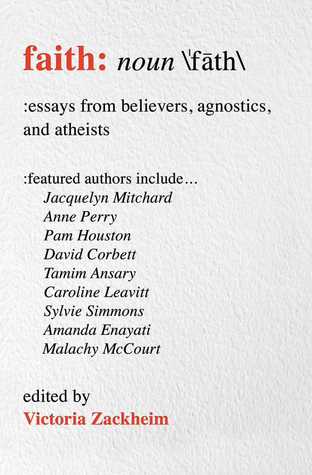
Review: Faith: Essays from Believers, Agnostics, and Atheists (edited by Victoria Zackheim)

First published:- February, 2015

Star rating:-

2.5/5

There was a time when I was still an optimistic seeker of doctrinal wisdom blissfully entertaining the certainty that there would at least be one religious doctrine fashioned by humans in the whole wide world which would not delight in depriving members of one half of the human race of any political and social standing. I was naive then. My ardor in this regard cooled considerably once I came across information that even Buddha helpfully classified seven kinds of wives (as recorded in the Anguttara Nikaya found within the Sutta Pitaka) of which the wife who meekly takes a beating from her husband, never argues back and remains as slavish as possible is defined as the ideal one. 

So is there any organized religion in the world which does not cheerfully preach, propagate and advocate misogynistic ideas and practices? If there is, do let me know. Meanwhile, I delight in evolving my personal belief systems to deal with pangs of short-term nihilism and remaining as religion-free as possible even though, to my dismay, every time I'm required to fill a government-printed form, I am hard-pressed to tick the 'Hindu' box. 

Organized religion has all the elements of organized crime, except for compassion. If you offend a crime boss who has no compassion, he will have you beaten up and sometimes killed. If the crime boss wants you to go to hell, he will have you killed after you have committed a sin so you have had no time to repent (i.e. you get yours as you leave a whorehouse or have just eaten pork, or have neglected to kill a female relative who has disgraced the family). Organized religion, however, does show some compassion. Still, in my mind, crime bosses and the guy called God have a lot in common: revenge, rage, and punishment are essential to their mission.

I requested this collection on Netgalley expecting to discover other, disparate ways of viewing faith and institutional religion and maybe challenging discussions on the intersection between religious philosophy and recent developments/intelligent speculation in the domain of astrophysics and the cosmo-sciences but nope. Instead what I got was a collection of maudlin musings on life and its trials and tribulations. It doesn't help either that most of the writers were raised in a Judeo-Christian tradition which means most of the articles lose their sheen of novelty after a while with similar anecdotes of childhood rites of initiation into a state of knowledge about organized religion re-appearing time and again. Catholic school, baptism ceremonies, obsession with collecting Virgin Mary statues, bar mitzvah experiences, traumatic memories of having to endure indoctrination at an early age and so on and so forth. A majority of the believers narrate experiences of dealing with life-threatening situations and losing loved ones to cancer and other terminal illnesses which is perfectly understandable because nobody really seeks out 'God' unless hardships and despair wrestle their way into life but after a while these reminiscences just wore me out. 
And then there are the more ridiculously cringe-worthy interpretations of faith - one contributor literally going on and on about her miserable love life and the fact that no man wants to be with her for the long haul. 

For believers, Faith is a remedy; for atheists, it's a smoke screen obscuring as shameful the essence of being human: our fallibility.

The only essays which made any impression were by Tamim Ansary, Amanda Enayati, and Aviva Layton. All of them are secular humanists/decriers of institutional religion of course but that does not mean their writings do not showcase a keen interest in giving the benefit of the doubt to all sides of the debate. Ansary, who identifies as a secular mystic, refreshingly does not go into saccharine-flavored tales of personal woes and triumph, instead choosing to recount a simple anecdote about a few moments spent in the heart of nature with his youngest daughter which helped him appreciate the fact that to be alive, for however brief a blink in the unending spiral of time, is to be close to the mystery of all creation. Amanda Enayati's touching piece documents her tryst with a most harrowing period in the history of Iran in an almost Marjane Satrapi-ish fashion except her voice is devoid of the latter's signature humor. Another plus was getting to know about the surprisingly liberal tenets of the Bahá'í faith, a minority monotheistic sect whose members were ruthlessly persecuted during the Iranian Revolution of '79. Aviva Layton's ruminations held nothing special unless one counts her wonderfully unsentimental description of the aftermath of personal loss and her logically argued repudiation of superstitious ideas about heaven and hell.

To conclude, it's not like all the other remaining essays were completely unpalatable or anything but the very fact that I scarcely remember anything about them speaks for itself.


__

Also posted on Goodreads & Amazon.


 photo C136E66569D294E4D5DA2D8124D4FF69.png

Sunday, July 5, 2015

Review: The Blazing World by Siri Hustvedt

First published:- 2014

Star rating:-


The problem with this book is that none of it rings true - the characterization, the narration, the atmosphere, the dialogues, the relationships, even the emotions. Everything seems so fake and overwhelmingly dramatic that at times I cajoled myself into reading on in the hopes of spotting some noticeable evidence of parody at work. But nope. Sardonic self-deprecation isn't the objective here. These people are all serious and want me to take them seriously. 

Although once I persuaded myself to go with the flow and obsequiously accepted the narrative's palpable delusions of grandeur and omnipotence, the reading experience became a lot more bearable. Because sometimes even if a book manages to irritate me with its undisguised self-admiration, I can gleefully read on if it contains an intelligent discussion on the human condition. And the good thing is 'The Blazing World' is blazing with new ideas, bursting at the seams with complex concepts on neuroscience, memory, phenomenology, perception and gendered identities which require careful, prolonged contemplation. Additionally, Siri Hustvedt can rustle up a wonderful turn of phrase and a syntactically elegant, lexically succulent sentence. So the negatives and positives are fairly balanced. 

Much like its protagonist Harriet Burden's creations, The Suffocation Rooms or Beneath, the book is like an elaborate contraption, a labyrinth of contrasting worldviews and allusions to arcane texts designed to aid the reader in comprehending the mess that lies outside clearly demarcated boundaries defining human existence. Friends, family, therapists, gallery owners, art reviewers, journalists, expose layer after layer of prejudice, personal contempt, vague conjectures, hollow biases while projecting their own image of Harriet Burden as an artist who had to use male pseudonyms to get attention in the art world. In posterity, Harriet is only reconstructed as a montage of other people's opinions and her journal entries, as a widely learned woman whose talent is overlooked by her rich, influential art collector husband and the male-dominated art world in general. Desperate for recognition, she decides to pull off an intricate con on the artworld by showcasing her work using three male artists as her 'masks'. But her plans derail when her last front aka Rune Larsen, an eccentric, manipulative artist, refuses to play along and takes credit for her work.

All intellectual and artistic endeavors, even jokes, ironies, and parodies, fare better in the mind of the crowd when the crowd knows that somewhere behind the great work or great spoof it can locate a cock and a pair of balls (odorless, of course). The pecker and beanbags need not be real. Oh no, the mere idea that they exist will suffice to goad the crowd into greater appreciation.

Women artists are less appreciated than their male counterparts, viewed with prejudice, treated with contempt, rarely allowed entrance into the hallowed halls of fame.... yada yada...you get the picture. Except something about the way Hustvedt delivers this feminist-y rant left me a little cold. I blame the highly unconvincing multiple perspectives and Hustvedt's general disregard for the 'show don't tell' device. This is where I prefer Margaret Atwood's deconstruction of the mind of a female painter/artist (Cat's Eye) because Atwood knows how to fashion a blistering denunciation of male chauvinism without being overt about it and she can recount a believable story like nobody's business. Hustvedt, on the other hand, seems rather intent on creating opportunities within a text to insert esoteric references and paragraph length footnotes which scarcely add anything to the world which our characters inhabit. 

Long story short, I want to remember this as an intellectual exercize, or as a corpus of interesting ideas.


_____

   photo C136E66569D294E4D5DA2D8124D4FF69.png

Thursday, March 12, 2015

Review: Broken Homes & Gardens by Rebecca Kelley

To be published:- April, 2015

Published by:- Blank Slate Press

Star rating:-


It is nigh impossible to banish the specter of sky-high expectations for a book which proudly advertises itself as the When Harry Met Sally for the millenial generation. That movie has been comfort food for the lonely and the lovelorn and the ones navigating the treacherous waters of friends-and-a-little-morerelationships for decades now. 

So potential readers and Nora Ephron fans, better be forewarned that the central characters here are not even pale imitations of Harry Burns and Sally Albright. Neither does Malcolm possess Harry's infuriatingly self-assured persona nor does Joanna manage to embody Sally's quirkiness and emotional vulnerabilities. More often than not they come off as people with no discernible character traits - they flicker in and out of focus like shadowy silhouettes in a hazily lit room. Their friendship is never fleshed out for the reader's benefit. In fact the only conversations they have are completely devoid of any wit or substance and merely border on good-natured flirtation.

Malcolm and Joanna meet at a party and make out without even exchanging proper greetings first. Malcolm flies out to Kazakhstan the very next day for 2 years with the Peace Corps during which time they maintain a correspondence through hand-written letters - yes you read that right - not emails or the phone because nothing puts a dampener on romance like modern technological innovations! When Malcolm shifts back to Portland after the designated time period, they keep hovering around each other, doing the mating dance without actually acting on their mutual attraction. They make bad decisions which would have been acceptable had they not appeared as deliberately manufactured unrealistic plot contrivances to delay their eventual union.

Long story short this is a bit like Harry Met Sally but not quite. It tries to sell the illusion of an unorthodox, fantasy love instead of conveying the truth of how relationships work in reality which brought Nora Ephron's creations universal adulation in the first place. However, on the plus side, there's no casual sexism here - Malcolm does not patronize Joanna like Harry aggressively dismisses Sally's opinions in the movie. (But then we are no longer in the 90s) It has all the trappings of a regular chicklit novel except without the mediocre writing and the abundance of idiotic cliches. And quite readable if not compulsively so.

As long as you are not craving for Nora Ephron-level insight into the quotidian comedy and heartbreak of relationships but light reading which does not require complete suspension of disbelief, Rebecca Kelley will keep you entertained.

__

**with thanks to Blank Slate Press and Netgalley for the ARC**


___

Also published on Goodreads and Amazon.

   photo C136E66569D294E4D5DA2D8124D4FF69.png

Friday, February 20, 2015

Review: The Fan-maker's Inquisition:A Novel of Marquis de Sade by Rikki Ducornet

First published:- 1999

Republished by:-Dzanc Books, Open Road Media

Star rating:-


For the past few weeks the subject of responsible use of freedom of expression and speech has dominated our public discourse. And this is not in the context of Charlie Hebdo. A group of Indian stand up comics had collaborated on a live 'roast' of two Bollywood actors (the very first of its kind in India) and posted the video on youtube - a performance peppered with sexual innuendos and a mind-boggling amount of profanity. The video went viral within minutes, inspired twitter hashtags, gave netizens a few good laughs, and 'offended' the usual suspects. A few days later, probably following the diktats issued by self-appointed guardians of Indian culture and values, the video was removed from youtube and criminal cases registered against the participants in this venture for 'obscenity'. 

Miscreants who vandalize churches, demolish mosques, rape women or launch into vitriolic diatribes against a specific religious community are allowed to function within the legal framework of the state but citizens who take to the streets to protest against the aforementioned atrocities are either water-cannoned or arrested with astonishing swiftness. Now it seems stand up comics, who are trying to inject some novelty into our painfully predictable entertainment industry which churns out lame potboilers by the dozen month after month, have secured a spot for themselves in the list of 'enemies of the state'. Law enforcement has its priorities right. 

Far fetched a parallel as it may seem, Rikki Ducornet's richly imaginative, Bohemian novel harps on the same double standards of moral policing. You can dismiss that glaring'erotica' label (not that I have any problems with this tag), dive in without hesitation and let Ducornet overwhelm your senses with her gossamer fine prose and her evocation of a turbulent Paris during the years of the Revolution. If you are looking for titillation and descriptions of sadomasochistic practices ala Sade, then let me forewarn you, the transgressions alluded to in Sade's monologues are not as frightfully repulsive as one might expect them to be. The only erotic similies I came across are of the following kind - 

..although the apple was as wrinkled and bruised as the clitoris of an old whore...

The plot weaves its way in and out of an imaginary Gabrielle, a fan-maker famous for her pornographic etchings and illustrations, and her patron Sade's points of view, stringing together their correspondence through letters during the time both were incarcerated for heresy by the Comité de surveillance while also including a parallel, semi-fictional narrative of the Catholic Church's barbaric suppression of indigenous pagan practices of Mayan people in the Yucatan peninsula during the Spanish Inquisition. Aside from all this there are various fascinating tidbits on Sade's upbringing and stories within stories which are aimed at highlighting the importance of unfettered freedom of thought.

A book is a private thing, citizen; it belongs to the one who writes it and to the one who reads it. Like the mind itself, a book is a private space. Within that space, anything is possible. The greatest evil and the greatest good.

The portions containing Sade's letters have him refuting the allegations levelled against him by the Comité by claiming most of what was regarded blasphemous in his work was simply the product of his virile imagination and that no sex act was ever performed without consent. The Marquis alternately laments the loss of his friend and confidante, Gabrielle and her lesbian lover Olympe de Gouges (an actual feminist figure from the Revolution) both of whom were put to death by the Comité, and chastises the hypocrisy of the Revolution which was systematically destroying the ideals of a civilized society in the name of upholding them.

Once the Revolution has gorged on the citizens of France and returned to her den to sleep for a century or two, what will happen to the triumvirate she whelped: Liberty, Equality, Fraternity-that vast heresy! That near impossibility! That acute necessity!

If you, like me, had not spared a thought for the infamous Parisian libertine till now then do pick up Ducornet's spirited defense of Sadeian ideology of unshackling one's life and art from hypocritical moral constraints. There's a good chance she may arouse your curiosity enough to want to take a peek into Sade's world of amoral creativity. In Gabrielle's own words - 

Sade offers a mirror. I dare you to have the courage to gaze into it.

____

Review also published on  Goodreads and Amazon.

**Thanks to Netgalley and Open Road Media for an advance reader's copy**

   photo C136E66569D294E4D5DA2D8124D4FF69.png

Thursday, December 11, 2014

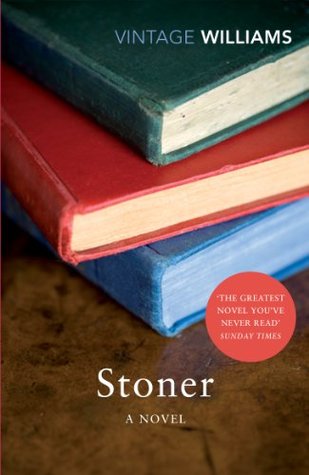
Review: Stoner by John Edward Williams


First published:-1965

Republished by:- Vintage Digital, 2012

Star rating:-

“Most men lead lives of quiet desperation and go to the grave with the song still in them.” - Henry David Thoreau

The triumph of this work lies in its self-effacing world-weariness, its tone of presupposed indifference even to the prospective reader's concerns. Like the inexorable stoicism of its protagonist in the face of misfortune and persecution, the narrative revels in its own lacklusterness, its state of diffused melancholy. 
William Stoner, first student and eventually English professor at (fictionalized) University of Missouri lives a life of flawed choices, unrealized potential and innumerable regrets, witnessing the world go through a period of tremendous sociopolitical ferment in the 20th century, and remaining invisible in the eyes of history. He breathes his last, just as silently, alone in a hospital ward, feebly flipping through the pages of a scholarly work. But do not for a moment think this deceptively drab synopsis encapsulates the essence of 'Stoner'. John Williams, through his luminous prose and by the aid of a vision which is as solemn as it is lucid, reminds us of the quotidian battles fought every moment anywhere by faceless individuals against the forces of oppression and moral laxity - that the fate of civilization is dependent on the capable or incapable shoulders of an individual.

He found himself wondering if his life were worth the living; if it had ever been. It was a question, he suspected, that came to all men at one time or another; he wondered if it came to them with such impersonal force as it came to him. The question brought with it a sadness, but it was a general sadness which (he thought) had little to do with himself or with his particular fate; he was not even sure that the question sprang from the most immediate and obvious causes, from what his own life had become.

An ode to literature? Yes. A story recounted with conviction and a quiet dignity? Undoubtedly. A sincere attempt at proffering acknowledgment on a seemingly inconsequential existence? That too. But more than anything else this is a literary toast raised in honour of those small, often unnoticed, acts of courage and compassion which somehow realign the moral order of the universe but are blotted out from memory and consciousness easily.
There is sadness here - boundless in depth and overwhelming in intensity - but hope glimmers occasionally too. Hope that the world may go to pieces and things may fall apart irrevocably yet a man may summon the strength to endure the tragedy of existence by discovering a true and unbreakable love. The currents of time weather away all past disappointments, longing, old grudges and anger. Only the love of the written word casts a glow in the eternal darkness.

A kind of joy came upon him, as if borne in on a summer breeze. He dimly recalled that he had been thinking of failure--as if it mattered. It seemed to him now that such thoughts were mean, unworthy of what his life had been. Dim presences gathered at the edge of his consciousness; he could not see them, but he knew that they were there, gathering their forces toward a kind of palpability he could not see or hear. He was approaching them, he knew; but there was no need to hurry. He could ignore them if he wished; he had all the time there was.

__

**much gratitude to Netgalley and Vintage Digital for providing a free e-copy as ARC**

Review also posted on Goodreads & Amazon.

   photo C136E66569D294E4D5DA2D8124D4FF69.png

Sunday, September 21, 2014

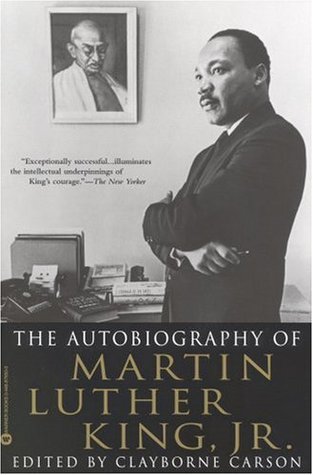
Review: The Autobiography of Martin Luther King, Jr. by Martin Luther King Jr.

First published:- 1998

Star rating:-

I had to keep reminding myself that it's not the civil rights movement I am rating and reviewing, because the spectrum of legitimate excuses, let alone justifications, which could explain the withholding of a star or two is rather limited. It comes as a kick to the gut every time a young, unarmed Clifford Glover or a Travyon Martin or a Michael Brown is shot for no valid reason and the realization sinks in that the process of integration which was initiated by Lincoln some 150+ years ago and furthered by Martin Luther is yet to reach its completion. So the essence of this book and MLK's doctrine of nonviolent agitation are now relevant more than ever. 

In a way this is Martin Luther's own account of the movement he helped steer in a direction which not only sought to free an entire community from socioeconomic and political servitude but prevented America from becoming synonymous with the ultimate hypocrisy of all - preaching the infallibility of human rights abroad (by waging wars against Communist totalitarianism) but carrying on with its tacit agenda of institutionalized discrimination back home. 
"I am convinced that if we are to get on the right side of the world revolution, we as a nation must undergo a radical revolution of values. We must rapidly begin the shift from a thing-oriented society to a person-oriented society. When machines and computers, profit motives and property rights, are considered more important than people, the giant triplets of racism, extreme materialism, and militarism are incapable of being conquered."

How the spirit of rebellion - which found expression for the first time with the Montgomery Bus Boycott in '55 (unwittingly started by Rosa Parks' act of denying her occupied seat to a white passenger) - trickled into the hearts of oppressed millions in Albany, Georgia, Birmingham, Alabama, Florida, Chicago, Boston, and Washington culminating in the passage of the landmark Civil Rights Act of 1964, is recounted by King himself.
That aside, there's a brief autobiographical sketch patched together from the fragments of writings gathered from the Stanford University archive by Clayborne Carson. Excerpts from King's speeches (sometimes even the full text) also make appearances in between the accounts of all the non-violent movements of civil disobedience he gave leadership to. 

To put it more accurately, this is less of an autobiography (since King didn't live long enough to write one) and more like a montage of every single written document or important oratory piece which King left behind. So lucidly written are these that Carson's work must have been reduced to simple editing and piecing together a coherent narrative out of the vast amount of material at her disposal.

And yet there are such glaring mistakes here which marred my reading experience. Consider this excerpt from King's personal writings after his visit to India in '59 which cemented his faith in the inviolability of civil disobedience as an effective tool to usher in socioeconomic and political change -
"On March 1 we had the privilege of spending at the Amniabad ashram and stood there at the point where Gandhi started his walk of 218 miles to a place called Bambi."

It's not Amniabad. In all probability, it's the Sabarmati ashram in Ahmedabad King is talking about, while the historic walk was to 'Dandi' - a coastal village in Gujarat (the state our present PM hails from). Not Bambi, the iconic Disney deer. 

Even if it was a memory lapse on King's part or a sad apathy for geographical names, as a King scholar looking to publish a work of monumental importance Carson should have been more vigilant for inconsistencies such as the above, especially since Gandhi gets mentioned several times by virtue of his being King's role model. 
(Some quick googling led me to the unhappy discovery that the Stanford archive still retains the unedited, therefore, incorrect information derived from the original sources. I can understand the significance of preserving King's writings exactly as he authored them but the insertion of incorrect facts diminishes the integrity of this work.)
Also occasionally 'Gandhi' is spelled as 'Ghandi'. (Aaarrrrggghhhhhh!)

In addition to these turn-offs, nearly all of King's speeches are so chock full of archetypal metaphor after metaphor that I felt it weakened the gravitas of the narrative. Perhaps, they would have been better off being included in shortened formats. The fact of God's mercy and benevolence being invoked (quite natural since King was a pastor) in every alternate sentence also served as an effective irritant. These are undoubtedly the primary reasons why it took me a whole month to finish reading this. 

But these causes of botheration aside, there's plenty of good to be found in this compilation. Like the way MLK expresses his disappointment with 20th century capitalism in a letter addressed to his wife, Coretta -
"...I am not so opposed to capitalism that I have failed to see its relative merits. It started out with a noble and high motive, viz., to block the trade monopolies of the nobles, but like most human systems it fell victim to the very thing it was revolting against. So today capitalism has out-lived its usefulness. It has brought about a system that takes necessities from the masses to give luxuries to the classes."

or his critique of the Vietnam War and correlation drawn between American militarism and the dangerously skewed nature of race relations in the deep south-
"I do not believe our nation can be a moral leader of justice, equality, and democracy if it is trapped in the role of a self-appointed world policeman."

The absence of that missing star, thus, should be attributed to my personal aversion to factual inaccuracies, overused metaphors and bad analogies. Otherwise no rating system in existence can measure MLK's significance in American history and all that he stood for.


   photo C136E66569D294E4D5DA2D8124D4FF69.png

Saturday, September 13, 2014

Review: The Royal Family by William T. Vollmann


First published:- 2000

Star rating:-

Some books are very obviously flawed, contrived in ways which slow down the reader's progress and heavily tax his/her ability to dredge up empathy over the headache-inducing frenzy of loaded work-weeks. And yet these narratives are so divine in their earnestness, so far-reaching in their scope, that you are filled with this overwhelming, earth-shattering zeal to shower them with a holy love and not let even a drop of your skepticism dilute your admiration for the writer's boldness. Your cowardice and inaction dictate you honor his unstated wish and this is the least you can do anyway. Embrace it all - the two-faced treachery perpetuated by the torchbearers of civilization, the endless cycle of degradation and corruption and the myriad sorrows of all the characters which bleed into its pages. Take one swig after another from the truth flask until you have been purged of all your self-indulgent guilt-trips and left with nothing but a crushing hopelessness which devours all other emotions with a vindictive fury. 

There's us, cocooned in the warm illusion of security, dissecting the politics of injustice from our ivory towers, wholly in denial of our bubble of happiness feeding off the despair of others. In an effort to scramble toward whatever glamourous concept of affluence it is we consider salvation, we do not see the charred wreckage of lives strewn all around. 

There's the woman of flesh and bone who becomes a grotesque assimilation of mere genitals, who can only be an abstract embodiment of the abuse with no human face - a walking, breathing cunt for hire whose existence you acknowledge only when you require its use. Every once in a while she leaves crack-addicted babies with no fathers in the maze of foster care or dumps them like inanimate blobs of flesh in seedy abortion clinics. She only lives in those documentaries harbouring Oscar-nomination ambitions, at the precipice of our segregated utopias merging with the abyss of the Tenderloins of the world. And the sanctimonious laws state with conviction, that the Tenderloins and the red light areas do not exist. 

There are the hobos, the panhandlers, the bums, the destitute - not allowed to be anything other than victims of their own ineptitude, worthy of a stray sympathetic glance and a few seconds of pity, to be religiously warded off our vaunted inner sanctums. There is Henry Tyler, a pathetic loser bearing the Mark of Cain, wallowing in eternal self-pity, choosing to live as a homeless man to find his Queen, his antidote to a desiccating loneliness. And then there's the Queen of the Whores with her magical powers and her crack pipe - just an emblem, a protector, a redeemer, a guardian angel, a modern day Jesus - and law-abiding respected founder of 'Feminine Circus' Jonas Brady, with his multi-million dollar franchise of selling men the right to rape, torture, and mutilate disabled girls, her nemesis. 
They are all actors in an absurd pantomime. They are all real. 

'Part biblical allegory and part skewed postmodern crime novel', the blurb announces with relish. But that doesn't even skim the surface of this tome.

I call this Vollmann's gift to the perpetual outcasts of society, the ones we have pushed so far beyond the edge bit by bit in our own mad dash for the center that they exist in a kind of parallel netherworld where all humanly concerns are put to rest, where violence and deprivation are the order of the day. I call this his sincerest attempt at chronicling their stories the way they may have approved of, however alien to our feral cravings for taint-free reputations, routine and fake dignity, however repulsive to our faux-fragile sensibilities. I call this a searing critique of the hypocrisy of the ones holding the reins of the civilized world, who would sputter with mock indignation when asked to legalize prostitution. 

However small or insignificant, I call this book an act of redemption.


   photo C136E66569D294E4D5DA2D8124D4FF69.png

Saturday, August 30, 2014

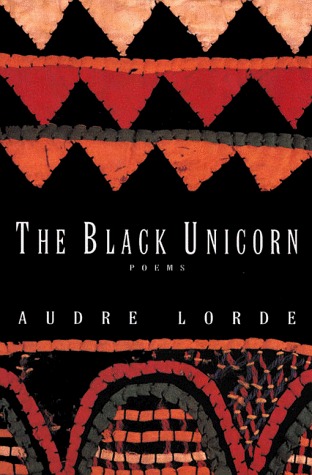
Review: The Black Unicorn: Poems by Audre Lorde


First published:-1978

Star rating:-

These poems are like shards of glass refracting the blurred image of some sombre new insight into the human condition - the agony of love, the pangs of coming to grips with the idea of racial segregation in a world one previously thought had no demarcations, the pervasive pessimism of living as reaffirmed by the morning newspaper, an elegy to the memories of a childhood friend whose time on earth ran out too soon, the melancholic ruminations of a prostitute, the absurdity of children of today being raised like slaughterhouse pigs to be sent to the war-front tomorrow. 
Coming in and out of cities
untouched by their magic
I think without feeling
this is what men do
who try for some connection
and fail
and leave
five dollars on the table.

If the annals of literature are to be consulted, most of these are time-worn subjects which other more renowned poets have regurgitated throughout their distinguished careers, after molding them in accordance with their perceptions of the world and its many idiosyncrasies. And yet Audre Lorde's words, imbued with despondency, regret, hope and fortitude at the same time, tempt you to read them again and again. Her lines flow effortlessly despite their innate simplicity, maintaining an enviable rhythmic symmetry, rendering the reader's tendency to puzzle over esoteric references unnecessary since there are almost none. 
There are a handful of poems here, in praise of the female and androgynous forms of divinity worshipped by the inhabitants of the historical kingdom of Dahomey and the Yoruba people of western Nigeria, which bring to light the oft-overlooked aspects of the cultural ethos of African people. But there's a conveniently provided glossary of African terms at the end to better facilitate complete understanding of these. 

You were not my first death.
but your going was not solaced by the usual
rituals of separation
the dark lugubrious murmurs
and invitations by threat
to the grownups' view
of a child's inelegant pain
so even now
all these years of death later
I search through the index
of each new book
on magic
hoping to find some new spelling
of your name

The implications hidden between her verses do not reinforce a kind of self-obsessed confessionalism as often found in Sylvia Plath or Anne Sexton's works or the heavy-handed inclusion of so many allusions that the poet's urge to communicate is buried under towering ambitions of dismantling poetic conventions. 

Sometimes, her words give the impression of mildly cryptic messages casually scribbled at the back of a notebook, perhaps, while she may have been staring out of her window distractedly. Sometimes, they are her anguished lament, her impassioned protest, wrenched out of her by the brutality of the world or the injustice perpetually dished out to those clinging to the lowermost rungs of the societal ladder for dear life. Her 'Power', one of the most influential and well-known poems from her entire oeuvre, simmers with a righteous rage, intense enough to blow a hole through the edifice of 'white supremacist patriarchy' aside from being a tribute to the memory of young Clifford Glover, a 10-year-old African American boy shot dead by a white cop on duty in South Jamaica, Queens, New York in '73, who was later acquitted by a white-majority jury with a single black female judge.

Today that 37-year-old white man with
13 years of police forcing
has been set free
by 11 white men who said they were satisfied
justice had been done
and one black woman who said
"They convinced me" meaning
they had dragged her 4'10" black woman's frame
over the hot coals of four centuries of white male approval
until she let go of the first real power she ever had
and lined her own womb with cement
to make a graveyard for our children.

Lorde remains one of the few poets in American history who had to contend with the tyranny of conforming to the demands of too many labels conferred on persecuted minorities - black woman in a white man's world, radical feminist, lesbian, civil rights activist. And yet she managed to breach the boundaries of these individual identities by singing in a richly resonant voice whose musicality still holds the power of bridging gaps, relaying the stories of the voiceless and the marginalised, healing the scars left by turbulent times and smoothening out our countless differences across continents and timelines. 
In my eyes, that makes her a hero more than a poet.


____

   photo C136E66569D294E4D5DA2D8124D4FF69.png

Sunday, August 3, 2014

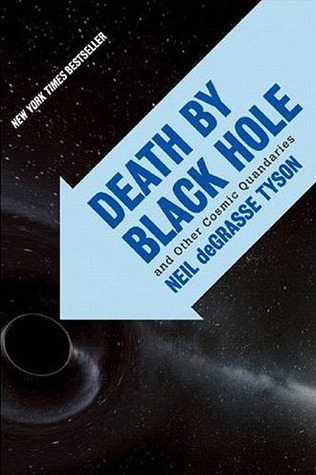
Review: Death by Black Hole and Other Cosmic Quandaries by Neil deGrasse Tyson

First published:- 2006


Star rating:-


Neil deGrasse Tyson is a force to reckon with. 


description

But he is not Carl Sagan. 

While Sagan must have smiled down kindly on your meek acknowledgement of ignorance regarding, say, black holes, Tyson will have most probably given you the stink eye or aimed a sarcastic jibe at your apathy, before proceeding to explain why black holes still remain a topic of much speculation in the community of astrophysicists worldwide.

Tyson does not pull any punches in this collection of essays while slamming the news media, who more often than not, come off as ill-informed hacks doing a shoddy job of reporting facts in the field of space science, forever (stupidly) claiming how scientists are baffled by so-and-so new developments. 
"Scientists cannot claim to be on the research frontier unless one thing or another baffles them. Bafflement drives discovery."

Or snidely commenting on the Hollywood exercise of producing multi-million dollar sci-fi films which badly butcher the scientific aspects of such ventures by inserting factually incorrect observations in scenes and dialogues. (there's a brilliant anecdote concerning James Cameron's 'Titanic' in this regard and the Contact film gets an honorable mention for its adherence to proper science if one overlooks a minor gaffe)
"I am glad that, in the end, the humans win. We conquer the 'Independence Day' aliens by having a Macintosh laptop computer upload a software virus to the mothership. [] The entire defense system for the alien mothership must have been powered by the same release of Apple Computer's system software as the laptop computer that delivered the virus."

Or criticizing the mad dash for extending the frontiers of space science during the Cold war years, when the spirit of scientific inquiry was sidelined in favor of a dangerous game of political one-upmanship, a kind of puerile assertion of 'our scientists are better than yours'. Or openly chastising revered names from ancient Greece like Aristotle whose inaccurate assumptions about the unchanging nature of stars and the geocentric universe helped the Catholic Church in propagating falsities for centuries with impunity. (He doesn't even spare Newton forGod's Higgs Boson's sake who, unable to satisfactorily explain the ordered behavior of the solar system despite the many often conflicting gravitational forces at work, had cited God's need to step in to correct things in his famed 'Principia')

While Sagan may have adopted a more benign, less aggressive tone in course of addressing issues of religious dogma being at loggerheads with scientific reasoning and aversion to science and mathematics among the general populace, NDT takes the approach of pure, unadulterated logic and demolishes one popular misconception after another (for e.g.:-the North Star is not the most brilliant star in the night sky or how everything that goes up doesn't come down) with a brute force which I am certain will not sit well with some sensitive readers who are easily offended. 

Being born in a country whose space research organization head performs pujas and makes ritualistic offerings prior to launching a 'Mission to Mars', I can't say I fault NDT's acerbic tone or his distaste for those who are hell-bent on unifying science and religion without even realizing that finding common ground between both is akin to attempting to exceed the velocity of light.

But if NDT lacks Sagan's sage-like demeanour and his rich, authorial voice (Sagan's prose is much more refined no doubt), his excellent sense of humor almost compensates for their absence - 
"The good thing about the laws of physics is that they require no law enforcement agencies to maintain them, although I once owned a nerdy T-shirt that loudly proclaimed, "OBEY GRAVITY."
"The only people who still call hurricanes 'acts of God' are the people who write insurance forms."
(and Michele Bachmann, just saying)

And occasionally there's a sop thrown in for the literary-minded (particularly the postmodernist fiction lover) - 
"The physicist Murray Gell-Mann, who in 1964 proposed the existence of quarks, and who at the time thought the quark family had only three members, drew the name from a characteristically elusive line in James Joyce's Finnegans Wake:'Three quarks for Muster Mark!'"

The more frivolous aspects of the essays aside, among the astrophysics-related topics NDT centers his discussions around, the ones which were relatively new to me are the concepts of hypernovae, gamma ray bursts, dark matter and dark energy, the uncertainty surrounding the string theory and the probability of the annihilation of Earth through ill-fated, cosmic encounters with errant asteroids, the unavoidable, impending collision of our galaxy with the Andromeda galaxy which is the nearest one heading towards us at a speed of more than 100 kilometers per second.

description
The Andromeda Galaxy

Since this is a collection of 42 essays which were published in the 'Natural History' magazine, some repetition of concepts and names creeps in occasionally but that merely helps you refresh memories of what you just read a few pages back, not exactly a shortcoming I am keen to quibble over. 

4 stars, because Tyson seems a little too bitter about artists who exercise 'artistic license' to distort certain astronomical facts in their paintings. Besides I am certain there is a lot of 5-star-worthy goodness in the rest of NDT's works left for me to discover in the future.


   photo C136E66569D294E4D5DA2D8124D4FF69.png
Related Posts Plugin for WordPress, Blogger...