Showing posts with label Amazing Characterization. Show all posts

Thursday, December 11, 2014

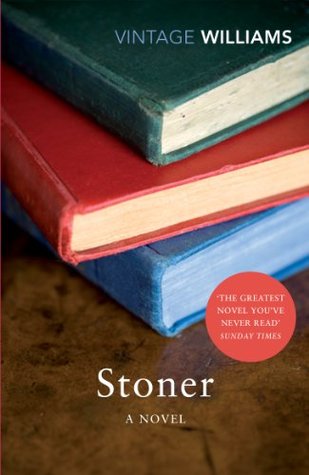
Review: Stoner by John Edward Williams


First published:-1965

Republished by:- Vintage Digital, 2012

Star rating:-

“Most men lead lives of quiet desperation and go to the grave with the song still in them.” - Henry David Thoreau

The triumph of this work lies in its self-effacing world-weariness, its tone of presupposed indifference even to the prospective reader's concerns. Like the inexorable stoicism of its protagonist in the face of misfortune and persecution, the narrative revels in its own lacklusterness, its state of diffused melancholy. 
William Stoner, first student and eventually English professor at (fictionalized) University of Missouri lives a life of flawed choices, unrealized potential and innumerable regrets, witnessing the world go through a period of tremendous sociopolitical ferment in the 20th century, and remaining invisible in the eyes of history. He breathes his last, just as silently, alone in a hospital ward, feebly flipping through the pages of a scholarly work. But do not for a moment think this deceptively drab synopsis encapsulates the essence of 'Stoner'. John Williams, through his luminous prose and by the aid of a vision which is as solemn as it is lucid, reminds us of the quotidian battles fought every moment anywhere by faceless individuals against the forces of oppression and moral laxity - that the fate of civilization is dependent on the capable or incapable shoulders of an individual.

He found himself wondering if his life were worth the living; if it had ever been. It was a question, he suspected, that came to all men at one time or another; he wondered if it came to them with such impersonal force as it came to him. The question brought with it a sadness, but it was a general sadness which (he thought) had little to do with himself or with his particular fate; he was not even sure that the question sprang from the most immediate and obvious causes, from what his own life had become.

An ode to literature? Yes. A story recounted with conviction and a quiet dignity? Undoubtedly. A sincere attempt at proffering acknowledgment on a seemingly inconsequential existence? That too. But more than anything else this is a literary toast raised in honour of those small, often unnoticed, acts of courage and compassion which somehow realign the moral order of the universe but are blotted out from memory and consciousness easily.
There is sadness here - boundless in depth and overwhelming in intensity - but hope glimmers occasionally too. Hope that the world may go to pieces and things may fall apart irrevocably yet a man may summon the strength to endure the tragedy of existence by discovering a true and unbreakable love. The currents of time weather away all past disappointments, longing, old grudges and anger. Only the love of the written word casts a glow in the eternal darkness.

A kind of joy came upon him, as if borne in on a summer breeze. He dimly recalled that he had been thinking of failure--as if it mattered. It seemed to him now that such thoughts were mean, unworthy of what his life had been. Dim presences gathered at the edge of his consciousness; he could not see them, but he knew that they were there, gathering their forces toward a kind of palpability he could not see or hear. He was approaching them, he knew; but there was no need to hurry. He could ignore them if he wished; he had all the time there was.

__

**much gratitude to Netgalley and Vintage Digital for providing a free e-copy as ARC**

Review also posted on Goodreads & Amazon.

   photo C136E66569D294E4D5DA2D8124D4FF69.png

Sunday, October 19, 2014

Review: Broken Harbour (Dublin Murder Squad, #4) by Tana French


First published:- 2012

Read in:- June, 2014

Star rating:-


There are certain things I pride myself on - the ability to read through a tremendous racket without losing my thread of concentration, the audacity to share my blasphemous distaste for pizzas with pizza worshippers who then proceed to shoot me death glares, and more pertinently, the way I don't balk at rating a piece of mainstream literature 5 stars if it has shown the grit to discard gimmickry and preserve that golden human touch. 

How ingeniously Tana French subverts the formulaic plotting of a 'psychological thriller', poking and prodding at the darkness we prefer to bury under the gloss of make-believe contentment until it becomes a threat of gargantuan proportions. How masterfully she paints this picture of a family marooned at the thin divide between normalcy and utter chaos, dangling precariously from the edge of oblivion. How mercilessly she concocts such a heart-wrenching tragedy where the lines between culpability and innocence are blurred to the point that both merge into a single entity, where the victims are just as unwittingly drawn to the dark side as the perpetrators and the ones entrusted with the task of rectifying the wrongs done. 

Sometimes the ugliness of visible reality is nothing but the tip of the iceberg and the truth is like a lightning bolt from the blue, capable of shattering the glass mansion of denial we prefer to live in. The truth runs much deeper, past the shallow defenses offered by skin and flesh, inexorably slicing through our bones.

"In that moment I thought of Broken Harbor: of my summer haven, awash with the curves of water and the loops of seabirds and the long falls of silver-gold light through sweet air; of muck and craters and raw-edged walls where human beings had beat their retreat. For the first time in my life, I saw the place for what it was: lethal, shaped and honed for destruction..."

'Broken Harbour' is about the proverbial monsters of our own creation lurking in the shadows biding their time to harm what we cherish the most, the slow disintegration of that 'good life' we have put together bit by bit and how sometimes cause does not precede effect. And it is a sad acknowledgement of the fact that a horrendous fate may lie in ambush for the sinless and unsuspecting. 

For the ones who steer clear of 'murder mystery novels' for their stereotypical compartmentalization of crime and detective work, I dare you to read this particular Tana French creation and remain unaffected.


 photo C136E66569D294E4D5DA2D8124D4FF69.png

Monday, October 6, 2014

Review: The Secret Place by Tana French

First published:- August, 2014

Published by:-Viking Adult

Star rating:- 


Few other books have conjured up the ghost of my teenage years as successfully as this one, dredged up the hazy remembrance of that first, most agonizing heartbreak, the subsequent amateurish cynicism summoned up to preclude the hassle of emotional hangups and the feeling of having only just the foggiest notion of how the world works.

It is awe-inspiring how Tana French continues to incorporate such authentic sociocultural commentary into narratives which are usually taken to be written for the sole sake of providing cheap thrills. So blame her if I end up sounding like a smitten fangirl every time I review a book of hers. She is just that good even when she is writing out a logically fallacious scenario.

The teenage girls of 'The Secret Place' are much more than what C-grade teenybopper flicks and stereotype-riddled YA books make them out to be. They are capable of as much cruelty as kindness, as much self-sacrifice as vindictive selfishness. Here, the conniving, bitchy and backstabbing blonde isn't a cardboard cutout 'mean girl' symbolizing pure evil just as the archetypal good girls aren't as puritan. And a private boarding school turns into a zone of ineluctable conflict of interest where the realm of the personal frequently dovetails into that of the collective forming the intricate web of high school politics which implicitly governs the place.

...a place like this is riddled with secrets but their shells are thin and it's crowded in here, they get bashed and jostled against each other; if you're not super-careful, then sooner or later they crack open and all the tender flesh comes spilling out.

More impressive is how the four girls who lie at the heart of the mystery do not let their budding sexualities define their lives, or even sacrifice individuality on the altar of some contrived requisites of 'coolness' which teenagers are prone to do since rarely do they know any better at that age. Instead, they defy odds to carve out a private utopia for themselves, a clique which doesn't require the glue of some common ideology to survive - a secret place neatly tucked away in an obscure corner of their minds where they can be wholly unabashed of the unflattering sides to their personalities, sure of the fact that they will have each other's backs even when the world goes to pieces. 

...the whole point of the vow was for none of them to have to feel like this. The point was for one place in their lives to be impregnable. For just one kind of love to be stronger than any outside thing; to be safe.

In a way, the narrative of friendship and loyalty in the aftermath of a terrible crime is reminiscent of an earlier book in the series -The Likeness - which in turn was inspired by Donna Tartt's The Secret History. So fans of any of the former will be sucked right in even if they may have reservations about stories involving teenagers, specially teenage girls who are forever being dumbed down by writers looking to make a quick buck. Ms French here, true to her gift for impeccable characterization, adds many dimensions to their personalities. 

As the common refrain goes, calling books of the Dublin Murder Squad series mere 'crime novels' is almost like an outrageous insult. And this one's certainly no exception in this regard. There are two parallel 'before' and 'after' narratives devoted to uncovering the truth of the same murder. A story of the tragic collapse of a close-knit group of teenage girls who, even while trapped in the complicated tangle of sexual politics, fight to ward off influences which threaten to destroy their fortress of solitude. A celebration of the bond of friendship, how powerful and all-consuming an affair it can be and how unpredictably it can turn dangerous and even life-threatening. And, in the end, a poignant tribute to those charged years of adolescence, a unique phase of our lives we look back on with equal parts terror and fondness.

They are a forever, a brief and mortal forever, a forever that will grow into their bones and be held inside them after it ends, intact, indestructible.
**I received an ARC from Viking Adult via Netgalley**
___

Also posted on Goodreads and Amazon.

 photo C136E66569D294E4D5DA2D8124D4FF69.png

Monday, May 5, 2014

Review: The Color Purple by Alice Walker


First published:- 1982

Star rating:-

Read in: - September, 2013

I give this book 5 stars to spite the myopic David Gilmours and the V.S. Naipauls of the world who think books written by women are irrelevant. I give this 5 stars to make up for the many 1/2/3 star ratings it may receive simply because of Alice Walker's forthright, honest portrayal of unpleasant truths that are often conveniently shoved under the carpet so as not to disturb the carefully preserved but brittle structure of dogma and century-old misconceptions. 
And I award this 5 stars, symbolically on Banned Books Week as an apology for all the cowardly sentiments of the ones who misuse their power by banning books, thereby shutting out many powerful voices which demand and need to be heard.

In my eyes, an author's merit lies not only in their sense of aesthetic beauty, but also in the scope and reach of their worldviews which must reflect in their craft.

Alice Walker's is the voice of one such African American writer that recounts a story which not only breaches the boundaries of an issue like emancipation of women but tries to detect a common pattern in problems plaguing civilizations across continents. She gives us one horrifying glimpse after another into the lives of women ravaged by unspeakable brutalities like rape and abuse, lives searching for meaning and connection and seeking out that elusive ray of hope amidst the darkness of despair. 
And by the end of the narrative, she brings to light with great sensitivity, that misogyny, sexism and blind patriarchal prejudices are as rampantly in vogue in the urban, upscale sphere of American cities as they are in the intractable, untameable African landscapes.

Celie and Nettie. Shug Avery, Sofia and Mary Agnes. Tashi and Olivia. 
All these are but different names and many facets of the same disturbing reality.
If the lives of Celie and Nettie are torn apart by sexual abuse and humiliation from childhood, then Tashi and other unnamed young African girls of the Olinka tribe are victims of genital mutilation and other forms of psychological and physical torture.
If the men of African American families dehumanize the female members to the point of treating them as mere care-givers and sex slaves, then the objectification of African women by the men of their families is no less appalling. And contrary to accepted beliefs, white families in America are just as easily susceptible to misogyny as the African American families are.

But Alice Walker doesn't only stop at opening our eyes to the uncivilized aspects of our so-called civilized world, but also shows us how knowledge of the world and people at large, self-awareness and education can help exorcize such social evils, how it is never too late to gain a fresh perspective, start anew and how empowerment of women eventually empowers society.

Dear David Gilmour, if I were a professor of English literature I'd have taught Alice Walker to my students without a shred of hesitation, because here's an author who may not possess the trademark sophistication of Virginia Woolf's lyrical prose but who, nonetheless, fearlessly broaches subjects many masters and mistresses of the craft may balk at dealing with.

Alice Walker: 5 | David Gilmour: 0


   photo C136E66569D294E4D5DA2D8124D4FF69.png

Monday, April 21, 2014

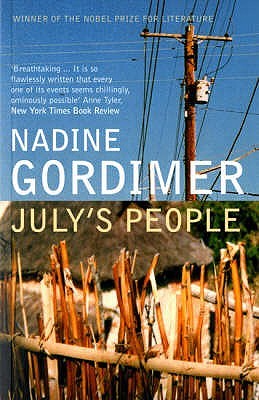
Review: July's People by Nadine Gordimer


First published:- 1981

Star rating:- 


The 5 stars you see flashing at you are not just any 5 stars. They were the end result of a whole day of deliberation. 
I happen to be one of those people who are not stingy with their ratings. If a book manages to bestow equal importance on both the prose and the message contained within in such a way that neither overshadows the other and both meld into a single entity of an unforgettable work of literature/fiction capable of whisking the reader away to a special place, then it can take my 5 stars right away.

But July's People had me dawdling back and forth between a 4 and a 5 star rating for the longest period of time. 

What happens to a middle-class family of white liberals in South Africa fleeing the horrors of a large scale violent agitation started by the blacks in the city? They find a safe haven in their black manservant July's village. 
Away from the amenities of an upscale, urban neighborhood in Johannesburg, away from all known civilization, in the heart of the formidable great South African wilderness, among people whose lives are different from their own as chalk is from cheese, Bamford and Maureen Smales and their 3 children become witnesses to the spectacle of humanity, stripped of all its materialistic props.

They become mute spectators to their own struggle for survival in the harshest of conditions and are left with no other option but to fall into the same pattern of weed-gathering, mealie-meal consuming, wart-hog slaying daily activities of the native Africans. They are also forced to accept this drastic role reversal with July, who had so far been at the receiving end of their patronizing 'kindness' and occasional thoughtfulness.

When July becomes their savior and protector, they finally start to realize how it must have been for July all this time to have been reduced to the status of dependence on a white family, to be considered human but still never judged according to the same criteria used to evaluate a white man's worth. 

Thus in the middle of the intractable African countryside, in the constant presence of buzzing mosquitoes and other poisonous bugs and in an environment redolent of decay and rotting animal corpses, all the hitherto insurmountable barriers between Maureen, the mistress, and July, the servant, are dismantled by the tide of circumstances. Maureen and July assume their true roles as mere humans in a symbiotic relationship where the nature of the dependence of one on the other may vary with a change in the scenario. 
And herein lies the poignancy of this story which relies much on the Maureen-July equation to lend the plot its true substance.
"We can go to my home - July said it, standing in the living-room where he had never sat down, as he would say 'We can buy a little bit paraffin' when there was a stain to be removed from the floor. That he should have been the one to decide what they should do, that their helplessness, in their own house, should have made it clear to him that he must do this - the sheer unlikeliness was the logic of their position."

"How was she to have known, until she came here, that the special consideration she had shown for his dignity as a man, while he was by definition a servant, would become his humiliation itself, the one thing there was to say between them that had any meaning."

"Of course, 'July' was a name for whites to use; for fifteen years they had not been told what the chief's subject was really called."

"She was unsteady with something that was not anger but a struggle: her inability to enter into a relation of subservience with him that she had never had with Bam."


Oh I could go on quoting such brilliant lines, fraught with underlying implications of life-changing proportions. 

Thus, July's People is not just a fantastic meditation on inter-racial tension but also an attempt at acknowledging the humanity of the ones considered less human. 
Gordimer doesn't merely highlight the ambiguity of the South African socio-political situation against the backdrop of the Anti-Apartheid movement or this imperfect intermingling of two cultures so disparate and alien to each other. She also poses a few fundamental questions which go far beyond the limits of a topic like racial discrimination. How do we live together in harmony? How do we come to terms with the differences(social, economic or racial) we perceive in others? 

As I write this, I am repeatedly struck by my own inadequacy as a reviewer and the fact that a few measly passages in a review cannot even come close to recording the experience of reading this book. I am fumbling around for the right words to present to the future reader, all the vivid images and the indescribably complex human emotions that Gordimer has stitched together with the gift of her skillful yet subtle story-telling in this narrative.

At times I forgot I was reading this in an air-conditioned room and found myself in Maureen's shoes - having to wash the unhygienic dirty rags she uses in the absence of sanitary napkins to soak up her menstrual blood or squatting down together with the women of July's family and plucking edible vegetables. I could almost imagine myself living the same nightmare as the Smales family in that stifling atmosphere rife with Equatorial heat and humidity and taut with the tension between July's black people and his white employers.

I am letting Ms Gordimer take over from me again- 

"On this night alone - Saturday - were the people awake among their sleeping companions, their animals; in the darkness(Drawing away, up from it, in the mind, like an eagle putting distance between his talons and the earth) the firelight of their party was a pocket torch held under the blanket of the universe. Heat and dark began to dissolve and she had to go in. There were no gutters; the soft rain was soundless on the thatch."

"It was the first time there had been rain since they came; the worn thatch darkened and began helplessly to conduct water down its smooth stalks; it dripped and dribbled. Insects crawled and flew in. They were activated by the moisture, broke from the chrysalis of darkness that had kept them in the walls, in the roof. She knew that the lamp attracted them but she kept it on. The flying cockroaches that hit her face were creatures she was familiar with."


And so I give July's People all the 5 stars. Because Nadine Gordimer excels at what she sets out to do here - dissect the human predicament with precision and deep sympathy, remove layering upon layering of man-made fabrications and reveal the crux of a human relationship as simple and complicated as Maureen and July's.

And if one thinks about it, she has titled this book ingeniously as well. What does she mean by July's people? July's own kith and kin, the anonymous and indistinguishable (to the white people) blacks of his own village? Does she mean July's white people who are also an indispensable part of his existence? Or is she referring to both at the same time? I think she left it as an unanswered question, left it for us to decide who July's people are.

And one has to admit, that it is certainly a question worth pondering.


   photo C136E66569D294E4D5DA2D8124D4FF69.png

Friday, February 28, 2014

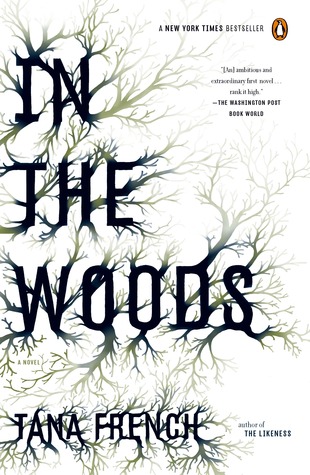
Review: In the Woods by Tana French

Reviewer's note:-Before I begin, let me state that 'In the Woods' has been reviewed in this space already but that was Scarlet's take. The following is mine. (The only thing evident in both reviews is how emotionally riveting we found this debut Tana French novel. Seriously, you must read this if you haven't.)


First published:- 2007

Read in:-November-December, 2013

Star rating:-

It's been a while since I have read a book that has left me so utterly devastated, a book entailing such a profound emotional investment that having finished it I feel a gaping emptiness within, a sense of loss. It feels like my heart has been simultaneously crushed into pulp under the weight of the tragedies that descend on the lives of a handful of characters and blown to smithereens. And I would never be able to pick up the pieces and glue them back together into a throbbing whole again.

I read In the Woods while on vacation, whenever I took breaks from watching wave after wave crash on to the shore with the familiar rip-roaring intensity of the sea. I read this even when I was too tired to stay up till late, lying on an unfamiliar bed with a sheet of dubious hygiene standards. I read this during prolonged car rides. And every time I had to tear my eyes away from its pages, I felt a pang of irritation.

As I made my way toward the bone-chilling climax of this narrative, awake at an unholy hour, I distinctly remember breaking out in a sweat on a cool December night to boot. Sleep became an alien entity and, come hell or high water, I knew I would not wrench myself away from this fantastic make-believe world of a small town and the sinister occurrences that tied the lives of its residents in the most twisted way possible. I longed to stay trapped in the eerie magic spell cast by the woods, under the ominous shadows of leafy canopies of pine and beech, caught up in a hazy daydream playing hide and seek with Peter, Jamie and Adam. My heart ached for the two children who never returned home from their beloved woods, who were never found again and the way the tragedy of their mystifying disappearance dealt a crushing blow to the life of their traumatized playmate who returned unharmed. It wept for Rob and Cassie and their missed chances.

This book isn't about crime and punishment, it isn't about the science of deduction or smooth-talking, fedora-sporting detectives smartly arriving at inference after inference and nabbing the culprit in style. I almost crave for the standardized simplicity of regular crime thrillers at this moment, the stories which conveniently compartmentalize the crime and the police procedure, the good guys and the bad guys. At least a book like that would not have left me feeling so desolate and bereft of any happy feeling. 

But this book took my breath away with its ability to instill so much life in each one of its characters that their distress became my own, with its ornate but never ostentatious prose and the way it deftly narrated a story infused with the dull shades of a sadness so affecting. Tana French foregoes all the spick and span categorizations here, thumbs her nose at the usual pigeon-holing. Instead with consummate skill, she outlines the faint traces of humanity in the most brutal impulses, acknowledges the messed up ways in which this bizarre drama of life plays out and how a neat tying up of all loose ends seldom happens in reality. More often than not, life is that merciless and cold. 

This book is about the labyrinthine pathways of our mind which treacherously conceal our most terrifying memories and how our subconscious prods us to replace the unpleasant truths with self-justifying falsities and even establishes our faith in them. It is about the seemingly innocuous, small cruelties of mundane everyday life that are capable of triggering much bigger disasters that destroy the lives of children and the unforgivable cruelties oblivious, ignorant children are themselves capable of.

I refuse to label this electrifying debut novel mere crime fiction because, in all earnestness, it is not. Rather, it is literature which delves deep into the causality of crime and meticulously brings out the humanity of all the people involved, literature capable of wringing out empathy from even the least sensitive reader. And it is an exploration of the convoluted workings of the human mind, of evil and barbaric urges lurking somewhere in its darkest nooks and crevices. It is a cerebral suspense thriller and, without a doubt, one of the best I have ever read. But it is also a beautiful, bittersweet story about people who carry on with their broken lives shouldering the unbearable burden of past trauma, an unforgettable human drama which left me emotionally drained, agitated to the extreme and yet gasping for more.


   photo C136E66569D294E4D5DA2D8124D4FF69.png

Tuesday, February 11, 2014

Review: American Pastoral by Philip Roth


First published:- 1997

Star rating:-
Read in:- From September to December, 2013

A quick perusal of my 'In-By-About-America' shelf will reveal a wide variety of titles ranging from popular fiction by the likes of Stephen King to the brand of post-modernist razzmatazz by the wonderfully perplexing Pynchon. Yet none of those books seem as American to me as American Pastoral is. Forget all the Great American Novels which swoop down on some of the 'Great American Issues' (this term is my invention yes!) like the Great Depression, racism, slavery, brutal and merciless killing of the Native Americans in the US-Mexican borderlands. Forget the illustrious names like To kill a mockingbird, The Grapes of Wrath, Beloved, The Great Gatsby, Blood Meridian and the other works which constitute the edifice of classic American literature. Even though every one of them focus either on watershed events in American history or relevant socio-cultural issues which form the basis of America's national identity, none of them are so glaringly American in spirit as this Philip Roth creation. I know my claims of being able to determine the degree of Americanness of any book are questionable at best since how can the internet and books supplant the experience of actually breathing American air. But I'll let Mr Roth speak on my behalf here -
"Around us nothing was lifeless. Sacrifice and constraint were over.The Depression had disappeared. Everything was in motion. The lid was off. Americans were to start over again, en masse, everyone in it together. If that wasn't sufficiently inspiring-the miraculous con-elusion of this towering event, the clock of history reset and a whole people's aims limited no longer by the past-there was the neighborhood, the communal determination that we, the children, should escape poverty, ignorance, disease, social injury and intimidation-escape, above all, insignificance!"

American Pastoral takes a plunge into the depths of America's heart and soul and analyzes its curious multiculturalism, its unrestrained self-love and its misdirected self-hatred. And speaking of 'depths', please bear in mind that it does go really deep, probing unmapped territory like the complications at the root of every human relationship be it between husband and wife or between a father and daughter who feel a subtly obsessive, nearly incestuous love for each other. On one hand it recounts a series of tragic events which result in the slow disintegration of a rich Jewish businessman's inner world while on the other it rapidly moves back and forth between various American issues, from the postwar economic boom to the Newark Riots of '67 to the violent anti Vietnam War protests bordering on terrorist activity, thereby weaving an intricate network symbolizing the web of America's inner conflicts. It's like AP revels in its own Americanness and its unabashed disdain for anything that is considered outside America's sphere of influence. But the surprising thing is, despite the self-absorbed tone of the narrator's voice and his blatant apathy for anything unAmerican, none of it sounds remotely offensive. On the contrary, everything put together, it comes off as a mockery of America's self-obsession. Every sentence, every stream of thought, every conversation that Roth has painstakingly put together to construct this masterpiece is rife with underlying implications. So much so that in order to squeeze out every last drop of meaning from one passage or a long conversation, a literature student reading this for coursework may need to pore over one particular page for hours on end. This, however, does not mean it is a difficult read, it isn't by a long shot. It is simply a book which requires a tremendous amount of patience and an effort on the reader's part to remove all the layers of obfuscation.

I have come across people criticizing Roth for portraying Jews in an unflattering light here but I find myself nodding my head in disagreement with them. The book smacks of anti-heroism if anything and it looks down upon the rich white American's idea of familial bliss, material prosperity and his hankering after a squeaky clean reputation free of any incriminating smudges. Roth tramples on the idea of hero-worship and stomps on it until it is so bent out of shape that it is beyond recognition. I also beg to differ on the subject of Roth's widespread infamy among the critic circle as a misogynist. Any writer capable of rustling up such fleshed out female characters like the ones depicted here, cannot be accused of nurturing a conscious hatred of women. Sure, there is a sprinkling of barely noticeable sexist remarks but I suspect it is done with the purpose of defining a particular character's perspective rather than simply out of contemptuous indifference (or maybe I need to read more Roth before pronouncing judgement). Some of the scenes of a sexual nature are disturbing to the point of being slightly cringe-worthy, but none of them demean women as such. And it will be hardly fair to indict Roth for sexual vulgarity when women erotica writers of today can be accused of much worse (rape and stalker fantasies anyone?).
To wrap up, this is a hard book to review as it obdurately resists deconstruction. But it is an ingeniously written one with long drawn out sentences which are a delight to savour if you love your share of linguistic acrobatics. Roth rambles a lot and gets side-tracked often, like an old man suffering from an early onset of dementia, frustrating the reader with his abrupt jumps from one subject to another almost in a stream-of-consciousness like manner and his penchant for detailing something as maddeningly boring as the art of glove-making. But eventually, when he makes his point you can't help but marvel at his ability to accurately deduce the hidden motives at work behind seemingly unremarkable action. And as schizophrenic as his writing may seem, one can't deny that it is also the work of a true master. 

 photo C136E66569D294E4D5DA2D8124D4FF69.png

Tuesday, January 21, 2014

Review : What Was She Thinking [Notes on a Scandal] by Zoë Heller


First published:- June 1, 2003

Star rating:-

Read in:-January, 2013

Notes on a Scandal is a multi-layered story. While keeping up with the pretense of titillating readers with the lurid details of a much older woman's romance with an adolescent boy, it skilfully but subtly exposes the hypocrisy practiced by each one of its characters. How each one of them remained so painfully aware of Sheba's perversions while being stubbornly dismissive of their own. 
Zoe Heller also forces us to rethink what we consider moral and immoral and ask ourselves whether we can really patronize Sheba Hart for what she did.

At the heart of the story is a theme of social deviance but there's also a tender love story at its core, albeit entirely one-sided.
The story of the scandal is narrated from Barbara's point of view who scribbles down whatever she feels about Sheba and her life in her notes while occasionally giving the reader a glimpse into her own sad little existence. Although she may come off as a woman with slightly sociopathic tendencies, keeping tabs on Sheba and meddling with almost every aspect of her life right from the time of their first meeting, one also feels for the profound loneliness she suffers from. She takes pleasure in watching Sheba's picture-perfect family life crumble bit by bit while she waits on the sidelines for a time to arrive when only she will remain by her side. While Sheba, subconsciously dissatisfied with the way her life has turned out to be, gets sucked deeper into the madness brought forth by her own deviance, Barbara observes silently and patiently. Till the time all hell breaks loose and both women-somewhat cut off from the mainstream of society-find a safe haven in each other's company.

A very significant question raised by the author in this book is - whether the supposed victims could sometimes be the culprits themselves? Whether a minor or a teenager can really be capable of manipulating an adult and bend him/her to their own will?
Not that this is an attempt at absolving Sheba of her actions but it's a question worth pondering. 

To sum it up, this is a twisted and complicated tale revolving around relationships which cannot be labelled and the notions of culpability and hence right up my alley. No this does not mean I'm twisted (okay maybe a little) but merely that I love a good conundrum.


   photo C136E66569D294E4D5DA2D8124D4FF69.png
Related Posts Plugin for WordPress, Blogger...