Showing posts with label Romance. Show all posts

Friday, June 26, 2015

Review: Middlemarch by George Eliot


First published:- 1872

Star rating:-

First read:- April-May, 2015


Take this for granted. Middlemarch will haunt your every waking hour for the duration you spend within its fictional provincial boundaries. At extremely odd moments during a day you will be possessed by a fierce urge to open the book and dwell over pages you read last night in an effort to clarify newly arisen doubts -'What did Will mean by that? What on earth is this much talked about Reform Bill? What will happen to poor Lydgate? Is Dorothea just symbolic or realistic?'
And failure to act on your impulses will give rise to irritation. The world all around you will cease to matter and you will be forced to perform everyday tasks on autopilot mode, partly zombified, completely at the mercy of this wonderful, wonderful book. Even hours after you turn over the last page, Middlemarchers and their manifold conundrums and self-delusions will maintain their firm grasp on your consciousness. What I mean by these not at all far-fetched generalizations, is that Middlemarch is engaging, suspenseful and readable. Profoundly so. 

Despite its dense outlay of character arcs dovetailing into the politics of the community, subplots jostling against each other for primacy and the reader's attention, vivid commentary by an omniscient narrator who interjects often to shape a reader's perception, and the painstakingly detailed inner lives of its zealous hero and heroine struggling to hold on to their lofty ideals in the face of sobering reality and suffocating marriages, everything moves at a breakneck speed. I never knew when I ran out of pages to tear through. There are few happy coincidences here and certainly no deus ex machinas to bestow easy resolution on conflicts. Characters do not stumble upon gentrified fulfillment accidentally, those persecuted because of their 'lower birth' do not magically acquire status and wealth, thereby proving beyond doubt that Mary Ann Evans meant to contravene the most fundamental of tropes created by her more celebrated contemporaries. Instead they wrestle with their own conscience, hypocrisies, prejudices, mortal desires and fatalistic judgments. The day to day grind deepens their spiritual crisis, derails their noble mission of being a part, however insignificant, of the progress story of the world at large, makes them realize the futility of the individual's struggle against the forces that govern society. Some emerge victorious, able to cling to the passions and ardors that drive them ahead in life despite the inclemency of their circumstances. While others flail and flounder, succumbing to the tyranny of material wants and demanding, selfish spouses. If that's not bitter reality served up on a plate I don't know what is.

If I am asked to pick one flaw with the plot and characters, I must confess I had considered withholding a star initially because of the book's treatment of Dorothea and the infuriating Ladislaw-Dorothea arc which made me want to quit reading out of pure frustration. Evans' fascination with subjecting every character's mental makeup to her trenchant irony seemed to expire every time her beloved heroine came into the picture. Frequent comparisons with the Virgin Mary and St Theresa and references to her queenly grace made me skeptical about her credibility as a character of flesh and blood in a narrative otherwise populated with believable, fallible men and women. Is she merely symbolic then of a life dominated by a 'soul hunger', completely immune to the mundane concerns of quotidian living? Why must her womanhood be almost deified and worshipped? But thankfully Dorothea is salvaged and humanized in the end, when she lets her own romantic passions overpower her altruistic zest. 

...the growing good of the world is partly dependent on unhistoric acts; and that things are not so ill with you and me as they might have been, is half owing to the number who lived faithfully a hidden life, and rest in unvisited tombs.

Many may disapprove of the choice but if I had to name one book very similar to 'Middlemarch' in thematic content and in terms of a multiple-perspective narrative structure set against a modern backdrop, then Rowling's The Casual Vacancy comes to mind. In fact, it is hard not to figure out the connection after having read both books. If the slew of unfavorable reviews on GR and elsewhere nipped your interest in the bud, I urge you to give it a shot. Unworthy of literary immortality as it maybe, perhaps, it still offers an intricately detailed portrait of a small town and how individual choices shape the destiny of a society. Of course it is no Middlemarch as no book ever will be but it is where Rowling shows her true calibre as a novelist. And really, it is not as horrid as most reviewers made it out to be. Far from it
.

__


   photo C136E66569D294E4D5DA2D8124D4FF69.png

Sunday, April 5, 2015

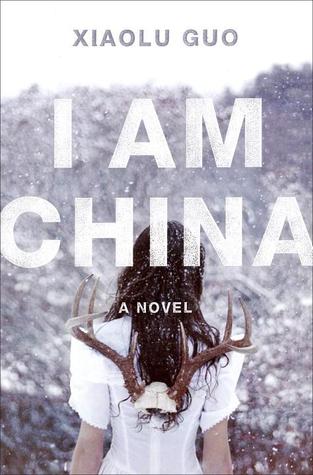
Review: I am China by Xiaolu Guo


Publishing date:-September, 2014

Publishing House:- Doubleday Books

Star rating:-

Seldom do I rue the absence of the solidity of a paperback I can clutch to my chest out of an overwhelming love, memorize the feel of its pages against my fingertips. My priorities lie in knowing what I do not, the means to the end irrelevant in this instance. The advent of the e-reader has negated the problem of the steadily shrinking space on the book shelf and helped me horde books without a care. And yet sometimes a kindle copy just isn't enough. The last time I had felt this familiar pang of kinship with a book right after turning over the last page was when Adichie left me feeling the weight of Biafra's senseless wartime violence (Half of a Yellow Sun). I procured a physical copy right after. 

I will do the same with this one too. Because imperfectly characterized and contrived as it is, this is the story I would want to associate modern China with. This is a book I would want to read again someday. 

All the cacophony around censorship and forgotten square massacres and totalitarianism aside, Xiaolu Guo's globe-trotting, no doubt most ambitious work till date tries to reclaim the dignity of the individual from the clutches of state ownership - a theme I have been desperately seeking out in my pick of literature from the land with less than satisfactory results. 

So far what I have gleaned from the works of writers from the mainland is mostly an overarching sense of dejection and bitterness - a gloomy preoccupation with rubbing old wounds raw.

Outside the bar, the midnight sky was lit by a vast cascade of fireworks, illuminating the solemn and dark Long Peace Avenue, the featureless Heavenly Gate Park, the foreboding Forbidden City, the drumming Bell Tower, and finally creating a fake light of day in Tiananmen Square. A new century of amnesia had arrived on China's earth.

But unlike the defeated, anguished voices of other contemporary Chinese authors, Guo's brims over with a valiant hope. Her Mu and Jian face the consequences of their political beliefs with an understated courage, hop across geographical boundaries to embrace the challenges of a hitherto unknown world outside their beloved China, even if to find themselves thwarted at various junctures. Driven out of their homeland by forces beyond their control and comprehension, they plunge headfirst into individual journeys of self realization, only their letters to each other tethering them to their shared reality in Beijing. And yet the same restlessness of being, the same grim disillusionment and feeble optimism color their evolving worldviews as they grapple with both hostility and acceptance in the humdrum heart of Europe and America. Experiences dismantle their prejudices about the west and the reckless abandon of youth gradually gives way to true wisdom. While Mu comes to acknowledge the purpose in Jian's subversive punk rock concerts in Beijing and his revolutionary zeal, Jian discovers merit in Mu's pacifist stance, her unrestrained love of life, art and literature. 

Art is the politics of perpetual revolution. Art is the purest revolution, and so the purest political form there is. A great artist is a great revolutionary.
Revolution = art, and art = perfect freedom. Right now, we have no revolution, no real art and no freedom.

As a lonely, unsociable Scottish translator unspools the many different threads of their past and present from a collection of letters and journal entries in her London flat, Mu and Jian's discordant voices harmonize in pitch and intensity across the barriers of time and space to meld into a symphony of human triumph. Their unbridled zest for life and liberty comes to symbolize the individual's quest for emancipation, to disentangle oneself from the myth of a national identity. Time, place and circumstances recede into the background. History's tenacious grip loosens. Mu and Jian's enduring love for one another finds its truest expression in the dream of a new China - one freed from the shadow of oppression.

I am China. We are China. The people. Not the state.

May this very dream survive.


**ARC received from Doubleday Books through Netgalley**
_____

Also published on Goodreads & Amazon.


 photo C136E66569D294E4D5DA2D8124D4FF69.png

Thursday, March 12, 2015

Review: Broken Homes & Gardens by Rebecca Kelley

To be published:- April, 2015

Published by:- Blank Slate Press

Star rating:-


It is nigh impossible to banish the specter of sky-high expectations for a book which proudly advertises itself as the When Harry Met Sally for the millenial generation. That movie has been comfort food for the lonely and the lovelorn and the ones navigating the treacherous waters of friends-and-a-little-morerelationships for decades now. 

So potential readers and Nora Ephron fans, better be forewarned that the central characters here are not even pale imitations of Harry Burns and Sally Albright. Neither does Malcolm possess Harry's infuriatingly self-assured persona nor does Joanna manage to embody Sally's quirkiness and emotional vulnerabilities. More often than not they come off as people with no discernible character traits - they flicker in and out of focus like shadowy silhouettes in a hazily lit room. Their friendship is never fleshed out for the reader's benefit. In fact the only conversations they have are completely devoid of any wit or substance and merely border on good-natured flirtation.

Malcolm and Joanna meet at a party and make out without even exchanging proper greetings first. Malcolm flies out to Kazakhstan the very next day for 2 years with the Peace Corps during which time they maintain a correspondence through hand-written letters - yes you read that right - not emails or the phone because nothing puts a dampener on romance like modern technological innovations! When Malcolm shifts back to Portland after the designated time period, they keep hovering around each other, doing the mating dance without actually acting on their mutual attraction. They make bad decisions which would have been acceptable had they not appeared as deliberately manufactured unrealistic plot contrivances to delay their eventual union.

Long story short this is a bit like Harry Met Sally but not quite. It tries to sell the illusion of an unorthodox, fantasy love instead of conveying the truth of how relationships work in reality which brought Nora Ephron's creations universal adulation in the first place. However, on the plus side, there's no casual sexism here - Malcolm does not patronize Joanna like Harry aggressively dismisses Sally's opinions in the movie. (But then we are no longer in the 90s) It has all the trappings of a regular chicklit novel except without the mediocre writing and the abundance of idiotic cliches. And quite readable if not compulsively so.

As long as you are not craving for Nora Ephron-level insight into the quotidian comedy and heartbreak of relationships but light reading which does not require complete suspension of disbelief, Rebecca Kelley will keep you entertained.

__

**with thanks to Blank Slate Press and Netgalley for the ARC**


___

Also published on Goodreads and Amazon.

   photo C136E66569D294E4D5DA2D8124D4FF69.png

Wednesday, June 4, 2014

Review: Their Eyes Were Watching God by Zora Neale Hurston


First published:-1937

Read in:- April, 2014

Star rating:-

Here is a woman who led a wretched life for years, doomed to stagnate in the drab depths of oblivion even after her death which had gone under the radar and generated no nostalgia-soaked, emotional obituaries. She lay in an unmarked grave in the Garden of Heavenly Rest, Florida, treated by her own contemporaries like an outcast because of a difference in perspectives, to be resuscitated and acknowledged as one of the foremost powerful voices that ever reverberated across the African-American literary landscape years later. And here is her creation, a 'coffee-and-cream' skinned Janie Crawford, a child born out of a possible rape, a sure forerunner to Toni Morrison's Sethe, Denver and Beloved or Alice Walker's Celie and Nettie. A mulatto woman in a white man's world, who grew aware of an identity not shackled by notions of race, skin color, and even gender, who could look beyond the small horizon carelessly conferred on her by an era which was bluntly apathetic to her kind, who could aspire to be free of a legacy of mere victimhood.
And here I am, trying to make sure I do not fuse Zora and Janie together, unable to decide how to love, revere and pity them at the same time.

I watched the young and carefree Janie, who bubbled over with an enthusiasm for life, eventually morph into the Janie who embraced the bittersweet realization of having loved and lost. My eyes traced her unsure footsteps from financial servitude to financial stability, from the daily battle of ignoring the sting of self-denial to grasping at a life free of emotional subservience. I loved the hapless, innocent Janie who consented to being passed over like property from her grandmother's ownership to her first husband's just as much I admired the Janie who found her salvation in Tea Cake's good-natured laughter after two marriages which had simultaneously stripped her of her last shred of self-esteem and caused her to listen to that stifled inner voice. And I felt a strange kind of happiness building up inside for the Janie who would not succumb to the temptation of self-loathing like the misguided Mrs Turner, the Janie who found the firm ground of self-awareness to tread on while the world of conflicting ideas rotated on its axis like ever.

Zora Neale Hurston had a rich dual voice - one of them fearlessly recounting the quirks characterizing the Black American community in the deep south still clinging on to the outer fringes of a white-dominated society intertwined with the lyrical, oneiric voice of a philosopher and a feminist, possibly one of the first among her kind. And it is this wholly harmonious union of these two voices which transforms this bildungsroman into a honeyed ballad of love and grief, of psychological bondage and emancipation.

"He looked like the love thoughts of women. He could be a bee to a blossom-a pear tree blossom in the spring. He seemed to be crushing scent out of the world with his footsteps. Crushing aromatic herbs with every step he took. Spices hung about him. He was a glance from God."

Janie never bore a grudge against her 'God' for making her path to fulfillment so long and arduous. She merely watched Him with hopeful eyes, lovingly accepting all He bestowed on her. And I watched Janie with a tear-strained smile.


   photo C136E66569D294E4D5DA2D8124D4FF69.png

Sunday, March 16, 2014

Review: The God of Small Things by Arundhati Roy


First published:- 1997

Read in:- January, 2014

Star rating:- 


As I stand just outside the compound with the untended garden, an uninvited, random visitor, the darkened Ayemenem House resembles a haunted mansion, belying the truth of the lives it once nurtured with maternal protectiveness in its cozy interiors. Derelict. Abandoned. Forgotten.
But I remember, you see. I remember the lives lived, and the loves which were birthed by circumstances, loves which breathed for a while before perishing on the altar of conformity. 
I remember Chacko and Sophie Mol. Ammu and Velutha. Rahel and Estha. 

And, most of all, I remember You. You, the painter of this portrait of a family's downward spiral into oblivion. You, the creator of this life-sized painting of a city and a nation, and all of human civilization in turn.
I see You as an iconoclast, persistent in your demand for liberties we are too submissive to dream of acquiring. You ask for things so heedlessly, so powerfully. The right to love whom we want and how much we want. The right to be equal. The right not to be discriminated against. The right not to be left languishing in solitude, battling painful memories. The right not to lose, at any cost, one's faith in the goodness in human beings.
You are the rebel we never considered becoming. We do not have courage like yours, you see. 
(Your opinions aired on national television are so often misinterpreted. Deliberately. Craftily.)

The sun, inside of You that refuses to be subdued by the drear of political machinations, by the evil lurking in the human heart, by the sham of 'development' perpetrated under the helpful charade of inexistent liberty, equality, fraternity, by every one saying 'No no no, you ask for too much. The world cannot ever be a fair place.', sent a little light my way.
That light gives me hope. Your Small God gives me hope.

He augurs that the overlooked small, mundane cruelties will only snowball into a tragedy of life-altering proportions later on, a gigantic boulder hurtling down the slope of a mountain crushing everything in its path into an unrecognizable gory pulp of flesh and blood. Small God's wrath will eventually consume Big God's apathy and reduce it to mere cinders.
I hope your Small God is right.

You speak the esoteric language of children, whose inner worlds are but their own, beyond the reach of the sharpened claws of the Love Laws - worlds which are free and infinite, where fables, dreams and terrifying realities churn into a nonsensical lovely mass, worlds untethered to earthly considerations. The two-egg twins' interlinked worlds, which stubbornly rejected the continued tyranny of the cycle of injustices perpetuated outside, were the same.
Their combined muteness throbbed with the dull ache of longing, loss and irreparable damage. Their collective passivity stood out as a blistering denouncement of humanity always coming second to zealously preserved blind prejudices. And You spoke through Rahel and Estha's silence which rung much louder than a giant church bell chiming away nearby.

We stew in our own insecurities and the irrelevance of small personal outrages, unable to take a step forward, helpless captives in the iron grip of the status quo of the world. While You, Ms Roy, take up your pen and fearlessly hail The God of Human Dignity, Empathy and Love - The God of Small Things.

So in this space, I thank that God for the Arundhati Roys of the world.


   photo C136E66569D294E4D5DA2D8124D4FF69.png

Tuesday, February 4, 2014

Review: In Love by Alfred Hayes

First published:- 1958
Republished by:-New York Review of Books
Republished on:- July 23rd, 2013
Star rating:-

Love, that misused, overabused idea, the tendrils of which coil around our everyday existence and refuse to loosen their collective tenacious grip. The illusion of which is sold in glittery packages of puce and pink to the masses like Marx's opium in the form of songs, messages and merchandise wrapped up in artifice. A full-fledged day devoted to singing its praises every year and the carefully orchestrated alignment of our feelings with soulless consumerism. 
Too much cynicism? Perhaps.
"Love bade me welcome; yet my soul drew back,
Guilty of dust and sin."
 - George Herbert

On a sombre wintry Sunday afternoon, while browsing my kindle shelves I tapped the lovely NYRB cover image of 'In Love' which had been lying ignored, buried under a burgeoning heap of newer additions and purchases (Thank you Kris, for your beautiful review which caused me to request this on Netgalley). A few pages into it, and my faith in humanity was restored partially with the realization that not all finer nuances of this emotion have been sacrificed at the altar of the virulently corporatized culture of our times.

There's still poetry in living. There's a strange kind of fulfillment even in grief and disenchantment. There's Alfred Hayes and his pain-soaked hymn to a doomed love affair. (And there are publishing houses like NYRB who are taking the initiative to republish buried works of genius in these distressing times of profit-making frenzy.)
"Now she had passed into another life. She inhabited a world from which I was excluded, and she had left me in an immense empty space."

Narrated by a man in his forties in conversation with a random young woman at a bar, this is essentially a tale serenading the transience of love and its undeniable link with the core of our being. The interplay of feelings, words and gestures that a romantic relationship revolves around, the acute sense of everything else paling in comparison with the object of our affection, the unreality of the extent of our involvement with a person that descends on us once passion wanes - Hayes dissects all these familiar and much talked about aspects of romantic love with a lyrical flair and with the wisdom and emotional depth of an author unwilling to shy away from depicting the entailing bitterness and despondency of heartbreak. 
"...nothing we want ever turns out quite the way we want it, love or ambition or children, and we go from disappointment to disappointment, from hope to denial, from expectation to surrender, as we grow older, thinking or coming to think that what was wrong was the wanting, so intense it hurt us, and believing or coming to believe that hope was our mistake and expectation our error, and that everything the more we want it the more difficult the having it seems to be.."

If not for the thoroughly original handling of a commonplace subject explored ever so often, read this for Hayes' lucid, understated but veritably charming writing style.

Also posted on Goodreads and Amazon.

   photo C136E66569D294E4D5DA2D8124D4FF69.png

Thursday, October 10, 2013

Review : Paper Towns by John Green

I sit here at my desk, staring blankly at the notepad document wondering what kind of a review will be able to portray effectively all that I felt for this book and yet manage not to come off as an incoherent, mawkishly emotional discourse on the failings of life.
On the one hand, there's this hazy voice at the back of my head - the one voice embodying the spirit of the slightly snooty me who almost had me convinced that I won't find another good YA book to read again - telling me to single out all the minor flaws and inconsistencies, elaborate on them and dismiss John Green with a condescending, pat-on-the-back kind of review.
On the other hand, there's the voice of the the flawed, often conflicted, unsure but honest me - asking me to be generous instead of patronizing, to have the courage to admit that the poignant ending made me shed tears and that often, our heart craves for a heart-warming, bittersweet yet simplistic story that represents life itself, in its myriad manifestations, rather than endless pages of rich, flowery prose and little more.
I am honoring the intentions of the second voice. (I mostly go with the second voice. Please care to note the word 'mostly'.)

At a superficial level, Paper Towns, is not much apart from a regular YA novel. It's about American teenagers doing what teenagers do - survive high school, try to fit into social cliques, get into colleges, date, break up, date again, lose their virginities and so on and so forth.
Yet deeper beneath that surface, it is a story flavoured with the bittersweetness of life itself.
It is about an unremarkable, often ignored boy named Quentin whose presence is almost taken for granted by every one around him. And it is about his polar opposite - an exceptionally interesting girl called Margo, Quentin's neighbor, who is seen only as the quintessential popular girl at school. And it is about the pair of them discovering who they really are underneath that exterior of carefully preserved appearances through a long and convoluted process..
When Margo goes missing after a night of vengeance wreaked on a handful of people at school who 'betrayed' her, the only person truly interested in getting her back or finding out her whereabouts is none other than Quentin. Because, predictably, our male lead has a crush on Margo since he was a kid.
But how does he find her when she has disappeared supposedly without a trace? - Turns out Margo has left clues behind for only Quentin to piece together and figure out where she is headed and more importantly, why she has taken off abruptly anyway.
This puts Quentin at the head of a long, winding, physical and metaphysical journey of deconstructing the enigma that Margo Roth Spiegelman is, figuring out where she is and in the process of it all, coming closer to understanding himself and the people around him better.

As a woman who spent her adolescence in a country named India, let me say that American YA fiction makes us feel as if we're reading about people from an alternate plane of reality. While American teens go to prom, date, lose their virginity, smoke pot, go clubbing, (sometimes) engage in illegal activities, take a gap year after school and mainly act and behave like adults, Indian teens are busy taking tuitions to get into the premier engineering institute in the country.
Because our society holds a degree in engineering in the highest regard and sees it as a one-way ticket to the realm of financial eminence.
So it's more of an understatement to say that we do not relate to American teens - we read these YA novels partly out of bizarre fascination and partly out of curiosity.
But rarely do we stumble upon a YA book which is able to surmount the barriers of stiff cultural divides and sing to the universal human spirit.
Paper Towns is like that rare gem in a genre well-known for its banality. It is alternately frivolous in its portrayal of teenagers and melancholic in its ruminations on life, love and the way we choose to put labels on people without caring to know the real person under the disguise of the stereotype.
But it is not free from its quota of cliches and minor flaws. The pairing up of the school geek with the school beauty, her jock boyfriend and bitchy best friend and two additional nerdy boys as sidekicks of the male lead - these are but formulaic elements found in a run-of-the-mill YA novel.
Also, in real life a girl like Margo Roth Spiegelman is unlikely to exist and even though she insists on the contrary, her penchant for drama and actions appear to be desperate bids for more attention - a fact John Green doesn't gloss over by making the side characters point this out to Quentin time and again. There's also something very Holden Caulfield-ish about Margo, a thought I just couldn't get out of my head.
Not to mention, the whole premise comes off as a little unrealistic as well - Margo is repeatedly shown to be a near invincible character whose plans and designs seldom fail.
But even so, the strengths of this book do enough to overshadow its shortcomings. John Green's fast dialogue and witty one-liners make you smile.
"Getting you a date to prom is so hard that the hypothetical idea itself is actually used to cut diamonds."

"Girls dig you," he said to me, which was at best true only if you defined the word as girls as "girls in the marching band."

Some of the hilarious situations that Quentin and his friends find themselves in during the course of their road trip, made me laugh out loud multiple times. Which doesn't happen often.

Ben keeps bouncing his legs up and down.
"Will you stop that?"
"I've had to pee for three hours."
"You've mentioned that."
"I can feel the pee all the way up to my rib cage," he says. I am honestly full of pee. Bro, right now, seventy percent of my body weight is pee."

And what sealed my absolute, unwavering love for this book was the ending. The sheer poignancy of it will stay with me for a long time.
John Green dares to ponder on the difference between being in love with the idea of a person and being in love with the actual person, while staying within the limits of a genre not noted for its depth or emotional range.
And this is why, Paper Towns stays with the reader long after he/she has finished reading - as a great story and as a somewhat sentimental discourse on the imperfection of our lives.

 photo C136E66569D294E4D5DA2D8124D4FF69.png

Saturday, September 14, 2013

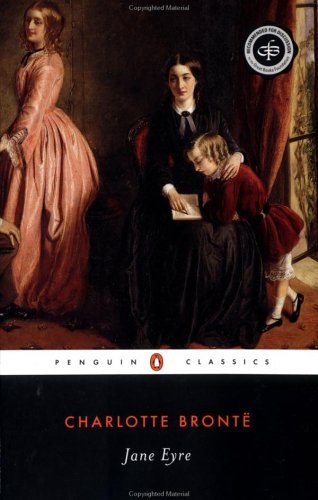
Review : Jane Eyre by Charlotte Bronte

(There's no point in my reviewing Jane Eyre the conventional way, because most of you who read have read this already. So what follows is the rough equivalent of a tribute to this great work of literature.)

What do I write about you Jane? Words fall short when I try to.

Jane, you are so much a part of me as I am yours.
You are so much a part of women who lived in obscurity centuries before Bronte breathed life into you.
You are so much a part of women who are alive at present and so much a part of women yet to be born.
You are so much a collective chorus of voices than just a single one.
You are so much an inexorable force which builds up in intensity over the course of the narrative.
You are so much an embodiment of the feminine spirit and not just an ordinary looking, puny little girl of barely twenty with pompous world views and ideals.

Jane, you are not only the essence of womanhood at its best but the finest specimen of humanity - so refined, so just, so fragile yet so iron-solid. So full of scorn yet so humble.
Jane, you transcend the boundaries of an era so effortlessly and retain your relevance even today.
I don't give any guarantees that reading Jane Eyre (that is if you are still uninitiated) will cure you of misogyny. I do not believe in utopian concepts such as chauvinistic men suddenly giving up on their own delusional views on women and starting to treat them with respect deserving of a human, after reading a book. But it may come very close to achieving that purpose.
Then again, I do not expect a well-read man to be a misogynist in the first place.

Charlotte Bronte has accorded this immortal literary character with such a voice, such a dignity of bearing, such a sharpness of intellect, such a power of conviction - that absolutely no one can remain unaffected after reading this. Once you get to make the acquaintance of courageous, zealous, outspoken, energetic, intelligent, principled, respectable Jane, you are bound to remember her forever. Rather, Jane will ensure that you do not forget.

If you are a woman of integrity, you may see a part of yourself reflected in her sarcastic comebacks, in her sense of humor, in her feelings of rage, in her unapologetic frankness and in her cold refusal to bow down to the wishes of those more powerful than her in terms of wealth or social recognition.

Before the term 'feminism' had even come into being, Charlotte Bronte was busy creating an everlasting symbol of feminine power that will withstand the test of time with incredible ease and continue to cast its influence on society and literature.

Sure Jane Eyre has a romance at its heart - a memorable one at that. Sure it also contains a gothic mystery. But these are not its only highlights.

Jane Eyre is a feminist doctrine in the garb of a novel. Jane Eyre fearlessly reproves the injustices of class divisions. Jane Eyre contains a subtle indictment of blind religious zealotry and upholds the value of man over God. Jane Eyre lays bare the perversities in self-important men of religion. Jane Eyre criticizes a prejudiced Victorian society and exposes the hollowness of the lives of its affluent but ignorant gentry.
And to think Charlotte Bronte wrote this in the middle of the 19th century.

The last time I had been this strongly affected by a classic was about 10 years ago, when I had read A Tale of Two Cities for the first time.
This is the kind of book whose greatness you cannot try and measure by awarding it a number of stars or even by reviewing it.  This is not just one of the finest literary masterpieces ever written but forms a very important part of the reason why we read, why we prefer to shun the company of people and seek a few precious hours of togetherness with fiction or literature, instead.

Dear Ms Bronte, I am late to the party but I have arrived nonetheless. And I cannot thank you enough for bringing me, for bringing 'us' alive in your powerful words. The world and I owe you a debt we can never repay.
Oh thank you so very much!

P.S.:- This review is glaring in its obvious exclusion of Edward Fairfax Rochester, but that is not for any shortcoming on Mr Rochester's part. Rochester is without a doubt one of the most realistic and interesting literary romantic interests ever created. But I wanted this to be about Jane and only her. Because had Bronte's intention been to bestow equal importance on Jane and Rochester, she would have named this 'Jane and Edward' or something along those lines.

5 out of 5 stars.

 photo C136E66569D294E4D5DA2D8124D4FF69.png

Tuesday, August 20, 2013

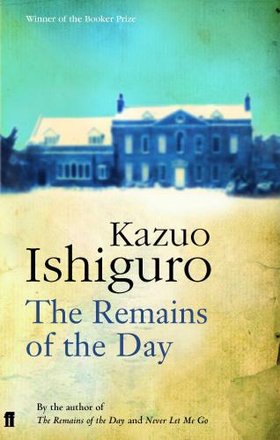
Review : The Remains of the Day

(Orginial review posted on Goodreads:- November 24, 2012)

When I had merely read about 30 or so pages of this book, I must confess I was debating whether or not to
continue with it, given the unbearably slow pacing of the plot.
And then when I had finally reached the end, I couldn't help but feel immensely thankful to my own better judgement against giving it up. Since by that time I had been reduced to a pathetic, blubbering mass of emotions and tears, teetering on the verge of a major breakdown and marvelling at the writer's remarkable achievement at the same time.

The Remains of the Day is Kazuo Ishiguro's ode to England - its bygone glories, numerous idiosyncrasies and fallacies.
Through the life of Stevens, the protagonist and an uptight butler to a distinguished Lord, Ishiguro takes us on a journey of a nation through two wars which crippled it financially and relegated it to the sidelines of international politics as another nation slowly rose to take its place. But it is not merely the tale of a tottering Britain but also a human drama centering around themes such as self-discovery, lasting regret, nostalgia, unfulfilled love and the enduring desire to start over anew.
Stevens is not merely a symbol of the inimitable sophistication that defines English culture but also an emblem of the undeniable hollowness of it. Of the unalterable mistakes committed in the course of a long and eventful journey - be it the journey of life of a man or one nation.

Even though the verbosity of Ishiguro's prose may tend to make the narrative monotonous from time to time, it is never too big an impediment to navigate around. In fact it is the elegant language which catapults this novel into the league of classic English literature. Besides the unhurried, tender nuances of Ishiguro's story-telling do not deserve any less.

Oh yes he most certainly deserved the Man Booker for this.

5 out of 5 stars.

Monday, August 19, 2013

Review : The End of the Affair by Graham Greene

(Original review posted on Goodreads:- June 21, 2013)

I'm trying very badly not to launch into a full fledged rant against this book as I type this out because rants
are rarely, if ever, proper reviews. And I want to pose a rational argument explaining my dislike for this book.
As much as the sexist ramblings of the protagonist and the selfish, irrational actions of the main characters served to irritate me to a great extent, I still reigned in my impatience and held out hope for the narrative till the time I was done with the very last page. But sadly enough, the ending left me not only disappointed but positively fuming with anger.
(Spoiler ahead)


I always welcome flawed characters in literature because truly what real person is perfect? or even close to being perfect?
Characters are meant to act like morons, do things that defy logic and frustrate us and yet earn our empathy in the end simply by virtue of their being human. But forget empathy, I just did not feel an ounce of anything for the central characters here except some occasional annoyance for abruptly starting one-sided conversations with this entity called 'God'.
As is obvious from the title this is about an affair, a torrid one at that, which ends badly and its subsequent repercussions. But the author just had to drag the much hyped up subject of 'God' into this and translate his love/hate for a woman into his love/hate for 'God'. How his insatiable desire for a woman forced him to confront his own atheistic/agnostic values and come closer to acknowledging the importance of faith. Which I didn't mind that much either, really.

But how do you look the other way when every other line of a passage has either the word 'God' or 'You' or 'Him' in it and the characters are engaging in endless monologues with 'Him'? (Please pay attention to how I am deliberately overlooking the crucial debate on God's gender)
'God' is a subject that I am yet to face head on and make my peace with. But my attitude so far has been a little like Haruki Murakami's in Kafka on the Shore -

“If you think God’s there, He is. If you don’t, He isn’t. And if that’s what God’s like, I wouldn’t worry about it.”

I can tolerate a healthy dose of reflections on religion, faith and worship, IF it is served with a touch of rationale and has the capacity to appeal to even the staunch non-believer. Like in a Life of Pi-ish way - nothing life-altering or too preachy but still understandable.
But I hate it when 'God' is shoved right in my face in long, winding passages replete with repetitive rhetorical questions. It's like 'He' is a character in this without being one. A passive, ubiquitous presence which steals everybody's thunder without doing a damned thing.
Was this about the affair or about 'God' or Catholicism? or was it about the author's attempt at coming to terms with the tragedy of his affair by seeking a form of oneness with 'God' and something bigger than life itself?
It's like Greene carelessly threw away chunks of the bigger picture but did not strive towards aiding the reader in stitching them all together. Which is why the book just stopped short of making a much larger impact.
If I am to take this novel only as a piece of autobiographical writing and a tribute to Greene's affair with one Lady Catherine Walston, then maybe some of my criticism automatically becomes void. But since this is a work of fiction, I think my points of contention are quite valid.
Dear 'God', you do not impress me in the least, especially when characters are citing 'You' as an excuse for their reluctance to behave like logical human beings.
Although there are few points in the narrative where the humanity of the characters shine through and one can't help but feel for their dilemma and suffering.

2 out of 5 stars.

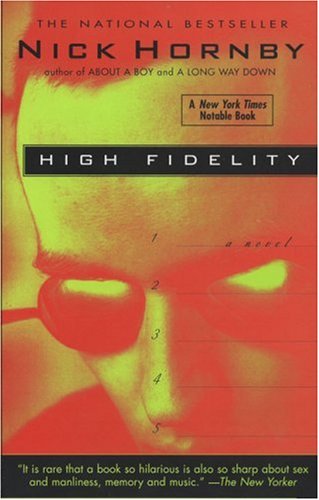
Review : High Fidelity by Nick Hornby


(Original review posted on Goodreads:- December 10, 2012)

High Fidelity is several things at once. 
It is a specimen of ladlit - romance and single life explained from the point of view of a man. And we have so few of those. 
It is a humorous reflection on life and its many failings.
And lastly, it is the tale of a Brit singleton in his mid thirties who is unrelentingly firm in his reluctance to grow into a man.
A man who is so caught up in his fantasies of the ultimate love one is destined to end up with, that he ignores the woman who truly cares for him and consequently ends up losing her.
So the novel begins with our protagonist, Rob Fleming, listing the 5 major break-ups of his life which either hurt him too much or ended up changing him as a person for good. And he takes vicious pleasure in informing the reader that Laura, the woman who just left him, doesn't make the top 5, doesn't even come close.
How could you not get sucked into a book which begins on such a promising note?

An owner of a dingy vinyl record shop named Championship Vinyl, Rob and his two employee-cum-sidekicks Dick and Barry stumble through the maze of life, more often than not clueless about what they are doing.
They debate merits and demerits of obscure bands and music artists and are generous in their display of disdain for the ones who love their Beatles, Billy Joel, Tina Turner, Elton John and the usuals. And these hilarious conversations centering around mundane things like tv shows, movies, music and women lend the plot much of its frivolity and humour. Especially Barry, who is described by Rob as a 'snob obscurantist', makes you laugh uncontrollably with his habit of belittling everything, his sneaky tactics of selling records of artists no one has heard of and his interactions with Dick.
And so the plot meanders through the zigzagging life of Rob, touches briefly upon the lives of all the women with whom he had been in love at some point of time and settles on his on-and-off relationship with Laura.

High Fidelity comes as close to portraying single life and romance as it actually is and not in the larger-than-life Hollywood rom-comish way. It talks about the things we all do in relationships - how we decide how much to reveal to the other person. How our feelings for a person waver time and again and how we often falter, unable to decide what we want. How we hurt the other person in the process. How we realize how precious a relationship was only after it has ended. And more importantly how we are ever afraid of making that feared transformation - be it from girl to woman or boy to man.

Nick Hornby's debut novel is a charming creation - it is like a music record by an artist you may not have heard of but you can relate to the music, nonetheless. 
And you can't help but want to play the record all over again. 

4 out of 5 stars.

Sunday, August 18, 2013

Review : Nick and Norah's Infinite Playlist by Rachel Cohn and DavidLevithan


(Original review written :- April 12, 2009)

I never really expected a book, each of whose pages are strewn with f-words to impress me. But uncannily enough this piece of young adult fiction by Rachel Cohn and David Levithan did. This book is about two teenagers each of whom are going through a difficult phase in their lives and how one night of togetherness helps change their views towards love, life and the future ahead.

Nick, the conventional 'nice guy' and the bassist of a band which doesn't have a fixed name, has just recently been dumped by his girlfriend Tris after he confessed that he loved her. Norah,on the other hand, is a loner despite having been in a relationship with the chauvinistic and the self-centred Tal for the last 3 years. She is the straight-A student, the feisty and a tad spoiled daughter of the hot-shot CEO of a record company and the chaperone of her best friend Caroline who is quite the party animal and gets drunk at every opportunity she gets. Norah is the witty, intelligent kind of girl who can't exactly be called hot but is beautiful in her own way if you notice carefully. Thus these two people meet on an eventful night while Nick and his band (they were calling themselves 'The Fuck-Offs' for the night...ridiculous huh?I know -_-) were performing in a certain club where Norah also happened to be present along with Caroline. And after Nick comes up to Norah and fake-propositions her with this corny line - “I know this is going to sound strange, but would you mind being my girlfriend for the next five minutes?” and she accepts his ludicrous proposal, their whirlwind journey through the night begins - a night during which they discover that their notions about love were prejudiced and learn how to deal with the demons of their past.

Norah who had been in only one relationship all her life instantly takes a liking to the decent and well-mannered Nick. Nick however finds it hard to get over Tris and entertain the idea of having a new girl in his life. Eventually though he comes around and realizes that Norah could be more than just his 'music soul-mate'. And all of this happens during the course of a single night as these two teenagers make their way through different clubs and gigs in Manhattan.

So now why do I like this book? The story seems like it has all the hackneyed themes of a typical young adult or 'chick lit' novel.
I think this is juvenile fiction at it's best. Because Nick and Norah are actual teenagers here who do not adhere to cliched portrayals of American teens who indulge in drugs, sex and alcohol in various high school dramas or tv shows. They have their own strong points and weaknesses. They are good and they are bad, at the same time. Profanity is a regular part of their vocabulary, yet there is nothing offensive about the way they hurl swear words at each other or others. It's almost like part of a tough guy/girl act on their part to hide the sadness that lies underneath the exterior.

Another thing that I liked about this book is that despite being a romance novel it never gets too mushy or cloyingly sweet. It's not the kind of romance where boy and girl meet, fall in love and get married after overcoming different kind of obstacles.
Nick and Norah discover how an ordinary night can turn out to be nothing short of spectacular and exciting when one has the right kind of company. It's almost as if forever is trapped somewhere inside that night where Nick and Norah and their relationship have endless possibilities. It could be that they end up married someday with a son named Salvatore as Norah muses ('Salvatore' was printed on Nick's jacket which he offers Norah). But for the moment, for the night ,it doesn't matter. This night is theirs and theirs only. And perhaps, it will stretch itself into both of their future lives.
Narrated alternatively by Nick and Norah, the story is fast-paced and the dialogue, witty and sarcastic. A recommended read for teenagers and also for readers who like their romance novels without the dose of mush.

P.S:- I watched the movie after finishing with the book but as usual was disappointed. Michael Cera and Kat Dennings made a good lead pair but the screenplay was bad - even yucky in parts (Caroline and her chewing gum-eww). For Heaven's sake why don't the directors follow the original storyline of the novels? I, for one, feel the end-product will turn out to be much better if they followed this simple rule.

Saturday, August 17, 2013

Review : Norwegian Wood by Haruki Murakami

(Original review written :- October 30, 2011)

Sadness is indeed a very complicated emotion. It has the uncanny ability of dissolving the edges of reality
surrounding you and immersing you completely in an alternate world, where only you and that feeling exist together in complete harmony. And nothing else matters. You luxuriate in the richness of its beauty and marvel at the tranquility it offers you.

Haruki Murakami's, Norwegian Wood evokes exactly similar kind of emotions in the reader.

There are some books you read, which leave you with stories-bitter, exciting, adrenaline-driven, romantic, depressing or grisly. And then there are books which leave you with feelings. Norwegian Wood, most definitely, belongs to the second category.
And in my opinion, it is infinitely easier to deconstruct a story in a review rather than the feeling it leaves you with. But here's an attempt anyway.

Norwegian Wood is a beautifully sad yet incredibly sensual tale of unfulfilled love where the central characters are, in all essence, broken individuals.
In a most indolent manner, the book begins with our narrator Toru Watanabe, catching the strains of an orchestral version of The Beatles' 'Norwegian wood' on a flight to Hamburg and beginning to reminisce about a certain girl named Naoko, from the days of his youth in Tokyo. From hereon, the story is told as a flashback, as a sliver of memory that the 37-year old Toru has carefully preserved or perhaps is struggling not to forget.
Majorly the story revolves around the trials and tribulations of the 3 key characters - Toru, Naoko and Midori.

Toru, a reserved young college student, is shown to be somewhat anti-social, not quite opening up to others as easily as others open up to him. There is a sense of profound sadness about him hidden skilfully under a veneer of indifference, probably arising out of losing his childhood friend Kizuki, who committed suicide at 17. While Naoko, Kizuki's first and only girlfriend, is a beautiful and emotionally fragile being who has been unable to grapple with the tragedy of Kizuki's untimely death. Still in mourning, bound by a mutual feeling of isolation, Toru and Naoko, forge an unnatural connection of sorts, when they cross each other's paths years later in Tokyo. Toru falls in love right away and even she feels something love-like for him, but sadly enough it is not enough to heal them both. Soon the emotionally unstable Naoko recedes to a sanatorium in mountainous Kyoto while Toru tries to continue with his life as an unremarkable university student, seeking comfort in sleeping with random women. In Naoko's continued absence from his life, he makes friends with the bright, sassy, sexually liberated Midori Kobayashi, who has had her fair share of tragedies too but still manages to be optimistic. An unlikely friendship with Midori, helps dissipate some of the darkness in Toru's life but he is still unable to get Naoko off his mind and keeps writing her letters irrespective of whether she sends a reply or not. The rest of the book details Toru's dilemma as he is torn between these two women, never too sure of whether to shun his troubled past and embrace reality as it comes or keep waiting for Naoko to fully recover from her festering psychological wounds.

Written in a lucid language, the book is full of metaphors usually represented by the description of natural scenery. Murakami's obsession with western classics and music is reflected in the countless references to Beatles numbers like "Yesterday", "Michelle", "Something", Bach, Mozart, Scarlatti and literary works of Joseph Conrad, F. Scott Fitzgerald, Thomas Mann, Karl Marx and so on.

The brief overview of the plot does not, in any way, do justice to the story. For a book like Norwegian Wood cannot be summarized.
It is about human relationships which cannot be given a name or a clear definition. It is about the ghastly spectre of death and the way the people who are no longer with us, sometimes leave us in a permanent state of damage. It is about friendship and love and sexuality. And most important of all, it is about sadness. In its cruelest yet most beautiful form. The inherent dreariness of the book gets to you at some point or the other, but Murakami's compelling story-telling ways, make sure you keep reading till the very end.

4 out of 5 stars.

Related Posts Plugin for WordPress, Blogger...