First published:-
1980
Star rating:-
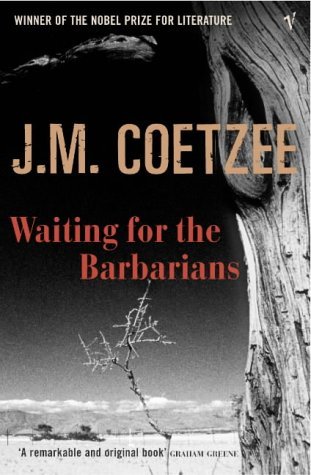
 It is impossible to read this and not be reminded of an almost genetically programmed inferiority complex, the burden of history only the descendants of the colonized have to bear. Despite those smug pronouncements of the 21st century being an era of a fair and equitable world and the hard battles won in favor of interracial harmony, there's the fact of your friend barely suppressing a squawk of alarm when you express your admiration for Idris Elba - no female I am acquainted with in real life has learned to wean herself away from the fixation with a white complexion. Scrub your skin raw till it bleeds but never fall behind in the race to make it whiter because that's the color the world approves of. You can fawn over Simon Baker's blonde, light-eyed glory but not over Elba's hulking, ruggedly handsome perfection; heaven forbid you prefer the latter over the former. The 21st century is yet to cast its magic spell over the standards of physical beauty.
So if I, a citizen of a purportedly newer and better social order, can still feel the rippling aftershocks of the catastrophe called Imperialism from across the barrier of decades and centuries, what would a man like Coetzee have experienced, stranded in the middle of the suffocating sociopolitical stasis of Apartheid? Moral anguish? A bitter impotence? A premonitory sense of doom? Anger?
Fiction, I believe, must have been his preferred method of exorcizing these demons. And purge these emotions he did through the composition of this slim little novel which can be aptly described as a most heart-wrenching lament on the condition of the world of his times.
It may be true that the world as it stands is no illusion, no evil dream of a night. It may be that we wake up to it ineluctably, that we can neither forget it nor dispense with it. But I find it as hard as ever to believe that the end is near.
An anonymous magistrate stationed at a farthest corner of an unspecified Empire witnesses the death throes of its reign while recovering his own humanity at the loss of his position of power and influence. In the beginning he is convinced of his righteousness as a dutiful servant of the Empire who oversees the welfare his subjects with moderation but with the arrival of a bluntly tyrannical figure of authority whose methods differ vastly from his, he begins to question his own collusion in the maintenance of an unnatural order. Unable to stand as a mute witness to the horrendous abuse inflicted on innocent 'natives' on the false suspicion of their complicity with 'barbarians' or armed rebels who threaten the stability of the Empire, he clashes with the aforementioned administrator who undoubtedly represents the true face of any oppressor when divested of its sheen of sophistication. And thus begins his fall from grace culminating in a kind of metaphorical rebirth through extreme physical abasement.
I was the lie that Empire tells itself when times are easy, he the truth that Empire tells when harsh winds blow. Two sides of imperial rule, no more, no less.
In the fashion of Coetzee's signature didacticism the novel is rife with allegorical implications but as much as these can be deeply thought-provoking, sometimes they also resemble conveniently inserted contrivances. Like the pseudo-erotic entanglement that develops between the ageing magistrate and a young 'barbarian' girl who is left maimed and partially blinded after a violent bout of interrogation is amply demonstrative of a colonizer-colonized arrangement - the one bereft of power to drive the relationship in a desired direction becomes dependent on the volatile benevolence of the other party. Or the mounting paranoia about the anticipated attack of the 'barbarians' who, much like Godot, fail to appear and remain a myth till the end although emerging as the key factor hastening the impending demise of Empire. All the layers of meaning and symbolism could send a dedicated literature student into paroxysms of pleasure no doubt.
With the buck before me suspended in immobility, there seems to be time for all things, time even to turn my gaze inward and see what it is that has robbed the hunt of its savour: the sense that this has become no longer a morning's hunting but an occasion on which either the proud ram bleeds to death on the ice or the old hunter misses his aim; that for the duration of its frozen moment the stars are locked in a configuration in which events are not themselves but stand for other things.
Wary as I am of Coetzee's often stilted world-building, my 5-star rating was an inevitability given my obsession with narratives containing a discernible vein of literary activism in harmony with notions of social justice. Here he also seems to have successfully reined in his pesky habit of turning his characters into sockpuppet-ish mouthpieces to tout his own passage-length worldviews. The narrator does occasionally morph into a pedagogue but his inner monologues never seem out of place given his unique circumstances. Besides it takes courage to acknowledge the fact of white man's guilt in a world which is yet to discard the rhetoric of 'white man's burden'.

First published:-
1999
Republished by:-
Dzanc Books, Open Road Media
Star rating:-
 For the past few weeks the subject of responsible use of freedom of expression and speech has dominated our public discourse. And this is not in the context of Charlie Hebdo. A group of Indian stand up comics had collaborated on a live 'roast' of two Bollywood actors (the very first of its kind in India) and posted the video on youtube - a performance peppered with sexual innuendos and a mind-boggling amount of profanity. The video went viral within minutes, inspired twitter hashtags, gave netizens a few good laughs, and 'offended' the usual suspects. A few days later, probably following the diktats issued by self-appointed guardians of Indian culture and values, the video was removed from youtube and criminal cases registered against the participants in this venture for 'obscenity'.
Miscreants who vandalize churches, demolish mosques, rape women or launch into vitriolic diatribes against a specific religious community are allowed to function within the legal framework of the state but citizens who take to the streets to protest against the aforementioned atrocities are either water-cannoned or arrested with astonishing swiftness. Now it seems stand up comics, who are trying to inject some novelty into our painfully predictable entertainment industry which churns out lame potboilers by the dozen month after month, have secured a spot for themselves in the list of 'enemies of the state'. Law enforcement has its priorities right.
Far fetched a parallel as it may seem, Rikki Ducornet's richly imaginative, Bohemian novel harps on the same double standards of moral policing. You can dismiss that glaring'erotica' label (not that I have any problems with this tag), dive in without hesitation and let Ducornet overwhelm your senses with her gossamer fine prose and her evocation of a turbulent Paris during the years of the Revolution. If you are looking for titillation and descriptions of sadomasochistic practices ala Sade, then let me forewarn you, the transgressions alluded to in Sade's monologues are not as frightfully repulsive as one might expect them to be. The only erotic similies I came across are of the following kind -
..although the apple was as wrinkled and bruised as the clitoris of an old whore...
The plot weaves its way in and out of an imaginary Gabrielle, a fan-maker famous for her pornographic etchings and illustrations, and her patron Sade's points of view, stringing together their correspondence through letters during the time both were incarcerated for heresy by the Comité de surveillance while also including a parallel, semi-fictional narrative of the Catholic Church's barbaric suppression of indigenous pagan practices of Mayan people in the Yucatan peninsula during the Spanish Inquisition. Aside from all this there are various fascinating tidbits on Sade's upbringing and stories within stories which are aimed at highlighting the importance of unfettered freedom of thought.
A book is a private thing, citizen; it belongs to the one who writes it and to the one who reads it. Like the mind itself, a book is a private space. Within that space, anything is possible. The greatest evil and the greatest good.
The portions containing Sade's letters have him refuting the allegations levelled against him by the Comité by claiming most of what was regarded blasphemous in his work was simply the product of his virile imagination and that no sex act was ever performed without consent. The Marquis alternately laments the loss of his friend and confidante, Gabrielle and her lesbian lover Olympe de Gouges (an actual feminist figure from the Revolution) both of whom were put to death by the Comité, and chastises the hypocrisy of the Revolution which was systematically destroying the ideals of a civilized society in the name of upholding them.
Once the Revolution has gorged on the citizens of France and returned to her den to sleep for a century or two, what will happen to the triumvirate she whelped: Liberty, Equality, Fraternity-that vast heresy! That near impossibility! That acute necessity!
If you, like me, had not spared a thought for the infamous Parisian libertine till now then do pick up Ducornet's spirited defense of Sadeian ideology of unshackling one's life and art from hypocritical moral constraints. There's a good chance she may arouse your curiosity enough to want to take a peek into Sade's world of amoral creativity. In Gabrielle's own words -
Sade offers a mirror. I dare you to have the courage to gaze into it.
____
Review also published on
Goodreads and Amazon.
**
Thanks to Netgalley and Open Road Media for an advance reader's copy**
First published:-
1998
Star rating:-

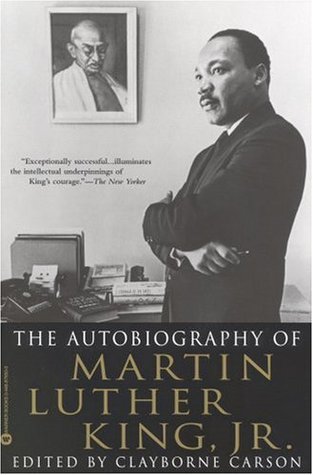
I had to keep reminding myself that it's not the civil rights movement I am rating and reviewing, because the spectrum of legitimate excuses, let alone justifications, which could explain the withholding of a star or two is rather limited. It comes as a kick to the gut every time a young, unarmed Clifford Glover or a Travyon Martin or a Michael Brown is shot for no valid reason and the realization sinks in that the process of integration which was initiated by Lincoln some 150+ years ago and furthered by Martin Luther is yet to reach its completion. So the essence of this book and MLK's doctrine of nonviolent agitation are now relevant more than ever.
In a way this is Martin Luther's own account of the movement he helped steer in a direction which not only sought to free an entire community from socioeconomic and political servitude but prevented America from becoming synonymous with the ultimate hypocrisy of all - preaching the infallibility of human rights abroad (by waging wars against Communist totalitarianism) but carrying on with its tacit agenda of institutionalized discrimination back home.
"I am convinced that if we are to get on the right side of the world revolution, we as a nation must undergo a radical revolution of values. We must rapidly begin the shift from a thing-oriented society to a person-oriented society. When machines and computers, profit motives and property rights, are considered more important than people, the giant triplets of racism, extreme materialism, and militarism are incapable of being conquered."
How the spirit of rebellion - which found expression for the first time with the Montgomery Bus Boycott in '55 (unwittingly started by Rosa Parks' act of denying her occupied seat to a white passenger) - trickled into the hearts of oppressed millions in Albany, Georgia, Birmingham, Alabama, Florida, Chicago, Boston, and Washington culminating in the passage of the landmark Civil Rights Act of 1964, is recounted by King himself.
That aside, there's a brief autobiographical sketch patched together from the fragments of writings gathered from the Stanford University archive by Clayborne Carson. Excerpts from King's speeches (sometimes even the full text) also make appearances in between the accounts of all the non-violent movements of civil disobedience he gave leadership to.
To put it more accurately, this is less of an autobiography (since King didn't live long enough to write one) and more like a montage of every single written document or important oratory piece which King left behind. So lucidly written are these that Carson's work must have been reduced to simple editing and piecing together a coherent narrative out of the vast amount of material at her disposal.
And yet there are such glaring mistakes here which marred my reading experience. Consider this excerpt from King's personal writings after his visit to India in '59 which cemented his faith in the inviolability of civil disobedience as an effective tool to usher in socioeconomic and political change -
"On March 1 we had the privilege of spending at the Amniabad ashram and stood there at the point where Gandhi started his walk of 218 miles to a place called Bambi."
It's not Amniabad. In all probability, it's the Sabarmati ashram in Ahmedabad King is talking about, while the historic walk was to 'Dandi' - a coastal village in Gujarat (the state our present PM hails from). Not Bambi, the iconic Disney deer.
Even if it was a memory lapse on King's part or a sad apathy for geographical names, as a King scholar looking to publish a work of monumental importance Carson should have been more vigilant for inconsistencies such as the above, especially since Gandhi gets mentioned several times by virtue of his being King's role model.
(Some quick googling led me to the unhappy discovery that the Stanford archive still retains the unedited, therefore, incorrect information derived from the original sources. I can understand the significance of preserving King's writings exactly as he authored them but the insertion of incorrect facts diminishes the integrity of this work.)
Also occasionally 'Gandhi' is spelled as 'Ghandi'. (Aaarrrrggghhhhhh!)
In addition to these turn-offs, nearly all of King's speeches are so chock full of archetypal metaphor after metaphor that I felt it weakened the gravitas of the narrative. Perhaps, they would have been better off being included in shortened formats. The fact of God's mercy and benevolence being invoked (quite natural since King was a pastor) in every alternate sentence also served as an effective irritant. These are undoubtedly the primary reasons why it took me a whole month to finish reading this.
But these causes of botheration aside, there's plenty of good to be found in this compilation. Like the way MLK expresses his disappointment with 20th century capitalism in a letter addressed to his wife, Coretta -
"...I am not so opposed to capitalism that I have failed to see its relative merits. It started out with a noble and high motive, viz., to block the trade monopolies of the nobles, but like most human systems it fell victim to the very thing it was revolting against. So today capitalism has out-lived its usefulness. It has brought about a system that takes necessities from the masses to give luxuries to the classes."
or his critique of the Vietnam War and correlation drawn between American militarism and the dangerously skewed nature of race relations in the deep south-
"I do not believe our nation can be a moral leader of justice, equality, and democracy if it is trapped in the role of a self-appointed world policeman."
The absence of that missing star, thus, should be attributed to my personal aversion to factual inaccuracies, overused metaphors and bad analogies. Otherwise no rating system in existence can measure MLK's significance in American history and all that he stood for.
First published:-
2006
Star rating:-
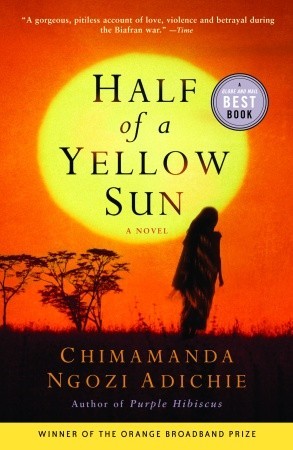
 It came to me as an epiphany as I barreled through the last few pages of this book, blanketed in my Sunday evening lethargy, marveling at Adichie's graceful evocation of a forgotten time and place and feeling the embarrassment of having known nothing about the Biafran war, that somewhere in the Gaza strip the maimed bodies of children must lie strewn amidst the debris of their former lives while vicious debates rage on twitter in which people pick a side - Israel or Hamas - to defend from criticism. As if that's what matters.
Somewhere at this very moment there may be a terror-stricken, weeping child, fleeing to find cover, unaware of what she is running from, unaware of the finality of death, shielded by the caprices of the same history she is living, perhaps. Someday she may grow up well to become another Chimamanda to write the story which is hers to tell, and time, circumstances, and health permitting, I am going to be reading that book and be reminded of the umpteenth 'war' that not even my generation of enlightened, Nobel-peace-prize winning heads of state did enough to prevent, the damage that could have been preempted, and the children who could have grown up to carry the weight of civilization some day but didn't.
The farce of this relentless cycle of mayhem, killing, pillage, rape, and starvation will hit us time and again and yet leaders of the first world will continue to look dapper in their crisp suits and appear dignified while justifying their sale of high-tech weapons to warring parties because revenue is to be earned from the spilling of blood. For the sake of self-made demarcations, for the sake of that ridiculous nonentity called national pride, for the sake of righting wrongs done in the past we'll bury our children and future in mass graves and commit more wrongs.
This book deserves 4 stars in my eyes. It's not a flawlessly written work with its frequent straying into the territory of melodramatic personal relationships and cliched characterization and Adichie's writing seems to lack polish in places. But in no way does that stop this from being a highly important work of fiction that the annals of literature ought to acknowledge with a gleaming appraisal.
This is the past transcending the barriers of time to appear before us in a surely pale imitation of its true grotesqueness. This is Adichie leading us to history of a corner of the world we only associate with food programs, the UNHCR, unstable governments and inexorable ethnic conflicts. This is Adichie telling us that history ignored isn't history blotted out.
I didn't know Biafra at all; there are not enough books on Biafra (as confirmed by Goodreads and Google Books), because only those horrors of war survive oblivion which are fortunate enough to receive the world media's stamp of approval. Not all death and devastation caused by 'civil wars' are worthy of the glory of 'crimes against humanity' like Nigeria's smooth war tactic of starving Biafran children with tacit British support wasn't.
"Starvation propelled aid organizations to sneak-fly food into Biafra at night since both sides could not agree on routes. Starvation aided the careers of photographers. And starvation made the International Red Cross call Biafra its gravest emergency since the Second World War."
But there was a Biafra. Not the transient existence of the nation represented by half of a yellow sun but the reality of the people who, in the paroxysms of misguided idealism, picked the losing side in a war.
Chimananda's Olanna, Ugwu and Richard, all of whom weave their way in and out of manifold conflicts of morality, identity, and survival, serve as our guides in this landscape of kwashiorkor-plagued children with pot bellies while trying to make sense of the muddle of mutual Hausa-Yoruba-Igbo animosity. And along with them the reader navigates the maze of wartime barbarity, political allegiances, and interpersonal relationships with a growing sense of unease and uncertainty - who are the ones truly responsible? who are the perpetrators? who are the victims? what was the war for and what did it achieve?
"Grief was the celebration of love, those who could feel real grief were lucky to have loved. But it was not grief that Olanna felt, it was greater than grief. It was stranger than grief."
In the end any such attempt at such neat compartmentalization makes little difference to the truth of lives destroyed in a fit of murderous passion. In all likelihood, there will be more Biafras and Srebrenicas and Rwanda-Burundis and Syrias and Gazas as there will be the burden of future tragedy and loss to be borne by hapless survivors. But there's the small assurance that there will be the Chimamanda Ngozi Adichies of the world to give a human face to the solemn formality of statistics every time.
First published:-
1987
Star rating:-
 Read in:- December, 2013
Claudia Hampton speaks to me of wars fought in distant lands, of the ever-persistent forward march of humanity in the quest for collective betterment, of stories unknowingly buried forever in the catacombs of time and never unearthed, of the people we carry in our hearts wherever we go, of the history of the world intertwined with our own. Claudia tries to make sense of the cacophony of voices inside her head and outside, of conflicting opinions colliding violently creating sparks that burn down empires and turn to rubble the foundation of regimes. Claudia tells me a story of the past melded with the present.
Read in:- December, 2013
Claudia Hampton speaks to me of wars fought in distant lands, of the ever-persistent forward march of humanity in the quest for collective betterment, of stories unknowingly buried forever in the catacombs of time and never unearthed, of the people we carry in our hearts wherever we go, of the history of the world intertwined with our own. Claudia tries to make sense of the cacophony of voices inside her head and outside, of conflicting opinions colliding violently creating sparks that burn down empires and turn to rubble the foundation of regimes. Claudia tells me a story of the past melded with the present.
Claudia's history of the world isn't one-sided. She accedes, to all the players involved, their right to speak for themselves, to say that which has been coldly snubbed by the opinionated historian of the past. Claudia does not look at past events through the lenses of established notions, of opinions passed off as indisputable facts. Larger than life heroes are reduced to the status of mere mortals in her eyes, violent uprisings become a trigger for devastating tragedies instead of turning points in the history of a nation's struggle for liberty. Images of a world war become indiscernible from the images of her lover who dies fighting in it and the entailing heartbreak she could never purge from her memories no matter how hard she tried. The unyielding bond she shares with her brother Gordon, her rival, her biggest critic, her most devoted admirer, and in the end her lover, remains intact even after he is no longer there to provoke her, to argue with her relentlessly, to urge her on towards becoming a more refined version of herself.
"For there are moments, out here in this place and at this time, when she feels that she is untethered, no longer hitched to past or future or to a known universe but adrift in the cosmos."
Claudia never became what others wanted her to be, stubbornly trudging along a path forged by none but herself. She loved the daughter born out of wedlock dearly, but from afar, without the grand show of affection expected of any mother. And as she lies in that hospital bed, her life force slowly ebbing away, a frail old woman of 76, misunderstood by the ones dearest to her, my heart weeps for the grief that she kept carefully hidden from everyone, a secret she carried to her grave. But I bid her farewell with a smile, soothed by the knowledge that her life was, after all, a life well-lived.
First published:-
2000
Read in:-
February, 2014
Star rating:-
 'The Empire Writes Back' would have been a fitting alternative title for this essay collection. (Achebe doesn't fail to pay a tribute to Salman Rushdie's essay of the same name published in 1982). Because that is what the running theme here is - a reclamation of a land and a culture that was wrested away with brutal force and made a part of an 'Empire' which still insists on viewing that period as one of glory and not characterized by the worst kind of human rights violation ever. And a heralding of the arrival of the African voice in the world literary scene.
Achebe is slowly turning into my personal literary hero. His wry humor, elegant prose, mildly sardonic tone and passion for social justice exude a righteousness that's hard not to defer to. His writings continue to make me question certain pet notions and ideas that are so deeply ingrained in each one of us that they seem like indisputable facts and consequently evade further introspection. My penchant for unconsciously comparing Latin American, South East Asian and African writing to the style, technique and language of the Americans and Europeans I admire and immediately pronouncing judgement on them on the basis of said parameters has to go away now, I realize.
It doesn't matter if African, Asian and other writers of the Commonwealth (Dear god, why do we have that ridiculous redundant grouping still? is it not there for the sole purpose of reminding us that we were once colonies?) have the same degree of grammatical precision and structural integrity to their English prose as their European and American counterparts. It matters that their voices be heard and universally acknowledged and the overlooked truths, their narratives highlight, be analyzed without bias.
Although this collection consists of 3 essays titled 'My Home Under Imperial Fire', 'The Empire Fights Back' and 'Today, the Balance of Stories' it should be considered a single body of work or discourse intended to dispel certain flawed notions about African people who are often derogatorily referred to as 'tribes' and automatically consigned to a lesser category of humanity.
Achebe begins with his reminiscences on his early years as a young university student in Nigeria, reading literature based on Africa authored mostly by British and European scholars who, of course, liberally manufactured painfully offensive 'facts' regarding the intellectual and anatomical inferiority of his fellow brethren and propagated the theory that European acquisition of their land and sphere of existence was for the sake of their own personal benefit.
This is what Achebe says about the interlinked nature of inherently racist literature of the time (he is sophisticated enough not to use the word 'racist' even once though) and the Atlantic slave trade:-
"I will merely say that a tradition does not begin and thrive, as the tradition of British writing about Africa did, unless it serves a certain need. From the moment in the 1560s when the English captain John Hawkins sailed to West Africa and 'got into his possession, partly by the sword and partly by other means, to the number of three hundred Negroes,' the European trade in slaves was destined by its very profitability to displace trade in commodities with West Africa."
Achebe directs his suppressed ire at Anglo-Irishman Joyce Cary who was regarded as one of the finest novelists of his time and his creation 'Mister Johnson' which Achebe systematically breaks down and interprets as a text strewn with viciously hateful commentary on Africans. Another renowned novelist and polymath who had considerable first hand experience of Africa, Elspeth Huxley, isn't spared either as her criticism of Amos Tutuola's 'The Palm-Wine Drinkard' as a 'folk tale full of queer, distorted poetry, the deep and dreadful fears, the cruelty, the obsession with death and spirits, the macabre humour, the grotesque imagery of the African mind' comes off as an insidious denunciation of all African literature in general.
Joseph Conrad, predictably, is his next victim. (Criticism of 'Heart of Darkness' seems like a recurrent theme in Achebe's essays)
Quote from 'Heart of Darkness' -
"Well, you know, that was the worst of it-this suspicion of their not being inhuman."
Achebe's deconstruction-
"A more deadly deployment of a mere sixteen words it would be hard to imagine. I think it merits close reading. Note first the narrator's suspicion; just suspicion, nothing more. And note also that even the faint glimmer of apparent charitableness around this speculation is not, as you might have thought, a good thing, but actually the worst of it! And note finally, the coup de grace of double negation, like a pair of prison guards, restraining that problematic being on each side."
Next in Achebe's line of fire is the ever controversial V.S. Naipaul and his lecture titled 'Our Universal Civilization' delivered at the Manhattan Institute and his caustic and downright obnoxious comments on Asian and African readership and cultures. Achebe brings into focus the difference in attitudes between the Indian-origin Naipaul and the famed Indian writer R.K. Narayan by stating how Narayan saw 'a million stories' every time he looked out of his window and not a 'million mutinies' like Naipaul did.
He ends by hailing story-tellers of repute like Nadine Gordimer (for her literary activism in the backdrop of the Anti-Apartheid movement in South Africa), Wole Soyinka, Amos Tutuola and names like Nigerian Cyprian Ekwensi (People of the City), Guinea's Camara Laye (L'Enfant Noir), Cameroon's Mongo Beti, Ferdinand Oyono (Houseboy), Cheikh Hamidou (Ambiguous Adventure) who have lent enormous credibility to the African literary landscape and have led readers all over the world, to take into account the complementary points of view of the people who had been, so far, deprived of a voice.
"Despite the significant changes that have taken place in the last four or five decades, the wound of the centuries is still a long way from healing. And I believe the curative power of stories can move the process forward."
P.S.:-My rating may be upgraded (or downgraded) in the future based on what I glean from a reading of A Bend in the River, India: A Million Mutinies Now and a re-reading of Heart of Darkness.
First published:- 1914
Star rating:-
A languid, melancholic dream of a novel which pierces the heart of the reader with its quiet intensity.
Cautious in its narrative tread on the ground of contentious issues, delicate in its broaching of subjects like the indignity of death, sin and redemption, existentialist ennui, self-recrimination and misanthropy, 'Kokoro' is a masterful recounting of a tragedy which unfolds against the backdrop of the dying years of the Meiji era. As Emperor Meiji breathes his last taking along with him the anachronistic echoes of an obsolete way of life rigidly shackled by the conservatism of the isolationist years, a hesitant Japan steps into the welcoming embrace of modern day materialism while simultaneously waging an inner war with the self-denying Confucian ideologies of its past.
A mysterious and scholarly middle-aged man only referred to as 'Sensei' meets our young protagonist in a chance encounter and the unique mentor-protege bonding, that forms between them subsequently, brings an indescribable joy and solace to both. While 'Sensei' eventually summons the courage to confess to past wrongdoings in a letter to the young man he barely knows and attains a kind of salvation through a self-imposed exile from society, his unnamed protege learns to look past the horror and agony of slow bodily death and accept the natural order of things. A powerfully written spiritual inquiry into the corruption of the human soul, an elegant acknowledgement of the juxtaposition of mournful endings and optimistic beginnings and a testimony to the fragility of human lives.
First published:- 1999
Star rating:- None
This is the first time I am reviewing a book that I have tried and failed to rate.
How do I decide on a rating anyway? Should I judge the prose? the content? the author's style of presentation? his narrative voice? the quality of the translation?
Do I even have the right to?
Awarding a star rating to this man's unbelievably harrowing and miraculous tale of surviving a war which claimed the lives of 6 million of his fellow brethren for no reason at all, seems a more sacrilegious act than calling Infinite Jest a bad book on Goodreads.
So I choose not to.
Wladyslaw Szpilman, a pianist working for the Polish radio station, takes us through the years of Nazi occupation of Poland and Warsaw, in particular, and the insensate violence that had the Jewish inhabitants of the city (the ones who were fortunate enough to be spared the concentration camps) living the most brutal and unforgiving of nightmares for a period of almost 5 years.

Wladyslaw Szpilman
Szpilman writes with a kind of unnerving indifference, as if this were someone else's tale of horrors he is narrating and not his own. It is obvious that since he had written this in 1946, immediately after the war, his senses may still have been numbed under the influence of the barbarous acts he had witnessed through the 6 years of the Occupation. His voice doesn't sound sarcastic, debilitated or even a little bit acerbic. Instead, he gives us a neat, uncluttered, unemotional, chronologically ordered account of events which saw him narrowly escaping certain death many, many times.
But this is not just his story. A surprise awaits the unsuspecting reader at the very end, in the form of Wilm Hosenfeld, a Nazi officer who saved Szpilman's life in the last few months of 1944. An astonishingly mild-mannered, generous soul who not only kept the knowledge of Szpilman's existence a secret from the other SS officers, but saved him from certain death out of starvation and the unbearable cold.
But true to the nature of war which justifies countering violence with more violence, Hosenfeld was taken as a prisoner of war when the Soviets finally recaptured Poland. He was tortured to death years later (1952) in some unnamed labor camp in the icy swathes of Stalingrad. His tormentors were especially cruel with him, angered by his claims of having saved the lives of many Jews and Poles during the Warsaw occupation. Which, of course, was nothing but the truth.*
Wilhelm Adalbert Hosenfeld
It goes without saying, while reading this book I had no sense of time or any movement around me, I had no idea whether it was still daytime or whether night had fallen. Turning over the last page, when I finally took note of my surroundings I discovered my pillow was half-wet with tears and that I had a dreadful headache.
Some of the most poignant, haunting and reflective passages of the narrative are in Wilm's journal which was recovered years later and incorporated into Szpilman's memoir -
"Evil and brutality lurk in the human heart. If they are allowed to develop freely, they flourish, putting out dreadful offshoots...."
A mere German officer seems to have had the moral strength to admit -
"Our entire nation will have to pay for all these wrongs and this unhappiness, all the crimes we have committed. Many innocent people must be sacrificed before the blood-guilt we've incurred can be wiped out. That's an inexorable law in small and large things alike."
And yet the "great" Der Führer, in front of whom a vast Empire bowed down at one point of time, could only choose the coward's way out by committing suicide in the end.
A million stars to the courage of Wladyslaw Szpilman, who aided the Jewish resistance in the Warsaw ghetto, disregarding the constant threat to his own life. A million stars to his unflinchingly honest attempt at looking back at a terrible past. A million stars for enabling the citizens of the world to read, know and derive lessons from the story of his life. A million stars to Wilm Hosenfeld for holding on to his conscience at a time when morality and compassion were in short supply.
And a million stars to the triumph of the human spirit.
(So you see the correct rating of this book should be 5 million stars which is beyond the scope of any conventional rating system.)
*Wilm Hosenfeld was posthumously recognized as a Righteous among the Nations in 2009 by Israel.
P.S.:- This review maybe updated after I watch the movie.
First published:-
1924
Star rating:-
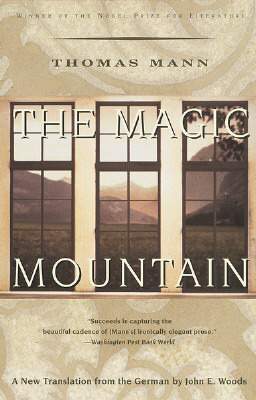
 Imagine being stuck in a place where all sense of time is lost in the web of inactivity, a place which enables people to lead a life devoid of any greater purpose and only focused on recuperation from a queer illness, a place almost hermetically sealed and self-controlled, successfully keeping the repercussions of wars and diplomatic feuds between nations at bay. Imagine being rid of all your earthly woes of finding means of survival and all the elements that stand as pillars supporting the normative structure of life during a sojourn in a special, secluded place. Imagine a miniature diorama of a society thriving on its own, divorced from society at large.
If you haven't been successful in imagining a real life scenario fitting aforementioned descriptions, do not despair. You can always discover this specially constructed safe haven in a certain fictional sanatorium in the Swiss Alps where our protagonist Hans Castorp languishes for seven whole years.
The experience of reading this book is akin to a painstaking hike up a dangerously steep slope. (Excuse the overused analogy but it happens to be quite apt)
There are long dry stretches requiring ritualistic finding of one footing after the next, ensuring that as a reader you do not slip and tumble headfirst into the gaping chasm of incomprehension. And then there are the moments of perfect clarity when snippets of Mann's wisdom filter in like errant rays of sunshine through the drear of many tedious descriptions of long walks and repetitive conversations, making the long and difficult climb seem worth it all of a sudden.
"But he who knows the body, who knows life, also knows death. Except that's not the whole thing - but merely a beginning, pedagogically speaking. You have to hold it up to the other half, to its opposite. Because our interest in death and illness is nothing but a way of expressing an interest in life..."
The summit of this "magic mountain" becomes the location of a metaphorical watch tower from where the spectacle of our collective civilizational march is viewed, dissected and analyzed with precision. The quirky patients inhabiting the sanatorium become mere proxies for some nations or disparate points of view, their inter-relationships often symbolic of some deeper ideological conflict woven intricately into the fabric of existence.
But despite the sheer brilliance of this premise, there's something off about this book. Something that prevented me from according that final star.
Even if this remains a lengthy and eruditely presented discussion on Europe's inner contradictions, its juxtaposition of progress in all spheres of life and violence brewing under the veneer of that sanctimonious progress, as a work of literature it is somehow imperfect and rough around the edges. Since I was often tempted to believe it would have worked better as a nonfictional philosophical discourse. It's sort of like what my eloquent friend Dolors says - 'The book lacks a soul.' How succinctly put. (Read her well-argued review here)
The characters are employed as mere mouthpieces, never resembling well-drawn sketches of actual people with their own stories. The situations and backdrops are mere contrivances specifically begotten to tout ideas on life and death. It's as if the whole narrative is an elaborate ruse developed to convey Mann's thoughts on the state of Europe prior to the First World War. During my moments of exasperation with the book I was able to recall a few of Nabokov's thoughts in his article onLolita-
"...All the rest is either topical trash or what some call the Literature of Ideas, which very often is topical trash coming in huge blocks of plaster that are carefully transmitted from age to age until somebody comes along with a hammer and takes a good crack at Balzac, at Gorki, at Mann."
Clearly a jibe at TMM if I have ever seen one.
Not that I agree with Nabokov's opinion on TMM being topical trash but it surely gives rise to the suspicion that if you strip the book of all its allegorical significance, almost nothing substantial remains. And with the turn of the last page, it leaves the reader with a sense of indescribable dissatisfaction about having just finished a journey neither very rewarding nor enjoyable.
Maybe a re-read some time years later on in life will restore the elusive star. Maybe it will not.