Showing posts with label Sociology. Show all posts

Sunday, September 21, 2014

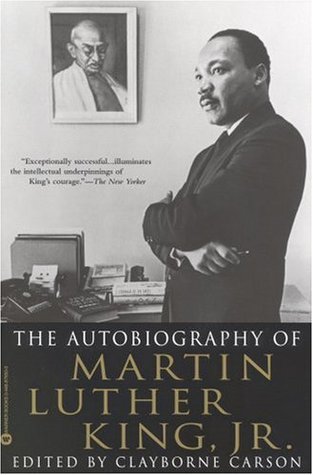
Review: The Autobiography of Martin Luther King, Jr. by Martin Luther King Jr.

First published:- 1998

Star rating:-

I had to keep reminding myself that it's not the civil rights movement I am rating and reviewing, because the spectrum of legitimate excuses, let alone justifications, which could explain the withholding of a star or two is rather limited. It comes as a kick to the gut every time a young, unarmed Clifford Glover or a Travyon Martin or a Michael Brown is shot for no valid reason and the realization sinks in that the process of integration which was initiated by Lincoln some 150+ years ago and furthered by Martin Luther is yet to reach its completion. So the essence of this book and MLK's doctrine of nonviolent agitation are now relevant more than ever. 

In a way this is Martin Luther's own account of the movement he helped steer in a direction which not only sought to free an entire community from socioeconomic and political servitude but prevented America from becoming synonymous with the ultimate hypocrisy of all - preaching the infallibility of human rights abroad (by waging wars against Communist totalitarianism) but carrying on with its tacit agenda of institutionalized discrimination back home. 
"I am convinced that if we are to get on the right side of the world revolution, we as a nation must undergo a radical revolution of values. We must rapidly begin the shift from a thing-oriented society to a person-oriented society. When machines and computers, profit motives and property rights, are considered more important than people, the giant triplets of racism, extreme materialism, and militarism are incapable of being conquered."

How the spirit of rebellion - which found expression for the first time with the Montgomery Bus Boycott in '55 (unwittingly started by Rosa Parks' act of denying her occupied seat to a white passenger) - trickled into the hearts of oppressed millions in Albany, Georgia, Birmingham, Alabama, Florida, Chicago, Boston, and Washington culminating in the passage of the landmark Civil Rights Act of 1964, is recounted by King himself.
That aside, there's a brief autobiographical sketch patched together from the fragments of writings gathered from the Stanford University archive by Clayborne Carson. Excerpts from King's speeches (sometimes even the full text) also make appearances in between the accounts of all the non-violent movements of civil disobedience he gave leadership to. 

To put it more accurately, this is less of an autobiography (since King didn't live long enough to write one) and more like a montage of every single written document or important oratory piece which King left behind. So lucidly written are these that Carson's work must have been reduced to simple editing and piecing together a coherent narrative out of the vast amount of material at her disposal.

And yet there are such glaring mistakes here which marred my reading experience. Consider this excerpt from King's personal writings after his visit to India in '59 which cemented his faith in the inviolability of civil disobedience as an effective tool to usher in socioeconomic and political change -
"On March 1 we had the privilege of spending at the Amniabad ashram and stood there at the point where Gandhi started his walk of 218 miles to a place called Bambi."

It's not Amniabad. In all probability, it's the Sabarmati ashram in Ahmedabad King is talking about, while the historic walk was to 'Dandi' - a coastal village in Gujarat (the state our present PM hails from). Not Bambi, the iconic Disney deer. 

Even if it was a memory lapse on King's part or a sad apathy for geographical names, as a King scholar looking to publish a work of monumental importance Carson should have been more vigilant for inconsistencies such as the above, especially since Gandhi gets mentioned several times by virtue of his being King's role model. 
(Some quick googling led me to the unhappy discovery that the Stanford archive still retains the unedited, therefore, incorrect information derived from the original sources. I can understand the significance of preserving King's writings exactly as he authored them but the insertion of incorrect facts diminishes the integrity of this work.)
Also occasionally 'Gandhi' is spelled as 'Ghandi'. (Aaarrrrggghhhhhh!)

In addition to these turn-offs, nearly all of King's speeches are so chock full of archetypal metaphor after metaphor that I felt it weakened the gravitas of the narrative. Perhaps, they would have been better off being included in shortened formats. The fact of God's mercy and benevolence being invoked (quite natural since King was a pastor) in every alternate sentence also served as an effective irritant. These are undoubtedly the primary reasons why it took me a whole month to finish reading this. 

But these causes of botheration aside, there's plenty of good to be found in this compilation. Like the way MLK expresses his disappointment with 20th century capitalism in a letter addressed to his wife, Coretta -
"...I am not so opposed to capitalism that I have failed to see its relative merits. It started out with a noble and high motive, viz., to block the trade monopolies of the nobles, but like most human systems it fell victim to the very thing it was revolting against. So today capitalism has out-lived its usefulness. It has brought about a system that takes necessities from the masses to give luxuries to the classes."

or his critique of the Vietnam War and correlation drawn between American militarism and the dangerously skewed nature of race relations in the deep south-
"I do not believe our nation can be a moral leader of justice, equality, and democracy if it is trapped in the role of a self-appointed world policeman."

The absence of that missing star, thus, should be attributed to my personal aversion to factual inaccuracies, overused metaphors and bad analogies. Otherwise no rating system in existence can measure MLK's significance in American history and all that he stood for.


   photo C136E66569D294E4D5DA2D8124D4FF69.png

Saturday, September 13, 2014

Review: The Royal Family by William T. Vollmann


First published:- 2000

Star rating:-

Some books are very obviously flawed, contrived in ways which slow down the reader's progress and heavily tax his/her ability to dredge up empathy over the headache-inducing frenzy of loaded work-weeks. And yet these narratives are so divine in their earnestness, so far-reaching in their scope, that you are filled with this overwhelming, earth-shattering zeal to shower them with a holy love and not let even a drop of your skepticism dilute your admiration for the writer's boldness. Your cowardice and inaction dictate you honor his unstated wish and this is the least you can do anyway. Embrace it all - the two-faced treachery perpetuated by the torchbearers of civilization, the endless cycle of degradation and corruption and the myriad sorrows of all the characters which bleed into its pages. Take one swig after another from the truth flask until you have been purged of all your self-indulgent guilt-trips and left with nothing but a crushing hopelessness which devours all other emotions with a vindictive fury. 

There's us, cocooned in the warm illusion of security, dissecting the politics of injustice from our ivory towers, wholly in denial of our bubble of happiness feeding off the despair of others. In an effort to scramble toward whatever glamourous concept of affluence it is we consider salvation, we do not see the charred wreckage of lives strewn all around. 

There's the woman of flesh and bone who becomes a grotesque assimilation of mere genitals, who can only be an abstract embodiment of the abuse with no human face - a walking, breathing cunt for hire whose existence you acknowledge only when you require its use. Every once in a while she leaves crack-addicted babies with no fathers in the maze of foster care or dumps them like inanimate blobs of flesh in seedy abortion clinics. She only lives in those documentaries harbouring Oscar-nomination ambitions, at the precipice of our segregated utopias merging with the abyss of the Tenderloins of the world. And the sanctimonious laws state with conviction, that the Tenderloins and the red light areas do not exist. 

There are the hobos, the panhandlers, the bums, the destitute - not allowed to be anything other than victims of their own ineptitude, worthy of a stray sympathetic glance and a few seconds of pity, to be religiously warded off our vaunted inner sanctums. There is Henry Tyler, a pathetic loser bearing the Mark of Cain, wallowing in eternal self-pity, choosing to live as a homeless man to find his Queen, his antidote to a desiccating loneliness. And then there's the Queen of the Whores with her magical powers and her crack pipe - just an emblem, a protector, a redeemer, a guardian angel, a modern day Jesus - and law-abiding respected founder of 'Feminine Circus' Jonas Brady, with his multi-million dollar franchise of selling men the right to rape, torture, and mutilate disabled girls, her nemesis. 
They are all actors in an absurd pantomime. They are all real. 

'Part biblical allegory and part skewed postmodern crime novel', the blurb announces with relish. But that doesn't even skim the surface of this tome.

I call this Vollmann's gift to the perpetual outcasts of society, the ones we have pushed so far beyond the edge bit by bit in our own mad dash for the center that they exist in a kind of parallel netherworld where all humanly concerns are put to rest, where violence and deprivation are the order of the day. I call this his sincerest attempt at chronicling their stories the way they may have approved of, however alien to our feral cravings for taint-free reputations, routine and fake dignity, however repulsive to our faux-fragile sensibilities. I call this a searing critique of the hypocrisy of the ones holding the reins of the civilized world, who would sputter with mock indignation when asked to legalize prostitution. 

However small or insignificant, I call this book an act of redemption.


   photo C136E66569D294E4D5DA2D8124D4FF69.png

Saturday, August 30, 2014

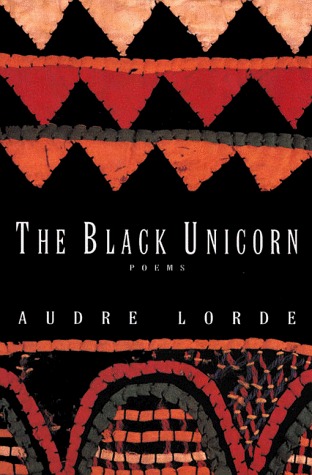
Review: The Black Unicorn: Poems by Audre Lorde


First published:-1978

Star rating:-

These poems are like shards of glass refracting the blurred image of some sombre new insight into the human condition - the agony of love, the pangs of coming to grips with the idea of racial segregation in a world one previously thought had no demarcations, the pervasive pessimism of living as reaffirmed by the morning newspaper, an elegy to the memories of a childhood friend whose time on earth ran out too soon, the melancholic ruminations of a prostitute, the absurdity of children of today being raised like slaughterhouse pigs to be sent to the war-front tomorrow. 
Coming in and out of cities
untouched by their magic
I think without feeling
this is what men do
who try for some connection
and fail
and leave
five dollars on the table.

If the annals of literature are to be consulted, most of these are time-worn subjects which other more renowned poets have regurgitated throughout their distinguished careers, after molding them in accordance with their perceptions of the world and its many idiosyncrasies. And yet Audre Lorde's words, imbued with despondency, regret, hope and fortitude at the same time, tempt you to read them again and again. Her lines flow effortlessly despite their innate simplicity, maintaining an enviable rhythmic symmetry, rendering the reader's tendency to puzzle over esoteric references unnecessary since there are almost none. 
There are a handful of poems here, in praise of the female and androgynous forms of divinity worshipped by the inhabitants of the historical kingdom of Dahomey and the Yoruba people of western Nigeria, which bring to light the oft-overlooked aspects of the cultural ethos of African people. But there's a conveniently provided glossary of African terms at the end to better facilitate complete understanding of these. 

You were not my first death.
but your going was not solaced by the usual
rituals of separation
the dark lugubrious murmurs
and invitations by threat
to the grownups' view
of a child's inelegant pain
so even now
all these years of death later
I search through the index
of each new book
on magic
hoping to find some new spelling
of your name

The implications hidden between her verses do not reinforce a kind of self-obsessed confessionalism as often found in Sylvia Plath or Anne Sexton's works or the heavy-handed inclusion of so many allusions that the poet's urge to communicate is buried under towering ambitions of dismantling poetic conventions. 

Sometimes, her words give the impression of mildly cryptic messages casually scribbled at the back of a notebook, perhaps, while she may have been staring out of her window distractedly. Sometimes, they are her anguished lament, her impassioned protest, wrenched out of her by the brutality of the world or the injustice perpetually dished out to those clinging to the lowermost rungs of the societal ladder for dear life. Her 'Power', one of the most influential and well-known poems from her entire oeuvre, simmers with a righteous rage, intense enough to blow a hole through the edifice of 'white supremacist patriarchy' aside from being a tribute to the memory of young Clifford Glover, a 10-year-old African American boy shot dead by a white cop on duty in South Jamaica, Queens, New York in '73, who was later acquitted by a white-majority jury with a single black female judge.

Today that 37-year-old white man with
13 years of police forcing
has been set free
by 11 white men who said they were satisfied
justice had been done
and one black woman who said
"They convinced me" meaning
they had dragged her 4'10" black woman's frame
over the hot coals of four centuries of white male approval
until she let go of the first real power she ever had
and lined her own womb with cement
to make a graveyard for our children.

Lorde remains one of the few poets in American history who had to contend with the tyranny of conforming to the demands of too many labels conferred on persecuted minorities - black woman in a white man's world, radical feminist, lesbian, civil rights activist. And yet she managed to breach the boundaries of these individual identities by singing in a richly resonant voice whose musicality still holds the power of bridging gaps, relaying the stories of the voiceless and the marginalised, healing the scars left by turbulent times and smoothening out our countless differences across continents and timelines. 
In my eyes, that makes her a hero more than a poet.


____

   photo C136E66569D294E4D5DA2D8124D4FF69.png

Thursday, July 17, 2014

Review: Feminism is for Everybody by Bell Hooks

First published:-2000

Read in:- June, 2014

Star rating:-

Not until recently had I emerged out of the rock I was living under and located the @everydaysexism twitter account. Keeping an eye on their retweets for a little less than two weeks enabled me to discover that women are not only forced to endure the lecherous male gaze (often called 'stare rape' these days) on public transportation, made the object of innuendo-laced, denigrating remarks since puberty but also masturbated at in public without their consent (not even women over 60 had been spared) . How blissfully ignorant I was of this last facet of everyday sexual harassment! I went on a kind of mad rampage immediately, flooding my timeline with a deluge of tweets on the subject, appealing to more of my followers to follow the everyday sexism account. A day later when I had checked back in eagerly in the hopes of noticing any visible change - NOTHING. Not even one person among my followers (I have nearly 1600 which maybe just a handful but it's not a very teeny number either) had honored my request apart from the 3 who were already following them - all of them women or women's issues related accounts.

It was then that I realized, 'feminism' in the 21st century is actually like a hip, new item of home decor that you place on a wall cabinet among the other borrowed, trendy opinions you profess as personal philosophy, then forget about. Whenever some horrendous instance of brutality against a woman makes the morning news headlines, everyone's 'tch-tch-ing' fake concern for civilization resurfaces, spills over into the realm of their office lunch hour debates and after a while dies a natural death. Then they go back to the comfort of their tweleb status by posting the same old 'jokes' about dumb blondes, unreasonable wives, sluts, 'cunts', boobs and what have you, each of which are guaranteed to get at least 20+ retweets. 
Lulz just chill, we're all kidding here, getting our kicks out of reinforcing the same old stereotypes that have done considerable damage to society since the dawn of time. No harm done.

It is this same all-pervading reluctance of acknowledging the efficacy of a concept like feminism as a panacea for sexism, violence and all the other concomitant shit women face every single moment of their lives that forms the backbone of Bell Hooks's book.

She merely chooses to use 'white supremacist capitalist patriarchy' as a refrain so as to hammer this information into our brains. Yes the recurrence of this phrase gets dull after a while, yes it is somewhat annoying but no it is not irrelevant. Especially since Bell Hooks seems to support the branch of feminism which brings the concept of equality for everyone (including homosexuals) in all walks of life - sexual, economic, social and religious - under its envelope. 

She summarizes the inception and journey of the feminist movement through the decades - how it made a first appearance in the U.S. in the 60s with the waves of bra-burning (she is not against bra-burning btw), angry women who had major grievances against a domestic arrangement where they held little to no power, how initially they believed 'feminism to be the theory and lesbianism the practice', how it has undergone gradual improvement to evolve into the polished academic discipline that it is today, how it was seen as an anathema in the past and how it continues to face a steadily growing list of challenges - apathy of mass media being a major one. She deftly interweaves feminism with the idea of politics, class struggle, physical beauty, love, religion, marriage, reproductive rights, parenting, masculinity and race to present before us a realistic picture of what truly internalizing its precepts can mean for us and our future. 

But all the conventionally known preachings of the book aside, she makes another very pertinent point about stripping the verbiage of jargon from all the academic work on feminism to make them more accessible to students and laymen alike, and working together to raise awareness of how feminism isn't inherently 'anti-men' or 'anti-religion' or even simply restricted to serving the interests of women in civilization, how feminism is for everybody.

"Today in academic circles much of the most celebrated feminist theory is written in a sophisticated jargon that only the well-educated can read. Most people in our society do not have a basic understanding of feminism; they cannot acquire that understanding from a wealth of diverse material, grade school-level primers, and so on, because this material does not exist. We must create it if we are to rebuild feminist movement that is truly for everyone."

To come to the negatives, there are almost none except the monotonous drone in which Hooks drives home her points which makes the reading experience little less than enjoyable, the drabness of her prose and the way her repeated references to her own writings reek of self-importance. And to further account for that missing star, I have this teeny niggling doubt about her defining acts of 'domestic violence', even those carried out by women against other women and children, as'patriarchal violence'. She reckons some women have been so rigorously conditioned by the patriarchal world order based on principles of domination through violence and other acts of intimidation, that they re-enact the same in their daily lives while dealing with people inferior in status to themselves. Which I agree with but my limited knowledge of the world and its assorted contradictions tells me it's not just the men. Some primeval inclination towards violence and skewing the power balance in any relationship is embedded in the human psyche in general, irrespective of sex. 

But that aside, the overarching message one gets from Hooks's outlook is that the traditional notions of 'manhood' and'masculinity' have to be flushed down the toilet for feminism to even have a chance at victory. And there's no second guessing it.


   photo C136E66569D294E4D5DA2D8124D4FF69.png
Related Posts Plugin for WordPress, Blogger...