Showing posts with label 2014-releases. Show all posts

Sunday, July 5, 2015

Review: The Blazing World by Siri Hustvedt

First published:- 2014

Star rating:-


The problem with this book is that none of it rings true - the characterization, the narration, the atmosphere, the dialogues, the relationships, even the emotions. Everything seems so fake and overwhelmingly dramatic that at times I cajoled myself into reading on in the hopes of spotting some noticeable evidence of parody at work. But nope. Sardonic self-deprecation isn't the objective here. These people are all serious and want me to take them seriously. 

Although once I persuaded myself to go with the flow and obsequiously accepted the narrative's palpable delusions of grandeur and omnipotence, the reading experience became a lot more bearable. Because sometimes even if a book manages to irritate me with its undisguised self-admiration, I can gleefully read on if it contains an intelligent discussion on the human condition. And the good thing is 'The Blazing World' is blazing with new ideas, bursting at the seams with complex concepts on neuroscience, memory, phenomenology, perception and gendered identities which require careful, prolonged contemplation. Additionally, Siri Hustvedt can rustle up a wonderful turn of phrase and a syntactically elegant, lexically succulent sentence. So the negatives and positives are fairly balanced. 

Much like its protagonist Harriet Burden's creations, The Suffocation Rooms or Beneath, the book is like an elaborate contraption, a labyrinth of contrasting worldviews and allusions to arcane texts designed to aid the reader in comprehending the mess that lies outside clearly demarcated boundaries defining human existence. Friends, family, therapists, gallery owners, art reviewers, journalists, expose layer after layer of prejudice, personal contempt, vague conjectures, hollow biases while projecting their own image of Harriet Burden as an artist who had to use male pseudonyms to get attention in the art world. In posterity, Harriet is only reconstructed as a montage of other people's opinions and her journal entries, as a widely learned woman whose talent is overlooked by her rich, influential art collector husband and the male-dominated art world in general. Desperate for recognition, she decides to pull off an intricate con on the artworld by showcasing her work using three male artists as her 'masks'. But her plans derail when her last front aka Rune Larsen, an eccentric, manipulative artist, refuses to play along and takes credit for her work.

All intellectual and artistic endeavors, even jokes, ironies, and parodies, fare better in the mind of the crowd when the crowd knows that somewhere behind the great work or great spoof it can locate a cock and a pair of balls (odorless, of course). The pecker and beanbags need not be real. Oh no, the mere idea that they exist will suffice to goad the crowd into greater appreciation.

Women artists are less appreciated than their male counterparts, viewed with prejudice, treated with contempt, rarely allowed entrance into the hallowed halls of fame.... yada yada...you get the picture. Except something about the way Hustvedt delivers this feminist-y rant left me a little cold. I blame the highly unconvincing multiple perspectives and Hustvedt's general disregard for the 'show don't tell' device. This is where I prefer Margaret Atwood's deconstruction of the mind of a female painter/artist (Cat's Eye) because Atwood knows how to fashion a blistering denunciation of male chauvinism without being overt about it and she can recount a believable story like nobody's business. Hustvedt, on the other hand, seems rather intent on creating opportunities within a text to insert esoteric references and paragraph length footnotes which scarcely add anything to the world which our characters inhabit. 

Long story short, I want to remember this as an intellectual exercize, or as a corpus of interesting ideas.


_____

   photo C136E66569D294E4D5DA2D8124D4FF69.png

Sunday, April 5, 2015

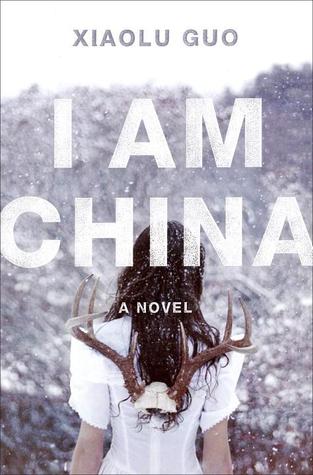
Review: I am China by Xiaolu Guo


Publishing date:-September, 2014

Publishing House:- Doubleday Books

Star rating:-

Seldom do I rue the absence of the solidity of a paperback I can clutch to my chest out of an overwhelming love, memorize the feel of its pages against my fingertips. My priorities lie in knowing what I do not, the means to the end irrelevant in this instance. The advent of the e-reader has negated the problem of the steadily shrinking space on the book shelf and helped me horde books without a care. And yet sometimes a kindle copy just isn't enough. The last time I had felt this familiar pang of kinship with a book right after turning over the last page was when Adichie left me feeling the weight of Biafra's senseless wartime violence (Half of a Yellow Sun). I procured a physical copy right after. 

I will do the same with this one too. Because imperfectly characterized and contrived as it is, this is the story I would want to associate modern China with. This is a book I would want to read again someday. 

All the cacophony around censorship and forgotten square massacres and totalitarianism aside, Xiaolu Guo's globe-trotting, no doubt most ambitious work till date tries to reclaim the dignity of the individual from the clutches of state ownership - a theme I have been desperately seeking out in my pick of literature from the land with less than satisfactory results. 

So far what I have gleaned from the works of writers from the mainland is mostly an overarching sense of dejection and bitterness - a gloomy preoccupation with rubbing old wounds raw.

Outside the bar, the midnight sky was lit by a vast cascade of fireworks, illuminating the solemn and dark Long Peace Avenue, the featureless Heavenly Gate Park, the foreboding Forbidden City, the drumming Bell Tower, and finally creating a fake light of day in Tiananmen Square. A new century of amnesia had arrived on China's earth.

But unlike the defeated, anguished voices of other contemporary Chinese authors, Guo's brims over with a valiant hope. Her Mu and Jian face the consequences of their political beliefs with an understated courage, hop across geographical boundaries to embrace the challenges of a hitherto unknown world outside their beloved China, even if to find themselves thwarted at various junctures. Driven out of their homeland by forces beyond their control and comprehension, they plunge headfirst into individual journeys of self realization, only their letters to each other tethering them to their shared reality in Beijing. And yet the same restlessness of being, the same grim disillusionment and feeble optimism color their evolving worldviews as they grapple with both hostility and acceptance in the humdrum heart of Europe and America. Experiences dismantle their prejudices about the west and the reckless abandon of youth gradually gives way to true wisdom. While Mu comes to acknowledge the purpose in Jian's subversive punk rock concerts in Beijing and his revolutionary zeal, Jian discovers merit in Mu's pacifist stance, her unrestrained love of life, art and literature. 

Art is the politics of perpetual revolution. Art is the purest revolution, and so the purest political form there is. A great artist is a great revolutionary.
Revolution = art, and art = perfect freedom. Right now, we have no revolution, no real art and no freedom.

As a lonely, unsociable Scottish translator unspools the many different threads of their past and present from a collection of letters and journal entries in her London flat, Mu and Jian's discordant voices harmonize in pitch and intensity across the barriers of time and space to meld into a symphony of human triumph. Their unbridled zest for life and liberty comes to symbolize the individual's quest for emancipation, to disentangle oneself from the myth of a national identity. Time, place and circumstances recede into the background. History's tenacious grip loosens. Mu and Jian's enduring love for one another finds its truest expression in the dream of a new China - one freed from the shadow of oppression.

I am China. We are China. The people. Not the state.

May this very dream survive.


**ARC received from Doubleday Books through Netgalley**
_____

Also published on Goodreads & Amazon.


 photo C136E66569D294E4D5DA2D8124D4FF69.png

Friday, February 20, 2015

Review: The Fan-maker's Inquisition:A Novel of Marquis de Sade by Rikki Ducornet

First published:- 1999

Republished by:-Dzanc Books, Open Road Media

Star rating:-


For the past few weeks the subject of responsible use of freedom of expression and speech has dominated our public discourse. And this is not in the context of Charlie Hebdo. A group of Indian stand up comics had collaborated on a live 'roast' of two Bollywood actors (the very first of its kind in India) and posted the video on youtube - a performance peppered with sexual innuendos and a mind-boggling amount of profanity. The video went viral within minutes, inspired twitter hashtags, gave netizens a few good laughs, and 'offended' the usual suspects. A few days later, probably following the diktats issued by self-appointed guardians of Indian culture and values, the video was removed from youtube and criminal cases registered against the participants in this venture for 'obscenity'. 

Miscreants who vandalize churches, demolish mosques, rape women or launch into vitriolic diatribes against a specific religious community are allowed to function within the legal framework of the state but citizens who take to the streets to protest against the aforementioned atrocities are either water-cannoned or arrested with astonishing swiftness. Now it seems stand up comics, who are trying to inject some novelty into our painfully predictable entertainment industry which churns out lame potboilers by the dozen month after month, have secured a spot for themselves in the list of 'enemies of the state'. Law enforcement has its priorities right. 

Far fetched a parallel as it may seem, Rikki Ducornet's richly imaginative, Bohemian novel harps on the same double standards of moral policing. You can dismiss that glaring'erotica' label (not that I have any problems with this tag), dive in without hesitation and let Ducornet overwhelm your senses with her gossamer fine prose and her evocation of a turbulent Paris during the years of the Revolution. If you are looking for titillation and descriptions of sadomasochistic practices ala Sade, then let me forewarn you, the transgressions alluded to in Sade's monologues are not as frightfully repulsive as one might expect them to be. The only erotic similies I came across are of the following kind - 

..although the apple was as wrinkled and bruised as the clitoris of an old whore...

The plot weaves its way in and out of an imaginary Gabrielle, a fan-maker famous for her pornographic etchings and illustrations, and her patron Sade's points of view, stringing together their correspondence through letters during the time both were incarcerated for heresy by the Comité de surveillance while also including a parallel, semi-fictional narrative of the Catholic Church's barbaric suppression of indigenous pagan practices of Mayan people in the Yucatan peninsula during the Spanish Inquisition. Aside from all this there are various fascinating tidbits on Sade's upbringing and stories within stories which are aimed at highlighting the importance of unfettered freedom of thought.

A book is a private thing, citizen; it belongs to the one who writes it and to the one who reads it. Like the mind itself, a book is a private space. Within that space, anything is possible. The greatest evil and the greatest good.

The portions containing Sade's letters have him refuting the allegations levelled against him by the Comité by claiming most of what was regarded blasphemous in his work was simply the product of his virile imagination and that no sex act was ever performed without consent. The Marquis alternately laments the loss of his friend and confidante, Gabrielle and her lesbian lover Olympe de Gouges (an actual feminist figure from the Revolution) both of whom were put to death by the Comité, and chastises the hypocrisy of the Revolution which was systematically destroying the ideals of a civilized society in the name of upholding them.

Once the Revolution has gorged on the citizens of France and returned to her den to sleep for a century or two, what will happen to the triumvirate she whelped: Liberty, Equality, Fraternity-that vast heresy! That near impossibility! That acute necessity!

If you, like me, had not spared a thought for the infamous Parisian libertine till now then do pick up Ducornet's spirited defense of Sadeian ideology of unshackling one's life and art from hypocritical moral constraints. There's a good chance she may arouse your curiosity enough to want to take a peek into Sade's world of amoral creativity. In Gabrielle's own words - 

Sade offers a mirror. I dare you to have the courage to gaze into it.

____

Review also published on  Goodreads and Amazon.

**Thanks to Netgalley and Open Road Media for an advance reader's copy**

   photo C136E66569D294E4D5DA2D8124D4FF69.png

Monday, October 6, 2014

Review: The Secret Place by Tana French

First published:- August, 2014

Published by:-Viking Adult

Star rating:- 


Few other books have conjured up the ghost of my teenage years as successfully as this one, dredged up the hazy remembrance of that first, most agonizing heartbreak, the subsequent amateurish cynicism summoned up to preclude the hassle of emotional hangups and the feeling of having only just the foggiest notion of how the world works.

It is awe-inspiring how Tana French continues to incorporate such authentic sociocultural commentary into narratives which are usually taken to be written for the sole sake of providing cheap thrills. So blame her if I end up sounding like a smitten fangirl every time I review a book of hers. She is just that good even when she is writing out a logically fallacious scenario.

The teenage girls of 'The Secret Place' are much more than what C-grade teenybopper flicks and stereotype-riddled YA books make them out to be. They are capable of as much cruelty as kindness, as much self-sacrifice as vindictive selfishness. Here, the conniving, bitchy and backstabbing blonde isn't a cardboard cutout 'mean girl' symbolizing pure evil just as the archetypal good girls aren't as puritan. And a private boarding school turns into a zone of ineluctable conflict of interest where the realm of the personal frequently dovetails into that of the collective forming the intricate web of high school politics which implicitly governs the place.

...a place like this is riddled with secrets but their shells are thin and it's crowded in here, they get bashed and jostled against each other; if you're not super-careful, then sooner or later they crack open and all the tender flesh comes spilling out.

More impressive is how the four girls who lie at the heart of the mystery do not let their budding sexualities define their lives, or even sacrifice individuality on the altar of some contrived requisites of 'coolness' which teenagers are prone to do since rarely do they know any better at that age. Instead, they defy odds to carve out a private utopia for themselves, a clique which doesn't require the glue of some common ideology to survive - a secret place neatly tucked away in an obscure corner of their minds where they can be wholly unabashed of the unflattering sides to their personalities, sure of the fact that they will have each other's backs even when the world goes to pieces. 

...the whole point of the vow was for none of them to have to feel like this. The point was for one place in their lives to be impregnable. For just one kind of love to be stronger than any outside thing; to be safe.

In a way, the narrative of friendship and loyalty in the aftermath of a terrible crime is reminiscent of an earlier book in the series -The Likeness - which in turn was inspired by Donna Tartt's The Secret History. So fans of any of the former will be sucked right in even if they may have reservations about stories involving teenagers, specially teenage girls who are forever being dumbed down by writers looking to make a quick buck. Ms French here, true to her gift for impeccable characterization, adds many dimensions to their personalities. 

As the common refrain goes, calling books of the Dublin Murder Squad series mere 'crime novels' is almost like an outrageous insult. And this one's certainly no exception in this regard. There are two parallel 'before' and 'after' narratives devoted to uncovering the truth of the same murder. A story of the tragic collapse of a close-knit group of teenage girls who, even while trapped in the complicated tangle of sexual politics, fight to ward off influences which threaten to destroy their fortress of solitude. A celebration of the bond of friendship, how powerful and all-consuming an affair it can be and how unpredictably it can turn dangerous and even life-threatening. And, in the end, a poignant tribute to those charged years of adolescence, a unique phase of our lives we look back on with equal parts terror and fondness.

They are a forever, a brief and mortal forever, a forever that will grow into their bones and be held inside them after it ends, intact, indestructible.
**I received an ARC from Viking Adult via Netgalley**
___

Also posted on Goodreads and Amazon.

 photo C136E66569D294E4D5DA2D8124D4FF69.png

Monday, July 21, 2014

Review: Skylight: Poems by Carol Muske-Dukes

First published:-1981

Republished:- By Open Road Media on June 10, 2014

Star rating:- 

One of my pet gripes with poetry is on full display in this poet's works - losing so much of time re-reading lines, fishing out implications from the layers of metaphor thrust upon allusion thrust upon circumlocution that in the battle between the reader's enthusiasm for emotionally connecting with the verses and sheer exasperation, exasperation wins. 
Poetry is meant to be savoured - the rhythm, the flow, the delicate alignment of pretty words combined with some semblance of purpose all taken in together - and not decrypted like some hidden code through multiple readings. It doesn't matter if the occasional pair of lines succeed in concealing their intent, their true significance, perhaps, too exclusive to the poet's inner life or too obscure to aid our understanding. But there should be a limit to this sort of penchant for inserting excessive imagery and hyperbole.

Don't take my complaints too seriously though. Finding poetry that hits just the right note is actually like finding the right shoe fit and hence the criteria that go into its determination will differ from reader to reader. Besides I had problems with only a few of the poems. Most of the remaining ones are exceptionally well-written and make their points with so much subtlety that you are more likely to miss them unless you keep your eyes peeled. 

I had no idea Carol Muske-Dukes (former Poet Laureate of California) had such a good knowledge of Indian history and an even firmer grasp over our cultural sensibilities. (Color me impressed) 
Her 'Ahimsa' on the Jallianwala Bagh massacre (which is still regarded as one of the most barbaric things done to us by the British and which caused Tagore to reject his knighthood) is elegiac and deeply philosophical.

"Say you walked in the shadowy garden
in Amritsar, before night descended,
tried to imagine the massacre, that crazy saint
Gandhi and the people on their knees to a god
less civilized than he. You would
disagree, agree....
violence teaches nothing."

While 'War Crimes', a reflection on rape (a subject which Adrienne Rich versifies with more finesse, no doubt, in her Diving Into the Wreck) is wrenching and cerebral. 

"...that the great nerve
which runs from head to pelvis
which makes us courteous
shy
scrupulous
makes us touch another with gentleness
would tremble
till it was plucked
held in the pliers
then in the fire
shriveling in that little violence
of heat and light
which in another form
we often refer to
as love."

The variation in her themes is another noteworthy aspect of her range as a poet - subjects from abuse of young children, a daughter's view of her painter father, a child with a stuttering problem, an opium addict mourning the loss of his wife/lover, real estate, to the last set of poems which seem to be meditations on grief make appearances in this collection.

No points for guessing that the poems on India-related subjects, an old man in Benares carrying his dead wife in his arms to her pyre, the one on sexual violence and androgyny are my favorites from the collection. Yes I am predictable like that.


**I received an ARC from Open Road Integrated Media via Netgalley**

_____

Also posted on Goodreads and Amazon.

   photo C136E66569D294E4D5DA2D8124D4FF69.png

Saturday, July 5, 2014

Review: Law of Desire: Stories by Andrej Blatnik

First published:- 2000

About to be republished on (after being translated into English):- July 15th, 2014

Republished by:- Dalkey Archive Press

Star rating:-

Short stories are such a tricky thing to get right and such a hassle to review. 
Before you have even settled down into the comfort of one minor narrative, a new one with brand new settings is silently demanding your undivided attention. A tiny slip in your concentration could result in that elusive thread of some unnameable, intangible emotion that you are struggling to disentangle from the jumble of lives and internal monologues, zipping past you with the agile grace of an eel. 
And having turned over the last page, you are facing the difficult prospect of making out all the discordant notes from the individual stories and combining them into a common refrain which captures the general mood of the collection. Unless the author can profess to being at par with one of those world-renowned masters and mistresses of the short story format (Munro, Maupassant, Carver, Lydia Davis, Gogol and so on) who have got it down so pat that each one of their stories stand out and leave permanent markings etched on to the slippery sands of memory, he/she has an uphill task ahead. 

I can vouch for the fact that Andrej Blatnik's stories cannot be shoehorned into any known category of writerly acuity. There's no single overarching theme that strings the whole collection together. And not all the stories can be commended on their execution or even thematic clarity. While some of the short stories give off a surrealistic Italo Calvino-esque vibe by blurring the boundaries between real and absurd, some of the others remind me of Murakami with their efficient juggling of nameless, wryly witty narrators who shirk responsibilities, intriguingly secretive women and emotional isolation. The remaining deal with themes as varied as PTSD-afflicted, psychologically scarred young men returning from the battlefield, the beauty and terror of fatherhood, the tragedy of young children adjusting to a newly motherless household and even something as eerie and nihilistic as a runaway convict resigned to his fate of being turned into a human sacrifice in an African village.

"The man feels the open dome of the sky descending, embracing him, he senses the universe closing in, he smells the brittle tail of comets, the gravity of distant worlds brushes his cheek. Galaxies open up and beckon him in. The man knows: This is the beginning; this is just the beginning."

The stories seem to be weakly delineated on purpose, the characters having no qualities that make an impression worth remembering, their lives appearing to be hazy silhouettes that never truly come into focus, just remaining out of reach for you to draw your own conclusions, which is precisely how short stories should be. But there's something more which accentuates their uniqueness, a disorienting effect that Blatnik manages to induce in the reader - an all-too-familiar sorrow, a feeling of unfulfillment arising out of a failure to communicate, and the concomitant cruelty of everyday lives of people trapped in the labyrinth of the urban jungle.

So even though I had my mind virtually made up to go with a 3.5 stars rounded off to a 3, I am conceding another one in the hopes that an above-average rating will help this Slovenian writer gain a wider readership, especially now that he has been translated. He really does deserve all the attention he can get.

**I received an ARC from the Dalkey Archive Press via Netgalley**


Also published on Goodreads and Amazon.

   photo C136E66569D294E4D5DA2D8124D4FF69.png

Thursday, May 15, 2014

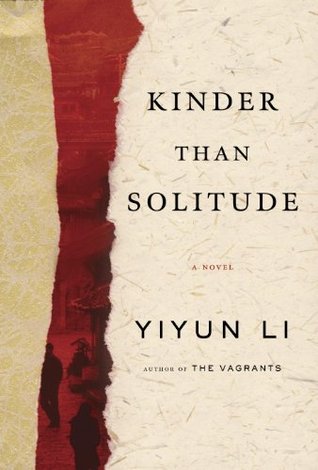
Review: Kinder than Solitude by Yiyun Li

Published on:- February 25, 2014

Published by:-Random House

Star rating:-

Coping mechanisms. For how long can one cling on to them with a quiet desperation? 

Long after grief subsided, long after the ache dealt by the blow of tragedy dulled, Ruyu, Moran and Boyang continued to let their lives revolve around their coping mechanisms. In place of a youthful lust for life and unbounded optimism they made a gaping emptiness their constant companion, drew strength from their blunt indifference to the world at large, never caring for the interminable flow of time and living from one moment to the next one. 

No expectations from those who touched their lives fleetingly. Relationships established and subsequently shed like second skins just as easily. An impenetrable fog of nothingness separated these three individuals from the world around them. Deeply afraid of tenuous attachment, they chose the secure comfort of solitude.

Orphaned in infancy, Ruyu had her perception of morality blurred by the blind religious fervor with which her grandaunts tried to indoctrinate her and later by Shaoai's everyday small cruelties. Disillusioned with life at a tender age, she could only snub gentle Moran's offer of friendship with acid contempt and wield Boyang's love for her as a weapon to harm others. Her act of transgression (not without its reasons) - perhaps triggered by the vindictive nature of adolescence - brought turbulence into the lives of three souls and destroyed a fourth, the aftershocks of this incident continuing to haunt them decades later across continents.

Ruyu knew she wasn't going to be let off unscathed by fate either but then what could possibly intimidate a misanthrope who treated life like a prison and considered the act of living akin to a sentence meant to be served out in silent despondency?

"She was not the only one trapped by life. She was afraid of meeting another person like her, but more than that she was afraid of never meeting another person like her, who, however briefly, would look into her eyes so that she knew she was not alone in her loneliness."

Yiyun Li is my new favorite author of Chinese origin simply because she manages not to succumb to the lure of sketching a Beijing under an autocratic regime like so many of her peers, choosing instead to narrate a tale of heartbreak and loss which will remain as affecting even if one strips her characters of their ethnicity and shifts the backdrop of events to any other place and time. It is the flawed humanity of the ensemble characters, none of whom are completely beyond reproach, and their self-inflicted emotional isolation which establishes Li's ability to go beyond the limits of spick and span pigeonholing. The devastating aftermath of the Tiananmen Square massacre and the agonizing chokehold of the Communist administration over its citizens are simply hinted at and never spelled out for the sake of inducing any cheap sentimentality. And what elevates her craft further in my eyes is the languid beauty of her prose and her accurate portrayal of the melancholia and ennui entailing the quandary of life. 

"They were not her stories. They were not about her time, or her people, but what she had once found in these stories-escape-would eventually become her wisdom. Perhaps if she kept these tales going he would one day forgive her stubbornness in choosing solitude, because he, kinder than solitude, was always here for her until death do them apart."

The pleasure of familiarizing myself with an author I know I can unhesitatingly seek out in the future never becomes stale.


-------

**I received an arc from Random House through Netgalley in exchange for an honest review**

Also posted on Goodreads and Amazon.

   photo C136E66569D294E4D5DA2D8124D4FF69.png

Wednesday, April 9, 2014

Review:The Frangipani Hotel: Stories by Violet Kupersmith

First published:- April 1st, 2014

Published by:- Spiegel & Grau

Star rating:- 

What your mind dredges up from memory and consciousness upon the utterance of the word 'Vietnam' is wholly predictable. That naked girl child of Trảng Bàng fleeing a napalm attack in terror, her scream silenced by the stillness of the well-known picture you have glanced at time and again or the grotesque image of blood-soaked bodies heaped by the side of a rice field in My Lai that continued to burn like a stinging slap across the face of the American administration long after the troops had pulled out of Vietnam. But the sheer tragedy of a nation being whittled down to the status of being defined by an ill-famed proxy war and a trendy word with an 'ism' at the end, has its roots in our collective apathy. 

Marguerite Duras' Indo-China (as described in her fictionalized memoir The Lover) was a place inextricably linked to the abuse of her childhood years, a cultural melting pot, an eerie and exotic landscape which served to simultaneously heighten and assuage her mental anguish, a nation still resigned to being seen as just another jewel in the crown of Europe. But Violet Kupersmith's Vietnam is the hum of the life force coursing through her veins; the horror and beauty that this culture encompasses, a hand-me-down from her ancestors. And it is this Vietnam, we have not cared enough to know, which inhabits these short stories. The tinge of paranormal intrigue and the elements of suspense are merely there to help you keep turning the pages with ease but it is the landscape itself which towers above the set of native Vietnamese characters and the Vietnamese diaspora in the U.S., metamorphosing into a humanly protagonist narrating a melancholic tale of personal woes.

The water nymph boarder of Hotel Frangipani, the ailing old Mrs Tran whose time on earth runs out while waiting for her now-American daughter and grand-daughters to visit her from far off Houston, the soldier-turned-calligrapher who cannot banish the horrifying memories of accidentally killing a civilian girl while serving the Viet Cong, the septuagenarian who involuntarily undergoes a morbid transformation into a giant python at times and ends up recounting the story of his life to a random Vietnamese American teen, the white girl who works at the American consulate in Ho Chi Minh are many among the imaginary guides that Ms Kupersmith designates to familiarize readers with an assortment of folktale-ish stories with elements of horror as the common running theme.

To quibble, some of the stories have been fashioned in an amateurish way in which character tropes such as the thoughtful, unattractive, fat sister and the insensitive, skinny one and the ignorant, condescending American tourist abound. But the structural and thematic integrity of the remaining stories made up for the flaws of the former and caused my 3 stars to be elevated to 3.5 stars.

Subtlety isn't Ms Kupersmith's strongest suit but her writing serves as a good example of potency of theme and plot surpassing the need for linguistic adornments at times and a rude reminder of my little to no knowledge of Vietnam sans the 'war', an oversight which needs to be remedied post haste. 


___

Review also posted on Goodreads & Amazon.

 photo C136E66569D294E4D5DA2D8124D4FF69.png
Related Posts Plugin for WordPress, Blogger...