First published:-
1978
Star rating:-
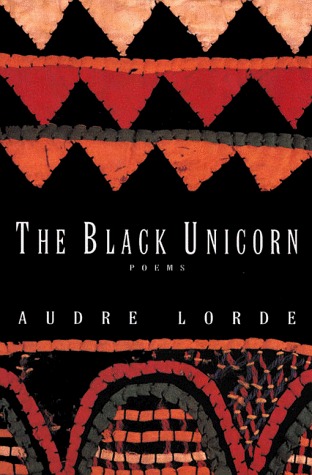
 These poems are like shards of glass refracting the blurred image of some sombre new insight into the human condition - the agony of love, the pangs of coming to grips with the idea of racial segregation in a world one previously thought had no demarcations, the pervasive pessimism of living as reaffirmed by the morning newspaper, an elegy to the memories of a childhood friend whose time on earth ran out too soon, the melancholic ruminations of a prostitute, the absurdity of children of today being raised like slaughterhouse pigs to be sent to the war-front tomorrow.
Coming in and out of cities
untouched by their magic
I think without feeling
this is what men do
who try for some connection
and fail
and leave
five dollars on the table.
If the annals of literature are to be consulted, most of these are time-worn subjects which other more renowned poets have regurgitated throughout their distinguished careers, after molding them in accordance with their perceptions of the world and its many idiosyncrasies. And yet Audre Lorde's words, imbued with despondency, regret, hope and fortitude at the same time, tempt you to read them again and again. Her lines flow effortlessly despite their innate simplicity, maintaining an enviable rhythmic symmetry, rendering the reader's tendency to puzzle over esoteric references unnecessary since there are almost none.
There are a handful of poems here, in praise of the female and androgynous forms of divinity worshipped by the inhabitants of the historical kingdom of Dahomey and the Yoruba people of western Nigeria, which bring to light the oft-overlooked aspects of the cultural ethos of African people. But there's a conveniently provided glossary of African terms at the end to better facilitate complete understanding of these.
You were not my first death.
but your going was not solaced by the usual
rituals of separation
the dark lugubrious murmurs
and invitations by threat
to the grownups' view
of a child's inelegant pain
so even now
all these years of death later
I search through the index
of each new book
on magic
hoping to find some new spelling
of your name
The implications hidden between her verses do not reinforce a kind of self-obsessed confessionalism as often found in Sylvia Plath or Anne Sexton's works or the heavy-handed inclusion of so many allusions that the poet's urge to communicate is buried under towering ambitions of dismantling poetic conventions.
Sometimes, her words give the impression of mildly cryptic messages casually scribbled at the back of a notebook, perhaps, while she may have been staring out of her window distractedly. Sometimes, they are her anguished lament, her impassioned protest, wrenched out of her by the brutality of the world or the injustice perpetually dished out to those clinging to the lowermost rungs of the societal ladder for dear life. Her 'Power', one of the most influential and well-known poems from her entire oeuvre, simmers with a righteous rage, intense enough to blow a hole through the edifice of 'white supremacist patriarchy' aside from being a tribute to the memory of young Clifford Glover, a 10-year-old African American boy shot dead by a white cop on duty in South Jamaica, Queens, New York in '73, who was later acquitted by a white-majority jury with a single black female judge.
Today that 37-year-old white man with
13 years of police forcing
has been set free
by 11 white men who said they were satisfied
justice had been done
and one black woman who said
"They convinced me" meaning
they had dragged her 4'10" black woman's frame
over the hot coals of four centuries of white male approval
until she let go of the first real power she ever had
and lined her own womb with cement
to make a graveyard for our children.
Lorde remains one of the few poets in American history who had to contend with the tyranny of conforming to the demands of too many labels conferred on persecuted minorities - black woman in a white man's world, radical feminist, lesbian, civil rights activist. And yet she managed to breach the boundaries of these individual identities by singing in a richly resonant voice whose musicality still holds the power of bridging gaps, relaying the stories of the voiceless and the marginalised, healing the scars left by turbulent times and smoothening out our countless differences across continents and timelines.
In my eyes, that makes her a hero more than a poet.
____

First published:-
2000
Read in:-
February, 2014
Star rating:-
 'The Empire Writes Back' would have been a fitting alternative title for this essay collection. (Achebe doesn't fail to pay a tribute to Salman Rushdie's essay of the same name published in 1982). Because that is what the running theme here is - a reclamation of a land and a culture that was wrested away with brutal force and made a part of an 'Empire' which still insists on viewing that period as one of glory and not characterized by the worst kind of human rights violation ever. And a heralding of the arrival of the African voice in the world literary scene.
Achebe is slowly turning into my personal literary hero. His wry humor, elegant prose, mildly sardonic tone and passion for social justice exude a righteousness that's hard not to defer to. His writings continue to make me question certain pet notions and ideas that are so deeply ingrained in each one of us that they seem like indisputable facts and consequently evade further introspection. My penchant for unconsciously comparing Latin American, South East Asian and African writing to the style, technique and language of the Americans and Europeans I admire and immediately pronouncing judgement on them on the basis of said parameters has to go away now, I realize.
It doesn't matter if African, Asian and other writers of the Commonwealth (Dear god, why do we have that ridiculous redundant grouping still? is it not there for the sole purpose of reminding us that we were once colonies?) have the same degree of grammatical precision and structural integrity to their English prose as their European and American counterparts. It matters that their voices be heard and universally acknowledged and the overlooked truths, their narratives highlight, be analyzed without bias.
Although this collection consists of 3 essays titled 'My Home Under Imperial Fire', 'The Empire Fights Back' and 'Today, the Balance of Stories' it should be considered a single body of work or discourse intended to dispel certain flawed notions about African people who are often derogatorily referred to as 'tribes' and automatically consigned to a lesser category of humanity.
Achebe begins with his reminiscences on his early years as a young university student in Nigeria, reading literature based on Africa authored mostly by British and European scholars who, of course, liberally manufactured painfully offensive 'facts' regarding the intellectual and anatomical inferiority of his fellow brethren and propagated the theory that European acquisition of their land and sphere of existence was for the sake of their own personal benefit.
This is what Achebe says about the interlinked nature of inherently racist literature of the time (he is sophisticated enough not to use the word 'racist' even once though) and the Atlantic slave trade:-
"I will merely say that a tradition does not begin and thrive, as the tradition of British writing about Africa did, unless it serves a certain need. From the moment in the 1560s when the English captain John Hawkins sailed to West Africa and 'got into his possession, partly by the sword and partly by other means, to the number of three hundred Negroes,' the European trade in slaves was destined by its very profitability to displace trade in commodities with West Africa."
Achebe directs his suppressed ire at Anglo-Irishman Joyce Cary who was regarded as one of the finest novelists of his time and his creation 'Mister Johnson' which Achebe systematically breaks down and interprets as a text strewn with viciously hateful commentary on Africans. Another renowned novelist and polymath who had considerable first hand experience of Africa, Elspeth Huxley, isn't spared either as her criticism of Amos Tutuola's 'The Palm-Wine Drinkard' as a 'folk tale full of queer, distorted poetry, the deep and dreadful fears, the cruelty, the obsession with death and spirits, the macabre humour, the grotesque imagery of the African mind' comes off as an insidious denunciation of all African literature in general.
Joseph Conrad, predictably, is his next victim. (Criticism of 'Heart of Darkness' seems like a recurrent theme in Achebe's essays)
Quote from 'Heart of Darkness' -
"Well, you know, that was the worst of it-this suspicion of their not being inhuman."
Achebe's deconstruction-
"A more deadly deployment of a mere sixteen words it would be hard to imagine. I think it merits close reading. Note first the narrator's suspicion; just suspicion, nothing more. And note also that even the faint glimmer of apparent charitableness around this speculation is not, as you might have thought, a good thing, but actually the worst of it! And note finally, the coup de grace of double negation, like a pair of prison guards, restraining that problematic being on each side."
Next in Achebe's line of fire is the ever controversial V.S. Naipaul and his lecture titled 'Our Universal Civilization' delivered at the Manhattan Institute and his caustic and downright obnoxious comments on Asian and African readership and cultures. Achebe brings into focus the difference in attitudes between the Indian-origin Naipaul and the famed Indian writer R.K. Narayan by stating how Narayan saw 'a million stories' every time he looked out of his window and not a 'million mutinies' like Naipaul did.
He ends by hailing story-tellers of repute like Nadine Gordimer (for her literary activism in the backdrop of the Anti-Apartheid movement in South Africa), Wole Soyinka, Amos Tutuola and names like Nigerian Cyprian Ekwensi (People of the City), Guinea's Camara Laye (L'Enfant Noir), Cameroon's Mongo Beti, Ferdinand Oyono (Houseboy), Cheikh Hamidou (Ambiguous Adventure) who have lent enormous credibility to the African literary landscape and have led readers all over the world, to take into account the complementary points of view of the people who had been, so far, deprived of a voice.
"Despite the significant changes that have taken place in the last four or five decades, the wound of the centuries is still a long way from healing. And I believe the curative power of stories can move the process forward."
P.S.:-My rating may be upgraded (or downgraded) in the future based on what I glean from a reading of A Bend in the River, India: A Million Mutinies Now and a re-reading of Heart of Darkness.