First published:- 2014
Star rating:- The problem with this book is that none of it rings true - the characterization, the narration, the atmosphere, the dialogues, the relationships, even the emotions. Everything seems so fake and overwhelmingly dramatic that at times I cajoled myself into reading on in the hopes of spotting some noticeable evidence of parody at work. But nope. Sardonic self-deprecation isn't the objective here. These people are all serious and want me to take them seriously.
Although once I persuaded myself to go with the flow and obsequiously accepted the narrative's palpable delusions of grandeur and omnipotence, the reading experience became a lot more bearable. Because sometimes even if a book manages to irritate me with its undisguised self-admiration, I can gleefully read on if it contains an intelligent discussion on the human condition. And the good thing is 'The Blazing World' is blazing with new ideas, bursting at the seams with complex concepts on neuroscience, memory, phenomenology, perception and gendered identities which require careful, prolonged contemplation. Additionally, Siri Hustvedt can rustle up a wonderful turn of phrase and a syntactically elegant, lexically succulent sentence. So the negatives and positives are fairly balanced.
Much like its protagonist Harriet Burden's creations, The Suffocation Rooms or Beneath, the book is like an elaborate contraption, a labyrinth of contrasting worldviews and allusions to arcane texts designed to aid the reader in comprehending the mess that lies outside clearly demarcated boundaries defining human existence. Friends, family, therapists, gallery owners, art reviewers, journalists, expose layer after layer of prejudice, personal contempt, vague conjectures, hollow biases while projecting their own image of Harriet Burden as an artist who had to use male pseudonyms to get attention in the art world. In posterity, Harriet is only reconstructed as a montage of other people's opinions and her journal entries, as a widely learned woman whose talent is overlooked by her rich, influential art collector husband and the male-dominated art world in general. Desperate for recognition, she decides to pull off an intricate con on the artworld by showcasing her work using three male artists as her 'masks'. But her plans derail when her last front aka Rune Larsen, an eccentric, manipulative artist, refuses to play along and takes credit for her work.
All intellectual and artistic endeavors, even jokes, ironies, and parodies, fare better in the mind of the crowd when the crowd knows that somewhere behind the great work or great spoof it can locate a cock and a pair of balls (odorless, of course). The pecker and beanbags need not be real. Oh no, the mere idea that they exist will suffice to goad the crowd into greater appreciation.
Women artists are less appreciated than their male counterparts, viewed with prejudice, treated with contempt, rarely allowed entrance into the hallowed halls of fame.... yada yada...you get the picture. Except something about the way Hustvedt delivers this feminist-y rant left me a little cold. I blame the highly unconvincing multiple perspectives and Hustvedt's general disregard for the 'show don't tell' device. This is where I prefer Margaret Atwood's deconstruction of the mind of a female painter/artist (Cat's Eye) because Atwood knows how to fashion a blistering denunciation of male chauvinism without being overt about it and she can recount a believable story like nobody's business. Hustvedt, on the other hand, seems rather intent on creating opportunities within a text to insert esoteric references and paragraph length footnotes which scarcely add anything to the world which our characters inhabit.
Long story short, I want to remember this as an intellectual exercize, or as a corpus of interesting ideas.
_____

First published:-
1872
Star rating:-

First read:-
April-May, 2015
Take this for granted. Middlemarch will haunt your every waking hour for the duration you spend within its fictional provincial boundaries. At extremely odd moments during a day you will be possessed by a fierce urge to open the book and dwell over pages you read last night in an effort to clarify newly arisen doubts -'What did Will mean by that? What on earth is this much talked about Reform Bill? What will happen to poor Lydgate? Is Dorothea just symbolic or realistic?'
And failure to act on your impulses will give rise to irritation. The world all around you will cease to matter and you will be forced to perform everyday tasks on autopilot mode, partly zombified, completely at the mercy of this wonderful, wonderful book. Even hours after you turn over the last page, Middlemarchers and their manifold conundrums and self-delusions will maintain their firm grasp on your consciousness. What I mean by these not at all far-fetched generalizations, is that Middlemarch is engaging, suspenseful and readable. Profoundly so.
Despite its dense outlay of character arcs dovetailing into the politics of the community, subplots jostling against each other for primacy and the reader's attention, vivid commentary by an omniscient narrator who interjects often to shape a reader's perception, and the painstakingly detailed inner lives of its zealous hero and heroine struggling to hold on to their lofty ideals in the face of sobering reality and suffocating marriages, everything moves at a breakneck speed. I never knew when I ran out of pages to tear through. There are few happy coincidences here and certainly no deus ex machinas to bestow easy resolution on conflicts. Characters do not stumble upon gentrified fulfillment accidentally, those persecuted because of their 'lower birth' do not magically acquire status and wealth, thereby proving beyond doubt that Mary Ann Evans meant to contravene the most fundamental of tropes created by her more celebrated contemporaries. Instead they wrestle with their own conscience, hypocrisies, prejudices, mortal desires and fatalistic judgments. The day to day grind deepens their spiritual crisis, derails their noble mission of being a part, however insignificant, of the progress story of the world at large, makes them realize the futility of the individual's struggle against the forces that govern society. Some emerge victorious, able to cling to the passions and ardors that drive them ahead in life despite the inclemency of their circumstances. While others flail and flounder, succumbing to the tyranny of material wants and demanding, selfish spouses. If that's not bitter reality served up on a plate I don't know what is.
If I am asked to pick one flaw with the plot and characters, I must confess I had considered withholding a star initially because of the book's treatment of Dorothea and the infuriating Ladislaw-Dorothea arc which made me want to quit reading out of pure frustration. Evans' fascination with subjecting every character's mental makeup to her trenchant irony seemed to expire every time her beloved heroine came into the picture. Frequent comparisons with the Virgin Mary and St Theresa and references to her queenly grace made me skeptical about her credibility as a character of flesh and blood in a narrative otherwise populated with believable, fallible men and women. Is she merely symbolic then of a life dominated by a 'soul hunger', completely immune to the mundane concerns of quotidian living? Why must her womanhood be almost deified and worshipped? But thankfully Dorothea is salvaged and humanized in the end, when she lets her own romantic passions overpower her altruistic zest.
...the growing good of the world is partly dependent on unhistoric acts; and that things are not so ill with you and me as they might have been, is half owing to the number who lived faithfully a hidden life, and rest in unvisited tombs.
Many may disapprove of the choice but if I had to name one book very similar to 'Middlemarch' in thematic content and in terms of a multiple-perspective narrative structure set against a modern backdrop, then Rowling's The Casual Vacancy comes to mind. In fact, it is hard not to figure out the connection after having read both books. If the slew of unfavorable reviews on GR and elsewhere nipped your interest in the bud, I urge you to give it a shot. Unworthy of literary immortality as it maybe, perhaps, it still offers an intricately detailed portrait of a small town and how individual choices shape the destiny of a society. Of course it is no Middlemarch as no book ever will be but it is where Rowling shows her true calibre as a novelist. And really, it is not as horrid as most reviewers made it out to be. Far from it.
__
To be published:-
April, 2015
Published by:-
Blank Slate Press
Star rating:-
 It is nigh impossible to banish the specter of sky-high expectations for a book which proudly advertises itself as the When Harry Met Sally for the millenial generation. That movie has been comfort food for the lonely and the lovelorn and the ones navigating the treacherous waters of friends-and-a-little-morerelationships for decades now.
So potential readers and Nora Ephron fans, better be forewarned that the central characters here are not even pale imitations of Harry Burns and Sally Albright. Neither does Malcolm possess Harry's infuriatingly self-assured persona nor does Joanna manage to embody Sally's quirkiness and emotional vulnerabilities. More often than not they come off as people with no discernible character traits - they flicker in and out of focus like shadowy silhouettes in a hazily lit room. Their friendship is never fleshed out for the reader's benefit. In fact the only conversations they have are completely devoid of any wit or substance and merely border on good-natured flirtation.
Malcolm and Joanna meet at a party and make out without even exchanging proper greetings first. Malcolm flies out to Kazakhstan the very next day for 2 years with the Peace Corps during which time they maintain a correspondence through hand-written letters - yes you read that right - not emails or the phone because nothing puts a dampener on romance like modern technological innovations! When Malcolm shifts back to Portland after the designated time period, they keep hovering around each other, doing the mating dance without actually acting on their mutual attraction. They make bad decisions which would have been acceptable had they not appeared as deliberately manufactured unrealistic plot contrivances to delay their eventual union.
Long story short this is a bit like Harry Met Sally but not quite. It tries to sell the illusion of an unorthodox, fantasy love instead of conveying the truth of how relationships work in reality which brought Nora Ephron's creations universal adulation in the first place. However, on the plus side, there's no casual sexism here - Malcolm does not patronize Joanna like Harry aggressively dismisses Sally's opinions in the movie. (But then we are no longer in the 90s) It has all the trappings of a regular chicklit novel except without the mediocre writing and the abundance of idiotic cliches. And quite readable if not compulsively so.
As long as you are not craving for Nora Ephron-level insight into the quotidian comedy and heartbreak of relationships but light reading which does not require complete suspension of disbelief, Rebecca Kelley will keep you entertained.
__
**with thanks to Blank Slate Press and Netgalley for the ARC**
___
Also published on Goodreads and Amazon.
First published:-
1999
Republished by:-
Dzanc Books, Open Road Media
Star rating:-
 For the past few weeks the subject of responsible use of freedom of expression and speech has dominated our public discourse. And this is not in the context of Charlie Hebdo. A group of Indian stand up comics had collaborated on a live 'roast' of two Bollywood actors (the very first of its kind in India) and posted the video on youtube - a performance peppered with sexual innuendos and a mind-boggling amount of profanity. The video went viral within minutes, inspired twitter hashtags, gave netizens a few good laughs, and 'offended' the usual suspects. A few days later, probably following the diktats issued by self-appointed guardians of Indian culture and values, the video was removed from youtube and criminal cases registered against the participants in this venture for 'obscenity'.
Miscreants who vandalize churches, demolish mosques, rape women or launch into vitriolic diatribes against a specific religious community are allowed to function within the legal framework of the state but citizens who take to the streets to protest against the aforementioned atrocities are either water-cannoned or arrested with astonishing swiftness. Now it seems stand up comics, who are trying to inject some novelty into our painfully predictable entertainment industry which churns out lame potboilers by the dozen month after month, have secured a spot for themselves in the list of 'enemies of the state'. Law enforcement has its priorities right.
Far fetched a parallel as it may seem, Rikki Ducornet's richly imaginative, Bohemian novel harps on the same double standards of moral policing. You can dismiss that glaring'erotica' label (not that I have any problems with this tag), dive in without hesitation and let Ducornet overwhelm your senses with her gossamer fine prose and her evocation of a turbulent Paris during the years of the Revolution. If you are looking for titillation and descriptions of sadomasochistic practices ala Sade, then let me forewarn you, the transgressions alluded to in Sade's monologues are not as frightfully repulsive as one might expect them to be. The only erotic similies I came across are of the following kind -
..although the apple was as wrinkled and bruised as the clitoris of an old whore...
The plot weaves its way in and out of an imaginary Gabrielle, a fan-maker famous for her pornographic etchings and illustrations, and her patron Sade's points of view, stringing together their correspondence through letters during the time both were incarcerated for heresy by the Comité de surveillance while also including a parallel, semi-fictional narrative of the Catholic Church's barbaric suppression of indigenous pagan practices of Mayan people in the Yucatan peninsula during the Spanish Inquisition. Aside from all this there are various fascinating tidbits on Sade's upbringing and stories within stories which are aimed at highlighting the importance of unfettered freedom of thought.
A book is a private thing, citizen; it belongs to the one who writes it and to the one who reads it. Like the mind itself, a book is a private space. Within that space, anything is possible. The greatest evil and the greatest good.
The portions containing Sade's letters have him refuting the allegations levelled against him by the Comité by claiming most of what was regarded blasphemous in his work was simply the product of his virile imagination and that no sex act was ever performed without consent. The Marquis alternately laments the loss of his friend and confidante, Gabrielle and her lesbian lover Olympe de Gouges (an actual feminist figure from the Revolution) both of whom were put to death by the Comité, and chastises the hypocrisy of the Revolution which was systematically destroying the ideals of a civilized society in the name of upholding them.
Once the Revolution has gorged on the citizens of France and returned to her den to sleep for a century or two, what will happen to the triumvirate she whelped: Liberty, Equality, Fraternity-that vast heresy! That near impossibility! That acute necessity!
If you, like me, had not spared a thought for the infamous Parisian libertine till now then do pick up Ducornet's spirited defense of Sadeian ideology of unshackling one's life and art from hypocritical moral constraints. There's a good chance she may arouse your curiosity enough to want to take a peek into Sade's world of amoral creativity. In Gabrielle's own words -
Sade offers a mirror. I dare you to have the courage to gaze into it.
____
Review also published on
Goodreads and Amazon.
**
Thanks to Netgalley and Open Road Media for an advance reader's copy**
First published:-
2012
Read in:-
June, 2014
Star rating:-

There are certain things I pride myself on - the ability to read through a tremendous racket without losing my thread of concentration, the audacity to share my blasphemous distaste for pizzas with pizza worshippers who then proceed to shoot me death glares, and more pertinently, the way I don't balk at rating a piece of mainstream literature 5 stars if it has shown the grit to discard gimmickry and preserve that golden human touch.
How ingeniously Tana French subverts the formulaic plotting of a 'psychological thriller', poking and prodding at the darkness we prefer to bury under the gloss of make-believe contentment until it becomes a threat of gargantuan proportions. How masterfully she paints this picture of a family marooned at the thin divide between normalcy and utter chaos, dangling precariously from the edge of oblivion. How mercilessly she concocts such a heart-wrenching tragedy where the lines between culpability and innocence are blurred to the point that both merge into a single entity, where the victims are just as unwittingly drawn to the dark side as the perpetrators and the ones entrusted with the task of rectifying the wrongs done.
Sometimes the ugliness of visible reality is nothing but the tip of the iceberg and the truth is like a lightning bolt from the blue, capable of shattering the glass mansion of denial we prefer to live in. The truth runs much deeper, past the shallow defenses offered by skin and flesh, inexorably slicing through our bones.
"In that moment I thought of Broken Harbor: of my summer haven, awash with the curves of water and the loops of seabirds and the long falls of silver-gold light through sweet air; of muck and craters and raw-edged walls where human beings had beat their retreat. For the first time in my life, I saw the place for what it was: lethal, shaped and honed for destruction..."
'Broken Harbour' is about the proverbial monsters of our own creation lurking in the shadows biding their time to harm what we cherish the most, the slow disintegration of that 'good life' we have put together bit by bit and how sometimes cause does not precede effect. And it is a sad acknowledgement of the fact that a horrendous fate may lie in ambush for the sinless and unsuspecting.
For the ones who steer clear of 'murder mystery novels' for their stereotypical compartmentalization of crime and detective work, I dare you to read this particular Tana French creation and remain unaffected.
First published:-
2008
Star rating:-

Read in:-
March, 2014
"We had worked together seamlessly, she and I. I had drawn her to this house, this life, every bit as neatly and surely as she had drawn me."
Tana French knows how to conjure up the most charmingly creepy characters out of thin air like nobody's business - damaged individuals who go about life like sentient, breathing time bombs about to go off and leave a trail of wreckage consisting of wounded hearts and shattered illusions in the wake of their committed mistakes. Call this tale of blurred identities a flight of her fancy where the basic premise induces one eye-roll after another. Call this The Secret History redux. Call this anything at all. But a beautifully worded commentary on the unpredictability of human behavior will remain as unputdownable under any other name, all criticisms notwithstanding.
A murdered girl with a fake identity made up and used by an undercover cop and her superior years ago, and that same undercover cop destined to unravel the mystery of her murder by pretending to be the dead girl brought to life - who are we kidding here? All of this sounds ridiculous on several levels.
But hey it's Tana French! When she tells you a story, you deferentially suspend disbelief, snuggle into the comfort of your blanket, and read till you hear the first bird gleefully chirping outside your window signalling the onset of yet another morning.
'The Likeness' is a story about people who breach forbidden boundaries in search of the ultimate freedom, refuse to fit into some generic, pre-determined cog in the wheel of society and develop a hermetically sealed, secretive world of their very own where no outside forces are allowed to operate. And it depicts how this painstakingly achieved state of domestic harmony comes apart at the seams when the personal needs of an individual jeopardize the unity of the close-knit group. Thus in the same vein as its predecessor, 'The Likeness' ingeniously utilizes its characters and events to introspect on the fallout of human foibles. But it is important to note here that it is not much of a standalone mystery. It is essential that readers acquaint themselves with the happenings of the first book in the series to grasp the motivations behind our headstrong, kickass female protagonist's actions and the fragile state of her mind.
It has been 6 months since the spectacularly eerie and depressing events of 'In the Woods' and Operation Vestal blew up in the face of Detectives Rob and Cassie, damaging their relationship beyond any hope of salvation, and leaving them with emotional scars that run much deeper than they care to admit to themselves. Cassie has moved from the Murder Squad to Domestic Violence, Rob is stuck in some other unknown branch of the police department, both no longer on speaking terms. In the midst of this irredeemable mess, a baffling murder case surfaces where the victim resembles Cassie down to her last lock of hair and carries an alias Cassie had used years ago on an undercover drug bust and gotten rid of later on. With no leads to follow and the mystery over the girl's true identity steadily deepening, Cassie decides to revisit her undercover roots (much to the chagrin of her gentle and considerate detective boyfriend Sam O'Neill) by masquerading as the victim, who somehow survived the assault, and returning to the secluded Whitethorn House with its assortment of 4 other inhabitants who are all PhD students of Trinity like Lexie, the murdered girl. Cassie aka Lexie's return under extraordinary circumstances triggers a set of curious events which, in turn, reveal alarming aspects of the lives of the 5 students whose closeness not only hints at something inexplicably disturbing but reveals darker sides of their past lives.
To be fair, this installment of the Dublin Murder Squad series is slightly underwhelming compared to Ms French's brilliant debut. None of the occurrences narrated are as bone-chilling or spooky and an awareness of the wafer thin nature of the logic presented creeps in once in a while. The very Secret History-ish list of ensemble characters (Daniel is Henry, Justin is Francis, Rafe is a cross between Charles and Bunny while Lexie and Abby have shades of Camilla in themselves) evoke a keen sense of déjà vu and the ending disappoints since the emotional aftermath of the crime(s) is much less affecting here compared to the climax of 'In the Woods', which begs the question why I have still rated this 4 stars despite the flaws.
A good way to answer this question will be to put my finger on French's accurate reconstruction of that feather light feeling of not being tethered to worldly considerations yet and that firm, transient belief in the fact that we'll always remain young and invincible, forever unyielding to civilization's ruthless demands - the wonderful friendships of student life which slip right through our grasp and melt away into oblivion like treacherous mirages as 'real life' hurls one gauntlet after another our way. And it is this thoughtful portrayal of that unavoidable tragedy, of having to grow up and grow out of the optimism of youth, that all of us eventually experience at some point of time which tugs at the heartstrings the most and transforms 'The Likeness' into more of an homage to the intrigue and vigor of youth from just a preternatural murder mystery.
First published:-
August, 2014
Published by:-
Viking Adult
Star rating:-
 Few other books have conjured up the ghost of my teenage years as successfully as this one, dredged up the hazy remembrance of that first, most agonizing heartbreak, the subsequent amateurish cynicism summoned up to preclude the hassle of emotional hangups and the feeling of having only just the foggiest notion of how the world works.
It is awe-inspiring how Tana French continues to incorporate such authentic sociocultural commentary into narratives which are usually taken to be written for the sole sake of providing cheap thrills. So blame her if I end up sounding like a smitten fangirl every time I review a book of hers. She is just that good even when she is writing out a logically fallacious scenario.
The teenage girls of 'The Secret Place' are much more than what C-grade teenybopper flicks and stereotype-riddled YA books make them out to be. They are capable of as much cruelty as kindness, as much self-sacrifice as vindictive selfishness. Here, the conniving, bitchy and backstabbing blonde isn't a cardboard cutout 'mean girl' symbolizing pure evil just as the archetypal good girls aren't as puritan. And a private boarding school turns into a zone of ineluctable conflict of interest where the realm of the personal frequently dovetails into that of the collective forming the intricate web of high school politics which implicitly governs the place.
...a place like this is riddled with secrets but their shells are thin and it's crowded in here, they get bashed and jostled against each other; if you're not super-careful, then sooner or later they crack open and all the tender flesh comes spilling out.
More impressive is how the four girls who lie at the heart of the mystery do not let their budding sexualities define their lives, or even sacrifice individuality on the altar of some contrived requisites of 'coolness' which teenagers are prone to do since rarely do they know any better at that age. Instead, they defy odds to carve out a private utopia for themselves, a clique which doesn't require the glue of some common ideology to survive - a secret place neatly tucked away in an obscure corner of their minds where they can be wholly unabashed of the unflattering sides to their personalities, sure of the fact that they will have each other's backs even when the world goes to pieces.
...the whole point of the vow was for none of them to have to feel like this. The point was for one place in their lives to be impregnable. For just one kind of love to be stronger than any outside thing; to be safe.
In a way, the narrative of friendship and loyalty in the aftermath of a terrible crime is reminiscent of an earlier book in the series -The Likeness - which in turn was inspired by Donna Tartt's The Secret History. So fans of any of the former will be sucked right in even if they may have reservations about stories involving teenagers, specially teenage girls who are forever being dumbed down by writers looking to make a quick buck. Ms French here, true to her gift for impeccable characterization, adds many dimensions to their personalities.
As the common refrain goes, calling books of the Dublin Murder Squad series mere 'crime novels' is almost like an outrageous insult. And this one's certainly no exception in this regard. There are two parallel 'before' and 'after' narratives devoted to uncovering the truth of the same murder. A story of the tragic collapse of a close-knit group of teenage girls who, even while trapped in the complicated tangle of sexual politics, fight to ward off influences which threaten to destroy their fortress of solitude. A celebration of the bond of friendship, how powerful and all-consuming an affair it can be and how unpredictably it can turn dangerous and even life-threatening. And, in the end, a poignant tribute to those charged years of adolescence, a unique phase of our lives we look back on with equal parts terror and fondness.
They are a forever, a brief and mortal forever, a forever that will grow into their bones and be held inside them after it ends, intact, indestructible.
**I received an ARC from Viking Adult via Netgalley**
___
First published:-
2006
Star rating:-
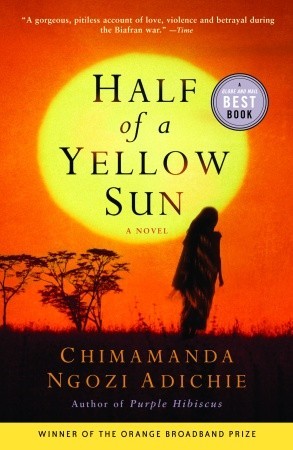
 It came to me as an epiphany as I barreled through the last few pages of this book, blanketed in my Sunday evening lethargy, marveling at Adichie's graceful evocation of a forgotten time and place and feeling the embarrassment of having known nothing about the Biafran war, that somewhere in the Gaza strip the maimed bodies of children must lie strewn amidst the debris of their former lives while vicious debates rage on twitter in which people pick a side - Israel or Hamas - to defend from criticism. As if that's what matters.
Somewhere at this very moment there may be a terror-stricken, weeping child, fleeing to find cover, unaware of what she is running from, unaware of the finality of death, shielded by the caprices of the same history she is living, perhaps. Someday she may grow up well to become another Chimamanda to write the story which is hers to tell, and time, circumstances, and health permitting, I am going to be reading that book and be reminded of the umpteenth 'war' that not even my generation of enlightened, Nobel-peace-prize winning heads of state did enough to prevent, the damage that could have been preempted, and the children who could have grown up to carry the weight of civilization some day but didn't.
The farce of this relentless cycle of mayhem, killing, pillage, rape, and starvation will hit us time and again and yet leaders of the first world will continue to look dapper in their crisp suits and appear dignified while justifying their sale of high-tech weapons to warring parties because revenue is to be earned from the spilling of blood. For the sake of self-made demarcations, for the sake of that ridiculous nonentity called national pride, for the sake of righting wrongs done in the past we'll bury our children and future in mass graves and commit more wrongs.
This book deserves 4 stars in my eyes. It's not a flawlessly written work with its frequent straying into the territory of melodramatic personal relationships and cliched characterization and Adichie's writing seems to lack polish in places. But in no way does that stop this from being a highly important work of fiction that the annals of literature ought to acknowledge with a gleaming appraisal.
This is the past transcending the barriers of time to appear before us in a surely pale imitation of its true grotesqueness. This is Adichie leading us to history of a corner of the world we only associate with food programs, the UNHCR, unstable governments and inexorable ethnic conflicts. This is Adichie telling us that history ignored isn't history blotted out.
I didn't know Biafra at all; there are not enough books on Biafra (as confirmed by Goodreads and Google Books), because only those horrors of war survive oblivion which are fortunate enough to receive the world media's stamp of approval. Not all death and devastation caused by 'civil wars' are worthy of the glory of 'crimes against humanity' like Nigeria's smooth war tactic of starving Biafran children with tacit British support wasn't.
"Starvation propelled aid organizations to sneak-fly food into Biafra at night since both sides could not agree on routes. Starvation aided the careers of photographers. And starvation made the International Red Cross call Biafra its gravest emergency since the Second World War."
But there was a Biafra. Not the transient existence of the nation represented by half of a yellow sun but the reality of the people who, in the paroxysms of misguided idealism, picked the losing side in a war.
Chimananda's Olanna, Ugwu and Richard, all of whom weave their way in and out of manifold conflicts of morality, identity, and survival, serve as our guides in this landscape of kwashiorkor-plagued children with pot bellies while trying to make sense of the muddle of mutual Hausa-Yoruba-Igbo animosity. And along with them the reader navigates the maze of wartime barbarity, political allegiances, and interpersonal relationships with a growing sense of unease and uncertainty - who are the ones truly responsible? who are the perpetrators? who are the victims? what was the war for and what did it achieve?
"Grief was the celebration of love, those who could feel real grief were lucky to have loved. But it was not grief that Olanna felt, it was greater than grief. It was stranger than grief."
In the end any such attempt at such neat compartmentalization makes little difference to the truth of lives destroyed in a fit of murderous passion. In all likelihood, there will be more Biafras and Srebrenicas and Rwanda-Burundis and Syrias and Gazas as there will be the burden of future tragedy and loss to be borne by hapless survivors. But there's the small assurance that there will be the Chimamanda Ngozi Adichies of the world to give a human face to the solemn formality of statistics every time.
First published:-
1978
Star rating:-
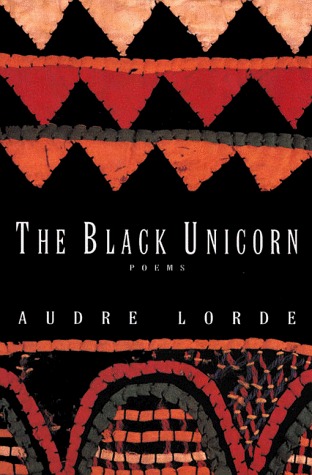
 These poems are like shards of glass refracting the blurred image of some sombre new insight into the human condition - the agony of love, the pangs of coming to grips with the idea of racial segregation in a world one previously thought had no demarcations, the pervasive pessimism of living as reaffirmed by the morning newspaper, an elegy to the memories of a childhood friend whose time on earth ran out too soon, the melancholic ruminations of a prostitute, the absurdity of children of today being raised like slaughterhouse pigs to be sent to the war-front tomorrow.
Coming in and out of cities
untouched by their magic
I think without feeling
this is what men do
who try for some connection
and fail
and leave
five dollars on the table.
If the annals of literature are to be consulted, most of these are time-worn subjects which other more renowned poets have regurgitated throughout their distinguished careers, after molding them in accordance with their perceptions of the world and its many idiosyncrasies. And yet Audre Lorde's words, imbued with despondency, regret, hope and fortitude at the same time, tempt you to read them again and again. Her lines flow effortlessly despite their innate simplicity, maintaining an enviable rhythmic symmetry, rendering the reader's tendency to puzzle over esoteric references unnecessary since there are almost none.
There are a handful of poems here, in praise of the female and androgynous forms of divinity worshipped by the inhabitants of the historical kingdom of Dahomey and the Yoruba people of western Nigeria, which bring to light the oft-overlooked aspects of the cultural ethos of African people. But there's a conveniently provided glossary of African terms at the end to better facilitate complete understanding of these.
You were not my first death.
but your going was not solaced by the usual
rituals of separation
the dark lugubrious murmurs
and invitations by threat
to the grownups' view
of a child's inelegant pain
so even now
all these years of death later
I search through the index
of each new book
on magic
hoping to find some new spelling
of your name
The implications hidden between her verses do not reinforce a kind of self-obsessed confessionalism as often found in Sylvia Plath or Anne Sexton's works or the heavy-handed inclusion of so many allusions that the poet's urge to communicate is buried under towering ambitions of dismantling poetic conventions.
Sometimes, her words give the impression of mildly cryptic messages casually scribbled at the back of a notebook, perhaps, while she may have been staring out of her window distractedly. Sometimes, they are her anguished lament, her impassioned protest, wrenched out of her by the brutality of the world or the injustice perpetually dished out to those clinging to the lowermost rungs of the societal ladder for dear life. Her 'Power', one of the most influential and well-known poems from her entire oeuvre, simmers with a righteous rage, intense enough to blow a hole through the edifice of 'white supremacist patriarchy' aside from being a tribute to the memory of young Clifford Glover, a 10-year-old African American boy shot dead by a white cop on duty in South Jamaica, Queens, New York in '73, who was later acquitted by a white-majority jury with a single black female judge.
Today that 37-year-old white man with
13 years of police forcing
has been set free
by 11 white men who said they were satisfied
justice had been done
and one black woman who said
"They convinced me" meaning
they had dragged her 4'10" black woman's frame
over the hot coals of four centuries of white male approval
until she let go of the first real power she ever had
and lined her own womb with cement
to make a graveyard for our children.
Lorde remains one of the few poets in American history who had to contend with the tyranny of conforming to the demands of too many labels conferred on persecuted minorities - black woman in a white man's world, radical feminist, lesbian, civil rights activist. And yet she managed to breach the boundaries of these individual identities by singing in a richly resonant voice whose musicality still holds the power of bridging gaps, relaying the stories of the voiceless and the marginalised, healing the scars left by turbulent times and smoothening out our countless differences across continents and timelines.
In my eyes, that makes her a hero more than a poet.
____