Showing posts with label Feminism-Feminist Undertones. Show all posts

Sunday, July 5, 2015

Review: The Blazing World by Siri Hustvedt

First published:- 2014

Star rating:-


The problem with this book is that none of it rings true - the characterization, the narration, the atmosphere, the dialogues, the relationships, even the emotions. Everything seems so fake and overwhelmingly dramatic that at times I cajoled myself into reading on in the hopes of spotting some noticeable evidence of parody at work. But nope. Sardonic self-deprecation isn't the objective here. These people are all serious and want me to take them seriously. 

Although once I persuaded myself to go with the flow and obsequiously accepted the narrative's palpable delusions of grandeur and omnipotence, the reading experience became a lot more bearable. Because sometimes even if a book manages to irritate me with its undisguised self-admiration, I can gleefully read on if it contains an intelligent discussion on the human condition. And the good thing is 'The Blazing World' is blazing with new ideas, bursting at the seams with complex concepts on neuroscience, memory, phenomenology, perception and gendered identities which require careful, prolonged contemplation. Additionally, Siri Hustvedt can rustle up a wonderful turn of phrase and a syntactically elegant, lexically succulent sentence. So the negatives and positives are fairly balanced. 

Much like its protagonist Harriet Burden's creations, The Suffocation Rooms or Beneath, the book is like an elaborate contraption, a labyrinth of contrasting worldviews and allusions to arcane texts designed to aid the reader in comprehending the mess that lies outside clearly demarcated boundaries defining human existence. Friends, family, therapists, gallery owners, art reviewers, journalists, expose layer after layer of prejudice, personal contempt, vague conjectures, hollow biases while projecting their own image of Harriet Burden as an artist who had to use male pseudonyms to get attention in the art world. In posterity, Harriet is only reconstructed as a montage of other people's opinions and her journal entries, as a widely learned woman whose talent is overlooked by her rich, influential art collector husband and the male-dominated art world in general. Desperate for recognition, she decides to pull off an intricate con on the artworld by showcasing her work using three male artists as her 'masks'. But her plans derail when her last front aka Rune Larsen, an eccentric, manipulative artist, refuses to play along and takes credit for her work.

All intellectual and artistic endeavors, even jokes, ironies, and parodies, fare better in the mind of the crowd when the crowd knows that somewhere behind the great work or great spoof it can locate a cock and a pair of balls (odorless, of course). The pecker and beanbags need not be real. Oh no, the mere idea that they exist will suffice to goad the crowd into greater appreciation.

Women artists are less appreciated than their male counterparts, viewed with prejudice, treated with contempt, rarely allowed entrance into the hallowed halls of fame.... yada yada...you get the picture. Except something about the way Hustvedt delivers this feminist-y rant left me a little cold. I blame the highly unconvincing multiple perspectives and Hustvedt's general disregard for the 'show don't tell' device. This is where I prefer Margaret Atwood's deconstruction of the mind of a female painter/artist (Cat's Eye) because Atwood knows how to fashion a blistering denunciation of male chauvinism without being overt about it and she can recount a believable story like nobody's business. Hustvedt, on the other hand, seems rather intent on creating opportunities within a text to insert esoteric references and paragraph length footnotes which scarcely add anything to the world which our characters inhabit. 

Long story short, I want to remember this as an intellectual exercize, or as a corpus of interesting ideas.


_____

   photo C136E66569D294E4D5DA2D8124D4FF69.png

Saturday, August 30, 2014

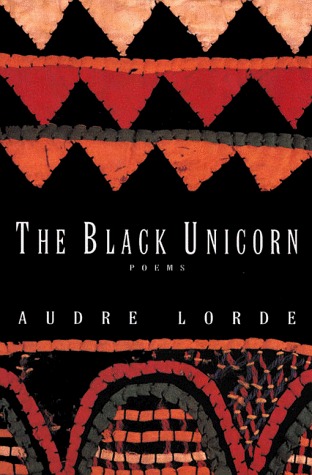
Review: The Black Unicorn: Poems by Audre Lorde


First published:-1978

Star rating:-

These poems are like shards of glass refracting the blurred image of some sombre new insight into the human condition - the agony of love, the pangs of coming to grips with the idea of racial segregation in a world one previously thought had no demarcations, the pervasive pessimism of living as reaffirmed by the morning newspaper, an elegy to the memories of a childhood friend whose time on earth ran out too soon, the melancholic ruminations of a prostitute, the absurdity of children of today being raised like slaughterhouse pigs to be sent to the war-front tomorrow. 
Coming in and out of cities
untouched by their magic
I think without feeling
this is what men do
who try for some connection
and fail
and leave
five dollars on the table.

If the annals of literature are to be consulted, most of these are time-worn subjects which other more renowned poets have regurgitated throughout their distinguished careers, after molding them in accordance with their perceptions of the world and its many idiosyncrasies. And yet Audre Lorde's words, imbued with despondency, regret, hope and fortitude at the same time, tempt you to read them again and again. Her lines flow effortlessly despite their innate simplicity, maintaining an enviable rhythmic symmetry, rendering the reader's tendency to puzzle over esoteric references unnecessary since there are almost none. 
There are a handful of poems here, in praise of the female and androgynous forms of divinity worshipped by the inhabitants of the historical kingdom of Dahomey and the Yoruba people of western Nigeria, which bring to light the oft-overlooked aspects of the cultural ethos of African people. But there's a conveniently provided glossary of African terms at the end to better facilitate complete understanding of these. 

You were not my first death.
but your going was not solaced by the usual
rituals of separation
the dark lugubrious murmurs
and invitations by threat
to the grownups' view
of a child's inelegant pain
so even now
all these years of death later
I search through the index
of each new book
on magic
hoping to find some new spelling
of your name

The implications hidden between her verses do not reinforce a kind of self-obsessed confessionalism as often found in Sylvia Plath or Anne Sexton's works or the heavy-handed inclusion of so many allusions that the poet's urge to communicate is buried under towering ambitions of dismantling poetic conventions. 

Sometimes, her words give the impression of mildly cryptic messages casually scribbled at the back of a notebook, perhaps, while she may have been staring out of her window distractedly. Sometimes, they are her anguished lament, her impassioned protest, wrenched out of her by the brutality of the world or the injustice perpetually dished out to those clinging to the lowermost rungs of the societal ladder for dear life. Her 'Power', one of the most influential and well-known poems from her entire oeuvre, simmers with a righteous rage, intense enough to blow a hole through the edifice of 'white supremacist patriarchy' aside from being a tribute to the memory of young Clifford Glover, a 10-year-old African American boy shot dead by a white cop on duty in South Jamaica, Queens, New York in '73, who was later acquitted by a white-majority jury with a single black female judge.

Today that 37-year-old white man with
13 years of police forcing
has been set free
by 11 white men who said they were satisfied
justice had been done
and one black woman who said
"They convinced me" meaning
they had dragged her 4'10" black woman's frame
over the hot coals of four centuries of white male approval
until she let go of the first real power she ever had
and lined her own womb with cement
to make a graveyard for our children.

Lorde remains one of the few poets in American history who had to contend with the tyranny of conforming to the demands of too many labels conferred on persecuted minorities - black woman in a white man's world, radical feminist, lesbian, civil rights activist. And yet she managed to breach the boundaries of these individual identities by singing in a richly resonant voice whose musicality still holds the power of bridging gaps, relaying the stories of the voiceless and the marginalised, healing the scars left by turbulent times and smoothening out our countless differences across continents and timelines. 
In my eyes, that makes her a hero more than a poet.


____

   photo C136E66569D294E4D5DA2D8124D4FF69.png

Monday, August 25, 2014

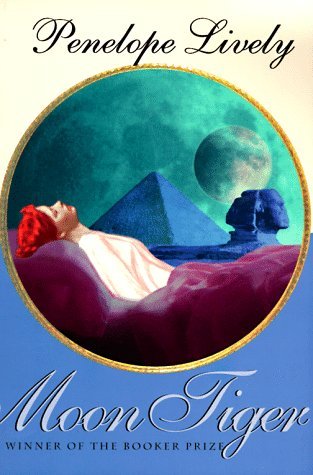
Review: Moon Tiger by Penelope Lively

First published:-1987

Star rating:-

Read in:- December, 2013


Claudia Hampton speaks to me of wars fought in distant lands, of the ever-persistent forward march of humanity in the quest for collective betterment, of stories unknowingly buried forever in the catacombs of time and never unearthed, of the people we carry in our hearts wherever we go, of the history of the world intertwined with our own. Claudia tries to make sense of the cacophony of voices inside her head and outside, of conflicting opinions colliding violently creating sparks that burn down empires and turn to rubble the foundation of regimes. Claudia tells me a story of the past melded with the present. 

Claudia's history of the world isn't one-sided. She accedes, to all the players involved, their right to speak for themselves, to say that which has been coldly snubbed by the opinionated historian of the past. Claudia does not look at past events through the lenses of established notions, of opinions passed off as indisputable facts. Larger than life heroes are reduced to the status of mere mortals in her eyes, violent uprisings become a trigger for devastating tragedies instead of turning points in the history of a nation's struggle for liberty. Images of a world war become indiscernible from the images of her lover who dies fighting in it and the entailing heartbreak she could never purge from her memories no matter how hard she tried. The unyielding bond she shares with her brother Gordon, her rival, her biggest critic, her most devoted admirer, and in the end her lover, remains intact even after he is no longer there to provoke her, to argue with her relentlessly, to urge her on towards becoming a more refined version of herself. 

"For there are moments, out here in this place and at this time, when she feels that she is untethered, no longer hitched to past or future or to a known universe but adrift in the cosmos."

Claudia never became what others wanted her to be, stubbornly trudging along a path forged by none but herself. She loved the daughter born out of wedlock dearly, but from afar, without the grand show of affection expected of any mother. And as she lies in that hospital bed, her life force slowly ebbing away, a frail old woman of 76, misunderstood by the ones dearest to her, my heart weeps for the grief that she kept carefully hidden from everyone, a secret she carried to her grave. But I bid her farewell with a smile, soothed by the knowledge that her life was, after all, a life well-lived.


  photo C136E66569D294E4D5DA2D8124D4FF69.png

Thursday, July 17, 2014

Review: Feminism is for Everybody by Bell Hooks

First published:-2000

Read in:- June, 2014

Star rating:-

Not until recently had I emerged out of the rock I was living under and located the @everydaysexism twitter account. Keeping an eye on their retweets for a little less than two weeks enabled me to discover that women are not only forced to endure the lecherous male gaze (often called 'stare rape' these days) on public transportation, made the object of innuendo-laced, denigrating remarks since puberty but also masturbated at in public without their consent (not even women over 60 had been spared) . How blissfully ignorant I was of this last facet of everyday sexual harassment! I went on a kind of mad rampage immediately, flooding my timeline with a deluge of tweets on the subject, appealing to more of my followers to follow the everyday sexism account. A day later when I had checked back in eagerly in the hopes of noticing any visible change - NOTHING. Not even one person among my followers (I have nearly 1600 which maybe just a handful but it's not a very teeny number either) had honored my request apart from the 3 who were already following them - all of them women or women's issues related accounts.

It was then that I realized, 'feminism' in the 21st century is actually like a hip, new item of home decor that you place on a wall cabinet among the other borrowed, trendy opinions you profess as personal philosophy, then forget about. Whenever some horrendous instance of brutality against a woman makes the morning news headlines, everyone's 'tch-tch-ing' fake concern for civilization resurfaces, spills over into the realm of their office lunch hour debates and after a while dies a natural death. Then they go back to the comfort of their tweleb status by posting the same old 'jokes' about dumb blondes, unreasonable wives, sluts, 'cunts', boobs and what have you, each of which are guaranteed to get at least 20+ retweets. 
Lulz just chill, we're all kidding here, getting our kicks out of reinforcing the same old stereotypes that have done considerable damage to society since the dawn of time. No harm done.

It is this same all-pervading reluctance of acknowledging the efficacy of a concept like feminism as a panacea for sexism, violence and all the other concomitant shit women face every single moment of their lives that forms the backbone of Bell Hooks's book.

She merely chooses to use 'white supremacist capitalist patriarchy' as a refrain so as to hammer this information into our brains. Yes the recurrence of this phrase gets dull after a while, yes it is somewhat annoying but no it is not irrelevant. Especially since Bell Hooks seems to support the branch of feminism which brings the concept of equality for everyone (including homosexuals) in all walks of life - sexual, economic, social and religious - under its envelope. 

She summarizes the inception and journey of the feminist movement through the decades - how it made a first appearance in the U.S. in the 60s with the waves of bra-burning (she is not against bra-burning btw), angry women who had major grievances against a domestic arrangement where they held little to no power, how initially they believed 'feminism to be the theory and lesbianism the practice', how it has undergone gradual improvement to evolve into the polished academic discipline that it is today, how it was seen as an anathema in the past and how it continues to face a steadily growing list of challenges - apathy of mass media being a major one. She deftly interweaves feminism with the idea of politics, class struggle, physical beauty, love, religion, marriage, reproductive rights, parenting, masculinity and race to present before us a realistic picture of what truly internalizing its precepts can mean for us and our future. 

But all the conventionally known preachings of the book aside, she makes another very pertinent point about stripping the verbiage of jargon from all the academic work on feminism to make them more accessible to students and laymen alike, and working together to raise awareness of how feminism isn't inherently 'anti-men' or 'anti-religion' or even simply restricted to serving the interests of women in civilization, how feminism is for everybody.

"Today in academic circles much of the most celebrated feminist theory is written in a sophisticated jargon that only the well-educated can read. Most people in our society do not have a basic understanding of feminism; they cannot acquire that understanding from a wealth of diverse material, grade school-level primers, and so on, because this material does not exist. We must create it if we are to rebuild feminist movement that is truly for everyone."

To come to the negatives, there are almost none except the monotonous drone in which Hooks drives home her points which makes the reading experience little less than enjoyable, the drabness of her prose and the way her repeated references to her own writings reek of self-importance. And to further account for that missing star, I have this teeny niggling doubt about her defining acts of 'domestic violence', even those carried out by women against other women and children, as'patriarchal violence'. She reckons some women have been so rigorously conditioned by the patriarchal world order based on principles of domination through violence and other acts of intimidation, that they re-enact the same in their daily lives while dealing with people inferior in status to themselves. Which I agree with but my limited knowledge of the world and its assorted contradictions tells me it's not just the men. Some primeval inclination towards violence and skewing the power balance in any relationship is embedded in the human psyche in general, irrespective of sex. 

But that aside, the overarching message one gets from Hooks's outlook is that the traditional notions of 'manhood' and'masculinity' have to be flushed down the toilet for feminism to even have a chance at victory. And there's no second guessing it.


   photo C136E66569D294E4D5DA2D8124D4FF69.png

Wednesday, June 4, 2014

Review: Their Eyes Were Watching God by Zora Neale Hurston


First published:-1937

Read in:- April, 2014

Star rating:-

Here is a woman who led a wretched life for years, doomed to stagnate in the drab depths of oblivion even after her death which had gone under the radar and generated no nostalgia-soaked, emotional obituaries. She lay in an unmarked grave in the Garden of Heavenly Rest, Florida, treated by her own contemporaries like an outcast because of a difference in perspectives, to be resuscitated and acknowledged as one of the foremost powerful voices that ever reverberated across the African-American literary landscape years later. And here is her creation, a 'coffee-and-cream' skinned Janie Crawford, a child born out of a possible rape, a sure forerunner to Toni Morrison's Sethe, Denver and Beloved or Alice Walker's Celie and Nettie. A mulatto woman in a white man's world, who grew aware of an identity not shackled by notions of race, skin color, and even gender, who could look beyond the small horizon carelessly conferred on her by an era which was bluntly apathetic to her kind, who could aspire to be free of a legacy of mere victimhood.
And here I am, trying to make sure I do not fuse Zora and Janie together, unable to decide how to love, revere and pity them at the same time.

I watched the young and carefree Janie, who bubbled over with an enthusiasm for life, eventually morph into the Janie who embraced the bittersweet realization of having loved and lost. My eyes traced her unsure footsteps from financial servitude to financial stability, from the daily battle of ignoring the sting of self-denial to grasping at a life free of emotional subservience. I loved the hapless, innocent Janie who consented to being passed over like property from her grandmother's ownership to her first husband's just as much I admired the Janie who found her salvation in Tea Cake's good-natured laughter after two marriages which had simultaneously stripped her of her last shred of self-esteem and caused her to listen to that stifled inner voice. And I felt a strange kind of happiness building up inside for the Janie who would not succumb to the temptation of self-loathing like the misguided Mrs Turner, the Janie who found the firm ground of self-awareness to tread on while the world of conflicting ideas rotated on its axis like ever.

Zora Neale Hurston had a rich dual voice - one of them fearlessly recounting the quirks characterizing the Black American community in the deep south still clinging on to the outer fringes of a white-dominated society intertwined with the lyrical, oneiric voice of a philosopher and a feminist, possibly one of the first among her kind. And it is this wholly harmonious union of these two voices which transforms this bildungsroman into a honeyed ballad of love and grief, of psychological bondage and emancipation.

"He looked like the love thoughts of women. He could be a bee to a blossom-a pear tree blossom in the spring. He seemed to be crushing scent out of the world with his footsteps. Crushing aromatic herbs with every step he took. Spices hung about him. He was a glance from God."

Janie never bore a grudge against her 'God' for making her path to fulfillment so long and arduous. She merely watched Him with hopeful eyes, lovingly accepting all He bestowed on her. And I watched Janie with a tear-strained smile.


   photo C136E66569D294E4D5DA2D8124D4FF69.png

Monday, May 5, 2014

Review: The Color Purple by Alice Walker


First published:- 1982

Star rating:-

Read in: - September, 2013

I give this book 5 stars to spite the myopic David Gilmours and the V.S. Naipauls of the world who think books written by women are irrelevant. I give this 5 stars to make up for the many 1/2/3 star ratings it may receive simply because of Alice Walker's forthright, honest portrayal of unpleasant truths that are often conveniently shoved under the carpet so as not to disturb the carefully preserved but brittle structure of dogma and century-old misconceptions. 
And I award this 5 stars, symbolically on Banned Books Week as an apology for all the cowardly sentiments of the ones who misuse their power by banning books, thereby shutting out many powerful voices which demand and need to be heard.

In my eyes, an author's merit lies not only in their sense of aesthetic beauty, but also in the scope and reach of their worldviews which must reflect in their craft.

Alice Walker's is the voice of one such African American writer that recounts a story which not only breaches the boundaries of an issue like emancipation of women but tries to detect a common pattern in problems plaguing civilizations across continents. She gives us one horrifying glimpse after another into the lives of women ravaged by unspeakable brutalities like rape and abuse, lives searching for meaning and connection and seeking out that elusive ray of hope amidst the darkness of despair. 
And by the end of the narrative, she brings to light with great sensitivity, that misogyny, sexism and blind patriarchal prejudices are as rampantly in vogue in the urban, upscale sphere of American cities as they are in the intractable, untameable African landscapes.

Celie and Nettie. Shug Avery, Sofia and Mary Agnes. Tashi and Olivia. 
All these are but different names and many facets of the same disturbing reality.
If the lives of Celie and Nettie are torn apart by sexual abuse and humiliation from childhood, then Tashi and other unnamed young African girls of the Olinka tribe are victims of genital mutilation and other forms of psychological and physical torture.
If the men of African American families dehumanize the female members to the point of treating them as mere care-givers and sex slaves, then the objectification of African women by the men of their families is no less appalling. And contrary to accepted beliefs, white families in America are just as easily susceptible to misogyny as the African American families are.

But Alice Walker doesn't only stop at opening our eyes to the uncivilized aspects of our so-called civilized world, but also shows us how knowledge of the world and people at large, self-awareness and education can help exorcize such social evils, how it is never too late to gain a fresh perspective, start anew and how empowerment of women eventually empowers society.

Dear David Gilmour, if I were a professor of English literature I'd have taught Alice Walker to my students without a shred of hesitation, because here's an author who may not possess the trademark sophistication of Virginia Woolf's lyrical prose but who, nonetheless, fearlessly broaches subjects many masters and mistresses of the craft may balk at dealing with.

Alice Walker: 5 | David Gilmour: 0


   photo C136E66569D294E4D5DA2D8124D4FF69.png

Sunday, March 9, 2014

Review: The Handmaid's Tale by Margaret Atwood

First published:-1985

Read in:- August, 2013

 Star rating:-

Consider this not a ground-breaking work of literature. Consider this not a piece of fiction boasting an avant-garde mode of narration. 
Consider it not a commentary on the concept of subjugation of the weak by the ones holding the reins. Consider it not a thinly veiled feminist diatribe either.

Instead, consider The Handmaid's Tale an almost physical experience. Consider Margaret Atwood a fearless deliverer of unpleasant news - a messenger unafraid of dishing out the bone-chilling, cruel, unaltered truth and nothing but the truth.

Move over Bram Stoker. Move over H.P. Lovecraft. Fade away into oblivion, Edgar Allan Poe. Disappear down the depths of obscurity, Stephen King. Your narratives are not nearly as coldly brutal, your premonitions not nearly as portentous. 
Because Ms Atwood, presents to us something so truly disturbing in the garb of speculative fiction that it reminds one of Soviet-era accounts of quotidian hardships in Gulag labour camps. 

Speculative is it?

Aren't the Offreds (Of Fred) , Ofglens (Of Glen), Of warrens (Of Warren) of Gilead equivalent to the Mrs So-and-So-s of the present, reduced to the identity of their male partners? Isn't the whittling down of a woman to the net worth of her reproductive organs and her outer appearance an accepted social more? Isn't blaming the rape victim, causing her to bear the burden of unwarranted shame and social stigma a familiar tactic employed by the defense attorney?
Hasn't the 21st century witnessed the fate of Savita Halappanavars who are led to their untimely deaths by inhumane laws of nations still unwilling to acknowledge the importance of the life of a mother over her yet unborn child?
Doesn't the 21st century have materially prosperous nations governed by absurd, archaic laws which prohibit a woman from driving a car?
Doesn't the world still take pleasure in terrorizing activists like Caroline Criado-Perez with threats of rape and murder only because they have the audacity to campaign for female literary icons (Jane Austen) to become the face of Britain's 10-pound note?
Do I not live in a country where female foeticide is as normal an occurrence as the rising and setting of the sun?

Are we still calling this speculative fiction?

Some may wish to labour under the delusion that the women belonging to this much vaunted modern civilization of ours are not experiencing the same nightmare as Offred and are at perfect liberty to do what they desire. But I will not.
Because when I look carefully, I notice shackles encircling my feet, my hands, my throat, my womb, my mind. Shackles whose presence I have become so used to since the dawn of time, that I no longer possess the ability to discern between willful submission and conditioned subservience.

But thankfully enough, I have Margaret Atwood to jolt me back into consciousness and to will me to believe that I am chained, bound and gagged. That I still need to break free. 
I thank her for making me shudder with indignation, revulsion and righteous anger. I thank her for causing bile to rise up my throat. 
And I thank her for forcing me to see that women of the present do live in a dystopia like Offred's United States of America. We just prefer to remain blissfully blind to this fact at times.

Disclaimer:- I mean no disrespect to the other writers mentioned in this review all of whom I have read and deeply admire.


   photo C136E66569D294E4D5DA2D8124D4FF69.png

Monday, January 27, 2014

Review: The Summer Before the Dark by Dorris Lessing

First published:-2009
Star rating:-
Read in:-November, 2013


Before it all slips away from my feeble psychological grasp, before the after-effects start wearing off, let me write it all out. About the summer before the dark.

The first thing that struck me while reading was this - Fuck purple prose. Or red or maroon or magenta prose for that matter. (And I say this in full acknowledgement of the fact that my prose is often closer to purple than any other color.) Screw post-modernism and its deliberate way of being obtuse, obscure, snarky. Screw all that.

Because this is it. This is what I want to achieve if I were to attempt writing a stream of consciousness novel some day. This laying bare of all the everyday inner battles a woman wages with her conscience, with society, with those hunters lined up on the sidewalk eyeing her with the interest of a sexual predator as she walks home in that form-fitting dress. Delving this deep into the psyche of a human being who navigates the space of a few months rapidly changing disguises never knowing which of them are closer to her real self, but in prose so beautifully self-evident. The things nobody in the world is bothered about because all of it is so awfully pedestrian. After all, there's nothing remotely tantalizing about an upper class woman having perfunctory sex in a passionless affair or caring for her husband, her children, molding her existence around their schedules. There's barely any appreciation for what she is doing for society at large by playing the forever-at-your-service comfort-giver. The way she is working a thankless job, drifting through life mostly invisible in the eyes of the ones who surround her. 

This is how Virginia Woolf would have written if she had been alive right now. Because Mrs Kate Brown is nothing but a slightly modified modern day avatar of Clarissa Dalloway or Mrs Ramsay. Her insecurities about her steadily whitening hair and declining sex appeal maybe belittled as a rich white woman's first world problems but pay a little attention to them and you will see how universal and all-encompassing her gripe with patriarchy is. 

"She marries because to get married young is to prove herself; and then it must be as if she has inside her an organ capable of absorbing and giving off thousands of watts of Love, Attention, Flattery, and this organ has been working at full capacity, but she can't switch the thing off."

This is what I can only hope to do some day. Make my words bite, sting and burn those who read them. Force them to ponder upon devoured words for extended periods of time.

But does it really deserve 5 stars? Perhaps not, especially in light of the portions where the narrative loses sight of its destination in one of its countless meanderings and gives us the impression that we are trapped in the quagmire of Kate's own inner chaos. But then I am already in awe of Doris Lessing's voice and its power, her way of systematically eviscerating an unequal partnership where the husband is somehow in command of his own life but the wife isn't, her way of cutting open and dissecting motherhood, magnifying each one of its ignored, glossed over aspects for us to see clearly. I love the way this perfectly ordinary Kate Brown with her ordinary name gets under my skin and burrows through my insides, making me so deeply uncomfortable, coercing me into reconsidering my view of the women I have known closely over the years. 

How elegantly she bridges the gap between the inner and outer worlds of an individual and yet in the simplest of manners! And that, for me, is a 5-star achievement. 

   photo C136E66569D294E4D5DA2D8124D4FF69.png
Related Posts Plugin for WordPress, Blogger...