Showing posts with label Relationships. Show all posts

Sunday, April 5, 2015

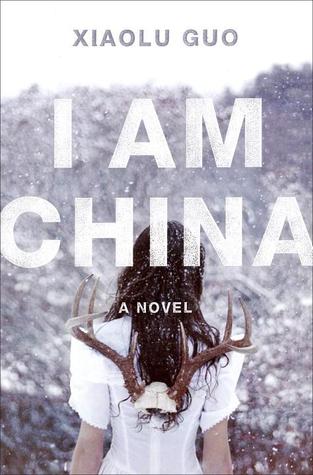
Review: I am China by Xiaolu Guo


Publishing date:-September, 2014

Publishing House:- Doubleday Books

Star rating:-

Seldom do I rue the absence of the solidity of a paperback I can clutch to my chest out of an overwhelming love, memorize the feel of its pages against my fingertips. My priorities lie in knowing what I do not, the means to the end irrelevant in this instance. The advent of the e-reader has negated the problem of the steadily shrinking space on the book shelf and helped me horde books without a care. And yet sometimes a kindle copy just isn't enough. The last time I had felt this familiar pang of kinship with a book right after turning over the last page was when Adichie left me feeling the weight of Biafra's senseless wartime violence (Half of a Yellow Sun). I procured a physical copy right after. 

I will do the same with this one too. Because imperfectly characterized and contrived as it is, this is the story I would want to associate modern China with. This is a book I would want to read again someday. 

All the cacophony around censorship and forgotten square massacres and totalitarianism aside, Xiaolu Guo's globe-trotting, no doubt most ambitious work till date tries to reclaim the dignity of the individual from the clutches of state ownership - a theme I have been desperately seeking out in my pick of literature from the land with less than satisfactory results. 

So far what I have gleaned from the works of writers from the mainland is mostly an overarching sense of dejection and bitterness - a gloomy preoccupation with rubbing old wounds raw.

Outside the bar, the midnight sky was lit by a vast cascade of fireworks, illuminating the solemn and dark Long Peace Avenue, the featureless Heavenly Gate Park, the foreboding Forbidden City, the drumming Bell Tower, and finally creating a fake light of day in Tiananmen Square. A new century of amnesia had arrived on China's earth.

But unlike the defeated, anguished voices of other contemporary Chinese authors, Guo's brims over with a valiant hope. Her Mu and Jian face the consequences of their political beliefs with an understated courage, hop across geographical boundaries to embrace the challenges of a hitherto unknown world outside their beloved China, even if to find themselves thwarted at various junctures. Driven out of their homeland by forces beyond their control and comprehension, they plunge headfirst into individual journeys of self realization, only their letters to each other tethering them to their shared reality in Beijing. And yet the same restlessness of being, the same grim disillusionment and feeble optimism color their evolving worldviews as they grapple with both hostility and acceptance in the humdrum heart of Europe and America. Experiences dismantle their prejudices about the west and the reckless abandon of youth gradually gives way to true wisdom. While Mu comes to acknowledge the purpose in Jian's subversive punk rock concerts in Beijing and his revolutionary zeal, Jian discovers merit in Mu's pacifist stance, her unrestrained love of life, art and literature. 

Art is the politics of perpetual revolution. Art is the purest revolution, and so the purest political form there is. A great artist is a great revolutionary.
Revolution = art, and art = perfect freedom. Right now, we have no revolution, no real art and no freedom.

As a lonely, unsociable Scottish translator unspools the many different threads of their past and present from a collection of letters and journal entries in her London flat, Mu and Jian's discordant voices harmonize in pitch and intensity across the barriers of time and space to meld into a symphony of human triumph. Their unbridled zest for life and liberty comes to symbolize the individual's quest for emancipation, to disentangle oneself from the myth of a national identity. Time, place and circumstances recede into the background. History's tenacious grip loosens. Mu and Jian's enduring love for one another finds its truest expression in the dream of a new China - one freed from the shadow of oppression.

I am China. We are China. The people. Not the state.

May this very dream survive.


**ARC received from Doubleday Books through Netgalley**
_____

Also published on Goodreads & Amazon.


 photo C136E66569D294E4D5DA2D8124D4FF69.png

Thursday, March 12, 2015

Review: Broken Homes & Gardens by Rebecca Kelley

To be published:- April, 2015

Published by:- Blank Slate Press

Star rating:-


It is nigh impossible to banish the specter of sky-high expectations for a book which proudly advertises itself as the When Harry Met Sally for the millenial generation. That movie has been comfort food for the lonely and the lovelorn and the ones navigating the treacherous waters of friends-and-a-little-morerelationships for decades now. 

So potential readers and Nora Ephron fans, better be forewarned that the central characters here are not even pale imitations of Harry Burns and Sally Albright. Neither does Malcolm possess Harry's infuriatingly self-assured persona nor does Joanna manage to embody Sally's quirkiness and emotional vulnerabilities. More often than not they come off as people with no discernible character traits - they flicker in and out of focus like shadowy silhouettes in a hazily lit room. Their friendship is never fleshed out for the reader's benefit. In fact the only conversations they have are completely devoid of any wit or substance and merely border on good-natured flirtation.

Malcolm and Joanna meet at a party and make out without even exchanging proper greetings first. Malcolm flies out to Kazakhstan the very next day for 2 years with the Peace Corps during which time they maintain a correspondence through hand-written letters - yes you read that right - not emails or the phone because nothing puts a dampener on romance like modern technological innovations! When Malcolm shifts back to Portland after the designated time period, they keep hovering around each other, doing the mating dance without actually acting on their mutual attraction. They make bad decisions which would have been acceptable had they not appeared as deliberately manufactured unrealistic plot contrivances to delay their eventual union.

Long story short this is a bit like Harry Met Sally but not quite. It tries to sell the illusion of an unorthodox, fantasy love instead of conveying the truth of how relationships work in reality which brought Nora Ephron's creations universal adulation in the first place. However, on the plus side, there's no casual sexism here - Malcolm does not patronize Joanna like Harry aggressively dismisses Sally's opinions in the movie. (But then we are no longer in the 90s) It has all the trappings of a regular chicklit novel except without the mediocre writing and the abundance of idiotic cliches. And quite readable if not compulsively so.

As long as you are not craving for Nora Ephron-level insight into the quotidian comedy and heartbreak of relationships but light reading which does not require complete suspension of disbelief, Rebecca Kelley will keep you entertained.

__

**with thanks to Blank Slate Press and Netgalley for the ARC**


___

Also published on Goodreads and Amazon.

   photo C136E66569D294E4D5DA2D8124D4FF69.png

Thursday, December 11, 2014

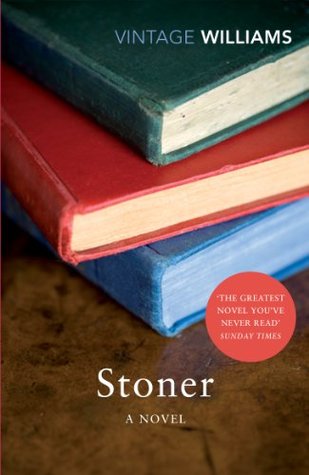
Review: Stoner by John Edward Williams


First published:-1965

Republished by:- Vintage Digital, 2012

Star rating:-

“Most men lead lives of quiet desperation and go to the grave with the song still in them.” - Henry David Thoreau

The triumph of this work lies in its self-effacing world-weariness, its tone of presupposed indifference even to the prospective reader's concerns. Like the inexorable stoicism of its protagonist in the face of misfortune and persecution, the narrative revels in its own lacklusterness, its state of diffused melancholy. 
William Stoner, first student and eventually English professor at (fictionalized) University of Missouri lives a life of flawed choices, unrealized potential and innumerable regrets, witnessing the world go through a period of tremendous sociopolitical ferment in the 20th century, and remaining invisible in the eyes of history. He breathes his last, just as silently, alone in a hospital ward, feebly flipping through the pages of a scholarly work. But do not for a moment think this deceptively drab synopsis encapsulates the essence of 'Stoner'. John Williams, through his luminous prose and by the aid of a vision which is as solemn as it is lucid, reminds us of the quotidian battles fought every moment anywhere by faceless individuals against the forces of oppression and moral laxity - that the fate of civilization is dependent on the capable or incapable shoulders of an individual.

He found himself wondering if his life were worth the living; if it had ever been. It was a question, he suspected, that came to all men at one time or another; he wondered if it came to them with such impersonal force as it came to him. The question brought with it a sadness, but it was a general sadness which (he thought) had little to do with himself or with his particular fate; he was not even sure that the question sprang from the most immediate and obvious causes, from what his own life had become.

An ode to literature? Yes. A story recounted with conviction and a quiet dignity? Undoubtedly. A sincere attempt at proffering acknowledgment on a seemingly inconsequential existence? That too. But more than anything else this is a literary toast raised in honour of those small, often unnoticed, acts of courage and compassion which somehow realign the moral order of the universe but are blotted out from memory and consciousness easily.
There is sadness here - boundless in depth and overwhelming in intensity - but hope glimmers occasionally too. Hope that the world may go to pieces and things may fall apart irrevocably yet a man may summon the strength to endure the tragedy of existence by discovering a true and unbreakable love. The currents of time weather away all past disappointments, longing, old grudges and anger. Only the love of the written word casts a glow in the eternal darkness.

A kind of joy came upon him, as if borne in on a summer breeze. He dimly recalled that he had been thinking of failure--as if it mattered. It seemed to him now that such thoughts were mean, unworthy of what his life had been. Dim presences gathered at the edge of his consciousness; he could not see them, but he knew that they were there, gathering their forces toward a kind of palpability he could not see or hear. He was approaching them, he knew; but there was no need to hurry. He could ignore them if he wished; he had all the time there was.

__

**much gratitude to Netgalley and Vintage Digital for providing a free e-copy as ARC**

Review also posted on Goodreads & Amazon.

   photo C136E66569D294E4D5DA2D8124D4FF69.png

Sunday, October 19, 2014

Review: Broken Harbour (Dublin Murder Squad, #4) by Tana French


First published:- 2012

Read in:- June, 2014

Star rating:-


There are certain things I pride myself on - the ability to read through a tremendous racket without losing my thread of concentration, the audacity to share my blasphemous distaste for pizzas with pizza worshippers who then proceed to shoot me death glares, and more pertinently, the way I don't balk at rating a piece of mainstream literature 5 stars if it has shown the grit to discard gimmickry and preserve that golden human touch. 

How ingeniously Tana French subverts the formulaic plotting of a 'psychological thriller', poking and prodding at the darkness we prefer to bury under the gloss of make-believe contentment until it becomes a threat of gargantuan proportions. How masterfully she paints this picture of a family marooned at the thin divide between normalcy and utter chaos, dangling precariously from the edge of oblivion. How mercilessly she concocts such a heart-wrenching tragedy where the lines between culpability and innocence are blurred to the point that both merge into a single entity, where the victims are just as unwittingly drawn to the dark side as the perpetrators and the ones entrusted with the task of rectifying the wrongs done. 

Sometimes the ugliness of visible reality is nothing but the tip of the iceberg and the truth is like a lightning bolt from the blue, capable of shattering the glass mansion of denial we prefer to live in. The truth runs much deeper, past the shallow defenses offered by skin and flesh, inexorably slicing through our bones.

"In that moment I thought of Broken Harbor: of my summer haven, awash with the curves of water and the loops of seabirds and the long falls of silver-gold light through sweet air; of muck and craters and raw-edged walls where human beings had beat their retreat. For the first time in my life, I saw the place for what it was: lethal, shaped and honed for destruction..."

'Broken Harbour' is about the proverbial monsters of our own creation lurking in the shadows biding their time to harm what we cherish the most, the slow disintegration of that 'good life' we have put together bit by bit and how sometimes cause does not precede effect. And it is a sad acknowledgement of the fact that a horrendous fate may lie in ambush for the sinless and unsuspecting. 

For the ones who steer clear of 'murder mystery novels' for their stereotypical compartmentalization of crime and detective work, I dare you to read this particular Tana French creation and remain unaffected.


 photo C136E66569D294E4D5DA2D8124D4FF69.png

Saturday, October 18, 2014

Review: The Likeness (Dublin Murder Squad, #2) by Tana French

First published:- 2008

Star rating:-

Read in:- March, 2014

"We had worked together seamlessly, she and I. I had drawn her to this house, this life, every bit as neatly and surely as she had drawn me."

Tana French knows how to conjure up the most charmingly creepy characters out of thin air like nobody's business - damaged individuals who go about life like sentient, breathing time bombs about to go off and leave a trail of wreckage consisting of wounded hearts and shattered illusions in the wake of their committed mistakes. Call this tale of blurred identities a flight of her fancy where the basic premise induces one eye-roll after another. Call this The Secret History redux. Call this anything at all. But a beautifully worded commentary on the unpredictability of human behavior will remain as unputdownable under any other name, all criticisms notwithstanding.

A murdered girl with a fake identity made up and used by an undercover cop and her superior years ago, and that same undercover cop destined to unravel the mystery of her murder by pretending to be the dead girl brought to life - who are we kidding here? All of this sounds ridiculous on several levels.

But hey it's Tana French! When she tells you a story, you deferentially suspend disbelief, snuggle into the comfort of your blanket, and read till you hear the first bird gleefully chirping outside your window signalling the onset of yet another morning.

'The Likeness' is a story about people who breach forbidden boundaries in search of the ultimate freedom, refuse to fit into some generic, pre-determined cog in the wheel of society and develop a hermetically sealed, secretive world of their very own where no outside forces are allowed to operate. And it depicts how this painstakingly achieved state of domestic harmony comes apart at the seams when the personal needs of an individual jeopardize the unity of the close-knit group. Thus in the same vein as its predecessor, 'The Likeness' ingeniously utilizes its characters and events to introspect on the fallout of human foibles. But it is important to note here that it is not much of a standalone mystery. It is essential that readers acquaint themselves with the happenings of the first book in the series to grasp the motivations behind our headstrong, kickass female protagonist's actions and the fragile state of her mind. 

It has been 6 months since the spectacularly eerie and depressing events of 'In the Woods' and Operation Vestal blew up in the face of Detectives Rob and Cassie, damaging their relationship beyond any hope of salvation, and leaving them with emotional scars that run much deeper than they care to admit to themselves. Cassie has moved from the Murder Squad to Domestic Violence, Rob is stuck in some other unknown branch of the police department, both no longer on speaking terms. In the midst of this irredeemable mess, a baffling murder case surfaces where the victim resembles Cassie down to her last lock of hair and carries an alias Cassie had used years ago on an undercover drug bust and gotten rid of later on. With no leads to follow and the mystery over the girl's true identity steadily deepening, Cassie decides to revisit her undercover roots (much to the chagrin of her gentle and considerate detective boyfriend Sam O'Neill) by masquerading as the victim, who somehow survived the assault, and returning to the secluded Whitethorn House with its assortment of 4 other inhabitants who are all PhD students of Trinity like Lexie, the murdered girl. Cassie aka Lexie's return under extraordinary circumstances triggers a set of curious events which, in turn, reveal alarming aspects of the lives of the 5 students whose closeness not only hints at something inexplicably disturbing but reveals darker sides of their past lives.

To be fair, this installment of the Dublin Murder Squad series is slightly underwhelming compared to Ms French's brilliant debut. None of the occurrences narrated are as bone-chilling or spooky and an awareness of the wafer thin nature of the logic presented creeps in once in a while. The very Secret History-ish list of ensemble characters (Daniel is Henry, Justin is Francis, Rafe is a cross between Charles and Bunny while Lexie and Abby have shades of Camilla in themselves) evoke a keen sense of déjà vu and the ending disappoints since the emotional aftermath of the crime(s) is much less affecting here compared to the climax of 'In the Woods', which begs the question why I have still rated this 4 stars despite the flaws. 

A good way to answer this question will be to put my finger on French's accurate reconstruction of that feather light feeling of not being tethered to worldly considerations yet and that firm, transient belief in the fact that we'll always remain young and invincible, forever unyielding to civilization's ruthless demands - the wonderful friendships of student life which slip right through our grasp and melt away into oblivion like treacherous mirages as 'real life' hurls one gauntlet after another our way. And it is this thoughtful portrayal of that unavoidable tragedy, of having to grow up and grow out of the optimism of youth, that all of us eventually experience at some point of time which tugs at the heartstrings the most and transforms 'The Likeness' into more of an homage to the intrigue and vigor of youth from just a preternatural murder mystery.


   photo C136E66569D294E4D5DA2D8124D4FF69.png

Monday, October 6, 2014

Review: The Secret Place by Tana French

First published:- August, 2014

Published by:-Viking Adult

Star rating:- 


Few other books have conjured up the ghost of my teenage years as successfully as this one, dredged up the hazy remembrance of that first, most agonizing heartbreak, the subsequent amateurish cynicism summoned up to preclude the hassle of emotional hangups and the feeling of having only just the foggiest notion of how the world works.

It is awe-inspiring how Tana French continues to incorporate such authentic sociocultural commentary into narratives which are usually taken to be written for the sole sake of providing cheap thrills. So blame her if I end up sounding like a smitten fangirl every time I review a book of hers. She is just that good even when she is writing out a logically fallacious scenario.

The teenage girls of 'The Secret Place' are much more than what C-grade teenybopper flicks and stereotype-riddled YA books make them out to be. They are capable of as much cruelty as kindness, as much self-sacrifice as vindictive selfishness. Here, the conniving, bitchy and backstabbing blonde isn't a cardboard cutout 'mean girl' symbolizing pure evil just as the archetypal good girls aren't as puritan. And a private boarding school turns into a zone of ineluctable conflict of interest where the realm of the personal frequently dovetails into that of the collective forming the intricate web of high school politics which implicitly governs the place.

...a place like this is riddled with secrets but their shells are thin and it's crowded in here, they get bashed and jostled against each other; if you're not super-careful, then sooner or later they crack open and all the tender flesh comes spilling out.

More impressive is how the four girls who lie at the heart of the mystery do not let their budding sexualities define their lives, or even sacrifice individuality on the altar of some contrived requisites of 'coolness' which teenagers are prone to do since rarely do they know any better at that age. Instead, they defy odds to carve out a private utopia for themselves, a clique which doesn't require the glue of some common ideology to survive - a secret place neatly tucked away in an obscure corner of their minds where they can be wholly unabashed of the unflattering sides to their personalities, sure of the fact that they will have each other's backs even when the world goes to pieces. 

...the whole point of the vow was for none of them to have to feel like this. The point was for one place in their lives to be impregnable. For just one kind of love to be stronger than any outside thing; to be safe.

In a way, the narrative of friendship and loyalty in the aftermath of a terrible crime is reminiscent of an earlier book in the series -The Likeness - which in turn was inspired by Donna Tartt's The Secret History. So fans of any of the former will be sucked right in even if they may have reservations about stories involving teenagers, specially teenage girls who are forever being dumbed down by writers looking to make a quick buck. Ms French here, true to her gift for impeccable characterization, adds many dimensions to their personalities. 

As the common refrain goes, calling books of the Dublin Murder Squad series mere 'crime novels' is almost like an outrageous insult. And this one's certainly no exception in this regard. There are two parallel 'before' and 'after' narratives devoted to uncovering the truth of the same murder. A story of the tragic collapse of a close-knit group of teenage girls who, even while trapped in the complicated tangle of sexual politics, fight to ward off influences which threaten to destroy their fortress of solitude. A celebration of the bond of friendship, how powerful and all-consuming an affair it can be and how unpredictably it can turn dangerous and even life-threatening. And, in the end, a poignant tribute to those charged years of adolescence, a unique phase of our lives we look back on with equal parts terror and fondness.

They are a forever, a brief and mortal forever, a forever that will grow into their bones and be held inside them after it ends, intact, indestructible.
**I received an ARC from Viking Adult via Netgalley**
___

Also posted on Goodreads and Amazon.

 photo C136E66569D294E4D5DA2D8124D4FF69.png

Monday, August 25, 2014

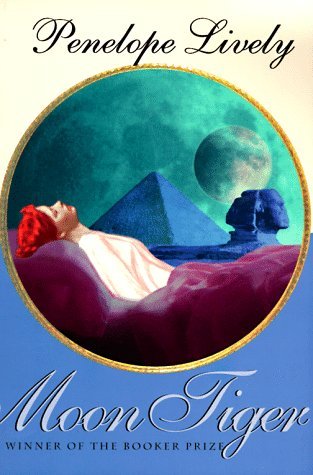
Review: Moon Tiger by Penelope Lively

First published:-1987

Star rating:-

Read in:- December, 2013


Claudia Hampton speaks to me of wars fought in distant lands, of the ever-persistent forward march of humanity in the quest for collective betterment, of stories unknowingly buried forever in the catacombs of time and never unearthed, of the people we carry in our hearts wherever we go, of the history of the world intertwined with our own. Claudia tries to make sense of the cacophony of voices inside her head and outside, of conflicting opinions colliding violently creating sparks that burn down empires and turn to rubble the foundation of regimes. Claudia tells me a story of the past melded with the present. 

Claudia's history of the world isn't one-sided. She accedes, to all the players involved, their right to speak for themselves, to say that which has been coldly snubbed by the opinionated historian of the past. Claudia does not look at past events through the lenses of established notions, of opinions passed off as indisputable facts. Larger than life heroes are reduced to the status of mere mortals in her eyes, violent uprisings become a trigger for devastating tragedies instead of turning points in the history of a nation's struggle for liberty. Images of a world war become indiscernible from the images of her lover who dies fighting in it and the entailing heartbreak she could never purge from her memories no matter how hard she tried. The unyielding bond she shares with her brother Gordon, her rival, her biggest critic, her most devoted admirer, and in the end her lover, remains intact even after he is no longer there to provoke her, to argue with her relentlessly, to urge her on towards becoming a more refined version of herself. 

"For there are moments, out here in this place and at this time, when she feels that she is untethered, no longer hitched to past or future or to a known universe but adrift in the cosmos."

Claudia never became what others wanted her to be, stubbornly trudging along a path forged by none but herself. She loved the daughter born out of wedlock dearly, but from afar, without the grand show of affection expected of any mother. And as she lies in that hospital bed, her life force slowly ebbing away, a frail old woman of 76, misunderstood by the ones dearest to her, my heart weeps for the grief that she kept carefully hidden from everyone, a secret she carried to her grave. But I bid her farewell with a smile, soothed by the knowledge that her life was, after all, a life well-lived.


  photo C136E66569D294E4D5DA2D8124D4FF69.png

Monday, August 11, 2014

Review: White Teeth by Zadie Smith

First published:-1999

Star rating:-

There are parts of this book fully deserving of unadulterated love and veneration, worthy of 4 stars in the least. The fact that the real India, Jamaica and Bangladesh are recreated here and not the imagined India, Jamaica and Bangladesh of white writers too reluctant to put in the requisite amount of research for getting the most inconsequential tidbits right has much to do with it. In addition, Zadie Smith succeeds in keenly evoking their history, language, cultural ethos, the stench of their festering old wounds inflicted by an undo-able past, and their bizarre hypocrisies making the leap across land and oceanic borders into alien territory, exempted from being dissected by the scalpel of 'western reason' in the name of minority rights. 

There's the undeniable truth of centuries of conditioned servility, hatred of the power which established the ground rules of the abusive relationship called colonialism, and the unfathomable responsibility of bearing the burden of yesterday.

"[] they can't help but reenaact the dash they once made from one land to another, from one faith to another, from one brown mother country in to the pale, freckled arms of an imperial sovereign."

There's the Bengaliness of the family to be religiously guarded against the sallies of Western liberalism; imminent dilution of the much treasured Bengali DNA in the gene pool staved off at all costs. And there's war to be waged on foreign territory - for another inch of land, another notch up on the dignity scale, for yet another step of the socioeconomic ladder. Whenever stung by the prick of casual racism, whenever thwarted, they will go back to their institutionalized tendencies of seeing things in black and white and studiously avoiding mentions of a gray area; they won't think twice before disregarding their favorite Gandhiji's famed 'An eye for an eye will make the whole world blind.' They will seek out the greener pastures of first world optimism but resist synthesis, tugging at the roots of old grudges again and again so that the present and the now can be drawn and quartered on the altar of history.

"And then you begin to give up the very idea of belonging. Suddenly this thing, this belonging, it seems like some long, dirty lie...and I begin to believe that birthplaces are accidents, that everything is an accident."

But then there are the 'just-roll-with-it' parts which deserve no more than 2 stars - the cocksure and smug tone in which the narrator recounts this multi-generational saga of families caught in the chaos of modern day materialism vs heritage, the unrealistic, often two-dimensional characterization and the zany Britcom feel to the episodes which warrants a suspension of disbelief and gives rise to the nagging suspicion that this was written with the idea of a film or tv series adaptation in mind. 

As much as Smith's light-hearted, tongue-in-cheek, clever mockery of roots and righteous reliance on said roots for existential validation is absolutely legitimate and spot-on, it is awfully disingenuous to think roots can and should be so easily discarded. Assimilation requires time and the immigration conundrum will never be felt as acutely by second generation immigrants (like Smith herself) as by their progenitors. This is where I prefer Jhumpa Lahiri's narrative voice (her later works) over Smith's - no inflection of moral and intellectual superiority, no pronouncing of judgement on flawed choices but a restrained attempt at humanizing all characters. 

Since the 4-star and 2-star ratings are equally bona fide in my eyes, a 3-star it is. More so because I can't remember the last time a woman writer of contemporary literary fiction made me laugh so hard.


   photo C136E66569D294E4D5DA2D8124D4FF69.png

Tuesday, July 29, 2014

Review: Em and the Big Hoom by Jerry Pinto


First published:- 2012

Star rating:-


The tragedy of words like 'touching' and 'poignant' is that they have become hackneyed to the point they only give rise to skepticism if one spots them in a blurb. And yet I can't think of word choices more apt at the moment. 

After having had nothing but disdain for the present crop of Indian Dan Brown wannabes and writers of mythological retellings and nauseating romances riddled with blatant sexism, featuring terminally ill fiancees and 'hot girl on campus' and what other pathetic genre tropes have you, my faith in contemporary Indian literature (sans the Kiran & Anita Desais, Amitav Ghoshs, Vikram Seths, and Arundhati Roys) has been revived all thanks to this critically acclaimed gem of a novel. Rejoice Indian readers! Do not abandon hope ye all. 

It comes as a blessing when your mind is still fresh from the tvshow-esque humor of White Teeth and you are confronted with a good instance of the kind of tragicomic family drama you consider free of any intent of providing amusement at the cost of insidious disparagement. 'Em and the Big Hoom', which is only but a few modifications away from being the story of my growing years, is suffused with the kind of humor which delineates the comedy of quotidian life while attempting to pare down its tragedies. 

For a country whose pop culture validates the use of the word'mad' as an excuse for dehumanizing the psychologically unwell, here's an author who cuts through the bullshit of stereotypes, accepted misconceptions, and whatever it is that sets the cash registers ringing and keeps us stuck in the dark ages, and creates an endearing, true to life portrait of a Goanese, Roman Catholic family in the Bombay of 70s-80s. A family of four ensconced in a love for each other as much as an acute distrust for life's caprices. An unusual but not dysfunctional family conjured from reality and not the fantasy of Bollywood-ish tear-inducing schmaltziness. 

The bumbling, manic depressive, bipolar disorder-afflicted, suicidal, terrifying and fascinating matriarch Imelda, called Em by her offsprings, is the centre of this family with her dreadful mood swings, her chain-smoking of cheap beedis and addiction to countless cups of tea, and her capability of antagonizing and praising her children in the same sentence. Em is loved, feared and despised in equal measure while Augustine aka the Big Hoom is the reliable better half of volatile Em, the father with the stolid outer facade, a 'paragon' of patience, the iron wall which refuses to be shaken even in the most distressing of circumstances. 

"Love is never enough. Madness is enough. It is complete, sufficient unto itself. You can only stand outside it, as a woman might stand outside a prison in which her lover is locked up. From time to time, a well-loved face will peer out and love floods back. A scrap of cloth flutters and it becomes a sign and a code and a message and all that you want it to be. Then it vanishes and you are outside the dark tower again."

The young narrator, who unravels the mysteries of his mother's life, takes the reader on a journey through Bombay of the last few decades, its socio-cultural quirks, the hilarity of Imelda and Augustine's courtship years, their unspoken, enduring love for each other, and the family's bitter battle with Em's post-partum depression.

There's something to be said for a book which makes you tear up and laugh at the same time. And I am not exaggerating or making a good use of rhetoric in this context. 
For those of you, like me, adequately suspicious of blurbs, you can take those words of high praise from Rushdie and Amitav Ghosh at face value here. For this one at least you can more than suspend your disbelief.


______

Also published on Goodreads and Amazon.

   photo C136E66569D294E4D5DA2D8124D4FF69.png
Related Posts Plugin for WordPress, Blogger...