First published:-
1872
Star rating:-

First read:-
April-May, 2015
Take this for granted. Middlemarch will haunt your every waking hour for the duration you spend within its fictional provincial boundaries. At extremely odd moments during a day you will be possessed by a fierce urge to open the book and dwell over pages you read last night in an effort to clarify newly arisen doubts -'What did Will mean by that? What on earth is this much talked about Reform Bill? What will happen to poor Lydgate? Is Dorothea just symbolic or realistic?'
And failure to act on your impulses will give rise to irritation. The world all around you will cease to matter and you will be forced to perform everyday tasks on autopilot mode, partly zombified, completely at the mercy of this wonderful, wonderful book. Even hours after you turn over the last page, Middlemarchers and their manifold conundrums and self-delusions will maintain their firm grasp on your consciousness. What I mean by these not at all far-fetched generalizations, is that Middlemarch is engaging, suspenseful and readable. Profoundly so.
Despite its dense outlay of character arcs dovetailing into the politics of the community, subplots jostling against each other for primacy and the reader's attention, vivid commentary by an omniscient narrator who interjects often to shape a reader's perception, and the painstakingly detailed inner lives of its zealous hero and heroine struggling to hold on to their lofty ideals in the face of sobering reality and suffocating marriages, everything moves at a breakneck speed. I never knew when I ran out of pages to tear through. There are few happy coincidences here and certainly no deus ex machinas to bestow easy resolution on conflicts. Characters do not stumble upon gentrified fulfillment accidentally, those persecuted because of their 'lower birth' do not magically acquire status and wealth, thereby proving beyond doubt that Mary Ann Evans meant to contravene the most fundamental of tropes created by her more celebrated contemporaries. Instead they wrestle with their own conscience, hypocrisies, prejudices, mortal desires and fatalistic judgments. The day to day grind deepens their spiritual crisis, derails their noble mission of being a part, however insignificant, of the progress story of the world at large, makes them realize the futility of the individual's struggle against the forces that govern society. Some emerge victorious, able to cling to the passions and ardors that drive them ahead in life despite the inclemency of their circumstances. While others flail and flounder, succumbing to the tyranny of material wants and demanding, selfish spouses. If that's not bitter reality served up on a plate I don't know what is.
If I am asked to pick one flaw with the plot and characters, I must confess I had considered withholding a star initially because of the book's treatment of Dorothea and the infuriating Ladislaw-Dorothea arc which made me want to quit reading out of pure frustration. Evans' fascination with subjecting every character's mental makeup to her trenchant irony seemed to expire every time her beloved heroine came into the picture. Frequent comparisons with the Virgin Mary and St Theresa and references to her queenly grace made me skeptical about her credibility as a character of flesh and blood in a narrative otherwise populated with believable, fallible men and women. Is she merely symbolic then of a life dominated by a 'soul hunger', completely immune to the mundane concerns of quotidian living? Why must her womanhood be almost deified and worshipped? But thankfully Dorothea is salvaged and humanized in the end, when she lets her own romantic passions overpower her altruistic zest.
...the growing good of the world is partly dependent on unhistoric acts; and that things are not so ill with you and me as they might have been, is half owing to the number who lived faithfully a hidden life, and rest in unvisited tombs.
Many may disapprove of the choice but if I had to name one book very similar to 'Middlemarch' in thematic content and in terms of a multiple-perspective narrative structure set against a modern backdrop, then Rowling's The Casual Vacancy comes to mind. In fact, it is hard not to figure out the connection after having read both books. If the slew of unfavorable reviews on GR and elsewhere nipped your interest in the bud, I urge you to give it a shot. Unworthy of literary immortality as it maybe, perhaps, it still offers an intricately detailed portrait of a small town and how individual choices shape the destiny of a society. Of course it is no Middlemarch as no book ever will be but it is where Rowling shows her true calibre as a novelist. And really, it is not as horrid as most reviewers made it out to be. Far from it.
__

Publishing date:-
September, 2014
Publishing House:-
Doubleday Books
Star rating:-
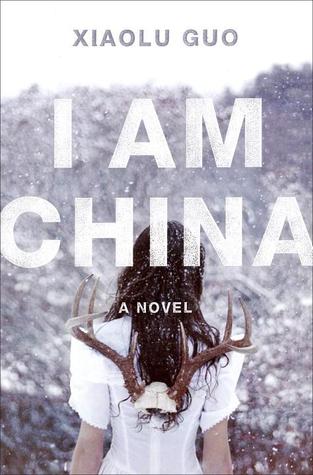
 Seldom do I rue the absence of the solidity of a paperback I can clutch to my chest out of an overwhelming love, memorize the feel of its pages against my fingertips. My priorities lie in knowing what I do not, the means to the end irrelevant in this instance. The advent of the e-reader has negated the problem of the steadily shrinking space on the book shelf and helped me horde books without a care. And yet sometimes a kindle copy just isn't enough. The last time I had felt this familiar pang of kinship with a book right after turning over the last page was when Adichie left me feeling the weight of Biafra's senseless wartime violence (Half of a Yellow Sun). I procured a physical copy right after.
I will do the same with this one too. Because imperfectly characterized and contrived as it is, this is the story I would want to associate modern China with. This is a book I would want to read again someday.
All the cacophony around censorship and forgotten square massacres and totalitarianism aside, Xiaolu Guo's globe-trotting, no doubt most ambitious work till date tries to reclaim the dignity of the individual from the clutches of state ownership - a theme I have been desperately seeking out in my pick of literature from the land with less than satisfactory results.
So far what I have gleaned from the works of writers from the mainland is mostly an overarching sense of dejection and bitterness - a gloomy preoccupation with rubbing old wounds raw.
Outside the bar, the midnight sky was lit by a vast cascade of fireworks, illuminating the solemn and dark Long Peace Avenue, the featureless Heavenly Gate Park, the foreboding Forbidden City, the drumming Bell Tower, and finally creating a fake light of day in Tiananmen Square. A new century of amnesia had arrived on China's earth.
But unlike the defeated, anguished voices of other contemporary Chinese authors, Guo's brims over with a valiant hope. Her Mu and Jian face the consequences of their political beliefs with an understated courage, hop across geographical boundaries to embrace the challenges of a hitherto unknown world outside their beloved China, even if to find themselves thwarted at various junctures. Driven out of their homeland by forces beyond their control and comprehension, they plunge headfirst into individual journeys of self realization, only their letters to each other tethering them to their shared reality in Beijing. And yet the same restlessness of being, the same grim disillusionment and feeble optimism color their evolving worldviews as they grapple with both hostility and acceptance in the humdrum heart of Europe and America. Experiences dismantle their prejudices about the west and the reckless abandon of youth gradually gives way to true wisdom. While Mu comes to acknowledge the purpose in Jian's subversive punk rock concerts in Beijing and his revolutionary zeal, Jian discovers merit in Mu's pacifist stance, her unrestrained love of life, art and literature.
Art is the politics of perpetual revolution. Art is the purest revolution, and so the purest political form there is. A great artist is a great revolutionary.
Revolution = art, and art = perfect freedom. Right now, we have no revolution, no real art and no freedom.
As a lonely, unsociable Scottish translator unspools the many different threads of their past and present from a collection of letters and journal entries in her London flat, Mu and Jian's discordant voices harmonize in pitch and intensity across the barriers of time and space to meld into a symphony of human triumph. Their unbridled zest for life and liberty comes to symbolize the individual's quest for emancipation, to disentangle oneself from the myth of a national identity. Time, place and circumstances recede into the background. History's tenacious grip loosens. Mu and Jian's enduring love for one another finds its truest expression in the dream of a new China - one freed from the shadow of oppression.
I am China. We are China. The people. Not the state.
May this very dream survive.
**
ARC received from Doubleday Books through Netgalley**
_____
Also published on
Goodreads &
Amazon.
First published:-
1924
Star rating:-

Read in:-
December, 2014
Make no mistake. This, to me, will always be Forster's magnum opus even though I am yet to even acquaint myself with the synopses of either Howards End or Maurice. Maybe it is the handicap of my Indian sentimentality that I cannot remedy on whim to fine-tune my capacity for objective assessment. But strip away a colonial India from this layered narrative. Peel away the British Raj too and the concomitant censure that its historical injustices invite. And you will find this to be Forster's unambiguous, lucid vision of humanity languishing in a zone of resentful sociocultural synthesis, his unhesitant condemnation not merely of racism, casteism, religion-ism and what other noxious, vindictive 'ism's we have had throughout the history of our collective existence but of the fatalistic human tendency of rejecting a simple truth in favour of self-justifying contrivances.
Yes there's the much hyped 'crime' analyzed in the broader context of presupposed guilt and innocence . There's the issue of race, class and privilege factoring into the ensuing judicial process. The ripples of the eventual fallout of this mishap disrupt the frail status quo that all parties on either side of the race divide were tacitly maintaining so far and pose crucial existential questions before people of all communities.
Then there are hypocritical Englishmen who cannot choose between preserving the sanctity of the Empire's administrative machinery and upholding their own prejudices. And hypocritical Indians who righteously accuse the Englishmen of institutionalized hatred while stringently maintaining their own brand of intolerance. But greater than the sum of all these thematic veins is the connecting thread of Forster's sure-footed, measured prose which explores not only the inner lives of the central characters but tries to penetrate the heart of a nation-state in the making.
The India depicted here is a foreign country to me - a time and a place yet to be demarcated irreversibly along lines of communal identities that are presently dominating our political rhetoric. It is of little appeal to the newly arrived umpteenth Englishman but, nonetheless, presents itself as an amalgamation of unrealized possibilities. Not once did my brows knit together in frustration on the discovery of any passage or line even casting a whiff of Forster's bias against the people or the land. My senses were stretched taut all the time in an effort to detect any. Sure, Dr. Aziz is a little infantilized and his importance is sometimes reduced to that of a plot device used for manufacturing the central conflict while Adela Quested, Mrs Moore and Mr Fielding appear before a reader as upright individuals who stand for the truth. The other Indian characters seem to be defined by their general pettiness. But these imperfect characterizations can be more than forgiven in the light of what Forster does accomplish.
The song of the future must transcend creed.
There are times when the narrator's voice dissects the drama unfolding against unfamiliar Indian landscapes with a kind of fond exasperation and times when it dissolves into a withering regret for the way the engines of civilization continue to trundle along towards some catastrophic destiny without ever pausing for the purpose of self-assessment. And it is the profound clarity of Forster's worldviews and his sensitivity and forthrightness in deconstructing the enigma of the 'Orient' that elevates his writing even further.
Perhaps life is a mystery, not a muddle; they could not tell. Perhaps the hundred Indias which fuss and squabble so tiresomely are one, and the universe they mirror is one.
It's not the 'handicap of my Indian sentimentality' after all. Forster sought to extract the kernel of truth buried underneath layers of artifice and his craft could successfully flesh out the blank spaces between that which can be expressed with ease. Those are always worthy enough literary achievements in my eyes.
First published:-
1987
Star rating:-
 Read in:- December, 2013
Claudia Hampton speaks to me of wars fought in distant lands, of the ever-persistent forward march of humanity in the quest for collective betterment, of stories unknowingly buried forever in the catacombs of time and never unearthed, of the people we carry in our hearts wherever we go, of the history of the world intertwined with our own. Claudia tries to make sense of the cacophony of voices inside her head and outside, of conflicting opinions colliding violently creating sparks that burn down empires and turn to rubble the foundation of regimes. Claudia tells me a story of the past melded with the present.
Read in:- December, 2013
Claudia Hampton speaks to me of wars fought in distant lands, of the ever-persistent forward march of humanity in the quest for collective betterment, of stories unknowingly buried forever in the catacombs of time and never unearthed, of the people we carry in our hearts wherever we go, of the history of the world intertwined with our own. Claudia tries to make sense of the cacophony of voices inside her head and outside, of conflicting opinions colliding violently creating sparks that burn down empires and turn to rubble the foundation of regimes. Claudia tells me a story of the past melded with the present.
Claudia's history of the world isn't one-sided. She accedes, to all the players involved, their right to speak for themselves, to say that which has been coldly snubbed by the opinionated historian of the past. Claudia does not look at past events through the lenses of established notions, of opinions passed off as indisputable facts. Larger than life heroes are reduced to the status of mere mortals in her eyes, violent uprisings become a trigger for devastating tragedies instead of turning points in the history of a nation's struggle for liberty. Images of a world war become indiscernible from the images of her lover who dies fighting in it and the entailing heartbreak she could never purge from her memories no matter how hard she tried. The unyielding bond she shares with her brother Gordon, her rival, her biggest critic, her most devoted admirer, and in the end her lover, remains intact even after he is no longer there to provoke her, to argue with her relentlessly, to urge her on towards becoming a more refined version of herself.
"For there are moments, out here in this place and at this time, when she feels that she is untethered, no longer hitched to past or future or to a known universe but adrift in the cosmos."
Claudia never became what others wanted her to be, stubbornly trudging along a path forged by none but herself. She loved the daughter born out of wedlock dearly, but from afar, without the grand show of affection expected of any mother. And as she lies in that hospital bed, her life force slowly ebbing away, a frail old woman of 76, misunderstood by the ones dearest to her, my heart weeps for the grief that she kept carefully hidden from everyone, a secret she carried to her grave. But I bid her farewell with a smile, soothed by the knowledge that her life was, after all, a life well-lived.
First published:-
1999
Star rating:-

There are parts of this book fully deserving of unadulterated love and veneration, worthy of 4 stars in the least. The fact that the real India, Jamaica and Bangladesh are recreated here and not the imagined India, Jamaica and Bangladesh of white writers too reluctant to put in the requisite amount of research for getting the most inconsequential tidbits right has much to do with it. In addition, Zadie Smith succeeds in keenly evoking their history, language, cultural ethos, the stench of their festering old wounds inflicted by an undo-able past, and their bizarre hypocrisies making the leap across land and oceanic borders into alien territory, exempted from being dissected by the scalpel of 'western reason' in the name of minority rights.
There's the undeniable truth of centuries of conditioned servility, hatred of the power which established the ground rules of the abusive relationship called colonialism, and the unfathomable responsibility of bearing the burden of yesterday.
"[] they can't help but reenaact the dash they once made from one land to another, from one faith to another, from one brown mother country in to the pale, freckled arms of an imperial sovereign."
There's the Bengaliness of the family to be religiously guarded against the sallies of Western liberalism; imminent dilution of the much treasured Bengali DNA in the gene pool staved off at all costs. And there's war to be waged on foreign territory - for another inch of land, another notch up on the dignity scale, for yet another step of the socioeconomic ladder. Whenever stung by the prick of casual racism, whenever thwarted, they will go back to their institutionalized tendencies of seeing things in black and white and studiously avoiding mentions of a gray area; they won't think twice before disregarding their favorite Gandhiji's famed 'An eye for an eye will make the whole world blind.' They will seek out the greener pastures of first world optimism but resist synthesis, tugging at the roots of old grudges again and again so that the present and the now can be drawn and quartered on the altar of history.
"And then you begin to give up the very idea of belonging. Suddenly this thing, this belonging, it seems like some long, dirty lie...and I begin to believe that birthplaces are accidents, that everything is an accident."
But then there are the 'just-roll-with-it' parts which deserve no more than 2 stars - the cocksure and smug tone in which the narrator recounts this multi-generational saga of families caught in the chaos of modern day materialism vs heritage, the unrealistic, often two-dimensional characterization and the zany Britcom feel to the episodes which warrants a suspension of disbelief and gives rise to the nagging suspicion that this was written with the idea of a film or tv series adaptation in mind.
As much as Smith's light-hearted, tongue-in-cheek, clever mockery of roots and righteous reliance on said roots for existential validation is absolutely legitimate and spot-on, it is awfully disingenuous to think roots can and should be so easily discarded. Assimilation requires time and the immigration conundrum will never be felt as acutely by second generation immigrants (like Smith herself) as by their progenitors. This is where I prefer Jhumpa Lahiri's narrative voice (her later works) over Smith's - no inflection of moral and intellectual superiority, no pronouncing of judgement on flawed choices but a restrained attempt at humanizing all characters.
Since the 4-star and 2-star ratings are equally bona fide in my eyes, a 3-star it is. More so because I can't remember the last time a woman writer of contemporary literary fiction made me laugh so hard.
First published:-
2004
Read in:-
April, 2014
Star rating:-
 There's the sound of a deeply contented sigh emanating from the lips of someone clutching this book to herself like a long-lost friend, a bead of tear perched precariously atop disorderly eyelashes. And there's the barely audible sound of her turning the pages ricocheting off the pliant walls of time and space, sculpting a minuscule dent on the surface of a collective fate and this perplexing cosmic interconnection.
She cannot properly articulate her awe or even fathom her own bewilderment at being rendered so tearfully sentimental by another case of 'old wine in new bottle'. Now she longs to believe that any or all of her trivial actions will lift her out of her predestined prison and place her somewhere on the crisscrossing grid of timelines and geographical boundaries, enable others to hear the distinct echo of her shout into the void. She just by herself is insignificant, not even a mere drop in the pool of time and she fears this looming threat of obscurity above all. But then David Mitchell gently reminds her that mute resignation to the 'natural order of things' is cowardice and billions and billions of droplets like her coalesce to form the ocean itself. She can will herself to shape the world any way she can.
American notary, Adam Ewing sails reluctantly across the Pacific aboard The Prophetess, unaware of the events that will set into motion a change of heart which will contribute toward the making of history.
A disinherited, arrogant and musically gifted Robert Frobisher chronicles the making of his avant garde 'Cloud Atlas' sextet in a series of letters addressed to his dear friend from distant Zedelghem.
Dauntless Luisa Rey doggedly pursues the truth and exposes the nexus between the Nixon administration and corporate corruption, emerging victorious against the tide of adverse circumstances.
Ageing, pedantic and self-important vanity publisher Timothy Cavendish endures a 'ghastly ordeal' partly as comeuppance for his lifelong selfishness but manages to emerge from his own predicament with a reformed worldview.
Fabricant Sonmi~451 rises above the 'catechisms' of institutionalized servitude to 'corpocratic' masters in futuristic Korea to light the spark of revolution.
In a post-apocalyptic Hawaii, valleysman Zachry witnesses mankind on the brink of a choice between complete annihilation and survival through self-reform.
And master puppeteer David Mitchell pulls all their strings from the background.
As she delights in her newfound admiration for the sweeping scope of this masterpiece and Mitchell's ambitious foray into the Matryoshka-doll structured story-telling, she doesn't fail to notice the accusations of gimmickry and pretensions, of self-indulgent writing, of 'trying too hard', of 'contrivances' and acknowledges the legitimacy of these opinions.
But then she remembers Robert Frobisher answering Mitchell's detractors on his behalf.
"Revolutionary or gimmicky? Shan't know until it's finished, and by then it'll be too late..."
Do you blame her for chuckling at the man's foresight and wit?
Enthralled, she notices the parallels drawn between the rabid consumerism of our times and a 'predatory society' based on principles of the empowered devouring the disenfranchised and the voiceless, the invisibility of the aged in the eyes of the young and unwrinkled, carefully inserted allusions to virulent sexism, racism and xenophobia through the ages, the enthusiastic nod given to cross-cultural harmony and freedom of sexuality and she wonders if Mitchell has left any of the issues haunting mankind since times immemorial unexplored.
Thus as Mitchell tips his hat to the likes of Melville and Calvino, to prose stylists like Joyce and Nabokov, to the traditions of intertextual witticisms and metafictional references, to all the disparate voices and genres that help enrich the body of literature today, she tips her hat to Mitchell's genius and the sheer audacity of his vision.
Unhappily she then takes cognizance of the fact that never again will she read 'Cloud Atlas' for the first time.
But then again, she might.
First published:-
1961
Read in:-
January, 2014
Star rating:-
 Henry Louis Vivian Derozio is a name possibly not known or cared for beyond the frontiers of India.
At the tender age of 17 this man of Anglo-Indian descent, possessing a sharp intellect and an even sharper tongue, was already a Professor of English Literature and History, busy influencing a group of eager, well-bred young men hailing from affluent Bengali families in Calcutta. He became a leading figure in the age of socio-cultural reform movements in Bengal in the dawn of the 19th century through his dissemination of Western philosophical and scientific ideas at a time when our society was stagnating in a cesspool of ignorance and blind prejudices. And his close-knit group of brilliant young students of the Hindu College who were referred to by the smart moniker of'Derozians', much in the same manner of the ill-famed 'Brodie set' of TPOMJB, were viewed with as much suspicion as unacknowledged respect. But following the pattern of reception of new ideas which are regarded 'radical' and therefore dangerously subversive in their times, Derozio was expelled from the Hindu College and this in turn applied an abrupt brake on the Young Bengal movement.
As much as my teenage self had looked upon the Derozio name and his legacy with a kind of starry-eyed deference, post-acquaintance with a fictional educator as sociopathic and ambiguous as Miss Jean Brodie, I am forced to view this whole idea of an inspirational teacher weaning a student away from conventional methods of learning with utmost skepticism. No I do not intend to overlook Derozio's small but significant contribution to the collective betterment of our society of the times which in turn greatly aided the nationalist movement later on. But maybe, it will be wise to probe deeper for the unadulterated truth rather than be so guilelessly accepting. I am sure both Muriel Spark and Derozio himself would have approved.
Young, impressionable minds being shaped according to someone else's personal standards of nauseating elitism and if one is unlucky enough to fall under the spell of some conniving Miss Jean Brodie in her prime, being sucked right into a sinister trap.
What a slippery slope this is! This setting about to correct the course undertaken by a young learner under the facade of challenging conformity, with a perverse sense of authoritarian entitlement.
'I know better than you, therefore you must follow my instructions.'
In the way of Miss Jean Brodie's attempts at manipulating adolescent girls into competing with each other to be made a part of her venerated 'crème de la crème', people of insidious intent devise ways of propagating some attractive piece of ideology with confident pronouncements of it being the 'path of righteousness' and all that familiar drivel.
Which is why I now realize how treacherous traversing this distance between not knowing and knowing a little better is - there's no way to fill up the vacuum of ignorance other than with information in any form that is available nearby and you better hope that pedagogical influence of the likes of the magnetic Miss Jean Brodies of the world does not hold free reign in the vicinity at the time.
"Give me a girl at an impressionable age, and she is mine for life."
It's been a while since something quite as innocuous sounding as the above claim has left me feeling so deeply unsettled.
First published:-2009
Star rating:-
Read in:-November, 2013

Before it all slips away from my feeble psychological grasp, before the after-effects start wearing off, let me write it all out. About the summer before the dark.
The first thing that struck me while reading was this - Fuck purple prose. Or red or maroon or magenta prose for that matter. (And I say this in full acknowledgement of the fact that my prose is often closer to purple than any other color.) Screw post-modernism and its deliberate way of being obtuse, obscure, snarky. Screw all that.
Because this is it. This is what I want to achieve if I were to attempt writing a stream of consciousness novel some day. This laying bare of all the everyday inner battles a woman wages with her conscience, with society, with those hunters lined up on the sidewalk eyeing her with the interest of a sexual predator as she walks home in that form-fitting dress. Delving this deep into the psyche of a human being who navigates the space of a few months rapidly changing disguises never knowing which of them are closer to her real self, but in prose so beautifully self-evident. The things nobody in the world is bothered about because all of it is so awfully pedestrian. After all, there's nothing remotely tantalizing about an upper class woman having perfunctory sex in a passionless affair or caring for her husband, her children, molding her existence around their schedules. There's barely any appreciation for what she is doing for society at large by playing the forever-at-your-service comfort-giver. The way she is working a thankless job, drifting through life mostly invisible in the eyes of the ones who surround her.
This is how Virginia Woolf would have written if she had been alive right now. Because Mrs Kate Brown is nothing but a slightly modified modern day avatar of Clarissa Dalloway or Mrs Ramsay. Her insecurities about her steadily whitening hair and declining sex appeal maybe belittled as a rich white woman's first world problems but pay a little attention to them and you will see how universal and all-encompassing her gripe with patriarchy is.
"She marries because to get married young is to prove herself; and then it must be as if she has inside her an organ capable of absorbing and giving off thousands of watts of Love, Attention, Flattery, and this organ has been working at full capacity, but she can't switch the thing off."
This is what I can only hope to do some day. Make my words bite, sting and burn those who read them. Force them to ponder upon devoured words for extended periods of time.
But does it really deserve 5 stars? Perhaps not, especially in light of the portions where the narrative loses sight of its destination in one of its countless meanderings and gives us the impression that we are trapped in the quagmire of Kate's own inner chaos. But then I am already in awe of Doris Lessing's voice and its power, her way of systematically eviscerating an unequal partnership where the husband is somehow in command of his own life but the wife isn't, her way of cutting open and dissecting motherhood, magnifying each one of its ignored, glossed over aspects for us to see clearly. I love the way this perfectly ordinary Kate Brown with her ordinary name gets under my skin and burrows through my insides, making me so deeply uncomfortable, coercing me into reconsidering my view of the women I have known closely over the years.
How elegantly she bridges the gap between the inner and outer worlds of an individual and yet in the simplest of manners! And that, for me, is a 5-star achievement.