Showing posts with label Mystery-Detective. Show all posts

Wednesday, September 30, 2015

Review : So You Don't Get Lost in the Neighborhood by Patrick Modiano


First published:- October, 2014

Translated by:- Euan Cameron

Publisher:- Houghton Mifflin Harcourt 

Star rating:- 


Call this a book of mirages and mirrors that distort the contours of visible reality all the time. Call it a lament for the inevitability of change that erases all the landmarks to a place that anchors one to a past self. Call it a psychological thriller, a faux-noir in which people materialize out of thin air to serve as clues to lead the joyless protagonist to a truth too terrible for him to comprehend all at once. (Faux noir because Modiano ingeniously deploys its signature leitmotifs to subvert the genre. The token crook is merely a shady character, the token gangster's moll/seductive siren becomes a sympathetic confidante and the token mystery transforms into a disconcerting odyssey through the maze of time and memory.) But an adroitly spun yarn as this one transcends the imposed boundaries of any such labeling with ease and surprising grace.

One can tell the Nobel committee usually doesn't mess around at least when it comes to this greatest of honours reserved for literary achievement. Only pure artistry could have produced something as perfect as this - a combination of strategically placed expository bits, a dreamy, sublime narrative voice reflecting both a subconscious longing and antipathy for lost time, a melding together of reality and delusion, an overlapping of the worlds of 'was' and 'is', and a cautious but sure-footed unravelling of plot. The last time something this unambiguously postmodern in tone and form had brought me such pure reading pleasure was when I happily surrendered before Ali Smith's rhetorical playfulness in There But for The.

There, on the pavement, in the light of the Indian summer that lent the Paris streets a timeless softness, he once again had the feeling that he was floating on his back.

Author Jean Daragane's world is populated by ghosts - ghost-like individuals who hover over his reality to lead him to places and people he has forgotten and, in all likelihood, does not want to recall, the specter of self-written words that elude his feeble grasp on memory, ghost of a city's turbulent past intruding on the equanimity of the present, ghost of those nauseous years of the Occupation that one cannot shake off despite best efforts. And these myriad ghosts proliferate at the back of his mind to warp his sense of time, creating a stark dissonance between reality and memory that usher in a renewed sense of dislocation. In a way, he seems like a vagrant spirit himself, adrift in life like flotsam after a devastating tsunami, alienated from the rituals of work, love, relationships. But this deceptive placidity of the surface of his consciousness is disturbed by a phone call out of the blue which sets into motion a chain of fated meetings and ridiculous coincidences which eventually allow him to find a way back into his past, a journey he undertakes with considerable reluctance and disguised trepidation. I'll leave you to summon the curiosity to find out where this journey eventually leads him.

It would appear, he often used to say to himself, that children never ask themselves any questions. Many years afterwards, we attempt to solve puzzles that were not mysteries at the time and we try to decipher half-obliterated letters from a language that is too old and whose alphabet we don't even know.

Like a true master of the craft, Modiano only ever mentions the War in passing, subtly inserting roadsigns which point to the ineffaceable marks of damage on a Paris which itself appears like a figment of Daragane's imagination at times, as if it might flicker out of focus any moment to reappear in a pale imitation of an unrecognizable former avatar. But the memory of war lingers on in the desolation of rue de l'Arcade and the boulevard of Champs-Élysées witnessing the flow of time like a dispirited sentinel, in Daragane's uneasy perambulations through the courtyard of Louvre and the mist-laden autumn air of the rue de l'Ermitage. An amnesia sets in when the currents of time gradually whittle down the tangible reminders of a tragic event into unfamiliar forms but reality forgotten is never reality expunged. 

...And yet he now wondered whether he had not dreamed this journey, which had taken place over forty years ago.

Daragane's Paris is tied inextricably to the past just as he finds himself colliding with the vision of an abandoned, forgotten child navigating the unfamiliar nooks and corners of an unknown neighborhood, perhaps, pained and relieved in equal measure to have finally remembered that which he was so intent on forgetting. I could not have wished for a more befitting sense of closure for our traumatized narrator.


**with thanks to Netgalley and Houghton Mifflin Harcourt for an ARC**
__


Also posted on Goodreads & Amazon.

   photo C136E66569D294E4D5DA2D8124D4FF69.png

Sunday, October 19, 2014

Review: Broken Harbour (Dublin Murder Squad, #4) by Tana French


First published:- 2012

Read in:- June, 2014

Star rating:-


There are certain things I pride myself on - the ability to read through a tremendous racket without losing my thread of concentration, the audacity to share my blasphemous distaste for pizzas with pizza worshippers who then proceed to shoot me death glares, and more pertinently, the way I don't balk at rating a piece of mainstream literature 5 stars if it has shown the grit to discard gimmickry and preserve that golden human touch. 

How ingeniously Tana French subverts the formulaic plotting of a 'psychological thriller', poking and prodding at the darkness we prefer to bury under the gloss of make-believe contentment until it becomes a threat of gargantuan proportions. How masterfully she paints this picture of a family marooned at the thin divide between normalcy and utter chaos, dangling precariously from the edge of oblivion. How mercilessly she concocts such a heart-wrenching tragedy where the lines between culpability and innocence are blurred to the point that both merge into a single entity, where the victims are just as unwittingly drawn to the dark side as the perpetrators and the ones entrusted with the task of rectifying the wrongs done. 

Sometimes the ugliness of visible reality is nothing but the tip of the iceberg and the truth is like a lightning bolt from the blue, capable of shattering the glass mansion of denial we prefer to live in. The truth runs much deeper, past the shallow defenses offered by skin and flesh, inexorably slicing through our bones.

"In that moment I thought of Broken Harbor: of my summer haven, awash with the curves of water and the loops of seabirds and the long falls of silver-gold light through sweet air; of muck and craters and raw-edged walls where human beings had beat their retreat. For the first time in my life, I saw the place for what it was: lethal, shaped and honed for destruction..."

'Broken Harbour' is about the proverbial monsters of our own creation lurking in the shadows biding their time to harm what we cherish the most, the slow disintegration of that 'good life' we have put together bit by bit and how sometimes cause does not precede effect. And it is a sad acknowledgement of the fact that a horrendous fate may lie in ambush for the sinless and unsuspecting. 

For the ones who steer clear of 'murder mystery novels' for their stereotypical compartmentalization of crime and detective work, I dare you to read this particular Tana French creation and remain unaffected.


 photo C136E66569D294E4D5DA2D8124D4FF69.png

Saturday, October 18, 2014

Review: The Likeness (Dublin Murder Squad, #2) by Tana French

First published:- 2008

Star rating:-

Read in:- March, 2014

"We had worked together seamlessly, she and I. I had drawn her to this house, this life, every bit as neatly and surely as she had drawn me."

Tana French knows how to conjure up the most charmingly creepy characters out of thin air like nobody's business - damaged individuals who go about life like sentient, breathing time bombs about to go off and leave a trail of wreckage consisting of wounded hearts and shattered illusions in the wake of their committed mistakes. Call this tale of blurred identities a flight of her fancy where the basic premise induces one eye-roll after another. Call this The Secret History redux. Call this anything at all. But a beautifully worded commentary on the unpredictability of human behavior will remain as unputdownable under any other name, all criticisms notwithstanding.

A murdered girl with a fake identity made up and used by an undercover cop and her superior years ago, and that same undercover cop destined to unravel the mystery of her murder by pretending to be the dead girl brought to life - who are we kidding here? All of this sounds ridiculous on several levels.

But hey it's Tana French! When she tells you a story, you deferentially suspend disbelief, snuggle into the comfort of your blanket, and read till you hear the first bird gleefully chirping outside your window signalling the onset of yet another morning.

'The Likeness' is a story about people who breach forbidden boundaries in search of the ultimate freedom, refuse to fit into some generic, pre-determined cog in the wheel of society and develop a hermetically sealed, secretive world of their very own where no outside forces are allowed to operate. And it depicts how this painstakingly achieved state of domestic harmony comes apart at the seams when the personal needs of an individual jeopardize the unity of the close-knit group. Thus in the same vein as its predecessor, 'The Likeness' ingeniously utilizes its characters and events to introspect on the fallout of human foibles. But it is important to note here that it is not much of a standalone mystery. It is essential that readers acquaint themselves with the happenings of the first book in the series to grasp the motivations behind our headstrong, kickass female protagonist's actions and the fragile state of her mind. 

It has been 6 months since the spectacularly eerie and depressing events of 'In the Woods' and Operation Vestal blew up in the face of Detectives Rob and Cassie, damaging their relationship beyond any hope of salvation, and leaving them with emotional scars that run much deeper than they care to admit to themselves. Cassie has moved from the Murder Squad to Domestic Violence, Rob is stuck in some other unknown branch of the police department, both no longer on speaking terms. In the midst of this irredeemable mess, a baffling murder case surfaces where the victim resembles Cassie down to her last lock of hair and carries an alias Cassie had used years ago on an undercover drug bust and gotten rid of later on. With no leads to follow and the mystery over the girl's true identity steadily deepening, Cassie decides to revisit her undercover roots (much to the chagrin of her gentle and considerate detective boyfriend Sam O'Neill) by masquerading as the victim, who somehow survived the assault, and returning to the secluded Whitethorn House with its assortment of 4 other inhabitants who are all PhD students of Trinity like Lexie, the murdered girl. Cassie aka Lexie's return under extraordinary circumstances triggers a set of curious events which, in turn, reveal alarming aspects of the lives of the 5 students whose closeness not only hints at something inexplicably disturbing but reveals darker sides of their past lives.

To be fair, this installment of the Dublin Murder Squad series is slightly underwhelming compared to Ms French's brilliant debut. None of the occurrences narrated are as bone-chilling or spooky and an awareness of the wafer thin nature of the logic presented creeps in once in a while. The very Secret History-ish list of ensemble characters (Daniel is Henry, Justin is Francis, Rafe is a cross between Charles and Bunny while Lexie and Abby have shades of Camilla in themselves) evoke a keen sense of déjà vu and the ending disappoints since the emotional aftermath of the crime(s) is much less affecting here compared to the climax of 'In the Woods', which begs the question why I have still rated this 4 stars despite the flaws. 

A good way to answer this question will be to put my finger on French's accurate reconstruction of that feather light feeling of not being tethered to worldly considerations yet and that firm, transient belief in the fact that we'll always remain young and invincible, forever unyielding to civilization's ruthless demands - the wonderful friendships of student life which slip right through our grasp and melt away into oblivion like treacherous mirages as 'real life' hurls one gauntlet after another our way. And it is this thoughtful portrayal of that unavoidable tragedy, of having to grow up and grow out of the optimism of youth, that all of us eventually experience at some point of time which tugs at the heartstrings the most and transforms 'The Likeness' into more of an homage to the intrigue and vigor of youth from just a preternatural murder mystery.


   photo C136E66569D294E4D5DA2D8124D4FF69.png

Monday, October 6, 2014

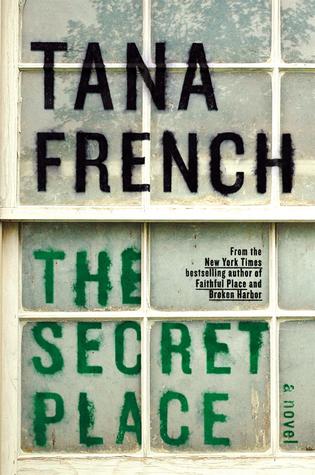
Review: The Secret Place by Tana French

First published:- August, 2014

Published by:-Viking Adult

Star rating:- 


Few other books have conjured up the ghost of my teenage years as successfully as this one, dredged up the hazy remembrance of that first, most agonizing heartbreak, the subsequent amateurish cynicism summoned up to preclude the hassle of emotional hangups and the feeling of having only just the foggiest notion of how the world works.

It is awe-inspiring how Tana French continues to incorporate such authentic sociocultural commentary into narratives which are usually taken to be written for the sole sake of providing cheap thrills. So blame her if I end up sounding like a smitten fangirl every time I review a book of hers. She is just that good even when she is writing out a logically fallacious scenario.

The teenage girls of 'The Secret Place' are much more than what C-grade teenybopper flicks and stereotype-riddled YA books make them out to be. They are capable of as much cruelty as kindness, as much self-sacrifice as vindictive selfishness. Here, the conniving, bitchy and backstabbing blonde isn't a cardboard cutout 'mean girl' symbolizing pure evil just as the archetypal good girls aren't as puritan. And a private boarding school turns into a zone of ineluctable conflict of interest where the realm of the personal frequently dovetails into that of the collective forming the intricate web of high school politics which implicitly governs the place.

...a place like this is riddled with secrets but their shells are thin and it's crowded in here, they get bashed and jostled against each other; if you're not super-careful, then sooner or later they crack open and all the tender flesh comes spilling out.

More impressive is how the four girls who lie at the heart of the mystery do not let their budding sexualities define their lives, or even sacrifice individuality on the altar of some contrived requisites of 'coolness' which teenagers are prone to do since rarely do they know any better at that age. Instead, they defy odds to carve out a private utopia for themselves, a clique which doesn't require the glue of some common ideology to survive - a secret place neatly tucked away in an obscure corner of their minds where they can be wholly unabashed of the unflattering sides to their personalities, sure of the fact that they will have each other's backs even when the world goes to pieces. 

...the whole point of the vow was for none of them to have to feel like this. The point was for one place in their lives to be impregnable. For just one kind of love to be stronger than any outside thing; to be safe.

In a way, the narrative of friendship and loyalty in the aftermath of a terrible crime is reminiscent of an earlier book in the series -The Likeness - which in turn was inspired by Donna Tartt's The Secret History. So fans of any of the former will be sucked right in even if they may have reservations about stories involving teenagers, specially teenage girls who are forever being dumbed down by writers looking to make a quick buck. Ms French here, true to her gift for impeccable characterization, adds many dimensions to their personalities. 

As the common refrain goes, calling books of the Dublin Murder Squad series mere 'crime novels' is almost like an outrageous insult. And this one's certainly no exception in this regard. There are two parallel 'before' and 'after' narratives devoted to uncovering the truth of the same murder. A story of the tragic collapse of a close-knit group of teenage girls who, even while trapped in the complicated tangle of sexual politics, fight to ward off influences which threaten to destroy their fortress of solitude. A celebration of the bond of friendship, how powerful and all-consuming an affair it can be and how unpredictably it can turn dangerous and even life-threatening. And, in the end, a poignant tribute to those charged years of adolescence, a unique phase of our lives we look back on with equal parts terror and fondness.

They are a forever, a brief and mortal forever, a forever that will grow into their bones and be held inside them after it ends, intact, indestructible.
**I received an ARC from Viking Adult via Netgalley**
___

Also posted on Goodreads and Amazon.

 photo C136E66569D294E4D5DA2D8124D4FF69.png

Friday, February 28, 2014

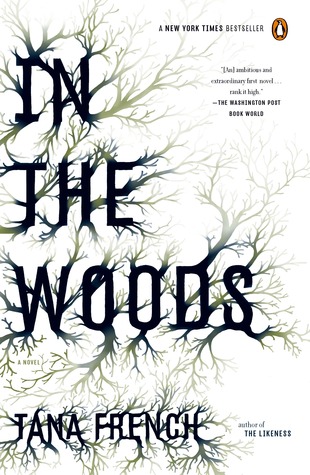
Review: In the Woods by Tana French

Reviewer's note:-Before I begin, let me state that 'In the Woods' has been reviewed in this space already but that was Scarlet's take. The following is mine. (The only thing evident in both reviews is how emotionally riveting we found this debut Tana French novel. Seriously, you must read this if you haven't.)


First published:- 2007

Read in:-November-December, 2013

Star rating:-

It's been a while since I have read a book that has left me so utterly devastated, a book entailing such a profound emotional investment that having finished it I feel a gaping emptiness within, a sense of loss. It feels like my heart has been simultaneously crushed into pulp under the weight of the tragedies that descend on the lives of a handful of characters and blown to smithereens. And I would never be able to pick up the pieces and glue them back together into a throbbing whole again.

I read In the Woods while on vacation, whenever I took breaks from watching wave after wave crash on to the shore with the familiar rip-roaring intensity of the sea. I read this even when I was too tired to stay up till late, lying on an unfamiliar bed with a sheet of dubious hygiene standards. I read this during prolonged car rides. And every time I had to tear my eyes away from its pages, I felt a pang of irritation.

As I made my way toward the bone-chilling climax of this narrative, awake at an unholy hour, I distinctly remember breaking out in a sweat on a cool December night to boot. Sleep became an alien entity and, come hell or high water, I knew I would not wrench myself away from this fantastic make-believe world of a small town and the sinister occurrences that tied the lives of its residents in the most twisted way possible. I longed to stay trapped in the eerie magic spell cast by the woods, under the ominous shadows of leafy canopies of pine and beech, caught up in a hazy daydream playing hide and seek with Peter, Jamie and Adam. My heart ached for the two children who never returned home from their beloved woods, who were never found again and the way the tragedy of their mystifying disappearance dealt a crushing blow to the life of their traumatized playmate who returned unharmed. It wept for Rob and Cassie and their missed chances.

This book isn't about crime and punishment, it isn't about the science of deduction or smooth-talking, fedora-sporting detectives smartly arriving at inference after inference and nabbing the culprit in style. I almost crave for the standardized simplicity of regular crime thrillers at this moment, the stories which conveniently compartmentalize the crime and the police procedure, the good guys and the bad guys. At least a book like that would not have left me feeling so desolate and bereft of any happy feeling. 

But this book took my breath away with its ability to instill so much life in each one of its characters that their distress became my own, with its ornate but never ostentatious prose and the way it deftly narrated a story infused with the dull shades of a sadness so affecting. Tana French foregoes all the spick and span categorizations here, thumbs her nose at the usual pigeon-holing. Instead with consummate skill, she outlines the faint traces of humanity in the most brutal impulses, acknowledges the messed up ways in which this bizarre drama of life plays out and how a neat tying up of all loose ends seldom happens in reality. More often than not, life is that merciless and cold. 

This book is about the labyrinthine pathways of our mind which treacherously conceal our most terrifying memories and how our subconscious prods us to replace the unpleasant truths with self-justifying falsities and even establishes our faith in them. It is about the seemingly innocuous, small cruelties of mundane everyday life that are capable of triggering much bigger disasters that destroy the lives of children and the unforgivable cruelties oblivious, ignorant children are themselves capable of.

I refuse to label this electrifying debut novel mere crime fiction because, in all earnestness, it is not. Rather, it is literature which delves deep into the causality of crime and meticulously brings out the humanity of all the people involved, literature capable of wringing out empathy from even the least sensitive reader. And it is an exploration of the convoluted workings of the human mind, of evil and barbaric urges lurking somewhere in its darkest nooks and crevices. It is a cerebral suspense thriller and, without a doubt, one of the best I have ever read. But it is also a beautiful, bittersweet story about people who carry on with their broken lives shouldering the unbearable burden of past trauma, an unforgettable human drama which left me emotionally drained, agitated to the extreme and yet gasping for more.


   photo C136E66569D294E4D5DA2D8124D4FF69.png

Friday, February 21, 2014

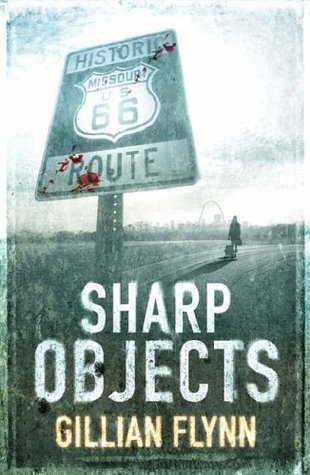
Review: Sharp Objects by Gillian Flynn

First published:-2006

Read in:- February, 2013

Star rating:-


When I had first come across rave reviews of Gone Girl, I was bowled over by the fact that there's after all a woman who is brave enough to try her hand at a genre rarely ventured into by women writers. And apparently, she excels at it too. Surely, she couldn't have hoodwinked hordes of unsuspecting readers into giving her books such high ratings.
So I had decided I'd devour Gillian Flynn's entire oeuvre starting with her first published work. 

Needless to say, that it is with obvious disappointment I'm giving this book only 2 stars. I had high hopes for Flynn's first published novel.

Sharp Objects comes off as a classic case of trying too hard. The set up feels too contrived, the world building, shabby and the writing, unimpressive and awkward. ('bucolicry' Ms Flynn? is that even a real word?) And to heap on to the negatives, Flynn rushes us through the scenery, the murders, the facts with such alarming speed that few things get time enough to make a powerful impact.

The eerie, secluded little town of Wind Gap never comes alive for the reader. All the characters appear to be caricatures of stereotypical suspects in a murder mystery novel. 
Even the central characters seem to be rather blurry outlines of real people instead of full-fledged human beings of flesh and bone. My mind failed at conjuring up even a single image of Wind Gap, its inhabitants or Camille and that's when I knew things were going downhill. After I had made some headway with the book, my attention kept drifting away and this doesn't usually happen with a thriller novel.(Proof of my steadily dwindling interest in thrillers maybe?)

Neither did I care about the murders nor did I think much of the disturbing imagery that Flynn shoves right in the reader's face from time to time. Even if you keep the somewhat macabre murders of pubescent girls aside, there are themes of self mutilation, sexual abuse, descriptions of horrific serial killings, slaughtering of pigs and chickens to make you cringe and wince as you read every alternate passage. Still I wasn't repulsed.
Instead what I felt acutely was Flynn's desperate desire to create a truly unsettling narrative. You can tell she is trying to offer you a blend of all things gory, disturbing and wicked just to titillate your senses. It's as if the central story became secondary to Flynn somewhere while she was writing this and only the deeply perturbing elements assumed primary importance.

Even the ending fails to pack in a punch, because if you have read a slew of whodunits at any point of time in your life, you will sort of guess the culprit. 
The only part which successfully creeped me out was the protagonist's tendency to inflict injuries on herself as a way to purge herself of emotions. But that one feeling doesn't help you sail through a book which is, otherwise, ceaselessly dreary and simply put, lacklustre in every way.

Hence, 2 very unsatisfied, very bored stars.

I am holding out hope for Gillian Flynn though. Maybe my opinion will change after reading Gone Girl.


   photo C136E66569D294E4D5DA2D8124D4FF69.png

Monday, October 21, 2013

Review: In The Woods (Dublin Murder Squad #1) by Tana French

First published: 2007

Star rating:  


It's been two hours since I finished reading. I'm disoriented and emotionally drained, and turns out, home alone on a Sunday. I think my parents told me they were going somewhere but I honestly cannot remember where that somewhere is; I was just that deeply obsessed with reading this book.

In The Woods is too layered to be labelled as a crime-thriller or a mystery. It is not just a guessing-game of who did what to whom. It is an exploration of what this guessing-game does to the people involved, from the ones left behind to deal with the ramifications to the ones responsible for doling out justice - and what better way to do that than tell the story through the eyes of a man who plays both roles at the same time.

In the Woods is a very unusual book. It has this lovely subdued feel to it, which I absolutely loved. It was everything I did not expect - unhurried, reflective, gorgeously written. There are two crimes involved but Tana French does not sensationalize either one. What she does instead, is create complex, real characters and build the dynamics between them. She makes you care about the players and not the game, so even when the whole thing wraps up and the verdict is out, you don't stop caring. You don't forget.

There is a big question-mark at the end that I'm sure will frustrate a lot of readers but I liked that note of incompleteness. I'd rather be left with a question that has room for hope than be left with an answer that is definite and ugly.

This book is not a high-action nail-biter. It is quiet and sad, but I can guarantee that it will linger in your memory way past the last page.

Added bonus: The writing is just wow.

These three children own the summer. They know the wood as surely as they know the microlandscapes of their own grazed knees; put them down blindfolded in any dell or clearing and they could find their way out without putting a foot wrong. This is their territory, and they rule it wild and lordly as young animals; they scramble through its trees and hide-and-seek in its hollows all the endless day long, and all night in their dreams. 
They are running into legend, into sleepover stories and nightmares parents never hear. Down the faint lost paths you would never find alone, skidding round the tumbled stone walls, they stream calls and shoelaces behind them like comet-trails. And who is it waiting on the riverbank with his hands in the willow branches, whose laughter tumbles swaying from a branch high above, whose is the face in the undergrowth in the corner of your eye, built of light and leaf-shadow, there and gone in a blink? 

If this snippet from the prologue doesn't convince you to give this book a try, I don't know what will.


Friday, September 27, 2013

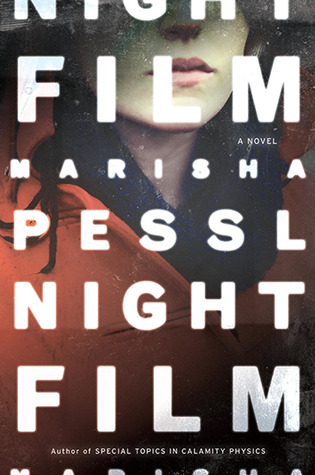
Review: Night Film by Marisha Pessl

(Originally reviewed on Aug 29, 2013 at Goodreads)

Night Film
opens with one hell of a prologue - easily the best I have ever come across. Those opening pages exude such authentic creepiness that it becomes impossible to not keep turning the pages, to not want to know more about the enigma of the reclusive legendary Hollywood director, Stanislas Cordova. This, I believe, is Pessl's greatest achievement here. With multimedia inclusions and some tight writing, she manages to do in a handful of pages what so many authors spend entire books trying; she manages to intrigue the reader, to lure him in, to make him take the bait.

I blew through this not-so-slight book in less than 3 days. That should give you an idea of the reading frenzy I was in.

So why the low rating??

Because once the frenzy ended and I put the book down, I realized I wasn't wowed by the actual plot or blown away by that ending and all it did or didn't imply.

The only feeling I was left with was an intense desire to watch a Cordova movie.

So the book certainly didn't fail. I wasn't bored or unaffected but the effect it did have was not really the kind Pessl intended, which is why I can't say it succeeded either.

Night Film follows a disgraced investigative reporter, Scott McGrath, as he digs into the mystery surrounding Ashley Cordova's suicide. Ashley, daughter of horror-film director Stanislas Cordova and a former piano prodigy, jumps to her death in downtown New York. Scott (who is such an unremarkable character that I'm struggling to find words to describe him) teams up with two twenty-something sidekicks (who are equally unremarkable and on top of that, annoying) as he runs around chasing clues, trying to hunt the truth that shifts and eludes like the patterns in a kaleidoscope.

The plot is one long treasure hunt centered around Cordova and while the chase is thrilling, I couldn't care less about the people I was forced to team up with. Every time Scott and his sidekicks took a break to ponder over their personal dilemmas, I would start to skim till the words 'Ashley' or 'Cordova' popped up again.

Night Film is not the kind of book that gives you the correct answer. What it gives you instead are multiple answers to the same question and leaves you to speculate which one is correct, if there even is such a thing as correct. If truth is a notion, how can anything be true? While the idea is great in theory, it did not hit me like I wanted it to. My reaction at the end was, "Who cares what the answer is when it doesn't change anything?" but I guess that has more to do with the kind of person I am. Maybe I'm someone who cares more about the effects and not the causes.

The writing is... good. If you ignore the inconsistency and the overuse of unnecessary italics, that is. There were some great parts writing-wise but no line or quote stood out enough to stay with me.

Overall, I'd definitely recommend Night Film. It did not blow me away but it was gripping enough to make me sacrifice sleep. This book is an experience and while the impact may differ from person to person, I think it is an experience worth having.


3 out of 5 stars


Monday, August 19, 2013

Review : The Girl with the Dragon Tattoo by Stieg Larsson

(Review written originally on:- June 18, 2011)

Never has a book made me experience one too many conflicting emotions side by side. Never has a book managed to infuriate, astound, shock, disgust, terrify yet charm me at the same time. The international best-seller named The Girl With The Dragon Tattoo or Män som hatar kvinnor (as it is known in Swedish) deserves every bit of the craze and the recognition it has achieved worldwide since its first publication in 2005. I have about zilch intention of giving away even a brief overview of the plot but for the sake of a
review I must. Hence.....

Mikael Blomkvist is an investigative journalist and co-owner of the monthly magazine Millenium who had just lost a libel lawsuit filed against him by the Swedish business tycoon Hans-Erik Wennerström. His reputation at stake, he decides to distance himself from the magazine's management and publishing bodies. Around the same time he is offered a freelance assignment by Henrik Vanger, patriarch of the affluent Vanger family and CEO of Vanger Enterprises, which deals with cracking the mysterious case of his great-niece Harriet Vanger, who had disappeared without a trace 36 years ago. Facing a prison term of about 3 months and no better alternative in sight, Blomkvist decides to take up the job. At the same time we're introduced to the other protagonist, Lisbeth Salander, a 24-year old, introverted, delinquent-like woman whose outward physical appearance replete with piercings and tattoos, repel most people she comes in contact with. An ingenius hacker who is also blessed with a photographic memory, she has the ability of digging up little-known yet vital information about public figures and documenting them with uncanny precision. She is assigned to do a thorough background check on Blomkvist by an aide of Henrik Vanger's. Eventually in the chain of events, she comes to work as an assistant for Blomkvist and helps him solve the intriguing case of Harriet Vanger and uncover a long chain of gruesome murders and aggravated sexual assaults against women spread throughout Sweden in turn. 

 To be honest, it is impossible to summarize an explosive novel like The Girl With The Dragon Tattoo in a paragraph or two. It will merely serve as an insult to the genius of Stieg Larsson, who has masterfully crafted a story out of the lives of Swedish corporate honchos, sexual sadism, misogyny, investigative reporting, journalistic values with a little bit of love thrown in as well. Hence it is a book you must read no matter how much you cringe at the graphic detailing of some of the crimes depicted. In any case you'll be compelled to read on as the mysteries continue to deepen till the very end.

Going by the writing style, Reg Keeland's translation seems to have managed to capture the underlying darkness of the story. I can only imagine how Larsson's original narration must have been like. There's a multitude of characters in the book and almost each one of them have been portrayed meticulously through their action or inaction. But none of them stand out as much as Lisbeth Salander's does. A victim of a violent sexual crime herself, she exacts retribution from her perpetrator in the most fitting way possible without having to resort to the law in which she doesn't place any faith in. Lisbeth is someone who'll hit back even harder and take control of a situation rather than be intimidated. She is socially awkward, incapable of developing long-term relationships with people or trust anyone, possibly due to the nature of her abnormal childhood years. She is perceived as a mentally retarded, repugnant woman by most and her inner brilliance always goes unnoticed. But then again Lisbeth is not one to care about what other people think of her. It is possibly because Blomkvist deals with her like he'd deal with any other normal human being, that Salander finds herself unable to treat him with the same calculated coldness she had always shown towards others.

Coming to the fallacies of the book, I must admit I couldn't find any. I was a bit surprised to find a mild love story angle developing towards the end as love is always an unnecessary baggage in thriller novels. However I understood the author's need to humanize Lisbeth, or at least offer her some sort of a balm to cast a calming effect on her tormented soul which she skilfully conceals underneath a mask of stoicism. Nothing more apt than love to achieve such a purpose. With the help of an inherently macabre theme of sexual violence, Larsson has tried his best to make the readers comprehend the brutality of a crime like rape or sodomy. And this seems to have been the main purpose of this book, given that Lisbeth's character has been named after a girl whom Larsson witnessed being gang-raped as a young boy.

 Thank you Stieg Larsson for deciding to publish the novels, otherwise the world would've missed out on one of the greatest trilogies in the mystery/thriller genre ever written.

5 glorious stars.


Sunday, August 18, 2013

Review : The Lost Symbol by Dan Brown


(Orginial review written on:- October 3, 2009)

Before I begin let me inform you all that this is not to be considered a conventional book review. Without giving out a summary or spoilers (I'm sure many still haven't read it) I'd try to sum up my views on Dan Brown's latest installment.
So then let's start at the beginning. The fact that I got hold of this book on the very day it released worldwide and yet managed to finish reading it only yesterday should,in itself, be considered a miracle. That's because if a book manages to capture my interest I usually devour it within a single day(at the most 2 days) no matter how lengthy it might be. But unfortunately I read The Lost Symbol over a span of a week.
This probably speaks volumes of how unimpressed I'm with Dan Brown this time.

Anyway without digressing any further let's come to the plot:-

To tell you the truth this novel has no actual plot because it had no aim from the very beginning.
So what does this book have then?

The answer consists of - Robert Langdon, his long time friend and mentor Peter Solomon who's in mortal danger,a deluded lunatic as the bad guy (just like always), Peter Solomon's beautiful sister as Langdon's companion for the night who's conducting some highly important research work on Noetic Sciences (just another replacement for Vittoria Vetra or Sophie Neveu), Freemasons, the CIA and of course an all-too-familiar routine of figuring out hidden codes, symbols, puzzles so as to thwart the villain's plans and save the world from disaster before it's too late.

Okay that's all good. But what is Robert Langdon doing here? - Half the time he is arguing quite uselessly with the other characters saying he doesn't believe in an ancient Masonic legend, around which the entire plot revolves.
I think a man who had discovered Mary Magdalene's tomb in his earlier adventure should have a more broad-minded perspective than that.
The time he spends deciphering few codes spans only 15-20 pages of the 339 page book(e-book). The rest of it is filled with too much information about the Masons, Solomon family stories and the warped thoughts of the psychopath villain.

Even though Angels and Demons had quite a far-fetched plot it never failed to make the reader gasp. Atleast it had some edge-of-the-seat suspense to offer. Also the age-old animosity between the Illuminati and the Church provided quite an intriguing backdrop.
Same with The Da Vinci Code. The controversy surrounding the Holy Grail, Mary Magdalene and the Merovingians was spicy enough to keep the reader enthralled till the very end.
But the Masons are not that interesting.
On one hand they are an ancient brotherhood dedicated to searching for light (symbolizing supreme knowledge) amidst darkness and on the other hand they're protecting an ancient wisdom for centuries which supposedly has the power to bring about man's ultimate enlightenment.
Contradictory isn't it?
And why keep something secret that is supposed to benefit mankind?
Uh yea right 'cause it might fall into the wrong hands and result in disasters of unimaginable proportions.
As if the world isn't already in chaos and on the verge of destruction. We could sure do with some ultimate knowledge (or whatever) in these troubled times.

Unlike his previous adventures Langdon does not make a startling discovery at the very end. Nobody gets to know what the Ancient Mysteries actually are. Brown only provides us with a brief overview which is not enough. And this is where the readers are bound to feel disappointed.

I think maybe it's time to put Robert Langdon to rest. We've had enough of religious symbology, secret societies and historical controversies. Though I won't mind another Deception Point or Digital Fortress.(I liked these 2 novels much better than your latest work Mr. Brown)

2 stars out of 5.

Saturday, August 17, 2013

Review : Salvation of a Saint by Keigo Higashino

(Original review written:- May 11, 2013)

The task of reviewing a novel of the mystery-detective genre usually presents itself as a challenge to me. Not because it is hard to put into words what the story holds without giving away spoilers. But because a detective novel usually doesn't give a reviewer much to go on, aside from a convoluted mystery and the solution.

But despite being a book of the same genre,Salvation of a Saint, provides ample food for thought on the complexities of the human mind and offers the reader some philosophical meanderings to go with a regular offering of a mind-boggling mystery.


Without delay let me get to the summary now:-


Yoshitaka and Ayane Mashiba have been married for one year and yet their marriage is already falling apart. Why? Because turns out, both of them had agreed to treat marriage like a contractual agreement in which if Ayane fails to conceive a child within a year they will part ways. And, of course, Ayane has failed to conceive at the end of the stipulated time period.

So what happens next?  Yoshitaka declares he is leaving her because he has already found prospective new wife to replace Ayane. And it turns out the prospective new wife is none other than Ayane's protege, Hiromi Wakayama, whose talent Ayane has helped hone herself.

And to put the cap on this madness, Yoshitaka gets killed in his apartment while Ayane is away in Sapporo on a visit to her parents and the detective in charge of the investigation falls for Ayane at first sight even though she becomes the chief suspect.

But then of course, she has a rock solid alibi. She was away from Tokyo when Yoshitaka was murdered. How do you kill when you are physically hundreds of miles away from the victim?


Here in lies the novelty of Salvation of a Saint. It's not a whodunit as much as it is a howdunit.


To me the real villain of the story remains the victim and not the murderer. Because men who treat women like baby-producing machines and switch to one from another as easily as changing clothes, deserve to be at least squarely kicked in their family jewels, if not murdered outright. And I'm pleased to find out there are no misogynistic undertones in this narrative since Higashino doesn't gloss over this fact.

Now for my verdict on Higashino as a writer:-

If you are acquainted with anime such as Death NoteMonster or Detective School Q (Tantei Gakuen Kyu), you are bound to know the Japanese have a penchant for logical reasoning and the science of deduction. And Keigo Higashino upholds that cherished tradition with this well-plotted novel.

He excels at creating a mystery which appears complex and unsolvable at the outset, but when it unravels slowly and all the pieces of the puzzle start falling into their place, the solution doesn't baffle one as much as the killer's dedication towards the act of the murder does.


But I have a bone to pick with the translation - it doesn't always do a good job of capturing the true cadences of Japanese speech and the awkward sentence construction often feels jarring.


A significant thing about this book is instead of one detective giving it his all to solve a murder - it gives you 3. Chief detective Kusanagi finds his judgement dangerously clouded by his growing fascination for Ayane. While his assistant Kaoru Utsumi, stubbornly convinced of the fact that Ayane is the killer, seeks out physics professor cum detective extraordinaire, Manabu Yukawa to help her out.

But even while pursuing separate leads, all 3 of them arrive at the same answer.


The characters are not badly sketched caricatures but appear as people who could actually exist. The calmness of Ayane's demeanour even under suspicion, Utsumi's doggedness, Yukawa's brilliance and Kusanagi's quiet dignity shine through.


Kusanagi and Yukawa's friendship, rivalry and the grudging respect they have for each other add another dimension to the story. And it reminds one of the Lestrade and Holmes equation because like Lestrade, Kusanagi is the one getting the credit even though most of the work is done by Yukawa. Although a comparison between Lestrade and Kusanagi won't be fair since the former was essentially a pompous idiot while Kusanagi is balanced and reasonable.

It is also interesting to take note of Kusanagi's growing concern for his own evaluation of the murder and the subsequent investigation - is he being objective or is he being too judgemental? and how does one stop his personal feelings from getting in the way of his professional assessment of a scenario?
Kusanagi's inner turmoil leads him to ponder over what makes a person commit a murder and the effect it has on their personality -


"Kusanagi had met plenty of good, admirable people who'd been turned into murderers quite by circumstance. There was something about them he always seemed to sense, an aura that they shared. Somehow, their trangression freed them from the confines of mortal existence, allowing them to perceive the great truths of the universe. At the same time, it meant they had one foot in forbidden territory. They straddled the line between sanity and madness."


Lastly, this novel also dares to analyze the not-so-flattering shades of a woman's personality and how one woman is sometimes another woman's worst enemy - how an act of betrayal may cause a woman to seek out vengeance with a resolute, perverse passion.


Hence an impressed 3 stars.

I will definitely watch out for Higashino's other works.

P.S:- I apologize for not throwing any light on how the title of the book relates to the murder or the core of the story. But to do that would be to reveal the crux of the story itself, which would be doing the reader a grave injustice.

Related Posts Plugin for WordPress, Blogger...