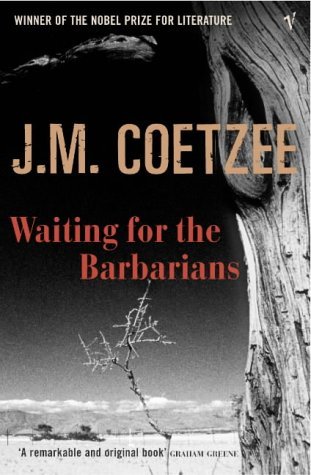
First published:-
1980
Star rating:-
 It is impossible to read this and not be reminded of an almost genetically programmed inferiority complex, the burden of history only the descendants of the colonized have to bear. Despite those smug pronouncements of the 21st century being an era of a fair and equitable world and the hard battles won in favor of interracial harmony, there's the fact of your friend barely suppressing a squawk of alarm when you express your admiration for Idris Elba - no female I am acquainted with in real life has learned to wean herself away from the fixation with a white complexion. Scrub your skin raw till it bleeds but never fall behind in the race to make it whiter because that's the color the world approves of. You can fawn over Simon Baker's blonde, light-eyed glory but not over Elba's hulking, ruggedly handsome perfection; heaven forbid you prefer the latter over the former. The 21st century is yet to cast its magic spell over the standards of physical beauty.
So if I, a citizen of a purportedly newer and better social order, can still feel the rippling aftershocks of the catastrophe called Imperialism from across the barrier of decades and centuries, what would a man like Coetzee have experienced, stranded in the middle of the suffocating sociopolitical stasis of Apartheid? Moral anguish? A bitter impotence? A premonitory sense of doom? Anger?
Fiction, I believe, must have been his preferred method of exorcizing these demons. And purge these emotions he did through the composition of this slim little novel which can be aptly described as a most heart-wrenching lament on the condition of the world of his times.
It may be true that the world as it stands is no illusion, no evil dream of a night. It may be that we wake up to it ineluctably, that we can neither forget it nor dispense with it. But I find it as hard as ever to believe that the end is near.
An anonymous magistrate stationed at a farthest corner of an unspecified Empire witnesses the death throes of its reign while recovering his own humanity at the loss of his position of power and influence. In the beginning he is convinced of his righteousness as a dutiful servant of the Empire who oversees the welfare his subjects with moderation but with the arrival of a bluntly tyrannical figure of authority whose methods differ vastly from his, he begins to question his own collusion in the maintenance of an unnatural order. Unable to stand as a mute witness to the horrendous abuse inflicted on innocent 'natives' on the false suspicion of their complicity with 'barbarians' or armed rebels who threaten the stability of the Empire, he clashes with the aforementioned administrator who undoubtedly represents the true face of any oppressor when divested of its sheen of sophistication. And thus begins his fall from grace culminating in a kind of metaphorical rebirth through extreme physical abasement.
I was the lie that Empire tells itself when times are easy, he the truth that Empire tells when harsh winds blow. Two sides of imperial rule, no more, no less.
In the fashion of Coetzee's signature didacticism the novel is rife with allegorical implications but as much as these can be deeply thought-provoking, sometimes they also resemble conveniently inserted contrivances. Like the pseudo-erotic entanglement that develops between the ageing magistrate and a young 'barbarian' girl who is left maimed and partially blinded after a violent bout of interrogation is amply demonstrative of a colonizer-colonized arrangement - the one bereft of power to drive the relationship in a desired direction becomes dependent on the volatile benevolence of the other party. Or the mounting paranoia about the anticipated attack of the 'barbarians' who, much like Godot, fail to appear and remain a myth till the end although emerging as the key factor hastening the impending demise of Empire. All the layers of meaning and symbolism could send a dedicated literature student into paroxysms of pleasure no doubt.
With the buck before me suspended in immobility, there seems to be time for all things, time even to turn my gaze inward and see what it is that has robbed the hunt of its savour: the sense that this has become no longer a morning's hunting but an occasion on which either the proud ram bleeds to death on the ice or the old hunter misses his aim; that for the duration of its frozen moment the stars are locked in a configuration in which events are not themselves but stand for other things.
Wary as I am of Coetzee's often stilted world-building, my 5-star rating was an inevitability given my obsession with narratives containing a discernible vein of literary activism in harmony with notions of social justice. Here he also seems to have successfully reined in his pesky habit of turning his characters into sockpuppet-ish mouthpieces to tout his own passage-length worldviews. The narrator does occasionally morph into a pedagogue but his inner monologues never seem out of place given his unique circumstances. Besides it takes courage to acknowledge the fact of white man's guilt in a world which is yet to discard the rhetoric of 'white man's burden'.

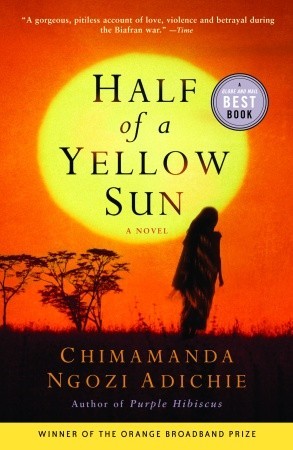
First published:-
2006
Star rating:-
 It came to me as an epiphany as I barreled through the last few pages of this book, blanketed in my Sunday evening lethargy, marveling at Adichie's graceful evocation of a forgotten time and place and feeling the embarrassment of having known nothing about the Biafran war, that somewhere in the Gaza strip the maimed bodies of children must lie strewn amidst the debris of their former lives while vicious debates rage on twitter in which people pick a side - Israel or Hamas - to defend from criticism. As if that's what matters.
Somewhere at this very moment there may be a terror-stricken, weeping child, fleeing to find cover, unaware of what she is running from, unaware of the finality of death, shielded by the caprices of the same history she is living, perhaps. Someday she may grow up well to become another Chimamanda to write the story which is hers to tell, and time, circumstances, and health permitting, I am going to be reading that book and be reminded of the umpteenth 'war' that not even my generation of enlightened, Nobel-peace-prize winning heads of state did enough to prevent, the damage that could have been preempted, and the children who could have grown up to carry the weight of civilization some day but didn't.
The farce of this relentless cycle of mayhem, killing, pillage, rape, and starvation will hit us time and again and yet leaders of the first world will continue to look dapper in their crisp suits and appear dignified while justifying their sale of high-tech weapons to warring parties because revenue is to be earned from the spilling of blood. For the sake of self-made demarcations, for the sake of that ridiculous nonentity called national pride, for the sake of righting wrongs done in the past we'll bury our children and future in mass graves and commit more wrongs.
This book deserves 4 stars in my eyes. It's not a flawlessly written work with its frequent straying into the territory of melodramatic personal relationships and cliched characterization and Adichie's writing seems to lack polish in places. But in no way does that stop this from being a highly important work of fiction that the annals of literature ought to acknowledge with a gleaming appraisal.
This is the past transcending the barriers of time to appear before us in a surely pale imitation of its true grotesqueness. This is Adichie leading us to history of a corner of the world we only associate with food programs, the UNHCR, unstable governments and inexorable ethnic conflicts. This is Adichie telling us that history ignored isn't history blotted out.
I didn't know Biafra at all; there are not enough books on Biafra (as confirmed by Goodreads and Google Books), because only those horrors of war survive oblivion which are fortunate enough to receive the world media's stamp of approval. Not all death and devastation caused by 'civil wars' are worthy of the glory of 'crimes against humanity' like Nigeria's smooth war tactic of starving Biafran children with tacit British support wasn't.
"Starvation propelled aid organizations to sneak-fly food into Biafra at night since both sides could not agree on routes. Starvation aided the careers of photographers. And starvation made the International Red Cross call Biafra its gravest emergency since the Second World War."
But there was a Biafra. Not the transient existence of the nation represented by half of a yellow sun but the reality of the people who, in the paroxysms of misguided idealism, picked the losing side in a war.
Chimananda's Olanna, Ugwu and Richard, all of whom weave their way in and out of manifold conflicts of morality, identity, and survival, serve as our guides in this landscape of kwashiorkor-plagued children with pot bellies while trying to make sense of the muddle of mutual Hausa-Yoruba-Igbo animosity. And along with them the reader navigates the maze of wartime barbarity, political allegiances, and interpersonal relationships with a growing sense of unease and uncertainty - who are the ones truly responsible? who are the perpetrators? who are the victims? what was the war for and what did it achieve?
"Grief was the celebration of love, those who could feel real grief were lucky to have loved. But it was not grief that Olanna felt, it was greater than grief. It was stranger than grief."
In the end any such attempt at such neat compartmentalization makes little difference to the truth of lives destroyed in a fit of murderous passion. In all likelihood, there will be more Biafras and Srebrenicas and Rwanda-Burundis and Syrias and Gazas as there will be the burden of future tragedy and loss to be borne by hapless survivors. But there's the small assurance that there will be the Chimamanda Ngozi Adichies of the world to give a human face to the solemn formality of statistics every time.
**Winner of the Man Booker Prize in 1983.**
Star Rating:- 
Ask me to pronounce verdict on a work of literature flaunting self-indulgent wordplay,
revelling in its own brand of avant-gardism which stops short of making a powerful statement on our troubled times and my response to it is likely to be lukewarm.
Ask me to judge a book dissecting the greater human quandary with keen insight but in stilted prose, and my reaction is likely to be more or less the same.
But give me a story capable of dismantling all the divides of race, culture, political/religious indoctrination, time and space, encompassing all the inner contradictions of our existence into a compelling commentary on human follies that elicits a very visceral, emotional response, and my being won over is practically guaranteed.
Reading Michael K's tale took me on one such heart-breaking metaphorical journey. At the culmination of which I realized that pitying the innocence of Michael Ks of the world who are repeatedly squashed like bugs under the bootsoles of the 'system' is but a foolish thing to do. Instead, I pitied the ones who are incapable of recognizing true misery when they see it, the ones who fail to identify the root cause of all human conflict and its futility, who pride themselves on their achievements which are, sometimes, nothing but grave mistakes in the greater scheme of things.
Inspite of being born with genetic deformities and other crucial handicaps like the absence of a privileged background, Michael K is a fortunate being in my eyes. Someone who doesn't baulk at staring truth right in the eye, a venerable hero stranded in the midst of cowards. He can summon the moral strength to shun the comforts of life, deprived of which each one of us are bound to wither away and die the pathetic death of an unwatered plant. He can seek refuge in the heart of the inhabitable mountains, combat starvation by feasting on insects and the cherished pumpkins he cultivates with the tender care of a mother. He is brave enough to eschew the path prescribed by the ones positioned on the top most echelons of the social hierarchy. He doesn't know which side to choose during a war. So he chooses life over death, physical misery over psychological enslavement, creation over destruction. Simply put, he deserts the company of men to embrace humanity.
"You are precious, Michaels in your way; you are the last of your kind, a creature left over from an earlier age, like the coelacanth or the last man to speak Yaqui. We have all tumbled over the lip into the cauldron of history: only you, following your idiot light, biding your time in an orphanage, evading the peace and the war, skulking in the open where no one dreamed of looking, have managed to live in the old way, drifting through time, observing the seasons no more trying to change the course of history than a grain of sand does. We ought to value you and celebrate you, we ought to put your clothes and your packet of pumpkin seeds too, with a label; there ought to be a plague nailed to the racetrack wall commemorating your stay here."
He understands the one thing that others are too cowardly or too ignorant to acknowledge. That laying the groundwork for a future way of life through ruthless violence blunts the human intellect to the point where one is only aroused by the urge to draw blood, inflict fatal injury and the application of reason loses its appeal.
Michael doesn't understand what a war is, so he struggles to flee the myriad horrors of it, clinging to the last shred of his dignity and his self-made definitions of right and wrong. As everything falls apart in the cities, in the labour camps, swallowed up by the chaos brought about during war, Michael busies himself with creating and rebuilding life in the countryside.
Thus, Michael is nothing but a representation of that slumbering voice of reason within each one of us, the voice of the dissenter, the voice of the one putting up a passive but stubborn resistance against the absurd, inhumane demands of society. And that is precisely the reason why this world needs more silent revolutionaries like him.
P.S.:- My only grouse with Coetzee is his pedagogical compulsion to launch into a lengthy discourse expounding on hidden meanings, instead of having faith in the perceptive reader to grasp underlying implications. That caused me to take away that 1 star.