Showing posts with label Essays-Critique. Show all posts

Wednesday, June 11, 2014

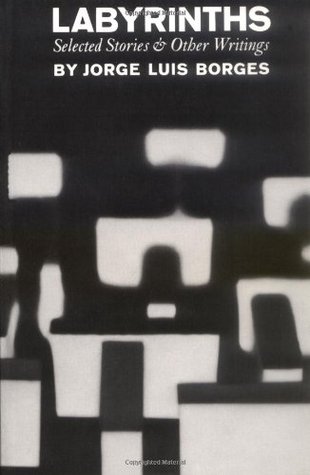
Review: Labyrinths: Selected Stories & Other Writings by Jorge Luis Borges


First published:-1962

Read in:- May, 2014

Star rating:- 

A university professor had once expounded on the supposed conflict between history and literature, the former bemoaning the irrelevance of the latter when it comes to tracing the contours of reality while the latter countering this accusation by deploying the well-known defense of 'there's no one way of looking at the truth'

Indeed. Why restrict ourselves to just the one way and the one reality? Why overlook the truth of infinite permutations and combinations of each eventuality and each one of them, in turn, forking off into myriad possibilities ad infinitum? Why seek neat compartmentalization of two disparate disciplines and prevent their intermingling to create new streams of thought? Why believe mathematics and literature to be so fundamentally apart that there can be no blending together of both without the results being distorted beyond intelligibility? 

The very fact that the known limits of what's considered intelligible are being breached every moment, has its roots in the reluctance of labyrinthine minds like Borges' to follow linear pathways. 

Mysticism, mathematics, arcana, philosophy, and literary criticism. A perfect blurring of the boundaries between fact and fiction leading to the creation of an entirely new entity which challenges the normative narrative form. And a moment of perfect lucidity arising out of a churning of all these elements. Where our imaginations come to a staggering halt, Borges' begins. 

I do not wish to squeeze out every last drop of meaning from these complex interpolations of a known truth into discrete bits of hitherto unknown logical conclusions by googling every reference I did not get. Instead I delight in Borges' perfectly synchronized demolition of all and any conventions associated with writing with an authorial preeminence, I gaze enthralled at the vision of clarity being birthed out of pure chaos. 

"In a birdless dawn the magician saw the concentric blaze close round the walls. For a moment, he thought of taking refuge in the river, but then he knew that death was coming to crown his old age and absolve him of labors. He walked into the shreds of flame. But they did not bite into his flesh, they caressed him and engulfed him without heat or combustion. With relief, with humiliation, with terror, he understood that he too was a mere appearance, dreamt by another."

I let my mind latch onto his even if for a little while and let it guide me into realms where only the divinity of thought reigns supreme in its many manifestations. 

And, for now, that is enough.


__

P.S.:-It's good to know where David Foster Wallace acquired his irksome yet awe-inspiring footnoting habit from.


   photo C136E66569D294E4D5DA2D8124D4FF69.png

Sunday, May 11, 2014

Review: Home and Exile by Chinua Achebe

First published:- 2000

Read in:- February, 2014

Star rating:-

'The Empire Writes Back' would have been a fitting alternative title for this essay collection. (Achebe doesn't fail to pay a tribute to Salman Rushdie's essay of the same name published in 1982). Because that is what the running theme here is - a reclamation of a land and a culture that was wrested away with brutal force and made a part of an 'Empire' which still insists on viewing that period as one of glory and not characterized by the worst kind of human rights violation ever. And a heralding of the arrival of the African voice in the world literary scene.

Achebe is slowly turning into my personal literary hero. His wry humor, elegant prose, mildly sardonic tone and passion for social justice exude a righteousness that's hard not to defer to. His writings continue to make me question certain pet notions and ideas that are so deeply ingrained in each one of us that they seem like indisputable facts and consequently evade further introspection. My penchant for unconsciously comparing Latin American, South East Asian and African writing to the style, technique and language of the Americans and Europeans I admire and immediately pronouncing judgement on them on the basis of said parameters has to go away now, I realize.
It doesn't matter if African, Asian and other writers of the Commonwealth (Dear god, why do we have that ridiculous redundant grouping still? is it not there for the sole purpose of reminding us that we were once colonies?) have the same degree of grammatical precision and structural integrity to their English prose as their European and American counterparts. It matters that their voices be heard and universally acknowledged and the overlooked truths, their narratives highlight, be analyzed without bias.

Although this collection consists of 3 essays titled 'My Home Under Imperial Fire', 'The Empire Fights Back' and 'Today, the Balance of Stories' it should be considered a single body of work or discourse intended to dispel certain flawed notions about African people who are often derogatorily referred to as 'tribes' and automatically consigned to a lesser category of humanity. 
Achebe begins with his reminiscences on his early years as a young university student in Nigeria, reading literature based on Africa authored mostly by British and European scholars who, of course, liberally manufactured painfully offensive 'facts' regarding the intellectual and anatomical inferiority of his fellow brethren and propagated the theory that European acquisition of their land and sphere of existence was for the sake of their own personal benefit.

This is what Achebe says about the interlinked nature of inherently racist literature of the time (he is sophisticated enough not to use the word 'racist' even once though) and the Atlantic slave trade:-

"I will merely say that a tradition does not begin and thrive, as the tradition of British writing about Africa did, unless it serves a certain need. From the moment in the 1560s when the English captain John Hawkins sailed to West Africa and 'got into his possession, partly by the sword and partly by other means, to the number of three hundred Negroes,' the European trade in slaves was destined by its very profitability to displace trade in commodities with West Africa."

Achebe directs his suppressed ire at Anglo-Irishman Joyce Cary who was regarded as one of the finest novelists of his time and his creation 'Mister Johnson' which Achebe systematically breaks down and interprets as a text strewn with viciously hateful commentary on Africans. Another renowned novelist and polymath who had considerable first hand experience of Africa, Elspeth Huxley, isn't spared either as her criticism of Amos Tutuola's 'The Palm-Wine Drinkard' as a 'folk tale full of queer, distorted poetry, the deep and dreadful fears, the cruelty, the obsession with death and spirits, the macabre humour, the grotesque imagery of the African mind' comes off as an insidious denunciation of all African literature in general. 
Joseph Conrad, predictably, is his next victim. (Criticism of 'Heart of Darkness' seems like a recurrent theme in Achebe's essays)

Quote from 'Heart of Darkness' -

"Well, you know, that was the worst of it-this suspicion of their not being inhuman."

Achebe's deconstruction-

"A more deadly deployment of a mere sixteen words it would be hard to imagine. I think it merits close reading. Note first the narrator's suspicion; just suspicion, nothing more. And note also that even the faint glimmer of apparent charitableness around this speculation is not, as you might have thought, a good thing, but actually the worst of it! And note finally, the coup de grace of double negation, like a pair of prison guards, restraining that problematic being on each side."

Next in Achebe's line of fire is the ever controversial V.S. Naipaul and his lecture titled 'Our Universal Civilization' delivered at the Manhattan Institute and his caustic and downright obnoxious comments on Asian and African readership and cultures. Achebe brings into focus the difference in attitudes between the Indian-origin Naipaul and the famed Indian writer R.K. Narayan by stating how Narayan saw 'a million stories' every time he looked out of his window and not a 'million mutinies' like Naipaul did.

He ends by hailing story-tellers of repute like Nadine Gordimer (for her literary activism in the backdrop of the Anti-Apartheid movement in South Africa), Wole Soyinka, Amos Tutuola and names like Nigerian Cyprian Ekwensi (People of the City), Guinea's Camara Laye (L'Enfant Noir), Cameroon's Mongo Beti, Ferdinand Oyono (Houseboy), Cheikh Hamidou (Ambiguous Adventure) who have lent enormous credibility to the African literary landscape and have led readers all over the world, to take into account the complementary points of view of the people who had been, so far, deprived of a voice.

"Despite the significant changes that have taken place in the last four or five decades, the wound of the centuries is still a long way from healing. And I believe the curative power of stories can move the process forward."


P.S.:-My rating may be upgraded (or downgraded) in the future based on what I glean from a reading of A Bend in the RiverIndia: A Million Mutinies Now and a re-reading of Heart of Darkness.


   photo C136E66569D294E4D5DA2D8124D4FF69.png

Sunday, December 29, 2013

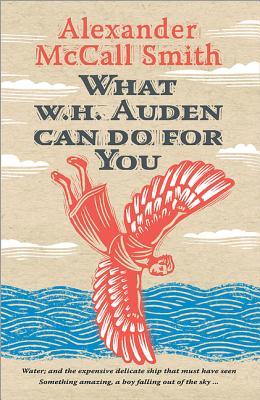
Review: What W.H. Auden Can Do For You by Alexander McCall Smith

First published:- 2013
Published by:- Princeton University Press

Star rating:-


How should we like it were stars to burn 
With a passion for us we could not return? 
If equal affection cannot be, 
Let the more loving one be me.


My association with W.H. Auden and his literary output has been restricted to the occasional browsing through poets.org which gave rise to a somewhat fickle love for Lullaby (which I couldn't help but read more than once) and As I walked Out One Evening. But somehow the lines faded away from memory as soon as I closed the browser window, sometimes mere beautiful words and perfect cadence aren't sufficient to stimulate further intellectual curiosity. But Alexander McCall Smith's near fanboyish enthusiasm for one of the greatest English poets of the 20th century has forced me to reconsider my views on Auden and maybe even provided the much needed push to delve into his oeuvre further.

This is not literary criticism per se, but rather a mixed bag of Smith's views on the poet's personal life, his body of work and the way his worldviews figured in his poetry. It goes without saying, literature students may find this book vastly redundant as it contains nothing that hasn't already been recorded by academicians who have analyzed and dissected Auden's poetry from all probable angles. And Smith acknowledges this right at the beginning, very clearly stating that his intention behind writing this has been to offer a tribute to Auden who was, in a way, his personal literary icon.

There are separate chapters devoted to Auden's early years at Gresham's School, another one in the long tradition of stiff upper-lipped English boarding schools, and later at Oxford, his lifelong friendship with Christopher Isherwood who had been inspired to write the renowned Goodbye to Berlin after Auden's visit to Berlin in 1928, his homosexual dalliances, his desire to drive an ambulance during Spanish Civil War which resulted in one of his celebrated, but subsequently disowned, poems 'Spain'(vehemently denounced by George Orwell who of course was accredited with a deeper understanding of the politics of the Civil War), his growing admiration for socialism in the wake of the rise of fascism in Europe prior to the Second World War and his eventual disillusionment with Communism. 

Auden's poetry is widely criticized as a hollow compilation of sublime imagery and flowery writing with little to no depth but Smith, in the tradition of most Auden lovers, defends the sanctity of his work with assertions like the following:- 

"'In Praise of Limestone' contributes greatly to the appeal of what he wrote. It is easy on the ear - and ease here has no pejorative implications: the fact that something is easy to listen to does not make it less intellectually significant."

"There are plenty of poets, especially those given to the writing of confessional verse, who are ready to tell us about their particular experience of love. We listen sympathetically, and may indeed be touched or inspired by their insights. But few poets transcend the personal when talking about love. They are talking, really, about how they felt when they were in love; Auden digs far deeper than that. He talks about love and flesh as it can be experienced by all of us - he transcends the specific experience in a particular place and time, to get to the heart of what we are."

Smith also makes a significant point in regard to Auden's disposition as a poet, he was known to acknowledging misrepresentations of facts in his earlier poems instead of quietly hoping for the work in contention to be erased from public memory like the other writers of his time did. He humbly acknowledged whenever he was wrong and was extremely self-critical.

To conclude, this is a fine book to gift to the random Auden devotee and perfect for introducing Auden to a neophyte who knows virtually nothing about the great Anglo-American poet (like myself for instance).


Also published on Goodreads and Amazon.
   photo C136E66569D294E4D5DA2D8124D4FF69.png
Related Posts Plugin for WordPress, Blogger...