Showing posts with label World War II. Show all posts

Monday, August 25, 2014

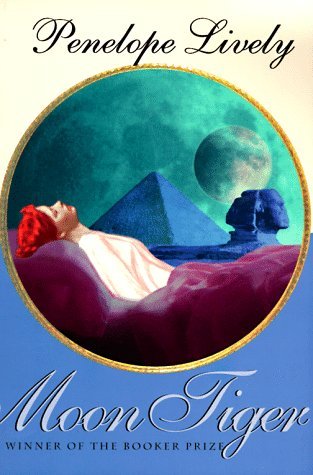
Review: Moon Tiger by Penelope Lively

First published:-1987

Star rating:-

Read in:- December, 2013


Claudia Hampton speaks to me of wars fought in distant lands, of the ever-persistent forward march of humanity in the quest for collective betterment, of stories unknowingly buried forever in the catacombs of time and never unearthed, of the people we carry in our hearts wherever we go, of the history of the world intertwined with our own. Claudia tries to make sense of the cacophony of voices inside her head and outside, of conflicting opinions colliding violently creating sparks that burn down empires and turn to rubble the foundation of regimes. Claudia tells me a story of the past melded with the present. 

Claudia's history of the world isn't one-sided. She accedes, to all the players involved, their right to speak for themselves, to say that which has been coldly snubbed by the opinionated historian of the past. Claudia does not look at past events through the lenses of established notions, of opinions passed off as indisputable facts. Larger than life heroes are reduced to the status of mere mortals in her eyes, violent uprisings become a trigger for devastating tragedies instead of turning points in the history of a nation's struggle for liberty. Images of a world war become indiscernible from the images of her lover who dies fighting in it and the entailing heartbreak she could never purge from her memories no matter how hard she tried. The unyielding bond she shares with her brother Gordon, her rival, her biggest critic, her most devoted admirer, and in the end her lover, remains intact even after he is no longer there to provoke her, to argue with her relentlessly, to urge her on towards becoming a more refined version of herself. 

"For there are moments, out here in this place and at this time, when she feels that she is untethered, no longer hitched to past or future or to a known universe but adrift in the cosmos."

Claudia never became what others wanted her to be, stubbornly trudging along a path forged by none but herself. She loved the daughter born out of wedlock dearly, but from afar, without the grand show of affection expected of any mother. And as she lies in that hospital bed, her life force slowly ebbing away, a frail old woman of 76, misunderstood by the ones dearest to her, my heart weeps for the grief that she kept carefully hidden from everyone, a secret she carried to her grave. But I bid her farewell with a smile, soothed by the knowledge that her life was, after all, a life well-lived.


  photo C136E66569D294E4D5DA2D8124D4FF69.png

Saturday, July 26, 2014

Review: The Garden of Evening Mists by Tan Twan Eng


First published:-2011

Star rating:-

"For after the rain, when with never a stain
The pavilion of Heaven is bare,
And the winds and sunbeams, with their convex gleams,
Build up the blue dome of Air
I silently laugh at my own cenotaph
And out of the caverns of rain,
Like a child from the womb, like a ghost from the tomb,
I arise, and unbuild it again."
 - P.B. Shelley

The heron preens itself majestically, perched delicately at the edge of the pond, having found the familiarity of a home at last after miles of mateless flight. Gold-flecked koi fishes dart surreptitiously just below the surface, disrupting the lotus leaves. Wisps of rain-bearing clouds and the mountains meld into each other's embrace in a rare moment to become a mist-robed goddess and render the vista an acute resemblance with aukiyo-e painting, a charming illusion not even a discerning eye can remain immune to. Unwilling to pay the dues exacted by aphasia, Yun Ling hears the fading whispers of times gone by - unspeakable horrors etched across the soft palate of her consciousness she'd dearly like to forget and fond remembrances of the ones who sustained the flame of empathy in their hearts while the symphony of death and devastation reached its crescendo all around the Malay peninsula. The beautiful and fragile landscape of Yugiri lies forgotten in the wake of Aritomo's perplexing disappearance, but his decrepit, untended garden stands as a testimony to his lifelong devotion to a dying art form, to his solemn resolve of remaining humane at a time when savagery was the norm. 

One war replaces another as the ruthless Communist guerrillas commence a new reign of terror at the end of the Japanese Occupation. Peace remains that idealized mirage in a desert, forever out of reach. The prospect of succumbing to an acute hatred of the ones who caused her misery tempts, but Yun Ling struggles to hold on to her sanity and conscience in the grey abyss trapped between light and dark. Her faith in Aritomo wavers time and again but she lets her skin become the last canvass of his horimono art anyway. 

Did Aritomo's loyalty lie with Emperor Hirohito all along? Or had he simply ignored the obligations imposed by notions of race, gender, skin color, and nationality to respond to that primordial voice of reason every time it had called out to him to do the right thing? Will Yun Ling ever be able to forgive herself for surviving the atrocities that claimed her sister's life? Will Yun Hong find the peace and dignity in death that she was denied as a 'comfort woman' at the hands of her Japanese captors? 

In her twilight years, Yun Ling realizes that these questions will continue to ricochet off the walls of her consciousness time and again until the day she breathes her last. But she is no longer haunted by their echoes. The war had claimed victims on all sides and nearly every one was complicit in the collective barbarity of it all. Her festering psychological wounds will never truly heal but she finds contentment in calm acceptance of this baffling duality of life - the juxtaposed coexistence of kindness and cruelty, love and loathing, memory and oblivion, the human capacity for creation and destruction. 

"Are all of us the same, I wonder, navigating our lives by interpreting the silences between words spoken, analysing the returning echoes of our memory in order to chart the terrain, in order to make sense of the world around us?"

Reconciled to history's ironies, Yun Ling now knows that the world will forever rotate on its axis of disastrous decisions and terrible consequences for all. The relentless flow of time will weather away all the damage that had seemed indelible once. Remembering Aritomo's words, she will cling to a greater purpose with every last bit of strength if and when the cycle of madness starts all over again. Because nestled in the heart of the mountains in Tanah Rata lies the frayed dream of her refuge from the brutalities of the outside world - the slumbering garden of evening mists which patiently waits for her to awaken it to the magical touch of life once again.


   photo C136E66569D294E4D5DA2D8124D4FF69.png

Friday, January 3, 2014

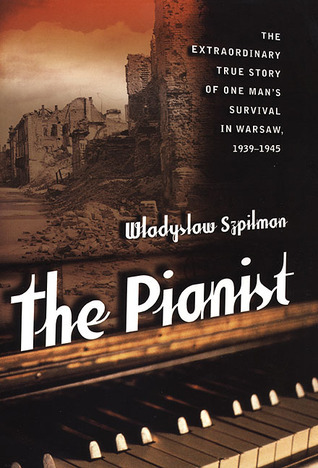
Review: The Pianist by Wladyslaw Szpilman

First published:- 1999
Star rating:- None

This is the first time I am reviewing a book that I have tried and failed to rate.

How do I decide on a rating anyway? Should I judge the prose? the content? the author's style of presentation? his narrative voice? the quality of the translation?
Do I even have the right to? 

Awarding a star rating to this man's unbelievably harrowing and miraculous tale of surviving a war which claimed the lives of 6 million of his fellow brethren for no reason at all, seems a more sacrilegious act than calling Infinite Jest a bad book on Goodreads. 

So I choose not to.

Wladyslaw Szpilman, a pianist working for the Polish radio station, takes us through the years of Nazi occupation of Poland and Warsaw, in particular, and the insensate violence that had the Jewish inhabitants of the city (the ones who were fortunate enough to be spared the concentration camps) living the most brutal and unforgiving of nightmares for a period of almost 5 years.

description
                                                 Wladyslaw Szpilman

Szpilman writes with a kind of unnerving indifference, as if this were someone else's tale of horrors he is narrating and not his own. It is obvious that since he had written this in 1946, immediately after the war, his senses may still have been numbed under the influence of the barbarous acts he had witnessed through the 6 years of the Occupation. His voice doesn't sound sarcastic, debilitated or even a little bit acerbic. Instead, he gives us a neat, uncluttered, unemotional, chronologically ordered account of events which saw him narrowly escaping certain death many, many times.

But this is not just his story. A surprise awaits the unsuspecting reader at the very end, in the form of Wilm Hosenfeld, a Nazi officer who saved Szpilman's life in the last few months of 1944. An astonishingly mild-mannered, generous soul who not only kept the knowledge of Szpilman's existence a secret from the other SS officers, but saved him from certain death out of starvation and the unbearable cold.

But true to the nature of war which justifies countering violence with more violence, Hosenfeld was taken as a prisoner of war when the Soviets finally recaptured Poland. He was tortured to death years later (1952) in some unnamed labor camp in the icy swathes of Stalingrad. His tormentors were especially cruel with him, angered by his claims of having saved the lives of many Jews and Poles during the Warsaw occupation. Which, of course, was nothing but the truth.*

description
                                             Wilhelm Adalbert Hosenfeld

It goes without saying, while reading this book I had no sense of time or any movement around me, I had no idea whether it was still daytime or whether night had fallen. Turning over the last page, when I finally took note of my surroundings I discovered my pillow was half-wet with tears and that I had a dreadful headache.

Some of the most poignant, haunting and reflective passages of the narrative are in Wilm's journal which was recovered years later and incorporated into Szpilman's memoir -

"Evil and brutality lurk in the human heart. If they are allowed to develop freely, they flourish, putting out dreadful offshoots...."

A mere German officer seems to have had the moral strength to admit - 

"Our entire nation will have to pay for all these wrongs and this unhappiness, all the crimes we have committed. Many innocent people must be sacrificed before the blood-guilt we've incurred can be wiped out. That's an inexorable law in small and large things alike."

And yet the "great" Der Führer, in front of whom a vast Empire bowed down at one point of time, could only choose the coward's way out by committing suicide in the end. 

A million stars to the courage of Wladyslaw Szpilman, who aided the Jewish resistance in the Warsaw ghetto, disregarding the constant threat to his own life. A million stars to his unflinchingly honest attempt at looking back at a terrible past. A million stars for enabling the citizens of the world to read, know and derive lessons from the story of his life. A million stars to Wilm Hosenfeld for holding on to his conscience at a time when morality and compassion were in short supply. 

And a million stars to the triumph of the human spirit. 

(So you see the correct rating of this book should be 5 million stars which is beyond the scope of any conventional rating system.) 

*Wilm Hosenfeld was posthumously recognized as a Righteous among the Nations in 2009 by Israel.

P.S.:- This review maybe updated after I watch the movie.


   photo C136E66569D294E4D5DA2D8124D4FF69.png

Saturday, October 12, 2013

Review: The Wind-Up Bird Chronicle by Haruki Murakami

If I were to use only one word to describe this book, I would type the word 'brilliant' a million times with each letter in CAPITALS and fill up the entire word length of this particular space.

In all its sensitivity, emotional depth and keen understanding of the complications of the human mind, this is a stellar work of literature and a tour de force in itself. I cannot go ahead and say it is Murakami's magnum opus (it is not his longest novel), since I haven't finished with all his translated works and besides he is only 63 and I expect him to keep writing books for as long as it matters, each one better than the last. But I'm forced to admit that of the 7 Murakami books I have had the fortune to read so far, this one stands out as the most gripping, most cerebral yet compassionate commentary on loneliness and human misery. 

In this particular novel, Murakami stitches together a handful of seductively beautiful vignettes to form a magnificent larger than life image, that does not only represent a story of a particular individual but recounts the tales of many. Seemingly unconnected at first, these numerous subplots coalesce together in a solid clincher of an ending - a humongous task but performed with elan by the masterful surrealist.

It is a story of a marriage which is falling apart slowly but steadily, a moving depiction of the horrors inflicted on humanity during Japan's occupation of Manchuria and the forgotten battle of Nomonhan, a mystery thriller, an exploration of the inherent darkness within each one of us and a man's path to self discovery all combined into one.

Newly out of work, Toru Okada is leading a peaceful life with his wife Kumiko when his carefully organized world starts to crumble bit by bit. His wife goes missing without a hint, the sociopathic brother-in-law he despises with a passion is emerging as a compelling figure in Japanese politics and he begins encountering queer characters one after the other, each of whom seem to be twisted individuals but guide him towards solving the mystery of his wife's sudden disappearance. And thus begins a most intriguing tale of Okada's journey through an intricate labyrinthine path stretching across time and space, the real and the surreal, where he goes through a set of bizarre but enlightening experiences.

It is difficult for me to say anything more about the plot simply because it is impossible to summarize a Murakami novel or to express all the emotions a reader goes through in such a short review. Honestly I could write a whole damn book if I'm to review every aspect of one particular Murakami novel.

All this time I had subconsciously developed an intense desire of knowing Murakami's opinions on Japan's infamous role in World War II. This book surprised me pleasantly by giving me exactly that and I'm not disappointed with his view. 
Instead of taking a stand, Murakami describes a few scenes of extreme violence with precision and calculated neutrality and pushes the reader to form his/her own opinion. He does not try to absolve the Japanese of the unmentionable crimes they committed against the Chinese but at the same time offers a very human perspective of the trail of death and devastation. For example, when a Japanese veterinarian, serving as the director of a zoo in Manchukuo is being made to watch the gruesome killing of 4 Chinese rebels with bayonets, Murakami sums up his feelings in the line:-

'He became simultaneously the stabber and the stabbed.'
I don't think he could have created a more moving picture of the ruthlessness of war or the unimaginable horrors it spawns. If the Japanese were ruthlessly brutal, so were the rest - the Soviets, the Mongols and every single human being who killed or tortured another in the name of war. He also hints at the accountability of those at the helm of matters, seated somewhere in their immaculately decorated offices, dressed in dapper suits, making decisions which alter the course of humanity for the worse and bring about disastrous consequences for the rest to face.

This is perhaps the only Murakami novel which has a very strong element of mystery at heart and which ends with a satisfactory resolution of sorts. 


Final rating :- 5 stars and no less. Hell, I could've given it a 10 stars out of 5 if possible.

P.S:- So Murakami didn't win the Nobel this year either, but that's okay because in the heart of every devoted Murakami lover, he has been given the Nobel a million times over already.


 photo C136E66569D294E4D5DA2D8124D4FF69.png

Tuesday, October 1, 2013

Review : The Gift of Rain by Tan Twan Eng


"Like the rain, I had brought tragedy into many people's lives but, more often than not, rain also brings relief, clarity, and renewal. It washes away our pain and prepares us for another day, and even another life. Now that I am old I find that the rains follow me and give me comfort, like the spirits of all the people I have ever known and loved."

Tan Twan Eng may not be a great prose stylist or even come close to being one. He may falter when it comes to subtlety and fail at inserting appropriate metaphors into his rather direct tone of narration. But he surely succeeds in recounting a moving tale of human triumph with great clarity. Like a wise old man with sinewy forearms sitting in the midst of a group of young, moon-eyed listeners, he narrated a story of times gone by and all I did was lend him an eager ear. 
I listened to his voice with rapt attention, I learnt, I understood, I shed tears. 

I was transported back in time where I stood somewhere along the sidelines as a helpless spectator witnessing the mute misery of a picturesque but war-ravaged land. So much so I'm still recovering from the fierce onslaught of all the images of terrible beauty that Eng drew before my mind's eye in rapid succession. 
I'm going to recall from time to time, the startling greenery of the verdant rain forests in and around Penang, the hustle and bustle of the marketplaces in Istana, the gray-white limestone cliffs of Ipoh, the rich aroma of a pot of steaming coconut rice, the calming effect of zazen and the tale of Philip Hutton's uncommon bravery in the face of madness brought forth by an all-engulfing war. And I'm going to try to make sense of the paradoxical yet deeply human bond between Philip Hutton, a representative of a vanquished and besieged Malaysia and Hayato Endo, a representative of the conqueror Japan.

When the world sinks into chaos of the most fatal kind and all finer human impulses are trampled on over and over again until nothing remains but only the irrational urge to draw blood, burn and annihilate, a handful of people refuse to stray from the path of sanity and compassion at the cost of complete personal ruin. 
Philip Hutton, our narrator, was one such person. Born of a British father and a Chinese mother, he was forever an outcast in any world he wished to belong to, all because he was guilty of having a mixed parentage. Perhaps that is why, he imbibed all the great virtues of his British and Chinese heritage and under the tutelage of a Japanese spy of dubious loyalties, familiarized himself with all the tenets of aikijutsu aikido and other Japanese ways of living, which became crucial to the survival of many later on.

During the trying times of the Japanese Occupation, at the risk of perpetual disgrace, he crossed over to the side of the enemy only to save what was most precious to him. Philip Hutton became notorious for aiding the Japanese in running the affairs of Malay and a collaborator in all the atrocities carried out against the natives, but what didn't become common knowledge was how he saved many, many innocent lives under the helpful guise of betraying the land of his birth.

Even though I am sorely tempted to label The Gift of Rain as a testimony to the greater human predicament during turbulent times, that goes beyond the petty divides of ethnicity, skin color and culture, I will not succumb to that lure. Philip Hutton maybe perceived as a cliched symbol of a stabilizing influence on all conflicting elements of life or he may even be just a reminder of that elusive voice of reason which we often proceed to stifle with brutal force at a time we need it the most. But I will not seek to trivialize his fictitious life in this cold analytical manner.

Instead, I choose to be a random listener who came across the extraordinary story of his courage and withhold judgement. I choose to dignify his existence by not questioning his deeds, his associations, his choices or his existential dilemmas. I choose to empathize with Malay and China, both of which were tormented and ripped apart by another nation nurturing a blind Imperialist zest. But then I also choose to empathize with the aggresor Japan, which didn't escape suffering inflicted by the War either. 

I choose not to vilify Philip for fraternizing with the foe and I choose not to indict Endo san for his treachery. 
And by doing neither, I choose to side with humanity.
Because as much as it will be easier to pigeonhole wartime human barbarity into convenient labels like repercussions of ruthless nationalist ambitions and pass the buck on responsibility, the lasting truth of the matter is the all-encompassing nature of our collective ordeals through time and space. 
In the end, it doesn't matter who or what caused our suffering. It matters that we suffered.


4 glorious stars of 5.

 photo C136E66569D294E4D5DA2D8124D4FF69.png

Tuesday, September 10, 2013

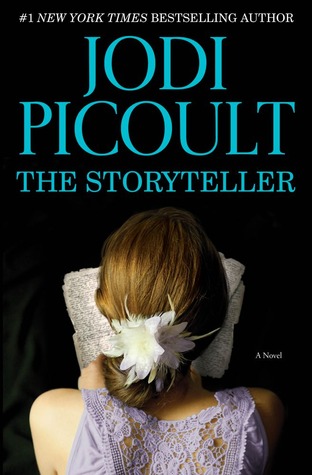
Review: The Storyteller by Jodi Picoult

(Original review posted on Goodreads : June 27, 2013)

The first few chapters of The Storyteller introduce us to Sage Singer - a twenty-something baker who is struggling with scars both emotional and physical. Following an accident that maimed half her face, Sage suffers from very low self-esteem, lives and works like a recluse and settles for being some guy's mistress.

Had I not read the blurb, I would have assumed that I was reading one of those chick-lit stories where an insecure girl with too much emotional baggage meets a guy who loves her for who she is.

400 pages later, that is EXACTLY what The Storyteller turned out to be.

What a bummer.

I'm not saying that The Storyteller doesn't talk about the Holocaust or doesn't do justice to it. In fact, the best parts are the flash-backs from WW2. I'll give credit where it's deserved - Jodi Picoult has researched the whole thing extremely well. And yet, the Holocaust angle always felt secondary to me. It did not get the attention it deserved. Or rather, undue attention was given to trivial plot-points.

Take the baking, for example. There is a ton of absolutely pointless information. What Sage bakes. Why she bakes. How she bakes. How gluten works. How brioche is made. Yadda yadda yadda.

Another useless detail that is hard to ignore - Sage's sisters are called Pepper and Saffron.
There's nothing technically wrong with those names except that they serve no purpose in the book whatsoever and stick out like a sore thumb.

All the side-characters were unrealistic and absolutely weird, again, for no reason other than grabbing undue attention. Who the hell speaks only in Haiku?? What kind of nun (or ex-nun) paints Jesus with the face of Bradley Cooper?? What is this, some Sophie Kinsella novel??

All that time Picoult wasted on meaningless digressions could have been better spent in developing Josef and Sage's friendship, which felt rather sudden and underwhelming to me.

There's another story about a vampire (No, I'm not joking.) that is narrated in parallel. It has allegorical meaning in the context of the book. I wish this story was kept separate, maybe like a prologue/epilogue to each part. It's jarring to go from SS officer in one chapter to blood-thirsty vampire in the next.

Now, the good part. Minka's harrowing tale of surviving the Holocaust is without question, the highlight of The Storyteller. The meticulously detailed descriptions make it nearly unbearable to read, but those 150 odd pages tell a supremely compelling story. For that one section, I'd say Brava, Ms Picoult.

Sadly, even Minka's story cannot save The Storyteller from my 2-star shelf. What should have been about Josef and Minka focused too much on Sage and Leo.


2 out of 5 stars


Sunday, September 8, 2013

3 short reviews

A Pale View of the Hills by Kazuo Ishiguro

Ishiguro's A Pale View of the Hills, despite being his debut, is no less an emotional tale than
his other better known works. It is a delicately woven tapestry of several themes, stitched together by the gift of Ishiguro's masterful but tender story-telling.
Through the eyes of Etsuko, we see a war-ravaged Japan trying to rise from its ashes - torn between the difficult choice of shunning past ideologies which lured it down the path of devastation or holding on to the frail sentimentality of traditions. The narrative switches back and forth between Etsuko's present where she is merely drifting through life in England with a daughter she barely knows and her memories of one particular summer in Japan when she came across a dysfuctional mother-daughter duo. We see women in a changing society who slowly begin to assert themselves, while a passive and pregnant Etsuko merely observes. It's almost as if Etsuko's life itself is an allegory of her homeland during turbulent times, about to undergo a major paradigm shift.
A story of loss, pain, self assertion and the aftermath of war.

4 stars out of 5.

An Image of Africa by Chinua Achebe

Presently, An Image of Africa has 49 ratings and 3 reviews (including mine) on Goodreads.
While Hopes and Impediments: Selected Essays, a compilation of essays by Achebe which contains this famous piece along with a few others, has 109 ratings and 8 reviews.

Which means this particular essay is as unknown and ignored as Heart of Darkness is universally read and worshipped.
This does not however indicate that Achebe has been given the cold shoulder by Goodreaders. (Oh no not at all, he is very popular instead.) 
Merely this that, either most people on Goodreads are not too intent on reading essays or not specifically interested in an African writer's denouncement of a most revered piece of literature written by a European. 
Even a Google search wasn't able to cough up links to coherent reviews of Achebe's essay than a meagre 2 or 3, one of which was posted on a UK based website, which understandably enough, shot down all of Achebe's claims in the same way as the rest of the world may dismiss a threat of nuclear war made by North Korea. 

Sharp, precise, thorough and keen in its deconstruction of Conrad's Heart of Darkness as a piece of mainstream literature fraught with racist implications, An Image of Africa does not only seek to label Conrad as a 'bloody racist' as the description says. (for your information, reader, he uses the word 'thoroughgoing' instead of 'bloody')
Achebe also brings to our notice, the often overlooked aspects of this literary fiction that is read by millions and taught as coursework for literature students worldwide, especially in American universities. Among the numerous critiques of Heart of Darkness, not one exists which points out Conrad's blatant dehumanization of the inhabitants of Africa as a manifestation of an obstinate white sense of superiority. 
Which is why Achebe took it upon himself to write one. 

"A Conrad student informed me in Scotland that Africa is merely a setting for the disintegration of the mind of Mr. Kurtz.

Which is partly the point. Africa as setting and backdrop which eliminates the African as human factor. Africa as a metaphysical battlefield devoid of all recognizable humanity, into which the wandering European enters at his peril. Can nobody see the preposterous and perverse arrogance in thus reducing Africa to the role of props for the break-up of one petty European mind? But that is not even the point. The real question is the dehumanization of Africa and Africans which this age-long attitude has fostered and continues to foster in the world. And the question is whether a novel which celebrates this dehumanization, which depersonalizes a portion of the human race, can be called a great work of art."


I think I ended up highlighting so much while reading that it would have sufficed to just highlight the entire printed text or leave it alone and consider the whole thing highlighted, anyway. 
Achebe's line of reasoning and thought is impossible to slight and makes one see Conrad's much vaunted literary masterpiece in a new light altogether.
But another reading of Heart of Darkness is needed before I can extol the infallibility of Achebe's arguments with more conviction.


4 stars out of 5.

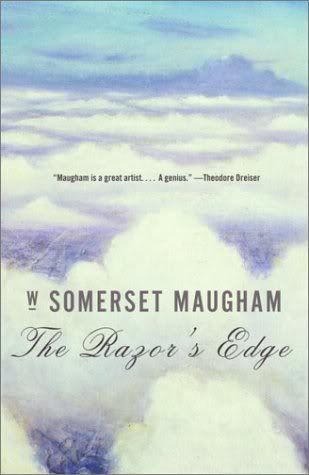
The Razor's Edge by Somerset Maugham


In a nutshell, this contains Maugham's indictment of the culture of materialism, upper class
snobbery and the story of a man's spiritual awakening and search for the true meaning of life. He has analyzed the opposite ends of the spectrum of human existence and juxtaposed themes of kindness and human goodwill along with the basest of human feelings such as contempt and jealousy in a way truly characteristic of a master of the art. But some portions were unnecessarily drawn out. And I felt Maugham's deliberate reveal of himself as a character in the story and as the narrator, didn't add anything to the narrative and instead mellowed down its intensity to a certain extent.

3.5 stars out of 5. 

 photo C136E66569D294E4D5DA2D8124D4FF69.png

Saturday, August 31, 2013

Review : Slaughterhouse-Five by Kurt Vonnegut

(Original review posted on Goodreads:- April 30th, 2013)

Neither does a war bring glory nor does a win in one ensure the moral infallibility of one
ideology over a conflicting one. Because essentially, war justifies countering genocide with more genocide. We all know that, right?
But nope, we don't. We only think we do. And that is what Kurt Vonnegut wishes to tell his reader, in a calm, detached and emotionless voice in Slaughterhouse Five.
He informs us, quite matter-of-factly that we don't know the first thing about a war and proceeds to explain to us what it really is, by fashioning a narrative as abstruse, disjointed and meaningless as war itself.
I must make a confession despite how morbid this may sound. I have a thing for war books because it's endlessly fascinating to read about the two World Wars which helped define our identity as a civilization in the last century. And despite the horrendous nature of crimes against humanity that were committed in both, these two wars held up a mirror in front of us where we could recognize our own failings as human beings and rectify our mistakes.
Which is why I agree with Tan Twan Eng's views on World War II:-,
"Moments in time when the world is changing, bring out the best and the worst in people."

But Vonnegut neither eulogizes war nor seeks to make our hearts bleed for the unimaginable loss and suffering it brings. Instead, he gives the traditional perspective on war a new twist by giving us a prolonged glimpse into the mind of a war veteran who neither considered himself a hero nor a coward. 

Billy Pilgrim's life or the way he viewed his own life in retrospect, was as chaotic and nonsensical as the war he fought in. It is the sheer absurdity of the concept of war that takes center stage in this highly experimental novel - how we carry on with our broken lives with a perverse sense of humor in the face of mindless cruelty and utter madness.

5 out of 5 stars.
Photobucket

Saturday, August 24, 2013

Review : An Artist of the Floating World by Kazuo Ishiguro

(Original review posted on Goodreads:- Feb 16, 2013)

If you've already read The Remains of the Day  chances are your enjoyment of An Artist of the Floating World will be greatly curtailed. And that is the sheer tragedy of this book.

Replace Stevens with Ono san. Replace a financially unstable England with post-war Japan and insert Ishiguro's penchant for allegory. And TADA, you have An Artist of the Floating World.
It had potential to be a very emotionally charged commentary of a nation re-building itself from its charred (atomic-bombed) rubble and reflecting on the flawed ideologies of its notorious past.
But instead it felt like a curious combination of The Remains of the Day and A Pale view of Hills.

If in TRotD, Stevens laments living a life devoted to serving a Nazi-sympathizing, anti-Semite Lord with unquestioning loyalty, in here, Ono san experiences feelings of profound guilt for having created paintings supporting the war and Imperial jingoism. We see Ono repeatedly trying to convince himself that his ideals were not at fault and he only did what his own conscience permitted him to, at the time.
But at the fag end of the narrative, Ono comes to terms with his 'mistakes' and even ends up offering an unsolicited apology to his daughter's father in law at her miai (marriage interview in Japanese).

Translation:- Ishiguro virtually makes Japan get down on its knees and apologize to the world for all the crimes against humanity it committed during the War. The floating world of the pleasure district that Ono san uses as a theme for his paintings is actually a symbol for a floating, unstable Japan about to turn over a new leaf.

I can't exactly put my finger on what I did not find appealing in this book. Maybe it's the matter-of-fact tone of Ono's voice in this narrative which will tend to annoy the reader at some point. Maybe it's the glaring similarities with TRotD. Or maybe it's the Booker-nominated writer Tan Twan Eng saying how he reads this book at least once every year which caused me to have really high expectations.

I thought a book had to create an incredibly strong impact for it to be Eng's all-time-favorite. But I guess as a native of Malaysia, he must have strong sentiments associated with any book which talks about Japan's shameful past as colonial master of most of south-east Asia.

So my advice to the uninitiated will be : Read Ishiguro's works in order or at least read this one before reading The Remains of the Day.

3 underwhelmed stars out of 5.
Related Posts Plugin for WordPress, Blogger...