Showing posts with label 2013-releases. Show all posts

Friday, July 11, 2014

Review: Enon by Paul Harding

First published:-June 7th 2012

Published by:-Random House

Star rating:- 

It is an ominous sign when your trusted, steady flow of empathy tapers off into a reluctant drip while you were making your way around the misfortunes encountered by a fictional parent rendered newly childless. Are you being too coldly practical, perhaps, mentally asking this grief-addled father to pick up the pieces of his heart and kickstart his life like a pre-programmed cyborg? Is your work-tired brain refusing to let you feel an intense pity for this man who resorts to tripping himself up on drugs to have a daily hallucinogenic rendezvous with his dead daughter?

I dearly wish I could nip such nagging doubts in the bud by answering all these questions with a 'no'. But I can't. My feelings for this book are as vague as the state of the protagonist's chaotic inner world post his daughter's demise.

The themes of trauma and tragedy permeate literature of any merit right down to its bones ever so often, that it's hard to come by a new treatment of the same old soul-crushing sadness. While some authors add an outer gloss of dignity and self-restraint to their psychologically broken characters, others deftly interweave unforeseen outwardly manifestations of repressed grief with the ennui of carrying on with the daily routine. And this is where Paul Harding does things differently. 

He kills Charlie Crosby's carefully organized world in an instant, shoving him right down the gaping hole of nothing. Charlie has no story to tell anymore, no purpose left in life except giving us prolonged glimpses of the tendrils of darkness that coil around his waking moments threatening to choke him to death. He only pulls us along for this turbulent ride as he traverses the distance between the edge of utter madness and a saner place, between losing himself in the futility of preserving any and every remnant of his daughter's short-lived earthly presence and finding his footing in the treacherous bog of loss. And this is fine really. But what is his justification for pushing away his co-mourner, his wife? 

There's only a thin line of difference between grieving for a loved one and internalizing that grief to the point where you begin using it as an anchor keeping you tethered to the reality that was stolen from you, to the extent the sadness which was gnawing away at your insides bit by bit became so fattened on your weaknesses that it pushed out every other thing from your head to make space for itself. And Charlie treads on this thin line barely holding on to his balance, often crossing over into the territory of no-man's land.


"I could not stop myself from stepping over the same dark threshold, night after night, trying to follow her into the country of the dead in order to fetch her back, even though she visited me in dreams and never left my waking thoughts."

I do not claim a kinship with most kinds of life-threatening sadnesses, especially a grief so fatal as the one entailing the loss of a child, not yet anyway. But I have lost a parent at 14. So I hope Paul Harding forgives me for judging Charlie Crosby the way I did.

Maybe I have never felt important enough to accord my grief a higher place over all the other more terrifying griefs - many of them unknown to me - which befall fellow humans and compete for priority every second in this mystifying drama of life. Maybe it's a personal foible to revere the ones who carry the ineffaceable marks of psychological damage, yet muster the courage to wake up every morning and put in their share of effort to keep the world's engines running. Maybe it's a puerile thing to care for tortured, emotionally scarred, righteous heroes like Rust Cohle who find an all-encompassing nihilism to be the answer to the inherent unfairness of life yet battle with that nihilism every moment with hope. 

Whatever the actual reasons maybe, I could not sympathize enough with this hapless father's 'magical realist' tendencies to keep his daughter frozen in the amber of his dope-induced daydreams. Even Harding's thoughtfully wrought, ornate sentences chronicling Charlie's memories of the small rural town of Enon, which witnessed the birth and death of his daughter, couldn't help me establish that intense emotional connection I was expecting to form with this story-without-a-story. In some of the narrative's most lucid yet hazy moments, during the course of Charlie's scarily accurate depiction of despair in its rawest form - the terror of waking up from a nightmare where your loved one was constantly slipping away from your grasp - I came close to developing a sense of solidarity with his pain. But then these moments of sporadic brilliance were interspersed with numerous other iterations of similarly-themed moments which gave rise to nothing other than indifference in me.

On occasions like these, I wish I could align my reviewing methods with those who never rate books but simply move on after recording their experiences with it. Because how do you rate a grief-stricken father's lament?
This is why I am trying to believe that the noticeable absence of 2 stars will only underscore my apathy for infinite extrapolations of the aftermath of tragedy, paraphrased again and again until the reader becomes too jaded to care, and not my disregard for mourning as the key resonant theme. Because the latter assumption couldn't be further from the truth.


P.S.:-I have a feeling my experiences with Harding's Pulitzer winning book, Tinkers will fare much better.
__

Review also posted on Goodreads and Amazon

**I received an ARC from Random House via Netgalley**

 photo C136E66569D294E4D5DA2D8124D4FF69.png

Saturday, June 28, 2014

Review: Speedboat by Renata Adler

First published:- 1976

Republished:- March 19th, 2013 by NYRB

Read in:- June, 2014

Star rating:-

Much of life does not make a lot of sense in the moment it is occuring. Only in posterity, when we dwell on memories, are we able to see past happenings in a clearer light. The passage of time helps us tame the inveterate romanticism of first perceptions and lets the realization sink in that some things are just what they appear to be and further efforts at figuring out some deeper significance are going to remain futile forevermore. Scattered fragments of time spent with people in places glow like fireflies in the dark but the dots never connect. No hidden, congruous patterns emerge. Some moments stand out in the multitude and bring us pleasure, sorrow, mirth, intrigue or some other keenly felt emotion while the rest merge with the void and perish.

Renata Adler's writing is thoroughly deserving of all the accolades because of her earnestness at remaining faithful to dull realities, everyday mundane things that we eagerly discard in favor of the exaggerated glamour of tragedy or romance. Her fictional love interests are ordinary and unexciting, her protagonist is just another city girl in the endless sea of anonymous faces, and her sardonically narrated observations utterly devoid of the artistic grandeur found in the trademark melancholic novel on urban alienation. 

Just as the traditional narrative of the novel is subverted without any pretensions in 'Speedboat' which, true to life, refuses to stitch together ephemeral moments into a much bigger collage of the human consciousness, the short story format is also ingeniously shunned. Adler's aphoristic 'stories' (for lack of a more apposite term) are just what they are - anecdotes on events and conversations recounted somewhat dispassionately and left unexplained, minor departures from the cyclical nature of routine-bound life laid bare for the readers to dissect and derive their quota of 'reading between the lines'from. The random handsome, young man encountered on the subway on your way to work who monopolized your attention for the length of the journey, the quarter found in the backseat of a cab that you surreptitiously picked up after wrestling with your conscience for a while, the ailing woman on the verge of certain death in the hospital ward who said she was doing fine on being asked how she was - these are but some of the many discrete snapshots of our collective lackadaisical existence in the backdrop of any nameless metropolitan city of the world and not just Adler's New York.

"The idea of hostages is very deep. Becoming pregnant is taking a hostage-as is running a pawnshop, being a bank, receiving a letter, taking a photograph, or listening to a confidence. Every love story, every commercial trade, every secret, every matter in which trust is involved, is a gentle transaction of hostages. Everything is, to a degree, in the custody of every other thing."

Her depiction of idiosyncratic urban life as she knew it is one of the most life-like I have ever come across and, possibly, ever will.


   photo C136E66569D294E4D5DA2D8124D4FF69.png

Tuesday, February 4, 2014

Review: In Love by Alfred Hayes

First published:- 1958
Republished by:-New York Review of Books
Republished on:- July 23rd, 2013
Star rating:-

Love, that misused, overabused idea, the tendrils of which coil around our everyday existence and refuse to loosen their collective tenacious grip. The illusion of which is sold in glittery packages of puce and pink to the masses like Marx's opium in the form of songs, messages and merchandise wrapped up in artifice. A full-fledged day devoted to singing its praises every year and the carefully orchestrated alignment of our feelings with soulless consumerism. 
Too much cynicism? Perhaps.
"Love bade me welcome; yet my soul drew back,
Guilty of dust and sin."
 - George Herbert

On a sombre wintry Sunday afternoon, while browsing my kindle shelves I tapped the lovely NYRB cover image of 'In Love' which had been lying ignored, buried under a burgeoning heap of newer additions and purchases (Thank you Kris, for your beautiful review which caused me to request this on Netgalley). A few pages into it, and my faith in humanity was restored partially with the realization that not all finer nuances of this emotion have been sacrificed at the altar of the virulently corporatized culture of our times.

There's still poetry in living. There's a strange kind of fulfillment even in grief and disenchantment. There's Alfred Hayes and his pain-soaked hymn to a doomed love affair. (And there are publishing houses like NYRB who are taking the initiative to republish buried works of genius in these distressing times of profit-making frenzy.)
"Now she had passed into another life. She inhabited a world from which I was excluded, and she had left me in an immense empty space."

Narrated by a man in his forties in conversation with a random young woman at a bar, this is essentially a tale serenading the transience of love and its undeniable link with the core of our being. The interplay of feelings, words and gestures that a romantic relationship revolves around, the acute sense of everything else paling in comparison with the object of our affection, the unreality of the extent of our involvement with a person that descends on us once passion wanes - Hayes dissects all these familiar and much talked about aspects of romantic love with a lyrical flair and with the wisdom and emotional depth of an author unwilling to shy away from depicting the entailing bitterness and despondency of heartbreak. 
"...nothing we want ever turns out quite the way we want it, love or ambition or children, and we go from disappointment to disappointment, from hope to denial, from expectation to surrender, as we grow older, thinking or coming to think that what was wrong was the wanting, so intense it hurt us, and believing or coming to believe that hope was our mistake and expectation our error, and that everything the more we want it the more difficult the having it seems to be.."

If not for the thoroughly original handling of a commonplace subject explored ever so often, read this for Hayes' lucid, understated but veritably charming writing style.

Also posted on Goodreads and Amazon.

   photo C136E66569D294E4D5DA2D8124D4FF69.png

Thursday, January 9, 2014

Review: The Pure Gold Baby by Margaret Drabble

First published:- October 1st, 2013
Published by:-  Houghton Mifflin Harcourt (HMH) 
Star rating:-

There are two kinds of rambling I have come across in literature - the good kind of rambling wherein the narrator jumps from one topic to another sub-topic quite abruptly, dwelling on one subject for a good many number of pages before attempting to make a point of some sort and succeeding in that endeavour. And the bad kind of rambling wherein a reader, realizes with a growing certainty, that the author's intention has been merely to dawdle and haphazardly branch out into topics with little to no substantial connection, occasionally inserting a philosophical musing or two to dispel some of the aimlessness of the narrative but with less than satisfactory results. 'The Pure Gold Baby' is an adherent of the latter kind of intolerable rambling. And Margaret Drabble is an eloquent rambler. It's good to hear her talking but there's also the moment of irritation creeping in intermittently when one is tempted to abandon reading and wonder aloud 'is this going anywhere?'.

Is this about the perils of motherhood? a feminist take on the dynamics of a mother-daughter relationship? a commentary on mental illness and neurological conditions? an ode to children afflicted by congenital disorders? 

I could not fathom. And that's majorly responsible for the half-hearted 3-star rating.

But a few days ago, by a stroke of good luck, I found Margaret Drabble's article in The Guardian on the deplorable treatment of senior citizens worldwide and her well-argued pitch for allowing them their right to die a dignified death (legalizing euthanasia in other words). And I found the connection with 'The Pure Gold Baby' developing instantly. The concept of growing old is inextricably linked with the idea of growing more and more incapable of being in control of one's life and that's one identifiable theme in this book. 

The eponymous pure, gold baby, a differently-abled child of sunny disposition who doesn't comprehend the complexities of the world and smiles and stumbles along her way through an uneventful life with the aid of her competent and headstrong mother has very little to do with the narrative but everything described within somehow revolves around her pitiable existence. Throw in the life story of a single mother, some theoretical anthropology, case studies of Zambian 'lobster-claw' children (born with physical deformities), examples of famed winners of the Nobel Prize for Literature with brain-damaged children like Kenzaburō Ōe, Pearl S. Buck and Doris Lessing, top it off with references to Jane Austen's mentally ill brother George Austen and what you get is a jumbled mess named 'The Pure Gold Baby'

To be fair to Ms Drabble, it is quite an aesthetically put together mess since she surely possesses the ability of fashioning a narrative out of sensitive issues without venturing into drippily sentimental territory. But that's about the only redeeming feature of this mess. 
That and the correct usage of the word 'prolepsis'

**Thanks to Houghton Mifflin Harcourt and Netgalley for an advance reader's copy**


Also posted on Goodreads and Amazon.

   photo C136E66569D294E4D5DA2D8124D4FF69.png

Sunday, December 29, 2013

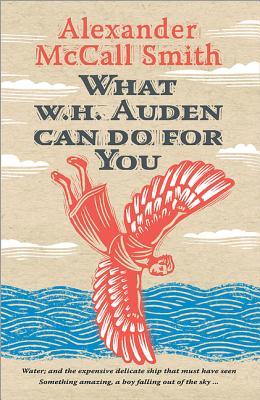
Review: What W.H. Auden Can Do For You by Alexander McCall Smith

First published:- 2013
Published by:- Princeton University Press

Star rating:-


How should we like it were stars to burn 
With a passion for us we could not return? 
If equal affection cannot be, 
Let the more loving one be me.


My association with W.H. Auden and his literary output has been restricted to the occasional browsing through poets.org which gave rise to a somewhat fickle love for Lullaby (which I couldn't help but read more than once) and As I walked Out One Evening. But somehow the lines faded away from memory as soon as I closed the browser window, sometimes mere beautiful words and perfect cadence aren't sufficient to stimulate further intellectual curiosity. But Alexander McCall Smith's near fanboyish enthusiasm for one of the greatest English poets of the 20th century has forced me to reconsider my views on Auden and maybe even provided the much needed push to delve into his oeuvre further.

This is not literary criticism per se, but rather a mixed bag of Smith's views on the poet's personal life, his body of work and the way his worldviews figured in his poetry. It goes without saying, literature students may find this book vastly redundant as it contains nothing that hasn't already been recorded by academicians who have analyzed and dissected Auden's poetry from all probable angles. And Smith acknowledges this right at the beginning, very clearly stating that his intention behind writing this has been to offer a tribute to Auden who was, in a way, his personal literary icon.

There are separate chapters devoted to Auden's early years at Gresham's School, another one in the long tradition of stiff upper-lipped English boarding schools, and later at Oxford, his lifelong friendship with Christopher Isherwood who had been inspired to write the renowned Goodbye to Berlin after Auden's visit to Berlin in 1928, his homosexual dalliances, his desire to drive an ambulance during Spanish Civil War which resulted in one of his celebrated, but subsequently disowned, poems 'Spain'(vehemently denounced by George Orwell who of course was accredited with a deeper understanding of the politics of the Civil War), his growing admiration for socialism in the wake of the rise of fascism in Europe prior to the Second World War and his eventual disillusionment with Communism. 

Auden's poetry is widely criticized as a hollow compilation of sublime imagery and flowery writing with little to no depth but Smith, in the tradition of most Auden lovers, defends the sanctity of his work with assertions like the following:- 

"'In Praise of Limestone' contributes greatly to the appeal of what he wrote. It is easy on the ear - and ease here has no pejorative implications: the fact that something is easy to listen to does not make it less intellectually significant."

"There are plenty of poets, especially those given to the writing of confessional verse, who are ready to tell us about their particular experience of love. We listen sympathetically, and may indeed be touched or inspired by their insights. But few poets transcend the personal when talking about love. They are talking, really, about how they felt when they were in love; Auden digs far deeper than that. He talks about love and flesh as it can be experienced by all of us - he transcends the specific experience in a particular place and time, to get to the heart of what we are."

Smith also makes a significant point in regard to Auden's disposition as a poet, he was known to acknowledging misrepresentations of facts in his earlier poems instead of quietly hoping for the work in contention to be erased from public memory like the other writers of his time did. He humbly acknowledged whenever he was wrong and was extremely self-critical.

To conclude, this is a fine book to gift to the random Auden devotee and perfect for introducing Auden to a neophyte who knows virtually nothing about the great Anglo-American poet (like myself for instance).


Also published on Goodreads and Amazon.
   photo C136E66569D294E4D5DA2D8124D4FF69.png

Tuesday, December 17, 2013

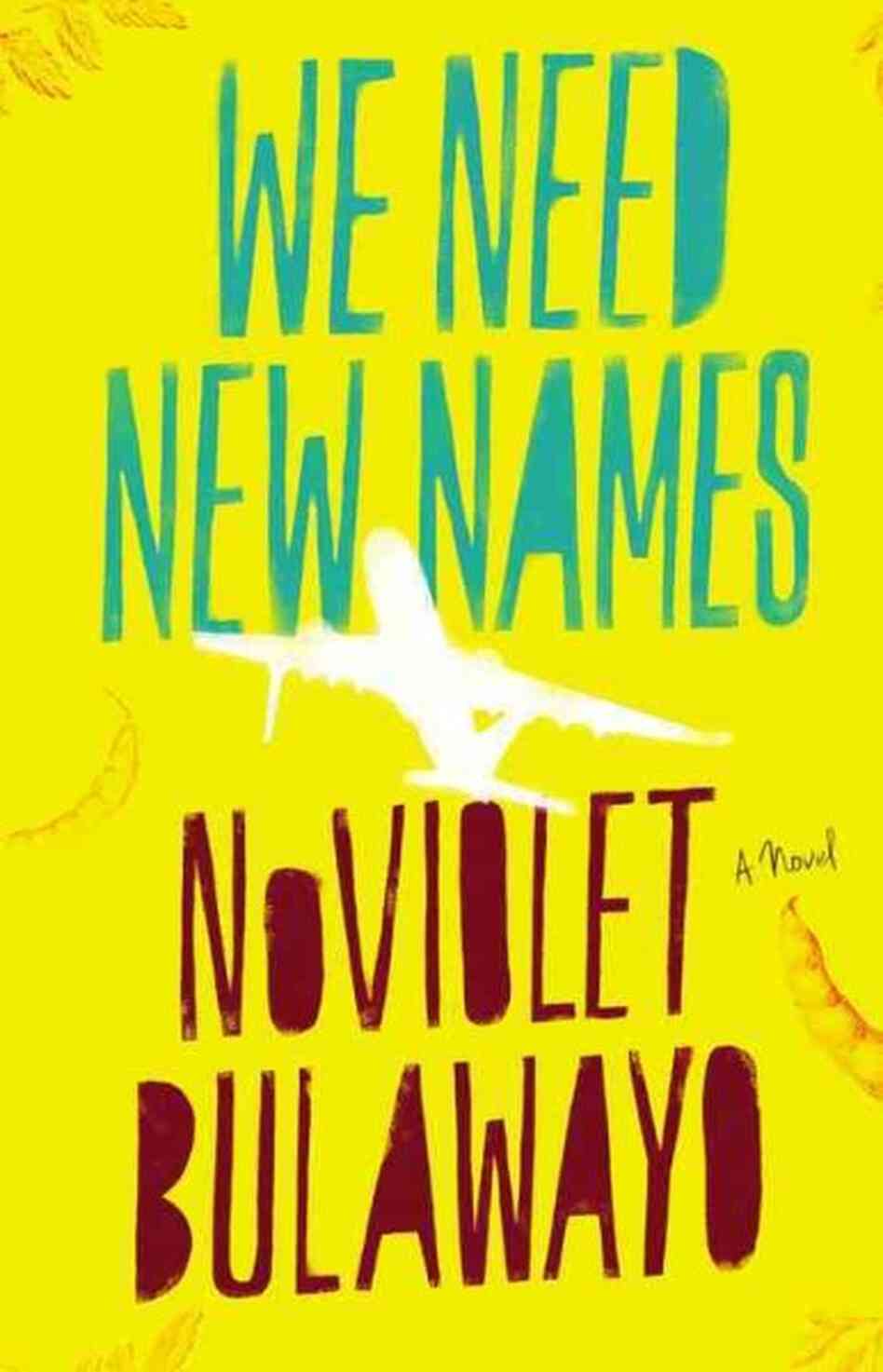
Review: We need new names by Noviolet Bulawayo

Noviolet Bulawayo (Bulawayo is presently the name of Zimbabwe's second largest city) aka Elizabeth Tshele (her real name) was the surprise name in the Booker shortlist this year since she is the first Zimbabwean to be considered for the prestigious honor. I read 'We need new names' after it was longlisted since my foray into African literary landscape has been very limited so far. And this review was written before the shortlist was announced. And to be honest I didn't expect it to be included. The book starts out with a novel intention but somehow isn't able to achieve its target, which is to help the reader develop an emotional connection with her characters. Or that's what I thought. Obviously, the Booker committee thought differently. Now begins my former review:-

First published:- May 21st, 2013
Star rating:-

Books like this one have me fumbling around for the right approach to review them, because they try to cram in too much within the scope of a regular sized novel and consequently just stop short of resonating strongly with the reader. 

It's like Bulawayo had a message to give me, something potent and fiercely honest enough to burn right through all my prejudices and cherished misconceptions and leave me staring right at all the cold, hard facts. But then halfway into it, her voice went off in various tangential directions in an effort to tackle too many issues at one go and lost most of its intensity. 
As a result the message that she had set out to deliver, gave off the impression of poor phrasing and ended up sounding half-hearted and rather dubious.

If I try my absolute best, I can only delineate this as a search for identity, a raw account of coming to terms with the after-effects of displacement. Or an attempt at summarizing in a few hundred pages the feelings of being neither here nor there. 

But then Bulawayo let me know so much more. She told me about the experiences of surviving on a few stolen guavas, walking barefoot on the burning asphalt of the dusty road and yet enjoying the smug satisfaction of playing 'Find Bin Laden'with equally destitute and miserable kids of your age. And what it feels like to flee from and forget the tattered remains of a land you were born in simply because it could not offer you the promise of a fulfilling life ahead anymore - a land torn apart by strife, ethnic violence and unstable, unsympathetic governments. The irony of silently selling away your dignity in a foreign country in exchange for a life better than what your own motherland could afford to bestow upon you. The feeling of being swept up in the vortex of too many rapidly occurring changes as an illegal immigrant and the utter hopelessness of never really belonging anywhere. 

Bulawayo may not be capable of subtlety or stringing beautiful words together into lengthy sentences fraught with imagery, but she has a compelling and unique voice of her own nonetheless. 

I will surely look out for her other works in the future.

**A 3.5 stars that could not be rounded off to a 4**


 photo C136E66569D294E4D5DA2D8124D4FF69.png

Saturday, November 2, 2013

Review: Parasite (Parasitology #1) by Mira Grant


Published on Oct 29th 2013 by Orbit

Star Rating:


The first thing I thought of when I read the blurb of Parasite was Animal Planet's Monsters Inside Me. Yes, that super-gruesome documentary that can kill your appetite or make you throw up, depending on when you watch it, if at all. And tapeworms! I remember there was an episode where this girl went blind because tapeworms had eaten away her retina. Gross, I know, but for real.

I mention this because it may have something to do with why this book fell flat. I was, quite simply, disillusioned. I went in expecting some freaky horror-show about parasitic tapeworms and while the idea was right there, the horror was not. Hardly one or two scenes stood out for their creepiness. The rest was bland and so much tamer than what Animal Planet had me expecting.

Parasite envisions a future where people can opt for genetically engineered tapeworm implants to oversee their health and thus do away with manual medication. SymboGen is the corporate giant behind these revolutionary tapeworms and when a nearly-dead Sally wakes up from a coma, SymboGen claims the tapeworm implant saved her life. Sally, however, is a slate wiped clean. She remembers nothing. Six years later, Sally is still struggling to fit in with a family she doesn't remember, even as she's unwittingly becoming the poster-child for SymboGen.

The first 40 percent of this book is all talk and no action. Okay, there's some action but that is like a tiny island in a sea of dialogue. Mostly, we get to follow Sally around and hear her talk. Sally talking to her father. Sally talking to her boyfriend. Sally talking to the staff at SymboGen. Sally talking to the co-founder of SymboGen. A lot of these conversations are meaningless jibber-jabber. They are also very boring, since Sally is not particularly witty.

There's a big brain-bending revelation around the 50% mark, which is where the book truly shines. There's another big revelation that you can logically infer from the first one, even if you are no genius. Except, it takes Sally the rest of the book to arrive at that conclusion. Yeah, she's not particularly bright either.

Actually, I'm not sure what to say about Sally. I'm just going to quote what one of the other, more interesting characters had to say about her:

"She's annoying, she's whiny, she has the learning curve of lichen."

Yeah, that sums it up. Except I feel guilty because the poor girl has amnesia.

Also, many events in this book are hinged on happy coincidences. Sally's sister is a scientist, so is her father and so is her boyfriend. There are other things too, that I cannot delve into without giving away spoilers.

VERDICT: Parasite could have been shorter and scarier. A great idea like that should have resulted in a great book, but the extraneous stuff got in the way. Overall, Parasite was just okay. And it definitely did not scare me.

If you are looking for parasites of the scary kind, watch the Animal Planet documentary. Provided you can stomach it, of course.


*With thanks to Netgalley for the ARC*


Wednesday, October 23, 2013

Review : Letter to a child never born by Oriana Fallaci

Originally published in 1975 by Rizzoli 
Republished on:- September 24th, 2013
Republished by:- Open Road Integrated Media 
Star Rating:-

Once in a while, I stumble upon an unheard of book written by someone who expresses everything I have ever felt and says it as eloquently and without any reservations as I would hope to someday. And I realize once again why reading is so vital to my existence. Only literature helps me make my peace with all the ugliness in the world and infuses me with the strength to carry on with whatever futile everyday doings I busy myself with in the hope that someone somewhere is summarizing the human condition with deep empathy and sensitivity, for me to derive my solace from.

Once in a while, I stumble upon an unheard of book written by someone who expresses everything I have ever felt and says it as eloquently and without any reservations as I would hope to someday. And I realize once again why reading is so vital to my existence. Only literature helps me make my peace with all the ugliness in the world and infuses me with the strength to carry on with whatever futile everyday doings I busy myself with in the hope that someone somewhere has summarized the human condition with profound empathy and insight, for me to derive my solace from.

Oriana Fallaci makes no pretensions in this book. Doesn't sugar-coat her attempt at shaking the very rigid walls that make up the citadel of patriarchy, doesn't shy away from tackling the entire spectrum of burning issues which if you proceed to discuss with friends and acquaintances even now in 2013, will earn you the raised eyebrows of some, urgently conducted hushed discussion of your 'morals as a woman' behind your back by others and vehement denouncement by the rest. And to think this brave war correspondent from Italy, who had removed the 'hijab' or 'chador' forced on her during an interview with Ayatollah Khomeini in Iran in addition to criticizing the imposed compulsion of wearing it, wrote this in 1975. (I am not going into the topic of her alleged Islamophobia)

A woman's right to her life over the life of her yet unborn child. Is there one?
And not just that. When do we say that life comes into being? At the moment of conception or in the ninth month and, in some cases, the seventh month when the foetus actually becomes viable?
How morally justifiable is it to ask a woman to behave, monitor her own mood changes, refrain from undertaking tasks which put a physical strain on her or treat her like an inanimate incubator designed to mold its existence around a foetus' needs? Is it okay to overlook the importance of the life of a full-fledged person of flesh and blood, with her own place in the world, taking only into consideration the hint of possibility of life that has taken roots inside of her? Given a choice, would an unborn child want to be born in a world like ours where a mother is unable to ensure her child's safety and well-being and slavery begins the moment we are liberated from our dark prison inside the mother's womb?

Oriana Fallaci writes with a poetic flair, fearlessly lending her voice to many questions which nearly all of us (specially women) battle with in solitude over a lifetime, but are often unable to articulate these ideas in front of an audience in fear of backlash by a predominantly conservative society. The central ideas are presented in the form of a young woman's internal monologue, in which she confronts her own fears, doubts, misgivings and suppressed anger while pretending to converse with her unborn child.

As I reached the end of the book I couldn't help but wonder if the irony of mostly men framing abortion laws in almost all nations of the world would have registered with the ones at the helm of matters if they had a copy of this book? Probably not. After all, a writer like Fallaci is more likely to be labelled a 'radical feminist' and her views snubbed coldly with a patronizing shake of the head without further thought.

I haven't 5-starred this book merely because it deals with a strongly feminist humanist theme or because it is so deftly written but also because it neatly presents a logical argument both in favor and in opposition of nearly every pronouncement of the pregnant woman. The unnamed protagonist's voice keeps shifting between the extremities of calm rationality and impatient resentment, sometimes making irrefutably cogent statements in front of an imagined jury silently judging her thoughts and actions, and sometimes just lashing out in cold fury at the unfairness with which the world treats her. 
She is as humane and prone to error as any one of us, which is why it is most important to acknowledge that our established notions of life, death and motherhood could be just as flawed.


**I received a free copy of the republished e-edition from Netgalley and Open Road Integrated Media**
___

Also posted on GoodreadsBooklikes and Amazon.

 photo C136E66569D294E4D5DA2D8124D4FF69.png

Monday, October 14, 2013

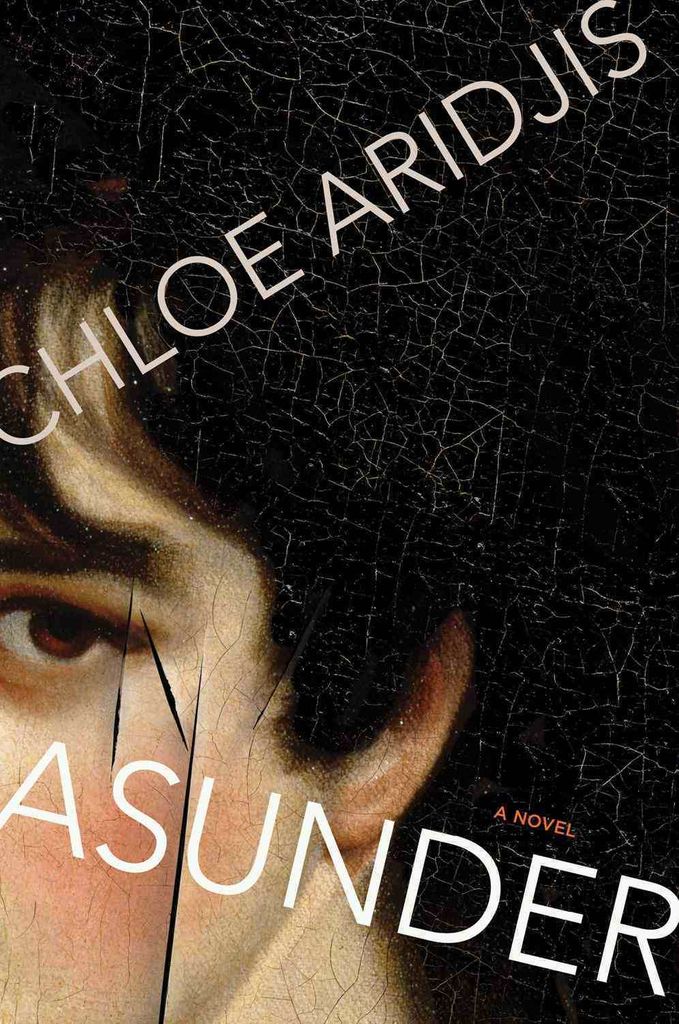
Review : Asunder by Chloe Aridjis

Publisher:-Houghton Mifflin Harcourt
Published on:-September 17th, 2013

A vague sense of foreboding persistently stalks the reader on every page of this narrative, as if something potentially dangerous and forbidding awaits one at the turn of the next page. But then the pages fly by, nothing truly nefarious ever materializes and the feeling finally settles in that the substance of this narrative lies not in a likely event of cosmic importance or even in the anticipation of its occurrence but in the minutiae a reader usually glosses over.
The everyday happenings, some of them mystically inexplicable, some of them a little odd but so commonplace that they do not merit even a second thought let alone further introspection - the things we breeze past in an effort to dwell on the more materially satisfying aspects of life without realizing that each one of these discrete snippets of time spent with people in places is what makes up the structure of life itself.

As I glanced at the blurb (which clearly does not do the book justice even as a half-hearted synopsis), I felt a stab of sympathy for whoever wrote it (author/publisher/random intern), because not only is it very difficult to clearly define the contours of this book but it is equally trying to put one's finger on one strongly resonant theme in it since there are many.

There's the subject matter of the suffragettes (the term used for women campaigning in Britain in the late 19th and 20th centuries for the female ballot) and a young Mary Richardson who had taken a blade to assault one of the priceless works of art in the National Gallery on the eve of the First World War while Marie's great-grandfather Ted was a guard at the museum. It's no coincidence that our protagonist is the namesake of this revolutionary since the shadow of Mary Richardson's act of bravado looms large over Marie's life, silently influencing her in ways she remains oblivious to.
Hence it can be stated that feminist undertones are delicately woven into the the narrative without being glaringly obvious.

There's also an overarching feeling of the protagonist's unnerving indifference to most things, her tacit refusal to take the wheels of her own life and letting herself be propelled by happenings and the decisions made by people around herself. In the beginning I was speculating on the possibility of some sort of unique psychological condition plaguing her in an attempt to convincingly explain her aloofness from life or what could even be called her cowardice. But by the end of the narrative, I realized, a little bit of Marie's dogged impassivity lives inside all of us.

She is haunted by the spectre of her own isolation in the midst of people and her inability to steer her life in the direction of romantic entanglements and fulfillment of any kind. As a guard at the National Gallery in London, Marie comes across many visitors from day to night who spend agonizing minutes peering over works of art which have been witness to centuries of history. With the passage of time, she starts equating the cracks and fissures showing up in the fabric of her life with the craquelures in the paintings. And finally when she confronts her own hesitations after an enigmatic encounter with an owner of a chateau in France, the reader is left with the parting message that Marie has finally summoned the courage to destabilize the status quo in her life just as a certain young Mary Richardson of yesterday had dismantled the status quo in the socio-political landscape.

Chloe Aridjis is a gifted story-teller. Her writing is richly atmospheric and often plays out like a discordant symphony, combining too many erratic musical notes together and yet sounding so perfectly melodious. Same can be said about her choice of original but beautiful metaphors.
"It began with those viragos, he'd tell me, comets detached from the firmament, deviant and sharply veering, long-haired vagabond stars, hissing through the universe on their solitary paths, a tear in the social fabric, threats to the status quo. Yes once war broke out, Ted said, their battle eclipsed by larger events, became no more than one of many lit matches in the stratosphere."
This book made me feel thankful for my relationship with Netgalley which has allowed me to discover such promising new female authors as Chloe Aridjis and Nina Schuyler. In other words, this is very highly recommended.

4.5/5

Also posted on GR:- https://www.goodreads.com/review/show/698912348
Also posted on Booklikes:- http://samadrita.booklikes.com/post/612329/review-asunder-by-chloe-aridjis

**with thanks to Netgalley and the publishing house for providing me with a free copy of the e-edition**
 photo C136E66569D294E4D5DA2D8124D4FF69.png

Saturday, October 5, 2013

Review: Forgive Me, Leonard Peacock by Matthew Quick


Either this book failed to do what it set out to do, or I went in with the wrong expectations. Whatever the cause, Forgive Me, Leonard Peacock did not have any appreciable impact on me.

You see, I read this book hoping to gain some insight into the mind of a school shooter. Someone like Kevin Khatchadourian, just not so inherently evil. I wanted this book to scare me, stun me, make me question, make me think, maybe break my heart a little.

What I did not want this book to do (and what it essentially did) was give me a long list of excuses for why this guy was walking around with a gun in his bag.

Now, I'm not trying to undermine the gravity of the situation here. Leonard has had a tough life; has endured some horrible things. He's depressed and lonely, he's been bullied, and I understand how difficult that is to get through. But isn't that true for a lot of teenagers?? Not everyone lugs a P-38 to school though. Shouldn't there be something more? Something in the way Leonard's mind works? Something to do with the person that Leonard is rather than the circumstances?

The narrative is designed to make you feel sorry for Leonard. I'm afraid that had quite the opposite effect on me - my empathy meter was stuck at zero. This is going to sound highly insensitive but I felt like Leonard was constantly appealing to the sensitive side of me - See how intelligent I am but nobody appreciates me? See how nice a person I am but nobody talks to me? See how profound my questions are but nobody gives a damn? See how none of my friends, and not even my mother, remember my birthday? Doesn't my life suck? Don't you feel sorry for me? Don't you? Don't you? - and all I could do was watch impassively, with the occasional annoyed eye-roll.

There are only a handful of characters other than Leonard but I cannot tell you anything remarkable about them except that they all seem a little extreme. As much as I hope teachers like Herr Silverman exist, he is almost too good to be true. Leonard's mother is way too absent; she has pretty much abandoned her only son and never bothers to return his messages. Asher Beal is... horrible, supposed to be hated. The whats-her-name that Leonard has a crush on is a little too obsessed with Christianity.

Leonard himself never became a real person in my eyes. At the best of times, he was nothing more than a string of adjectives, too different and too disjoint to go together.

Quick's writing is okay but the structure of the book impedes the flow. The footnotes are more like footessays - long, meandering recollections that make you forget you're reading a footnote until you're suddenly pulled back to the main narrative, following which it becomes necessary to re-read a few lines to grasp the context again. Then there are these "Letters from the Future" that, looking back, are probably some of the most poignant moments the book has to offer, but because Quick doesn't bother explaining their importance until it's too late, you read them only with a growing sense of bewilderment, wondering why you're suddenly in the middle of a post-apocalyptic water-world.

The only point where I felt some semblance of an emotional connection was the very last chapter. It's nothing remarkable, but there is this desperation there that really hit me. It was when I wondered if I had it all wrong. Maybe Leonard was never the "shooter" but just another depressed teenager who, tired of fighting the world, had come dangerously close to giving up altogether.

I don't know if I'd recommend this book. If you can empathize with Leonard then maybe you'll love it. I couldn't, so I didn't.

Forgive Me, Matthew Quick. I'm not impressed.


2 out of 5 stars


Thursday, October 3, 2013

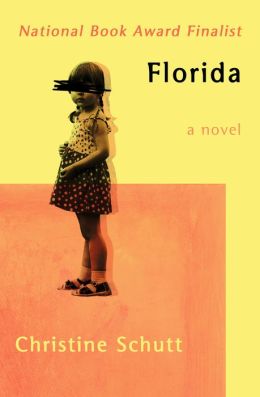
Review : Florida by Christine Schutt

While reading this, I suffered from a keen sense of déjà vu.

"Now where have I come across similar prose?"


Then I dredged up from memory, my feelings about Offred's nearly toneless, emotionally detached, subtly traumatized voice in The Handmaid's Tale.
The protagonist, Alice Fivey's voice shares stark similarities with Offred's, in the way it drips with a resignation to fate and acute despair. There's nothing much lyrical about the prose of THT as opposed to the prose-poem like structure of Florida, but there's the note of desolation and suppressed grief palpable in both the narrator voices. 
While I liked THT extremely because of the brilliant extrapolation of facts concerning present trends on misogyny, Alice Fivey's rather blandly narrated tale of grappling with abandonment issues left me cold and unaffected. 

And the thing is I am not a big fan of this kind of writing characterized by awkward, stumpy sentences which must be the polar opposite of Proustian prose. In fact, it grates on my nerves. My brand of poetic prose would be Anaïs Nin's, Virginia Woolf's in pretty much every one of her books or Toni Morrison's in Beloved. Sorry Christine Schutt, but your prose doesn't seem all that poetic to me. 

Alice Fivey is an orphaned child who lost her father to a car accident. A few years later her mother falls victim to a mental illness and has to be institutionalized as a result of which Alice becomes homeless, reduced to the state of temporary live-in arrangements with a set of unsympathetic relatives. 

"I was ten - ten was my age when Mother left for good, and this sleep-over life began."

The reader is led through her growing years in the midwest, where she is shown rather implicitly to suffer from profound loneliness, her dreams of a laughter-filled life with her parents in Florida shattered to bits. Her isolation is so pronounced that only the company of her family chauffeur Arthur, whom Alice comes to view as a kind of father figure, seems to provide her with a degree of comfort. Arthur becomes the only person who doesn't treat her unkindly or make thoughtless remarks regarding her mother the way her Aunt Frances and Uncle Billy do.

"No one was there to think he was my father, so I could love him as I might a father."

There are certain sentences containing heart-breaking implications of Alice's sense of hurt and subdued anger at her mother's 'betrayal'.

"Mother, or the woman who said she was my mother, settled in California, finally."

This one really stabbed me in a rather sensitive spot. But barring a few instances like the sentences I quoted above, Alice's story didn't achieve any kind of high emotional resonance. More often than not, the monotony of reading similarly structured sentences crept in unnoticed and I found myself trying to glide over them with a fluid grace in an effort to finish the book soon and move on to better reads.


3.5 stars out of 5.

P.S.:- My slightly negative review notwithstanding, this novella was a finalist for the National Book Award in 2004 so it could be worth a shot after all. 


 photo C136E66569D294E4D5DA2D8124D4FF69.png
Related Posts Plugin for WordPress, Blogger...