Showing posts with label Horror. Show all posts

Saturday, November 2, 2013

Review: Parasite (Parasitology #1) by Mira Grant


Published on Oct 29th 2013 by Orbit

Star Rating:


The first thing I thought of when I read the blurb of Parasite was Animal Planet's Monsters Inside Me. Yes, that super-gruesome documentary that can kill your appetite or make you throw up, depending on when you watch it, if at all. And tapeworms! I remember there was an episode where this girl went blind because tapeworms had eaten away her retina. Gross, I know, but for real.

I mention this because it may have something to do with why this book fell flat. I was, quite simply, disillusioned. I went in expecting some freaky horror-show about parasitic tapeworms and while the idea was right there, the horror was not. Hardly one or two scenes stood out for their creepiness. The rest was bland and so much tamer than what Animal Planet had me expecting.

Parasite envisions a future where people can opt for genetically engineered tapeworm implants to oversee their health and thus do away with manual medication. SymboGen is the corporate giant behind these revolutionary tapeworms and when a nearly-dead Sally wakes up from a coma, SymboGen claims the tapeworm implant saved her life. Sally, however, is a slate wiped clean. She remembers nothing. Six years later, Sally is still struggling to fit in with a family she doesn't remember, even as she's unwittingly becoming the poster-child for SymboGen.

The first 40 percent of this book is all talk and no action. Okay, there's some action but that is like a tiny island in a sea of dialogue. Mostly, we get to follow Sally around and hear her talk. Sally talking to her father. Sally talking to her boyfriend. Sally talking to the staff at SymboGen. Sally talking to the co-founder of SymboGen. A lot of these conversations are meaningless jibber-jabber. They are also very boring, since Sally is not particularly witty.

There's a big brain-bending revelation around the 50% mark, which is where the book truly shines. There's another big revelation that you can logically infer from the first one, even if you are no genius. Except, it takes Sally the rest of the book to arrive at that conclusion. Yeah, she's not particularly bright either.

Actually, I'm not sure what to say about Sally. I'm just going to quote what one of the other, more interesting characters had to say about her:

"She's annoying, she's whiny, she has the learning curve of lichen."

Yeah, that sums it up. Except I feel guilty because the poor girl has amnesia.

Also, many events in this book are hinged on happy coincidences. Sally's sister is a scientist, so is her father and so is her boyfriend. There are other things too, that I cannot delve into without giving away spoilers.

VERDICT: Parasite could have been shorter and scarier. A great idea like that should have resulted in a great book, but the extraneous stuff got in the way. Overall, Parasite was just okay. And it definitely did not scare me.

If you are looking for parasites of the scary kind, watch the Animal Planet documentary. Provided you can stomach it, of course.


*With thanks to Netgalley for the ARC*


Friday, September 27, 2013

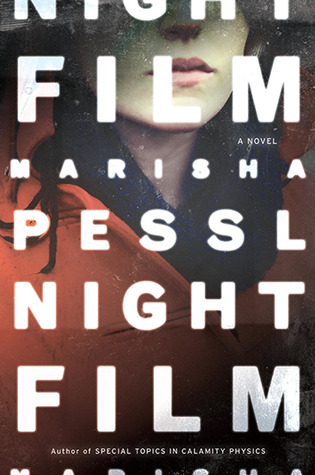
Review: Night Film by Marisha Pessl

(Originally reviewed on Aug 29, 2013 at Goodreads)

Night Film
opens with one hell of a prologue - easily the best I have ever come across. Those opening pages exude such authentic creepiness that it becomes impossible to not keep turning the pages, to not want to know more about the enigma of the reclusive legendary Hollywood director, Stanislas Cordova. This, I believe, is Pessl's greatest achievement here. With multimedia inclusions and some tight writing, she manages to do in a handful of pages what so many authors spend entire books trying; she manages to intrigue the reader, to lure him in, to make him take the bait.

I blew through this not-so-slight book in less than 3 days. That should give you an idea of the reading frenzy I was in.

So why the low rating??

Because once the frenzy ended and I put the book down, I realized I wasn't wowed by the actual plot or blown away by that ending and all it did or didn't imply.

The only feeling I was left with was an intense desire to watch a Cordova movie.

So the book certainly didn't fail. I wasn't bored or unaffected but the effect it did have was not really the kind Pessl intended, which is why I can't say it succeeded either.

Night Film follows a disgraced investigative reporter, Scott McGrath, as he digs into the mystery surrounding Ashley Cordova's suicide. Ashley, daughter of horror-film director Stanislas Cordova and a former piano prodigy, jumps to her death in downtown New York. Scott (who is such an unremarkable character that I'm struggling to find words to describe him) teams up with two twenty-something sidekicks (who are equally unremarkable and on top of that, annoying) as he runs around chasing clues, trying to hunt the truth that shifts and eludes like the patterns in a kaleidoscope.

The plot is one long treasure hunt centered around Cordova and while the chase is thrilling, I couldn't care less about the people I was forced to team up with. Every time Scott and his sidekicks took a break to ponder over their personal dilemmas, I would start to skim till the words 'Ashley' or 'Cordova' popped up again.

Night Film is not the kind of book that gives you the correct answer. What it gives you instead are multiple answers to the same question and leaves you to speculate which one is correct, if there even is such a thing as correct. If truth is a notion, how can anything be true? While the idea is great in theory, it did not hit me like I wanted it to. My reaction at the end was, "Who cares what the answer is when it doesn't change anything?" but I guess that has more to do with the kind of person I am. Maybe I'm someone who cares more about the effects and not the causes.

The writing is... good. If you ignore the inconsistency and the overuse of unnecessary italics, that is. There were some great parts writing-wise but no line or quote stood out enough to stay with me.

Overall, I'd definitely recommend Night Film. It did not blow me away but it was gripping enough to make me sacrifice sleep. This book is an experience and while the impact may differ from person to person, I think it is an experience worth having.


3 out of 5 stars


Sunday, September 15, 2013

Review: The Memory of Trees by F. G. Cottam


Expected publication: October 1 2013 by Severn House Publishers


I'd never heard of F. G. Cottam when I stumbled upon this book on NetGalley. My decision to hit request was driven by an intense case of cover-cum-title love, and the fact that this was due for release on my birthday (yes, I can be shallow like that sometimes). But if all his books are this wonderfully creepy, then I sure have a lot of reading to do in the near future.

The Memory of Trees is an immaculately crafted piece of horror driven by the age-old formula of dread. It's the kind of book that makes you intensely uneasy for no clear reason and then takes advantage by amplifying that anxiety with every other chapter, like that feeling you sometimes get of being watched but when you turn there's no one there. The build-up is so intense that even though you have no idea where it's going, you dread reaching there anyway.

Billionaire Saul Abercrombie hires Tom Curtis a.k.a the "Tree Man" to restore his vast sea-side estate to it's ancient verdant glory. But the land harbors dark secrets, hidden in myths and Arthurian legends, and it may be too late before Curtis realizes that some forests aren't supposed to exist.

The best, or in this case, creepiest aspect of the book is the setting. There is something very wrong about Abercrombie's land and Cottam captures that vile atmosphere brilliantly. The ancient desolate church with it's single large montage depicting a legendary hero, the cairn of stones where the wind shrieks and whistles as it passes, the undiscovered cave that folklore claims is the abode of ancient monsters, and most of all, the thorn bush, oh Lord, THAT THORN BUSH - I'm expecting them all to feature in my nightmares.

Cottam's writing is fantastic. It's lush and descriptive with minimum dialogue.

"There was something unlovely about the acreage Abercrombie owned, a baleful quality beyond its vastness. It was a place where things seemed to lurk and hide and to have qualities other than those they ought rightfully to possess."

Just what I was saying earlier but in Cottam's lovely words.

Things don't start happening right away, of course. There are many characters and back-stories to get through in the first few chapters so I can't guarantee you'll be hooked from page 1 even though I was. I never felt bored, I never felt the mood or pace falter. This book definitely has five-star potential and I'm only holding out on the rating because this is my first (and surely not last) Cottam book.

The Memory of Trees is the creepiest book I've read this year. I'm not a girl who's easy to scare but I would be lying if I said I didn't have goosebumps on my arms at a certain point while reading. I live on the fourth floor and there are many trees around my apartment. No willows or yews, thank God, but there are some palm trees that are waving their feathery fingers at me right now and creeping me out.

Just for tonight, I'll sleep with the window shut tight and the curtains drawn.

4.5 stars rounded down to 4


**I received an ARC from Netgalley in exchange for an honest review**


Tuesday, September 10, 2013

Short Review: The Ocean At The End Of The Lane by Neil Gaiman

(Original Review posted on Goodreads: July 9, 2013)


"All monsters are scared.
That's why they're monsters."

48 hours ago, when I read the last page for the first time, I had this strange, sad feeling. Like I had come to the end of something beautiful without really comprehending the beauty of it until the last minute.

Which is why it took me a re-read to realize how brilliant this book is.

The Ocean at the End of the Lane is childhood in 181 pages.

Short. Sweet. Magical. Scary. Real.

There is a reason this book is labelled as "adult" and it has nothing to do with sexual content or violence or gore. To be an adult by age is meaningless because, to truly appreciate this book, you must be an adult by experience. You must be adult enough to miss childhood.

Me, I'm not there yet. I don't miss being a child because I remember being a child. I can still see it when I turn back.

So right now, no. This is not my favorite Gaiman book.
But in 20-odd years, it probably will be.

Because The Ocean at the End of the Lane is one of those books.
It can only grow in appeal the older you get.

"And did I pass?"
The face of the old woman on my right was unreadable in the gathering dusk.
On my left the younger woman said,
"You don't pass or fail at being a person, dear."

4 out of 5 stars


Wednesday, September 4, 2013

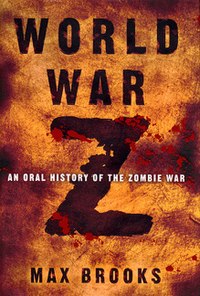
Review : World War Z by Max Brooks

Full title:- World War Z : An Oral History of the Zombie War  (yeah too long to write the whole thing on top at once)

(Originally review posted on Goodreads:- May 5, 2013)

Initially I had thought World War Z was going to be a book I would be surreptitiously adding to
my 'read' list on Goodreads, rating it and moving on to better reads quite unceremoniously.
I had considered not even the remotest possibility of reviewing it, because I assumed this was going to be one of those books one reads for sheer entertainment value and little else. 
But here I am writing one anyway, because I think the author definitely deserves some praise for his powers of imagination, if not for the copious amount of research he must have put in to write this.

If you are looking for your regular dosage of blood, guts and gore or a deliciously disturbing montage of decapitated torsos and severed limbs, I suggest you look elsewhere. Because World War Z is different from your mainstream zombie book.
Sure it contains the appropriate number of grotesque scenarios and morbid imagery, but these are not its highlights.
Here the zombie apocalypse serves merely as a backdrop against which the fragility of the world order is exposed - how an unforeseen human crisis of unimaginably catastrophic proportions can make the painstakingly put-together fabric of our civilization crumble like a house of cards.
Instead of recounting the story of the survival of one particular group of humans, making their way from one safe haven to another, Max Brooks gives us the bird's eye view of the nature of the calamity. 
The story of the human resistance against zombies unfolds from the perspective of not one but numerous survivors all over the world - military and navy men/women, war strategists, politicians, fraudulent businessmen, doctors, film directors, divers, ordinary civilians and so on. But the multiple points of view are compiled together in a single document, by an unnamed UN official to help create a clearer picture of the extent of the tragedy after the war has ended.
So what one finds in this book are minutiae regarding military equipment, weapons specially designed to fight off the living dead, strategies for quarantine and annihilation of infected people, psychological after-effects of surviving the disaster and living through it. Which makes it a lot more interesting and unconventional since the focus is shifted from the mindless violence perpetrated by a bunch of reanimated corpses and placed on human strengths and fallacies, instead. 

So then why did it leave me underwhelmed? 
Because the different accounts start to sound repetitive and the novelty of the mode of narration wears off after you get past the halfway mark. The frequency with which the author bombards the reader with descriptions of tactics employed by military and navy men tires one out after a while. And often, he goes overboard while trying to display his ample knowledge of the socio-political landscape of various nations. The way the book feels like a piece of non-fiction rather than a fictionalized account, also curtails one's enjoyment of the story somewhat.
I would have rated this 4 stars had the book helped me maintain the same level of interest throughout. 
That, however, does not mean it is unreadable. 
If you love your zombies yet cannot put up with mediocre writing and respect an author who cares to thoroughly research the topics he wishes to write on, World War Z is your next prospective read.

3 stars out of 5.


 photo C136E66569D294E4D5DA2D8124D4FF69.png

Tuesday, September 3, 2013

Review: Perfume: The Story Of A Murderer by Patrick Suskind

(Original review posted on Goodreads: Oct 7, 2012)


Perfume is a book in a league of its own. It’s unconventional, terrifying and creepy; yet at the same time, dazzling, mesmerizing and strangely hypnotic. Whether I hate it or love it is irrelevant (and honestly, I’m still not sure), because I know that this is a great book. I knew that five minutes after I started reading.

Perfume is a very bizarre tale about a very bizarre murderer, who kills not for sadistic pleasure or monetary gains, but simply in the pursuit of achieving his dream – creating the best perfume in the whole of France, which, quintessentially, is the scent of an adolescent beautiful virgin. But what sets this book apart, aside from the brilliant narration, is the fact that the story solely focuses on Grenouille – his life, his obsession, his single-minded devotion to his craft. No thoughts are spared for the victims or the actual killings; it’s only the scent-induced high that matters.

Grenouille is a character you are supposed to hate. The author never tries to bring about any semblance of humanity in him. In fact, he introduces Grenouille as ‘a gifted abomination’; ‘a tick waiting to bore and bite into animal flesh’. Yet, as much as I loathed him, there were times when I caught myself feeling sorry for him. And it unsettled me because for a long time, I couldn’t figure out why I would feel that way since the book projects Grenouille as nothing less than a monster. But there’s something about how fanatically devoted he is to his passion, how his whole life is centered around scent, that's eerily touching.

The narration is brilliant, as long as Grenouille stays in the picture. Once or twice, however, the author shifts focus to other people, like the perfumer who mentors Grenouille in Paris. And that is when I felt the narration slip a little, going off on tangents. The pace of the book also drops towards the middle.

However, the end more than made up for all that. The story truly came alive in the last 15 chapters and it gripped me with an infectious mix of thrill and paranoia that made it impossible to put the book down. And OMG, the end!! I never saw it coming. It was jaw-dropping, shocking, and very, very clever. In fact, if I had to rate just the concluding chapters, I would give them a 5-on-5.

The writing is exceptionally good. The words are brilliantly chosen, and put together in a way that gives them a dreamlike quality, especially when the author describes scents. And obviously, he does that a lot.

Perfume made my skin crawl and left me reeling. But it also left me spellbound at the sheer ingenuity of Patrick Suskind’s vision. Equal parts creepy and creative, Perfume might not be a book for everyone but it is a great piece of literature regardless.

4 out of 5 stars


Saturday, August 31, 2013

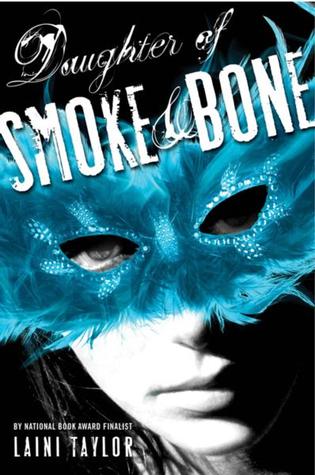
Review : Daughter of Smoke and Bone by Laini Taylor

(Review originally posted on Goodreads:- November 16, 2012)

Dear Ms Taylor, there's not even a shred of doubt in my mind about your ability to tell a story
in the most enigmatic and captivating fashion. You have made your characters appear straight out of our exaggeratedly romanticized fantasies where everything is grandiosely beautiful - even the most evil and terrifying things. Your Prague is every bit as surreal and out of this world as Eretz.
The same can be said about your prose. It is mesmerizingly soothing and reading this book felt like listening to a delightful piece of musical composition where no note feels jarring or misplaced.
But even so, I'm sorely disappointed. DoSaB has no tale to tell. While the beautiful writing, kept me going smoothly at least till the middle point, I kept waiting for something...anything... to happen. But nothing ever did, except at the very end and by that time it didn't matter anymore.

The brilliantly conceived set-up is there. The characters, albeit very stereotypical ones, are there. The language and similes and metaphors and all kinds of literary embellishments are there. 
But where's a good story? Where's character development? Where's the suspense? Where's the mystery? Where's the drama? Where's the romance? 

At least a quarter of the book is devoted to flashbacks and memories. Another quarter to Karou and Akiva angsting over each other. Another quarter to Karou and her chimaera family (which was the best part in my opinion). And another to Karou's hair and Akiva's eyes.
I'm not kidding. I should've counted the number of times the writer alluded to Karou's blue hair and the similes she devoted to its description. Same with Akiva's eyes and his ethereal, impossible beauty.
Sure sure we get it, Laini. They're both surreally beautiful beyond what our feeble imaginations can conceive. Can you please move on now?

Another thing which irked me beyond measure was the love story. I was supposed to be mooning over Akiva and Karou, feeling sympathy for their fate of star-crossed lovers. Instead I felt detached and some measure of annoyance. 
Why did they fall in love with each other again?
Uh they just did. Just like that. I can't remember why but they just did. And it's supposed to be romantic and heart-breaking except that I just don't feel it is.

Last but not the least, the thing which finally caused me to abandon hope for this book was its dilly-dallying between two heroines (although both are one and the same). We start the book thinking it's all Karou. Then Madrigal comes barelling into the story from nowhere and pushes her completely out of the picture. From then on, it's all her. 

And just when I was developing some sort of liking for her, she is gone. Poof! And Karou is handed back to me as unceremoniously as possible, when I can't quite figure out whether I want her back again.

An eloquently-worded novel, but not a good story. Certainly not worth spending rare hours of free time over.

2 out of 5 stars.

Photobucket

Saturday, August 24, 2013

Review : The Stand by Stephen King

(Original review posted on Goodreads:- Feb 02, 2013)


One of the reasons why I would never club Stephen King together with any of the other best-selling writers of his generation (Grisham, Archer, Patterson, Sheldon and so on) is this :-
None of them match King's calibre as a story-teller.They don't even come close.

If somebody spins an intriguing tale, his characters get in the way of my enjoyment of it.
If somebody excels at characterization, his plotting is rather unconvincing.
If somebody plots a story well, then his writing turns out to be flat.
(And if you're unlucky enough, some of them mess everything up.)

But Stephen King, possesses that rare talent of getting everything right - the story, the unraveling of the plot, the imagery, the underlying implications, the characters, the backdrop, the world-building, the writing - down to the very last detail. 
He can grasp your attention at the onset, reel you in slowly but surely, give you nerve-wracking moments of pure anxiety, make you visualize a scene exactly the way he must have imagined it, feel for the characters in his story as if they were people of flesh and blood you were familiar with and, at some point, render you completely incapable of discerning between reality and the make-believe world of his imagination. And you're caught in the same nightmare as the characters of his book are plunging deeper into with every passing moment. 

The Stand is one such Stephen King creation. Arguably known as his best written work yet, The Stand, I'm happy to inform readers, deserves every bit of the praise and adulation it continues to receive worldwide till this day. 
Now don't get me wrong. The book is nothing new when you glance at the blurb. It is nothing you haven't already read or known about because it is the story your mom/dad/grandma must have read to you as a kid - while you listened moon-eyed with wonder and awe, overcome with emotions you couldn't quite fathom. 
It is the ever-fascinating and timeless tale of good triumphing over evil that you have come across enough times yet can never possibly get over. 
It is that same story, but with a distinct Stephen King-esque flavour.
Add a dystopian, post-apocalyptic, anarchic world in the grip of an epidemic that claimed most human lives to the eternal conflict between good and evil, and the summation result will lead to The Stand.
But it is so much more than this simple one-sentence summary. Every character, every plot device, every written scene has been constructed and put together so fastidiously in this book that at the end of it one feels that the reader is assigned with the task of collecting and preserving every piece of the gigantic puzzle to form this humbling, larger-than-life image the author had begotten.
Everything is done so ingeniously, that the mesmerized reader can only sit back and watch this spectacle of gargantuan proportions unfolding right in front of his/her mind's eyes. 
Horror, psychological ramifications of events, political intrigue, war, chaos in the absence of a centralized administration, a crumbling world order, basest of our human tendencies - King doesn't shy away from exploring the entire gamut of human actions and emotions in a world where nothing of the old establishments has survived.

This man can write. There's no doubt about it.

In terms of sheer volume, scale and narrative sweep, it is an epic. In a way it is The Ramayana, The Mahabharata, The Iliad and The Odyssey or a concoction of all the elements that transformed each one of these stories into epics the world will never cease to look upon with the utmost respect. 
It is the story that never becomes stale despite the number of years you insert between the time you read it first and read it for the umpteenth time in some other form. It is the story that transcends barriers of language, culture, religion and history and will always be told and retold in possible ways imaginable, for as long as humanity survives.
It is the story you are bound to be won over by even if you're snotty enough to swear by your copy of Ulysses and frown upon the Stephen Kings of the world of writing simply because they don't have much of a chance of ever winning the Man Booker or Pulitzer or *gasp* the Nobel Prize.
It is the story of good, evil and everything in between. It is the story of love and hatred, loyalty and betrayal, sin and redemption, fate and co-incidence, rationality and the inexplicable. Of unalterable mistakes and innocence lost. Of the goodness of the human heart and the face of the Devil.
At 1100+ pages, it was rather much too short. 
I almost wished for it to never end. 
But then again one can always re-read to start the cycle of awesomeness all over again.


5 awestruck stars out of 5.

Monday, August 19, 2013

Review : The Girl with the Dragon Tattoo by Stieg Larsson

(Review written originally on:- June 18, 2011)

Never has a book made me experience one too many conflicting emotions side by side. Never has a book managed to infuriate, astound, shock, disgust, terrify yet charm me at the same time. The international best-seller named The Girl With The Dragon Tattoo or Män som hatar kvinnor (as it is known in Swedish) deserves every bit of the craze and the recognition it has achieved worldwide since its first publication in 2005. I have about zilch intention of giving away even a brief overview of the plot but for the sake of a
review I must. Hence.....

Mikael Blomkvist is an investigative journalist and co-owner of the monthly magazine Millenium who had just lost a libel lawsuit filed against him by the Swedish business tycoon Hans-Erik Wennerström. His reputation at stake, he decides to distance himself from the magazine's management and publishing bodies. Around the same time he is offered a freelance assignment by Henrik Vanger, patriarch of the affluent Vanger family and CEO of Vanger Enterprises, which deals with cracking the mysterious case of his great-niece Harriet Vanger, who had disappeared without a trace 36 years ago. Facing a prison term of about 3 months and no better alternative in sight, Blomkvist decides to take up the job. At the same time we're introduced to the other protagonist, Lisbeth Salander, a 24-year old, introverted, delinquent-like woman whose outward physical appearance replete with piercings and tattoos, repel most people she comes in contact with. An ingenius hacker who is also blessed with a photographic memory, she has the ability of digging up little-known yet vital information about public figures and documenting them with uncanny precision. She is assigned to do a thorough background check on Blomkvist by an aide of Henrik Vanger's. Eventually in the chain of events, she comes to work as an assistant for Blomkvist and helps him solve the intriguing case of Harriet Vanger and uncover a long chain of gruesome murders and aggravated sexual assaults against women spread throughout Sweden in turn. 

 To be honest, it is impossible to summarize an explosive novel like The Girl With The Dragon Tattoo in a paragraph or two. It will merely serve as an insult to the genius of Stieg Larsson, who has masterfully crafted a story out of the lives of Swedish corporate honchos, sexual sadism, misogyny, investigative reporting, journalistic values with a little bit of love thrown in as well. Hence it is a book you must read no matter how much you cringe at the graphic detailing of some of the crimes depicted. In any case you'll be compelled to read on as the mysteries continue to deepen till the very end.

Going by the writing style, Reg Keeland's translation seems to have managed to capture the underlying darkness of the story. I can only imagine how Larsson's original narration must have been like. There's a multitude of characters in the book and almost each one of them have been portrayed meticulously through their action or inaction. But none of them stand out as much as Lisbeth Salander's does. A victim of a violent sexual crime herself, she exacts retribution from her perpetrator in the most fitting way possible without having to resort to the law in which she doesn't place any faith in. Lisbeth is someone who'll hit back even harder and take control of a situation rather than be intimidated. She is socially awkward, incapable of developing long-term relationships with people or trust anyone, possibly due to the nature of her abnormal childhood years. She is perceived as a mentally retarded, repugnant woman by most and her inner brilliance always goes unnoticed. But then again Lisbeth is not one to care about what other people think of her. It is possibly because Blomkvist deals with her like he'd deal with any other normal human being, that Salander finds herself unable to treat him with the same calculated coldness she had always shown towards others.

Coming to the fallacies of the book, I must admit I couldn't find any. I was a bit surprised to find a mild love story angle developing towards the end as love is always an unnecessary baggage in thriller novels. However I understood the author's need to humanize Lisbeth, or at least offer her some sort of a balm to cast a calming effect on her tormented soul which she skilfully conceals underneath a mask of stoicism. Nothing more apt than love to achieve such a purpose. With the help of an inherently macabre theme of sexual violence, Larsson has tried his best to make the readers comprehend the brutality of a crime like rape or sodomy. And this seems to have been the main purpose of this book, given that Lisbeth's character has been named after a girl whom Larsson witnessed being gang-raped as a young boy.

 Thank you Stieg Larsson for deciding to publish the novels, otherwise the world would've missed out on one of the greatest trilogies in the mystery/thriller genre ever written.

5 glorious stars.


Related Posts Plugin for WordPress, Blogger...