Showing posts with label Spookfest. Show all posts

Tuesday, April 15, 2014

Review: The Road by Cormac McCarthy


First published:- 2006

Star rating:-

Terror. Stark naked, clear as the day and indelible in its intensity. Terror that turns its unflinching gaze on you, commanding you to quake in your boots and disintegrate into pieces. This book is that kind of cold dread that seeps into your blood like insidious venom and drains away your strength in a steady, agonizing trickle as you read along. The horror of being stranded in a world, where the living live on either to become sustenance for other survivors or to hunt and feast on fellow brethren to survive, becomes as real as the morning sunlight pouring in to your room through the gauzy curtains.

The trouble with dystopian fiction (literary and otherwise) is that if you have read one book from the genre you have pretty much read them all. And the rather unabashed confession I have to make in this regard is that I have read quite a lot of them - this is the 'guilty pleasure' I am not really guilty of indulging in once in a while. But when the focus of the discussion on dystopias shifts to a universally read book like 'The Road' then opinions range from acerbically negative criticism, a patronizing, reluctant pat on the back to disappointed neutrality and effusive praise. Cormac McCarthy's prose has also garnered less than enthusiastic responses from quite a significant number of reviewers. I suppose some thought his metaphors to be too flowery for their taste. While the rest have found him to be repetitive and dull. 

Fair enough. But I did not.

To bring to life a world, where there's nothing left to do except scrounge around for nourishment, it is obvious the author will be hard pressed to elaborately detail the act of unscrewing a jar top and drinking from it. The monotone adopted while chronicling these trivial actions conveys the chilling truth of how much gravity is being accorded to affairs considered undeserving of even a passing mention in a former way of life.

Thus, I refuse to join in the chorus of complaints. The very visceral and undiluted reaction the narrative elicited from me as a reader, caused me to refrain from belittling McCarthy's gift for utilizing the same old genre tropes to offer such insightful commentary on the human condition. And despite its bleak and nihilistic leanings, 'The Road' surprised me with its deft handling of a subject as sensitive as a parent-child relationship, a theme that is often explored in many fictional narratives but with varying degrees of success. More than any tear-inducing gimmickry, the relationship depicted here bears a frighteningly close resemblance to how things are in reality. 

Our two unnamed vagrants, a listless father-son duo, who move down this seemingly endless road strewn with the debris of a world long gone and the echoes of a way of life no longer preserved, seemed to me to be representatives of a large majority of humans. The father acts as a kind of misery-sponge, enduring the brunt of all the vicissitudes of fate that await them on this cruel and unforgiving peregrination, while shielding the son from the same. And as the toil of this godforsaken journey wears the parent down to the point of no return, the child is familiarized with the brutalities of the world at large and gently shown the ways in which one can side-step all the unpleasantness and maintain an existence without challenging authority in any form. Isn't this what a majority of humans have been seeking to accomplish on an infinite loop? 'Survive and don't ask for trouble in any form.' is the motto etched onto the blank slate of our minds since childhood. 

All the horrors lying in ambush for this father-son pair, starting from chance encounters with roving bands of cannibals to combating the evident threat of starvation and the bitter cold which freezes them to the bone, can be taken to be allegories of all the challenges of living that individually all of us have to contend with. The metaphorical road is just another minefield where one can never foresee the kind of evils one wrong step may unleash. All the lawless laws, by which the world is governed once the formerly established edifice of order and organization has crumbled to dust, are deeply reminiscent of the relentless cycle of injustices institutionalized by our so-called 'civilization'. Just as the weak are preyed upon and devoured alive in this dystopia, the downtrodden and oppressed are victims of a sort of economic cannibalism enshrined in the 'laws' of our reality. 

The scales are tipped ever in the favor of those who wield power in some form; in this dystopia it is the possession of a weapon, in ours it is the ownership of wealth. 

"The last instance of a thing takes the class with it. Turns out the light and is gone. Look around you. Ever is a long time. But the boy knew what he knew. That ever is no time at all."

It disturbs me how near invisible the line of separation between an imagined dystopia and a real one is.

   photo C136E66569D294E4D5DA2D8124D4FF69.png

Wednesday, April 9, 2014

Review:The Frangipani Hotel: Stories by Violet Kupersmith

First published:- April 1st, 2014

Published by:- Spiegel & Grau

Star rating:- 

What your mind dredges up from memory and consciousness upon the utterance of the word 'Vietnam' is wholly predictable. That naked girl child of Trảng Bàng fleeing a napalm attack in terror, her scream silenced by the stillness of the well-known picture you have glanced at time and again or the grotesque image of blood-soaked bodies heaped by the side of a rice field in My Lai that continued to burn like a stinging slap across the face of the American administration long after the troops had pulled out of Vietnam. But the sheer tragedy of a nation being whittled down to the status of being defined by an ill-famed proxy war and a trendy word with an 'ism' at the end, has its roots in our collective apathy. 

Marguerite Duras' Indo-China (as described in her fictionalized memoir The Lover) was a place inextricably linked to the abuse of her childhood years, a cultural melting pot, an eerie and exotic landscape which served to simultaneously heighten and assuage her mental anguish, a nation still resigned to being seen as just another jewel in the crown of Europe. But Violet Kupersmith's Vietnam is the hum of the life force coursing through her veins; the horror and beauty that this culture encompasses, a hand-me-down from her ancestors. And it is this Vietnam, we have not cared enough to know, which inhabits these short stories. The tinge of paranormal intrigue and the elements of suspense are merely there to help you keep turning the pages with ease but it is the landscape itself which towers above the set of native Vietnamese characters and the Vietnamese diaspora in the U.S., metamorphosing into a humanly protagonist narrating a melancholic tale of personal woes.

The water nymph boarder of Hotel Frangipani, the ailing old Mrs Tran whose time on earth runs out while waiting for her now-American daughter and grand-daughters to visit her from far off Houston, the soldier-turned-calligrapher who cannot banish the horrifying memories of accidentally killing a civilian girl while serving the Viet Cong, the septuagenarian who involuntarily undergoes a morbid transformation into a giant python at times and ends up recounting the story of his life to a random Vietnamese American teen, the white girl who works at the American consulate in Ho Chi Minh are many among the imaginary guides that Ms Kupersmith designates to familiarize readers with an assortment of folktale-ish stories with elements of horror as the common running theme.

To quibble, some of the stories have been fashioned in an amateurish way in which character tropes such as the thoughtful, unattractive, fat sister and the insensitive, skinny one and the ignorant, condescending American tourist abound. But the structural and thematic integrity of the remaining stories made up for the flaws of the former and caused my 3 stars to be elevated to 3.5 stars.

Subtlety isn't Ms Kupersmith's strongest suit but her writing serves as a good example of potency of theme and plot surpassing the need for linguistic adornments at times and a rude reminder of my little to no knowledge of Vietnam sans the 'war', an oversight which needs to be remedied post haste. 


___

Review also posted on Goodreads & Amazon.

 photo C136E66569D294E4D5DA2D8124D4FF69.png

Friday, February 28, 2014

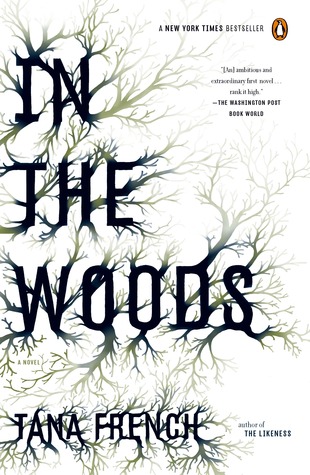
Review: In the Woods by Tana French

Reviewer's note:-Before I begin, let me state that 'In the Woods' has been reviewed in this space already but that was Scarlet's take. The following is mine. (The only thing evident in both reviews is how emotionally riveting we found this debut Tana French novel. Seriously, you must read this if you haven't.)


First published:- 2007

Read in:-November-December, 2013

Star rating:-

It's been a while since I have read a book that has left me so utterly devastated, a book entailing such a profound emotional investment that having finished it I feel a gaping emptiness within, a sense of loss. It feels like my heart has been simultaneously crushed into pulp under the weight of the tragedies that descend on the lives of a handful of characters and blown to smithereens. And I would never be able to pick up the pieces and glue them back together into a throbbing whole again.

I read In the Woods while on vacation, whenever I took breaks from watching wave after wave crash on to the shore with the familiar rip-roaring intensity of the sea. I read this even when I was too tired to stay up till late, lying on an unfamiliar bed with a sheet of dubious hygiene standards. I read this during prolonged car rides. And every time I had to tear my eyes away from its pages, I felt a pang of irritation.

As I made my way toward the bone-chilling climax of this narrative, awake at an unholy hour, I distinctly remember breaking out in a sweat on a cool December night to boot. Sleep became an alien entity and, come hell or high water, I knew I would not wrench myself away from this fantastic make-believe world of a small town and the sinister occurrences that tied the lives of its residents in the most twisted way possible. I longed to stay trapped in the eerie magic spell cast by the woods, under the ominous shadows of leafy canopies of pine and beech, caught up in a hazy daydream playing hide and seek with Peter, Jamie and Adam. My heart ached for the two children who never returned home from their beloved woods, who were never found again and the way the tragedy of their mystifying disappearance dealt a crushing blow to the life of their traumatized playmate who returned unharmed. It wept for Rob and Cassie and their missed chances.

This book isn't about crime and punishment, it isn't about the science of deduction or smooth-talking, fedora-sporting detectives smartly arriving at inference after inference and nabbing the culprit in style. I almost crave for the standardized simplicity of regular crime thrillers at this moment, the stories which conveniently compartmentalize the crime and the police procedure, the good guys and the bad guys. At least a book like that would not have left me feeling so desolate and bereft of any happy feeling. 

But this book took my breath away with its ability to instill so much life in each one of its characters that their distress became my own, with its ornate but never ostentatious prose and the way it deftly narrated a story infused with the dull shades of a sadness so affecting. Tana French foregoes all the spick and span categorizations here, thumbs her nose at the usual pigeon-holing. Instead with consummate skill, she outlines the faint traces of humanity in the most brutal impulses, acknowledges the messed up ways in which this bizarre drama of life plays out and how a neat tying up of all loose ends seldom happens in reality. More often than not, life is that merciless and cold. 

This book is about the labyrinthine pathways of our mind which treacherously conceal our most terrifying memories and how our subconscious prods us to replace the unpleasant truths with self-justifying falsities and even establishes our faith in them. It is about the seemingly innocuous, small cruelties of mundane everyday life that are capable of triggering much bigger disasters that destroy the lives of children and the unforgivable cruelties oblivious, ignorant children are themselves capable of.

I refuse to label this electrifying debut novel mere crime fiction because, in all earnestness, it is not. Rather, it is literature which delves deep into the causality of crime and meticulously brings out the humanity of all the people involved, literature capable of wringing out empathy from even the least sensitive reader. And it is an exploration of the convoluted workings of the human mind, of evil and barbaric urges lurking somewhere in its darkest nooks and crevices. It is a cerebral suspense thriller and, without a doubt, one of the best I have ever read. But it is also a beautiful, bittersweet story about people who carry on with their broken lives shouldering the unbearable burden of past trauma, an unforgettable human drama which left me emotionally drained, agitated to the extreme and yet gasping for more.


   photo C136E66569D294E4D5DA2D8124D4FF69.png

Monday, October 14, 2013

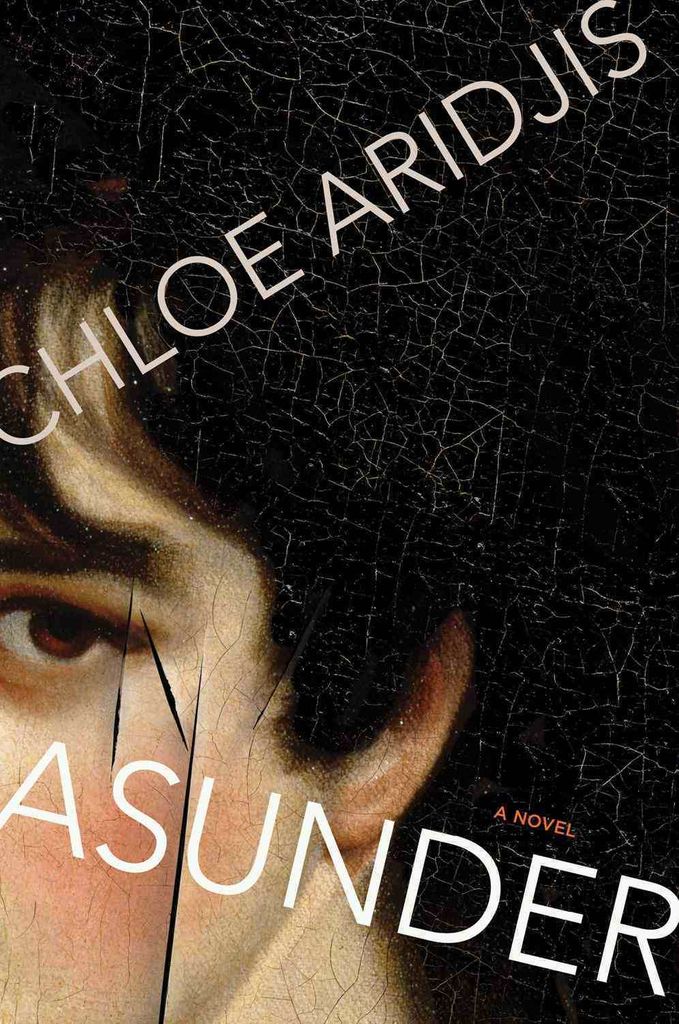
Review : Asunder by Chloe Aridjis

Publisher:-Houghton Mifflin Harcourt
Published on:-September 17th, 2013

A vague sense of foreboding persistently stalks the reader on every page of this narrative, as if something potentially dangerous and forbidding awaits one at the turn of the next page. But then the pages fly by, nothing truly nefarious ever materializes and the feeling finally settles in that the substance of this narrative lies not in a likely event of cosmic importance or even in the anticipation of its occurrence but in the minutiae a reader usually glosses over.
The everyday happenings, some of them mystically inexplicable, some of them a little odd but so commonplace that they do not merit even a second thought let alone further introspection - the things we breeze past in an effort to dwell on the more materially satisfying aspects of life without realizing that each one of these discrete snippets of time spent with people in places is what makes up the structure of life itself.

As I glanced at the blurb (which clearly does not do the book justice even as a half-hearted synopsis), I felt a stab of sympathy for whoever wrote it (author/publisher/random intern), because not only is it very difficult to clearly define the contours of this book but it is equally trying to put one's finger on one strongly resonant theme in it since there are many.

There's the subject matter of the suffragettes (the term used for women campaigning in Britain in the late 19th and 20th centuries for the female ballot) and a young Mary Richardson who had taken a blade to assault one of the priceless works of art in the National Gallery on the eve of the First World War while Marie's great-grandfather Ted was a guard at the museum. It's no coincidence that our protagonist is the namesake of this revolutionary since the shadow of Mary Richardson's act of bravado looms large over Marie's life, silently influencing her in ways she remains oblivious to.
Hence it can be stated that feminist undertones are delicately woven into the the narrative without being glaringly obvious.

There's also an overarching feeling of the protagonist's unnerving indifference to most things, her tacit refusal to take the wheels of her own life and letting herself be propelled by happenings and the decisions made by people around herself. In the beginning I was speculating on the possibility of some sort of unique psychological condition plaguing her in an attempt to convincingly explain her aloofness from life or what could even be called her cowardice. But by the end of the narrative, I realized, a little bit of Marie's dogged impassivity lives inside all of us.

She is haunted by the spectre of her own isolation in the midst of people and her inability to steer her life in the direction of romantic entanglements and fulfillment of any kind. As a guard at the National Gallery in London, Marie comes across many visitors from day to night who spend agonizing minutes peering over works of art which have been witness to centuries of history. With the passage of time, she starts equating the cracks and fissures showing up in the fabric of her life with the craquelures in the paintings. And finally when she confronts her own hesitations after an enigmatic encounter with an owner of a chateau in France, the reader is left with the parting message that Marie has finally summoned the courage to destabilize the status quo in her life just as a certain young Mary Richardson of yesterday had dismantled the status quo in the socio-political landscape.

Chloe Aridjis is a gifted story-teller. Her writing is richly atmospheric and often plays out like a discordant symphony, combining too many erratic musical notes together and yet sounding so perfectly melodious. Same can be said about her choice of original but beautiful metaphors.
"It began with those viragos, he'd tell me, comets detached from the firmament, deviant and sharply veering, long-haired vagabond stars, hissing through the universe on their solitary paths, a tear in the social fabric, threats to the status quo. Yes once war broke out, Ted said, their battle eclipsed by larger events, became no more than one of many lit matches in the stratosphere."
This book made me feel thankful for my relationship with Netgalley which has allowed me to discover such promising new female authors as Chloe Aridjis and Nina Schuyler. In other words, this is very highly recommended.

4.5/5

Also posted on GR:- https://www.goodreads.com/review/show/698912348
Also posted on Booklikes:- http://samadrita.booklikes.com/post/612329/review-asunder-by-chloe-aridjis

**with thanks to Netgalley and the publishing house for providing me with a free copy of the e-edition**
 photo C136E66569D294E4D5DA2D8124D4FF69.png
Related Posts Plugin for WordPress, Blogger...