Showing posts with label Man Booker Shortlist. Show all posts

Saturday, July 26, 2014

Review: The Garden of Evening Mists by Tan Twan Eng


First published:-2011

Star rating:-

"For after the rain, when with never a stain
The pavilion of Heaven is bare,
And the winds and sunbeams, with their convex gleams,
Build up the blue dome of Air
I silently laugh at my own cenotaph
And out of the caverns of rain,
Like a child from the womb, like a ghost from the tomb,
I arise, and unbuild it again."
 - P.B. Shelley

The heron preens itself majestically, perched delicately at the edge of the pond, having found the familiarity of a home at last after miles of mateless flight. Gold-flecked koi fishes dart surreptitiously just below the surface, disrupting the lotus leaves. Wisps of rain-bearing clouds and the mountains meld into each other's embrace in a rare moment to become a mist-robed goddess and render the vista an acute resemblance with aukiyo-e painting, a charming illusion not even a discerning eye can remain immune to. Unwilling to pay the dues exacted by aphasia, Yun Ling hears the fading whispers of times gone by - unspeakable horrors etched across the soft palate of her consciousness she'd dearly like to forget and fond remembrances of the ones who sustained the flame of empathy in their hearts while the symphony of death and devastation reached its crescendo all around the Malay peninsula. The beautiful and fragile landscape of Yugiri lies forgotten in the wake of Aritomo's perplexing disappearance, but his decrepit, untended garden stands as a testimony to his lifelong devotion to a dying art form, to his solemn resolve of remaining humane at a time when savagery was the norm. 

One war replaces another as the ruthless Communist guerrillas commence a new reign of terror at the end of the Japanese Occupation. Peace remains that idealized mirage in a desert, forever out of reach. The prospect of succumbing to an acute hatred of the ones who caused her misery tempts, but Yun Ling struggles to hold on to her sanity and conscience in the grey abyss trapped between light and dark. Her faith in Aritomo wavers time and again but she lets her skin become the last canvass of his horimono art anyway. 

Did Aritomo's loyalty lie with Emperor Hirohito all along? Or had he simply ignored the obligations imposed by notions of race, gender, skin color, and nationality to respond to that primordial voice of reason every time it had called out to him to do the right thing? Will Yun Ling ever be able to forgive herself for surviving the atrocities that claimed her sister's life? Will Yun Hong find the peace and dignity in death that she was denied as a 'comfort woman' at the hands of her Japanese captors? 

In her twilight years, Yun Ling realizes that these questions will continue to ricochet off the walls of her consciousness time and again until the day she breathes her last. But she is no longer haunted by their echoes. The war had claimed victims on all sides and nearly every one was complicit in the collective barbarity of it all. Her festering psychological wounds will never truly heal but she finds contentment in calm acceptance of this baffling duality of life - the juxtaposed coexistence of kindness and cruelty, love and loathing, memory and oblivion, the human capacity for creation and destruction. 

"Are all of us the same, I wonder, navigating our lives by interpreting the silences between words spoken, analysing the returning echoes of our memory in order to chart the terrain, in order to make sense of the world around us?"

Reconciled to history's ironies, Yun Ling now knows that the world will forever rotate on its axis of disastrous decisions and terrible consequences for all. The relentless flow of time will weather away all the damage that had seemed indelible once. Remembering Aritomo's words, she will cling to a greater purpose with every last bit of strength if and when the cycle of madness starts all over again. Because nestled in the heart of the mountains in Tanah Rata lies the frayed dream of her refuge from the brutalities of the outside world - the slumbering garden of evening mists which patiently waits for her to awaken it to the magical touch of life once again.


   photo C136E66569D294E4D5DA2D8124D4FF69.png

Saturday, May 24, 2014

Review: Cloud Atlas by David Mitchell


First published:-2004

Read in:- April, 2014

Star rating:-

There's the sound of a deeply contented sigh emanating from the lips of someone clutching this book to herself like a long-lost friend, a bead of tear perched precariously atop disorderly eyelashes. And there's the barely audible sound of her turning the pages ricocheting off the pliant walls of time and space, sculpting a minuscule dent on the surface of a collective fate and this perplexing cosmic interconnection. 

She cannot properly articulate her awe or even fathom her own bewilderment at being rendered so tearfully sentimental by another case of 'old wine in new bottle'. Now she longs to believe that any or all of her trivial actions will lift her out of her predestined prison and place her somewhere on the crisscrossing grid of timelines and geographical boundaries, enable others to hear the distinct echo of her shout into the void. She just by herself is insignificant, not even a mere drop in the pool of time and she fears this looming threat of obscurity above all. But then David Mitchell gently reminds her that mute resignation to the 'natural order of things' is cowardice and billions and billions of droplets like her coalesce to form the ocean itself. She can will herself to shape the world any way she can. 

American notary, Adam Ewing sails reluctantly across the Pacific aboard The Prophetess, unaware of the events that will set into motion a change of heart which will contribute toward the making of history. 

A disinherited, arrogant and musically gifted Robert Frobisher chronicles the making of his avant garde 'Cloud Atlas' sextet in a series of letters addressed to his dear friend from distant Zedelghem.

Dauntless Luisa Rey doggedly pursues the truth and exposes the nexus between the Nixon administration and corporate corruption, emerging victorious against the tide of adverse circumstances. 

Ageing, pedantic and self-important vanity publisher Timothy Cavendish endures a 'ghastly ordeal' partly as comeuppance for his lifelong selfishness but manages to emerge from his own predicament with a reformed worldview. 

Fabricant Sonmi~451 rises above the 'catechisms' of institutionalized servitude to 'corpocratic' masters in futuristic Korea to light the spark of revolution. 

In a post-apocalyptic Hawaii, valleysman Zachry witnesses mankind on the brink of a choice between complete annihilation and survival through self-reform. 

And master puppeteer David Mitchell pulls all their strings from the background.

As she delights in her newfound admiration for the sweeping scope of this masterpiece and Mitchell's ambitious foray into the Matryoshka-doll structured story-telling, she doesn't fail to notice the accusations of gimmickry and pretensions, of self-indulgent writing, of 'trying too hard', of 'contrivances' and acknowledges the legitimacy of these opinions. 
But then she remembers Robert Frobisher answering Mitchell's detractors on his behalf. 

"Revolutionary or gimmicky? Shan't know until it's finished, and by then it'll be too late..."
Do you blame her for chuckling at the man's foresight and wit?

Enthralled, she notices the parallels drawn between the rabid consumerism of our times and a 'predatory society' based on principles of the empowered devouring the disenfranchised and the voiceless, the invisibility of the aged in the eyes of the young and unwrinkled, carefully inserted allusions to virulent sexism, racism and xenophobia through the ages, the enthusiastic nod given to cross-cultural harmony and freedom of sexuality and she wonders if Mitchell has left any of the issues haunting mankind since times immemorial unexplored. 

Thus as Mitchell tips his hat to the likes of Melville and Calvino, to prose stylists like Joyce and Nabokov, to the traditions of intertextual witticisms and metafictional references, to all the disparate voices and genres that help enrich the body of literature today, she tips her hat to Mitchell's genius and the sheer audacity of his vision.

Unhappily she then takes cognizance of the fact that never again will she read 'Cloud Atlas' for the first time. 
But then again, she might.


   photo C136E66569D294E4D5DA2D8124D4FF69.png

Sunday, March 9, 2014

Review: The Handmaid's Tale by Margaret Atwood

First published:-1985

Read in:- August, 2013

 Star rating:-

Consider this not a ground-breaking work of literature. Consider this not a piece of fiction boasting an avant-garde mode of narration. 
Consider it not a commentary on the concept of subjugation of the weak by the ones holding the reins. Consider it not a thinly veiled feminist diatribe either.

Instead, consider The Handmaid's Tale an almost physical experience. Consider Margaret Atwood a fearless deliverer of unpleasant news - a messenger unafraid of dishing out the bone-chilling, cruel, unaltered truth and nothing but the truth.

Move over Bram Stoker. Move over H.P. Lovecraft. Fade away into oblivion, Edgar Allan Poe. Disappear down the depths of obscurity, Stephen King. Your narratives are not nearly as coldly brutal, your premonitions not nearly as portentous. 
Because Ms Atwood, presents to us something so truly disturbing in the garb of speculative fiction that it reminds one of Soviet-era accounts of quotidian hardships in Gulag labour camps. 

Speculative is it?

Aren't the Offreds (Of Fred) , Ofglens (Of Glen), Of warrens (Of Warren) of Gilead equivalent to the Mrs So-and-So-s of the present, reduced to the identity of their male partners? Isn't the whittling down of a woman to the net worth of her reproductive organs and her outer appearance an accepted social more? Isn't blaming the rape victim, causing her to bear the burden of unwarranted shame and social stigma a familiar tactic employed by the defense attorney?
Hasn't the 21st century witnessed the fate of Savita Halappanavars who are led to their untimely deaths by inhumane laws of nations still unwilling to acknowledge the importance of the life of a mother over her yet unborn child?
Doesn't the 21st century have materially prosperous nations governed by absurd, archaic laws which prohibit a woman from driving a car?
Doesn't the world still take pleasure in terrorizing activists like Caroline Criado-Perez with threats of rape and murder only because they have the audacity to campaign for female literary icons (Jane Austen) to become the face of Britain's 10-pound note?
Do I not live in a country where female foeticide is as normal an occurrence as the rising and setting of the sun?

Are we still calling this speculative fiction?

Some may wish to labour under the delusion that the women belonging to this much vaunted modern civilization of ours are not experiencing the same nightmare as Offred and are at perfect liberty to do what they desire. But I will not.
Because when I look carefully, I notice shackles encircling my feet, my hands, my throat, my womb, my mind. Shackles whose presence I have become so used to since the dawn of time, that I no longer possess the ability to discern between willful submission and conditioned subservience.

But thankfully enough, I have Margaret Atwood to jolt me back into consciousness and to will me to believe that I am chained, bound and gagged. That I still need to break free. 
I thank her for making me shudder with indignation, revulsion and righteous anger. I thank her for causing bile to rise up my throat. 
And I thank her for forcing me to see that women of the present do live in a dystopia like Offred's United States of America. We just prefer to remain blissfully blind to this fact at times.

Disclaimer:- I mean no disrespect to the other writers mentioned in this review all of whom I have read and deeply admire.


   photo C136E66569D294E4D5DA2D8124D4FF69.png

Tuesday, January 21, 2014

Review : What Was She Thinking [Notes on a Scandal] by Zoë Heller


First published:- June 1, 2003

Star rating:-

Read in:-January, 2013

Notes on a Scandal is a multi-layered story. While keeping up with the pretense of titillating readers with the lurid details of a much older woman's romance with an adolescent boy, it skilfully but subtly exposes the hypocrisy practiced by each one of its characters. How each one of them remained so painfully aware of Sheba's perversions while being stubbornly dismissive of their own. 
Zoe Heller also forces us to rethink what we consider moral and immoral and ask ourselves whether we can really patronize Sheba Hart for what she did.

At the heart of the story is a theme of social deviance but there's also a tender love story at its core, albeit entirely one-sided.
The story of the scandal is narrated from Barbara's point of view who scribbles down whatever she feels about Sheba and her life in her notes while occasionally giving the reader a glimpse into her own sad little existence. Although she may come off as a woman with slightly sociopathic tendencies, keeping tabs on Sheba and meddling with almost every aspect of her life right from the time of their first meeting, one also feels for the profound loneliness she suffers from. She takes pleasure in watching Sheba's picture-perfect family life crumble bit by bit while she waits on the sidelines for a time to arrive when only she will remain by her side. While Sheba, subconsciously dissatisfied with the way her life has turned out to be, gets sucked deeper into the madness brought forth by her own deviance, Barbara observes silently and patiently. Till the time all hell breaks loose and both women-somewhat cut off from the mainstream of society-find a safe haven in each other's company.

A very significant question raised by the author in this book is - whether the supposed victims could sometimes be the culprits themselves? Whether a minor or a teenager can really be capable of manipulating an adult and bend him/her to their own will?
Not that this is an attempt at absolving Sheba of her actions but it's a question worth pondering. 

To sum it up, this is a twisted and complicated tale revolving around relationships which cannot be labelled and the notions of culpability and hence right up my alley. No this does not mean I'm twisted (okay maybe a little) but merely that I love a good conundrum.


   photo C136E66569D294E4D5DA2D8124D4FF69.png

Tuesday, December 17, 2013

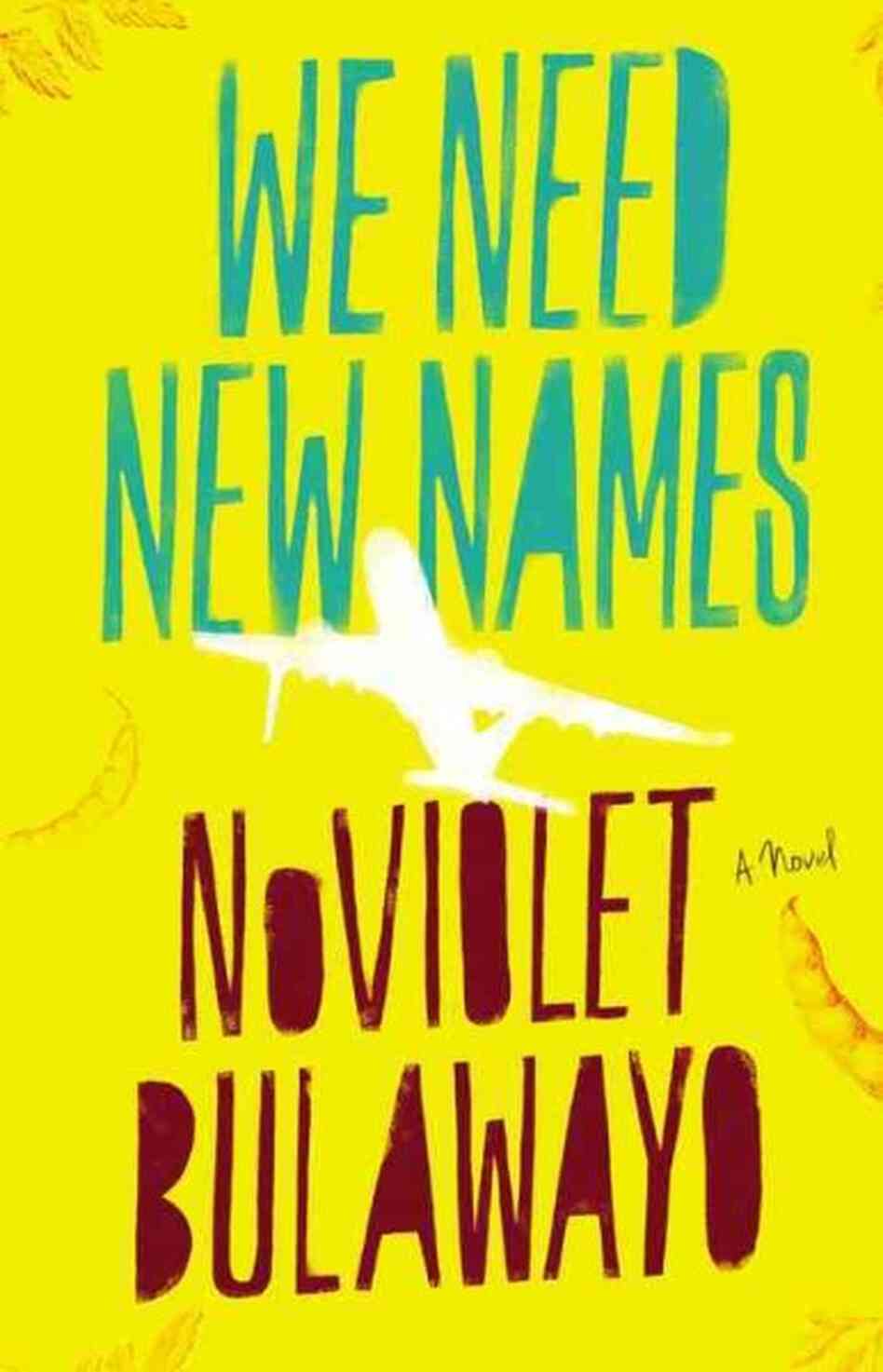
Review: We need new names by Noviolet Bulawayo

Noviolet Bulawayo (Bulawayo is presently the name of Zimbabwe's second largest city) aka Elizabeth Tshele (her real name) was the surprise name in the Booker shortlist this year since she is the first Zimbabwean to be considered for the prestigious honor. I read 'We need new names' after it was longlisted since my foray into African literary landscape has been very limited so far. And this review was written before the shortlist was announced. And to be honest I didn't expect it to be included. The book starts out with a novel intention but somehow isn't able to achieve its target, which is to help the reader develop an emotional connection with her characters. Or that's what I thought. Obviously, the Booker committee thought differently. Now begins my former review:-

First published:- May 21st, 2013
Star rating:-

Books like this one have me fumbling around for the right approach to review them, because they try to cram in too much within the scope of a regular sized novel and consequently just stop short of resonating strongly with the reader. 

It's like Bulawayo had a message to give me, something potent and fiercely honest enough to burn right through all my prejudices and cherished misconceptions and leave me staring right at all the cold, hard facts. But then halfway into it, her voice went off in various tangential directions in an effort to tackle too many issues at one go and lost most of its intensity. 
As a result the message that she had set out to deliver, gave off the impression of poor phrasing and ended up sounding half-hearted and rather dubious.

If I try my absolute best, I can only delineate this as a search for identity, a raw account of coming to terms with the after-effects of displacement. Or an attempt at summarizing in a few hundred pages the feelings of being neither here nor there. 

But then Bulawayo let me know so much more. She told me about the experiences of surviving on a few stolen guavas, walking barefoot on the burning asphalt of the dusty road and yet enjoying the smug satisfaction of playing 'Find Bin Laden'with equally destitute and miserable kids of your age. And what it feels like to flee from and forget the tattered remains of a land you were born in simply because it could not offer you the promise of a fulfilling life ahead anymore - a land torn apart by strife, ethnic violence and unstable, unsympathetic governments. The irony of silently selling away your dignity in a foreign country in exchange for a life better than what your own motherland could afford to bestow upon you. The feeling of being swept up in the vortex of too many rapidly occurring changes as an illegal immigrant and the utter hopelessness of never really belonging anywhere. 

Bulawayo may not be capable of subtlety or stringing beautiful words together into lengthy sentences fraught with imagery, but she has a compelling and unique voice of her own nonetheless. 

I will surely look out for her other works in the future.

**A 3.5 stars that could not be rounded off to a 4**


 photo C136E66569D294E4D5DA2D8124D4FF69.png

Saturday, August 24, 2013

Review : An Artist of the Floating World by Kazuo Ishiguro

(Original review posted on Goodreads:- Feb 16, 2013)

If you've already read The Remains of the Day  chances are your enjoyment of An Artist of the Floating World will be greatly curtailed. And that is the sheer tragedy of this book.

Replace Stevens with Ono san. Replace a financially unstable England with post-war Japan and insert Ishiguro's penchant for allegory. And TADA, you have An Artist of the Floating World.
It had potential to be a very emotionally charged commentary of a nation re-building itself from its charred (atomic-bombed) rubble and reflecting on the flawed ideologies of its notorious past.
But instead it felt like a curious combination of The Remains of the Day and A Pale view of Hills.

If in TRotD, Stevens laments living a life devoted to serving a Nazi-sympathizing, anti-Semite Lord with unquestioning loyalty, in here, Ono san experiences feelings of profound guilt for having created paintings supporting the war and Imperial jingoism. We see Ono repeatedly trying to convince himself that his ideals were not at fault and he only did what his own conscience permitted him to, at the time.
But at the fag end of the narrative, Ono comes to terms with his 'mistakes' and even ends up offering an unsolicited apology to his daughter's father in law at her miai (marriage interview in Japanese).

Translation:- Ishiguro virtually makes Japan get down on its knees and apologize to the world for all the crimes against humanity it committed during the War. The floating world of the pleasure district that Ono san uses as a theme for his paintings is actually a symbol for a floating, unstable Japan about to turn over a new leaf.

I can't exactly put my finger on what I did not find appealing in this book. Maybe it's the matter-of-fact tone of Ono's voice in this narrative which will tend to annoy the reader at some point. Maybe it's the glaring similarities with TRotD. Or maybe it's the Booker-nominated writer Tan Twan Eng saying how he reads this book at least once every year which caused me to have really high expectations.

I thought a book had to create an incredibly strong impact for it to be Eng's all-time-favorite. But I guess as a native of Malaysia, he must have strong sentiments associated with any book which talks about Japan's shameful past as colonial master of most of south-east Asia.

So my advice to the uninitiated will be : Read Ishiguro's works in order or at least read this one before reading The Remains of the Day.

3 underwhelmed stars out of 5.
Related Posts Plugin for WordPress, Blogger...