Showing posts with label Contemporary. Show all posts

Saturday, May 24, 2014

Review: Cloud Atlas by David Mitchell


First published:-2004

Read in:- April, 2014

Star rating:-

There's the sound of a deeply contented sigh emanating from the lips of someone clutching this book to herself like a long-lost friend, a bead of tear perched precariously atop disorderly eyelashes. And there's the barely audible sound of her turning the pages ricocheting off the pliant walls of time and space, sculpting a minuscule dent on the surface of a collective fate and this perplexing cosmic interconnection. 

She cannot properly articulate her awe or even fathom her own bewilderment at being rendered so tearfully sentimental by another case of 'old wine in new bottle'. Now she longs to believe that any or all of her trivial actions will lift her out of her predestined prison and place her somewhere on the crisscrossing grid of timelines and geographical boundaries, enable others to hear the distinct echo of her shout into the void. She just by herself is insignificant, not even a mere drop in the pool of time and she fears this looming threat of obscurity above all. But then David Mitchell gently reminds her that mute resignation to the 'natural order of things' is cowardice and billions and billions of droplets like her coalesce to form the ocean itself. She can will herself to shape the world any way she can. 

American notary, Adam Ewing sails reluctantly across the Pacific aboard The Prophetess, unaware of the events that will set into motion a change of heart which will contribute toward the making of history. 

A disinherited, arrogant and musically gifted Robert Frobisher chronicles the making of his avant garde 'Cloud Atlas' sextet in a series of letters addressed to his dear friend from distant Zedelghem.

Dauntless Luisa Rey doggedly pursues the truth and exposes the nexus between the Nixon administration and corporate corruption, emerging victorious against the tide of adverse circumstances. 

Ageing, pedantic and self-important vanity publisher Timothy Cavendish endures a 'ghastly ordeal' partly as comeuppance for his lifelong selfishness but manages to emerge from his own predicament with a reformed worldview. 

Fabricant Sonmi~451 rises above the 'catechisms' of institutionalized servitude to 'corpocratic' masters in futuristic Korea to light the spark of revolution. 

In a post-apocalyptic Hawaii, valleysman Zachry witnesses mankind on the brink of a choice between complete annihilation and survival through self-reform. 

And master puppeteer David Mitchell pulls all their strings from the background.

As she delights in her newfound admiration for the sweeping scope of this masterpiece and Mitchell's ambitious foray into the Matryoshka-doll structured story-telling, she doesn't fail to notice the accusations of gimmickry and pretensions, of self-indulgent writing, of 'trying too hard', of 'contrivances' and acknowledges the legitimacy of these opinions. 
But then she remembers Robert Frobisher answering Mitchell's detractors on his behalf. 

"Revolutionary or gimmicky? Shan't know until it's finished, and by then it'll be too late..."
Do you blame her for chuckling at the man's foresight and wit?

Enthralled, she notices the parallels drawn between the rabid consumerism of our times and a 'predatory society' based on principles of the empowered devouring the disenfranchised and the voiceless, the invisibility of the aged in the eyes of the young and unwrinkled, carefully inserted allusions to virulent sexism, racism and xenophobia through the ages, the enthusiastic nod given to cross-cultural harmony and freedom of sexuality and she wonders if Mitchell has left any of the issues haunting mankind since times immemorial unexplored. 

Thus as Mitchell tips his hat to the likes of Melville and Calvino, to prose stylists like Joyce and Nabokov, to the traditions of intertextual witticisms and metafictional references, to all the disparate voices and genres that help enrich the body of literature today, she tips her hat to Mitchell's genius and the sheer audacity of his vision.

Unhappily she then takes cognizance of the fact that never again will she read 'Cloud Atlas' for the first time. 
But then again, she might.


   photo C136E66569D294E4D5DA2D8124D4FF69.png

Friday, February 28, 2014

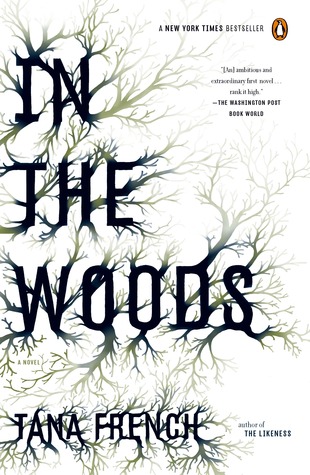
Review: In the Woods by Tana French

Reviewer's note:-Before I begin, let me state that 'In the Woods' has been reviewed in this space already but that was Scarlet's take. The following is mine. (The only thing evident in both reviews is how emotionally riveting we found this debut Tana French novel. Seriously, you must read this if you haven't.)


First published:- 2007

Read in:-November-December, 2013

Star rating:-

It's been a while since I have read a book that has left me so utterly devastated, a book entailing such a profound emotional investment that having finished it I feel a gaping emptiness within, a sense of loss. It feels like my heart has been simultaneously crushed into pulp under the weight of the tragedies that descend on the lives of a handful of characters and blown to smithereens. And I would never be able to pick up the pieces and glue them back together into a throbbing whole again.

I read In the Woods while on vacation, whenever I took breaks from watching wave after wave crash on to the shore with the familiar rip-roaring intensity of the sea. I read this even when I was too tired to stay up till late, lying on an unfamiliar bed with a sheet of dubious hygiene standards. I read this during prolonged car rides. And every time I had to tear my eyes away from its pages, I felt a pang of irritation.

As I made my way toward the bone-chilling climax of this narrative, awake at an unholy hour, I distinctly remember breaking out in a sweat on a cool December night to boot. Sleep became an alien entity and, come hell or high water, I knew I would not wrench myself away from this fantastic make-believe world of a small town and the sinister occurrences that tied the lives of its residents in the most twisted way possible. I longed to stay trapped in the eerie magic spell cast by the woods, under the ominous shadows of leafy canopies of pine and beech, caught up in a hazy daydream playing hide and seek with Peter, Jamie and Adam. My heart ached for the two children who never returned home from their beloved woods, who were never found again and the way the tragedy of their mystifying disappearance dealt a crushing blow to the life of their traumatized playmate who returned unharmed. It wept for Rob and Cassie and their missed chances.

This book isn't about crime and punishment, it isn't about the science of deduction or smooth-talking, fedora-sporting detectives smartly arriving at inference after inference and nabbing the culprit in style. I almost crave for the standardized simplicity of regular crime thrillers at this moment, the stories which conveniently compartmentalize the crime and the police procedure, the good guys and the bad guys. At least a book like that would not have left me feeling so desolate and bereft of any happy feeling. 

But this book took my breath away with its ability to instill so much life in each one of its characters that their distress became my own, with its ornate but never ostentatious prose and the way it deftly narrated a story infused with the dull shades of a sadness so affecting. Tana French foregoes all the spick and span categorizations here, thumbs her nose at the usual pigeon-holing. Instead with consummate skill, she outlines the faint traces of humanity in the most brutal impulses, acknowledges the messed up ways in which this bizarre drama of life plays out and how a neat tying up of all loose ends seldom happens in reality. More often than not, life is that merciless and cold. 

This book is about the labyrinthine pathways of our mind which treacherously conceal our most terrifying memories and how our subconscious prods us to replace the unpleasant truths with self-justifying falsities and even establishes our faith in them. It is about the seemingly innocuous, small cruelties of mundane everyday life that are capable of triggering much bigger disasters that destroy the lives of children and the unforgivable cruelties oblivious, ignorant children are themselves capable of.

I refuse to label this electrifying debut novel mere crime fiction because, in all earnestness, it is not. Rather, it is literature which delves deep into the causality of crime and meticulously brings out the humanity of all the people involved, literature capable of wringing out empathy from even the least sensitive reader. And it is an exploration of the convoluted workings of the human mind, of evil and barbaric urges lurking somewhere in its darkest nooks and crevices. It is a cerebral suspense thriller and, without a doubt, one of the best I have ever read. But it is also a beautiful, bittersweet story about people who carry on with their broken lives shouldering the unbearable burden of past trauma, an unforgettable human drama which left me emotionally drained, agitated to the extreme and yet gasping for more.


   photo C136E66569D294E4D5DA2D8124D4FF69.png

Saturday, October 5, 2013

Review: Forgive Me, Leonard Peacock by Matthew Quick


Either this book failed to do what it set out to do, or I went in with the wrong expectations. Whatever the cause, Forgive Me, Leonard Peacock did not have any appreciable impact on me.

You see, I read this book hoping to gain some insight into the mind of a school shooter. Someone like Kevin Khatchadourian, just not so inherently evil. I wanted this book to scare me, stun me, make me question, make me think, maybe break my heart a little.

What I did not want this book to do (and what it essentially did) was give me a long list of excuses for why this guy was walking around with a gun in his bag.

Now, I'm not trying to undermine the gravity of the situation here. Leonard has had a tough life; has endured some horrible things. He's depressed and lonely, he's been bullied, and I understand how difficult that is to get through. But isn't that true for a lot of teenagers?? Not everyone lugs a P-38 to school though. Shouldn't there be something more? Something in the way Leonard's mind works? Something to do with the person that Leonard is rather than the circumstances?

The narrative is designed to make you feel sorry for Leonard. I'm afraid that had quite the opposite effect on me - my empathy meter was stuck at zero. This is going to sound highly insensitive but I felt like Leonard was constantly appealing to the sensitive side of me - See how intelligent I am but nobody appreciates me? See how nice a person I am but nobody talks to me? See how profound my questions are but nobody gives a damn? See how none of my friends, and not even my mother, remember my birthday? Doesn't my life suck? Don't you feel sorry for me? Don't you? Don't you? - and all I could do was watch impassively, with the occasional annoyed eye-roll.

There are only a handful of characters other than Leonard but I cannot tell you anything remarkable about them except that they all seem a little extreme. As much as I hope teachers like Herr Silverman exist, he is almost too good to be true. Leonard's mother is way too absent; she has pretty much abandoned her only son and never bothers to return his messages. Asher Beal is... horrible, supposed to be hated. The whats-her-name that Leonard has a crush on is a little too obsessed with Christianity.

Leonard himself never became a real person in my eyes. At the best of times, he was nothing more than a string of adjectives, too different and too disjoint to go together.

Quick's writing is okay but the structure of the book impedes the flow. The footnotes are more like footessays - long, meandering recollections that make you forget you're reading a footnote until you're suddenly pulled back to the main narrative, following which it becomes necessary to re-read a few lines to grasp the context again. Then there are these "Letters from the Future" that, looking back, are probably some of the most poignant moments the book has to offer, but because Quick doesn't bother explaining their importance until it's too late, you read them only with a growing sense of bewilderment, wondering why you're suddenly in the middle of a post-apocalyptic water-world.

The only point where I felt some semblance of an emotional connection was the very last chapter. It's nothing remarkable, but there is this desperation there that really hit me. It was when I wondered if I had it all wrong. Maybe Leonard was never the "shooter" but just another depressed teenager who, tired of fighting the world, had come dangerously close to giving up altogether.

I don't know if I'd recommend this book. If you can empathize with Leonard then maybe you'll love it. I couldn't, so I didn't.

Forgive Me, Matthew Quick. I'm not impressed.


2 out of 5 stars


Wednesday, September 4, 2013

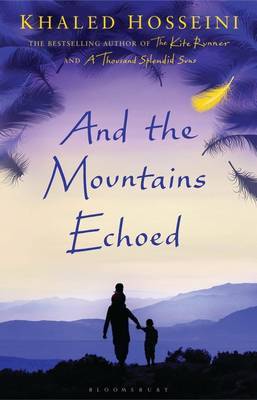
Review: And the Mountains Echoed by Khaled Hosseini

(Original review posted on Goodreads: May 31, 2013)


Here's something you should know about Khaled Hosseini: All his stories have more or less, the same ingredients.

It always starts with Afghanistan in its pre-war days. The protagonists are children, guileless and innocent. Then the invasion happens. People separate, the bonds between them torn apart either by fate or by design. Many gut-wrenching chapters later, there's some kind of reunion but with a catch - there's something amiss, something unfulfilled, like a testimony to the unfairness of life.

To be honest, I'm not a fan of formulaic things. Yet, when it's Hosseini telling a story, I listen. I give in. I let his words curl around me like a blanket. I fall in love. And when it's all over, I clutch the book to my chest and weep like a child.

Because formula or no formula, Khaled Hosseini just knows how to tell a story. He knows what to say and how to say it. It's like an art he has mastered - and no matter how many times he does it, the impact of it never fades.

And the Mountains Echoed is an ode to siblinghood and all the joys and heartbreaks that come with it - the anguish of separation, the guilt of envy, the comfort of companionship, the burden of responsibility. Unlike his previous books, Hosseini adopts a short-story approach for this one. There are multiple narratives in multiple time-frames spread across several different countries, all connected by a common link to Afghanistan.

The writing is beautiful, as always. Sample this:

"All my life, I have lived like an aquarium fish in the safety of a glass tank, behind a barrier as impenetrable as it has been transparent. I have been free to observe the glimmering world on the other side, to picture myself in it, if I like. But I have always been contained, hemmed in, by the hard, unyielding confines of the existence that Baba has constructed for me, at first knowingly, when I was young, and now guilelessly, now that he is fading day by day. I think I have grown accustomed to the glass and am terrified that when it breaks, when I am alone, I will spill out into the wide open unknown and flop around, helpless, lost, gasping for breath."

And the Mountains Echoed was one of my most anticipated books this year and it did not disappoint. That being said, it pales in comparison to his previous works - The Kite Runner and A Thousand Splendid Suns. Maybe it was the multiple POV thing. With so many characters and so many stories, it's inevitable that some would hit harder than the rest. Personally, I found the first half more emotionally striking - Abdullah, Nabi and Parwana's stories all made me tear up. I missed Afghanistan in the later segments.

And in case it wasn't obvious enough, I just wanted to say that I love Khaled Hosseini. If it weren't for him, I would have foolishly associated Afghanistan with just the Taliban. It's shocking how little I know about this country even though it's so close to mine.

Thank you for the culture-cum-history lessons, Mr. Hosseini. And even if your next book adheres to the formula, I'll still read it and in all likelihood, cherish it.

4 out of 5 stars


Tuesday, September 3, 2013

Review: An Abundance of Katherines by John Green

(Original review posted on Goodreads: March 10, 2013)

Here are some things I’ve realized after reading AAoK:

1. John Green is a talented, clever writer with a great sense of humor.

2. Contrary to what I’d like to think, I’m still math-phobic.

3. I’ll never, ever date a has-been child prodigy. Or a washed-up genius. Or a whiny guy who speaks 11 languages. Or whatever it is that Colin’s supposed to be.


An Abundance of Katherines is a hilarious book but it did not make me laugh. Okay, maybe a little but that was more like snorting-in-mild-amusement than full-fledged laughing. I found the humor a little tiresome. But then, I’m the kind of girl who cracks up at things that normal people don’t find even remotely funny so maybe there’s something wrong with me and not the book.

AAoK has a nerdy, heartbroken hero (irritating), some cussing in Arabic (gets taxing after a while), jokes about man-boobs and fractured balls (not really my idea of humor), a lot of math (scary) that strangely looks interesting (I wouldn’t know for sure since I skipped those parts).

Colin really got on my nerves. Whining and theorem-making are not exactly things I’m fond of, and that’s all Colin does (in addition to spewing out random facts). I wish the narration was in first-person; it would have made things more interesting.

The footnotes were a relief. I loved them – even the ones that had math. In fact, they were my sole motivation for trudging through the pages.

This was my first John Green novel and well... I’m not terribly impressed. I hope TFioS and Looking for Alaska fare better.
I’ll leave you with one of those rare lines that actually made me laugh:

“He tried not to sob much, because the plain fact of the matter is that boy-sobbing is exceedingly unattractive. Lindsey said, “Let it out, let it out,” and then Colin said, “But I can’t, because if I let it out it’ll sound like a bullfrog’s mating call.” ”

2.5 rounded off to 3


Review: No And Me by Delphine de Vigan

(Originally reviewed on Goodreads: Jan 24, 2013)

“How do you find yourself at the age of eighteen out on the streets with nothing and no one? Are we so small, so very small, that the world continues to turn, immensely large, and couldn’t care less where we sleep?”

Four years ago, on my way home one night, I met a girl in the train. She was a kid really, selling cheap jewellery. I was standing by the exit, waiting to get down at the next stop. The train jerked, she dropped her stuff and I helped gather it all up – maybe that’s how we got talking. It was a conversation that lasted less than a minute because I had to get down soon, but I remember asking her where she lived. She said:

“Hamara toh koi thikaana nahi hai didi. Hum toh bas idhar-udhar so jaate hai. Kismet ho toh platform par.”

Translation :
“People like me don’t have destinations. We sleep here and there; on platforms when we’re lucky.”

I can’t stop thinking about that encounter ever since I began reading No and Me.

I liked this book a lot. I think I would have liked it just as much even if I hadn’t met that homeless girl that night. No and Me has an impressive subject, two brilliantly sketched characters and a beautifully written story. It’s amazing how this book, which I stumbled across by chance, has left such a deep-seated impression on me.

I won’t say that the book is perfect. A lot of the things that happen are too convenient. Plus the book ends so suddenly that it’s bound to leave a lot of readers feeling high and dry. But that does not really matter – not to me at least.

For me, No and Me isn’t so much about the story as the strangely beautiful bond it explores between the two girls – Lou and Nolwenn. Two girls, who live in starkly different worlds within the same city. Two girls, who try to help each other and make promises they can’t keep. Two girls, who can never fit into each others’ worlds, no matter how hard they try.

And just like that incident in the train, this book doesn't really make me sad; rather, I feel tormented, ill-at-ease and thoughtful. I feel guilty that I never asked her name. I wonder where she is now, where she’s sleeping tonight.

No and Me deserves a lot more readers than it gets.

“Before I met No I thought that violence meant shouting and hitting and war and blood. Now I know that there can also be violence in silence and that it’s sometimes invisible to the naked eye. There’s violence in the time that conceals wounds, the relentless succession of days, the impossibility of turning back the clock. Violence is what escapes us. It’s silent and hidden. Violence is what remains inexplicable, what stays forever opaque.”

3.5 rounded off to 4


Sunday, September 1, 2013

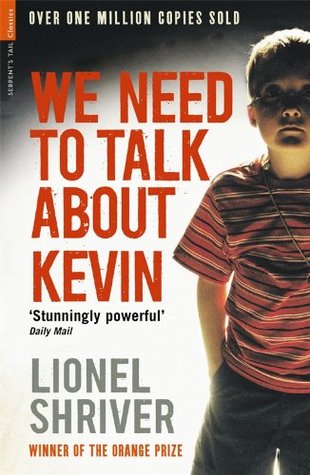
Review: We Need To Talk About Kevin by Lionel Shriver

(Original review posted on Goodreads: Jan 22, 2013)

I knew before I started that reading this was going to be hard. We Need to Talk about Kevin is listed as one of the most disturbing books on Goodreads.. So, in an attempt to limit the coming agony, I made a few rules:

RULE 1: Do not get emotionally involved.
RULE 2: Do not take sides.
RULE 3: Do not dwell on the disturbing parts.

A hundred pages later, when I put the book down and went to bed only to replay and obsess over Eva’s commentary in my head, I realized my rules were long broken.

I got emotionally involved. I always do. I wish I could say that Eva's so horrible that I couldn't relate to her but a teeny-tiny part of me did, especially at the start. Crying babies terrify me and I have always harbored a lot of reservations about having kids. I’m not saying I never want to have kids; that would be a stupid thing to say considering I wasn’t even an adult four years ago. But I’m the kind of girl who gets a panic attack when she's asked to babysit her hyperactive nephews.

I took sides. Right from the start, I unconsciously sided with Eva. True, the way she thought of her son repulsed me at times, but I felt Kevin’s actions were more repulsive. For me, Kevin was quintessentially evil, and Eva was the poor woman who had the misfortune of bearing him. The fact that she did not want to have him in the first place just seemed to make her more of a victim.

As for not dwelling on the disturbing parts...well, there are NO PARTS. The book in entirety is a systematically harrowing tale with no escape. The only way to skip the distress would be to stop reading the book itself, and while that thought did cross my mind, the bibliophile in me could not stay away. So I persisted. I bore the mental anguish. I let Eva’s commentary drill into my brain.

And that's my answer to why I love this ugly, ugly book. It caused me to recoil in horror so many times, but also made me come back to it every single time. Every minute I was reading, I wanted to stop; yet when I put the book down, I wanted to pick it up again. Like being addicted to something unpleasant and craving it, even when that voice in your head begs you not to.

This is an uncharacteristically long review, but there’s one last thing I want to add. This book left me with a question that’s bothered me for days. Like I said, I have always been on Eva’s side, but the last 4 pages made me reconsider. I mean, whatever Kevin did is inexcusable and gruesome, and I still feel for Eva, but who’s the culprit and who’s the victim?

What’s the cause and what’s the effect?

Is Eva such a cold mother because Kevin is who he is? Or did Kevin become who he is because Eva is such a cold mother?

In the end, who do we really need to talk about? Kevin? Or Eva?

I have ruminated over this question for days, but I feel it’s best to leave it unanswered. Because whatever the truth may be, it’s bound to be hideous.

“It must be possible to earn a devotion by testing an antagonism to its very limit, to bring people closer through the very act of pushing them away. Because after three days short of eighteen years, I can finally announce that I am too exhausted and too confused and too lonely to keep fighting, and if only out of desperation or even laziness I love my son.”

5 out of 5 stars


Saturday, August 31, 2013

Review : Daughter of Smoke and Bone by Laini Taylor

(Review originally posted on Goodreads:- November 16, 2012)

Dear Ms Taylor, there's not even a shred of doubt in my mind about your ability to tell a story
in the most enigmatic and captivating fashion. You have made your characters appear straight out of our exaggeratedly romanticized fantasies where everything is grandiosely beautiful - even the most evil and terrifying things. Your Prague is every bit as surreal and out of this world as Eretz.
The same can be said about your prose. It is mesmerizingly soothing and reading this book felt like listening to a delightful piece of musical composition where no note feels jarring or misplaced.
But even so, I'm sorely disappointed. DoSaB has no tale to tell. While the beautiful writing, kept me going smoothly at least till the middle point, I kept waiting for something...anything... to happen. But nothing ever did, except at the very end and by that time it didn't matter anymore.

The brilliantly conceived set-up is there. The characters, albeit very stereotypical ones, are there. The language and similes and metaphors and all kinds of literary embellishments are there. 
But where's a good story? Where's character development? Where's the suspense? Where's the mystery? Where's the drama? Where's the romance? 

At least a quarter of the book is devoted to flashbacks and memories. Another quarter to Karou and Akiva angsting over each other. Another quarter to Karou and her chimaera family (which was the best part in my opinion). And another to Karou's hair and Akiva's eyes.
I'm not kidding. I should've counted the number of times the writer alluded to Karou's blue hair and the similes she devoted to its description. Same with Akiva's eyes and his ethereal, impossible beauty.
Sure sure we get it, Laini. They're both surreally beautiful beyond what our feeble imaginations can conceive. Can you please move on now?

Another thing which irked me beyond measure was the love story. I was supposed to be mooning over Akiva and Karou, feeling sympathy for their fate of star-crossed lovers. Instead I felt detached and some measure of annoyance. 
Why did they fall in love with each other again?
Uh they just did. Just like that. I can't remember why but they just did. And it's supposed to be romantic and heart-breaking except that I just don't feel it is.

Last but not the least, the thing which finally caused me to abandon hope for this book was its dilly-dallying between two heroines (although both are one and the same). We start the book thinking it's all Karou. Then Madrigal comes barelling into the story from nowhere and pushes her completely out of the picture. From then on, it's all her. 

And just when I was developing some sort of liking for her, she is gone. Poof! And Karou is handed back to me as unceremoniously as possible, when I can't quite figure out whether I want her back again.

An eloquently-worded novel, but not a good story. Certainly not worth spending rare hours of free time over.

2 out of 5 stars.

Photobucket

Tuesday, August 20, 2013

Review : The Casual Vacancy

(Original review posted on Goodreads:- January 15, 2013)

Well much has been said and written about this book already throughout the latter part of last year. But here's my twopence on Rowling's ambitious adult novel, which in my opinion has received a rather harsh reception.

This book is grey. As grey as grey can be.
It is an intense introspection on the bleakness of modern day urban life, the dynamics of various human relationships, which may seem ordinary on the surface but reveal complexities just beneath that showy exterior - where the basis of each one is some deeply personal interest and little else. Where every human action is steeped in the fundamental need for fulfillment of some ulterior, personal objective. And it is more about people of flesh and blood, like you and I, rather than a story.

Rowling takes her sweet little time (which costs many of the readers much of their patience) to establish an imaginary suburban neighborhood and its various quirky inhabitants - unscrupulous, prejudiced councilmen, hypocritical educators, pedophiles, violent, abusive fathers, problematic teenagers, promiscuous adolescent girls, drug addicts, drug dealers and pimps, victims of sexual abuse, rape, jittery, reluctant boyfriends, emotionally absent husbands and sexually frustrated, disgruntled wives. But Rowling's achievement lies in the fact that she makes all her characters appear as humane as possible without ever forcefully pushing any one of them either into the realm of abject villainy or highly romanticized heroism. They have their share of good and bad traits. Although, noticeably, the bad in them is much more pronounced.

Rowling dishes out reality in its most vicious and ugly form and leaves nothing to the imagination. She never tries to tone down the scale of the tragedy, everyday mundane life entails. The tragedies we either prefer to shove under the carpet or try and forget about by donning a mask of make-believe contentment.
Pagford is the dystopia of Rowling's imagination and each one of its residents are bizarre enough to be the subject of a psychoanalyst's case study.
In a simple sentence, The Casual Vacancy is Rowling's exegesis on human nature.

Initially I had decided on a meagre 3-star rating but towards the end, Rowling kicks up the ante a notch or two and gives us some some solid plot developments. Her characterization is beyond brilliant and a major asset to this story.
And it becomes quite a page-turner towards the end as the very disturbing narrative hurtles towards an unavoidably tragic ending.

This woman gave a generation of kids (like me) a story so special and awe-inspiring, that it became a part of their lives forever. There's no chance in hell that she can write anything mediocre or substandard.
But, maybe....just maybe I was nurturing hope, in some obscure corner of my heart, of something life-altering and magnificent from her once again.
No, I wasn't naive enough to expect another Harry Potter but I wasn't expecting her ambitious adult novel to leave such a bitterly sharp after-taste in my mouth either.
That made me take away the one remaining star.
Sorry, Jo. Maybe next time.

P.S:-I can't help but wonder, is TCV Rowling's commentary on contemporary England?
I certainly hope not.

4 out of 5 stars.

Monday, August 19, 2013

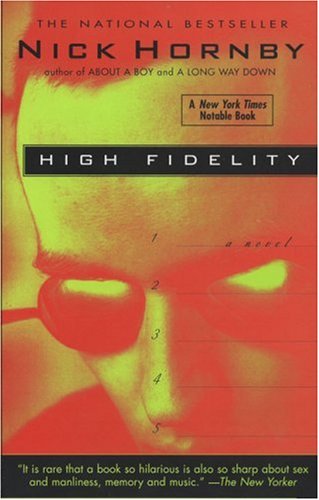
Review : High Fidelity by Nick Hornby


(Original review posted on Goodreads:- December 10, 2012)

High Fidelity is several things at once. 
It is a specimen of ladlit - romance and single life explained from the point of view of a man. And we have so few of those. 
It is a humorous reflection on life and its many failings.
And lastly, it is the tale of a Brit singleton in his mid thirties who is unrelentingly firm in his reluctance to grow into a man.
A man who is so caught up in his fantasies of the ultimate love one is destined to end up with, that he ignores the woman who truly cares for him and consequently ends up losing her.
So the novel begins with our protagonist, Rob Fleming, listing the 5 major break-ups of his life which either hurt him too much or ended up changing him as a person for good. And he takes vicious pleasure in informing the reader that Laura, the woman who just left him, doesn't make the top 5, doesn't even come close.
How could you not get sucked into a book which begins on such a promising note?

An owner of a dingy vinyl record shop named Championship Vinyl, Rob and his two employee-cum-sidekicks Dick and Barry stumble through the maze of life, more often than not clueless about what they are doing.
They debate merits and demerits of obscure bands and music artists and are generous in their display of disdain for the ones who love their Beatles, Billy Joel, Tina Turner, Elton John and the usuals. And these hilarious conversations centering around mundane things like tv shows, movies, music and women lend the plot much of its frivolity and humour. Especially Barry, who is described by Rob as a 'snob obscurantist', makes you laugh uncontrollably with his habit of belittling everything, his sneaky tactics of selling records of artists no one has heard of and his interactions with Dick.
And so the plot meanders through the zigzagging life of Rob, touches briefly upon the lives of all the women with whom he had been in love at some point of time and settles on his on-and-off relationship with Laura.

High Fidelity comes as close to portraying single life and romance as it actually is and not in the larger-than-life Hollywood rom-comish way. It talks about the things we all do in relationships - how we decide how much to reveal to the other person. How our feelings for a person waver time and again and how we often falter, unable to decide what we want. How we hurt the other person in the process. How we realize how precious a relationship was only after it has ended. And more importantly how we are ever afraid of making that feared transformation - be it from girl to woman or boy to man.

Nick Hornby's debut novel is a charming creation - it is like a music record by an artist you may not have heard of but you can relate to the music, nonetheless. 
And you can't help but want to play the record all over again. 

4 out of 5 stars.

Sunday, August 18, 2013

Review : Nick and Norah's Infinite Playlist by Rachel Cohn and DavidLevithan


(Original review written :- April 12, 2009)

I never really expected a book, each of whose pages are strewn with f-words to impress me. But uncannily enough this piece of young adult fiction by Rachel Cohn and David Levithan did. This book is about two teenagers each of whom are going through a difficult phase in their lives and how one night of togetherness helps change their views towards love, life and the future ahead.

Nick, the conventional 'nice guy' and the bassist of a band which doesn't have a fixed name, has just recently been dumped by his girlfriend Tris after he confessed that he loved her. Norah,on the other hand, is a loner despite having been in a relationship with the chauvinistic and the self-centred Tal for the last 3 years. She is the straight-A student, the feisty and a tad spoiled daughter of the hot-shot CEO of a record company and the chaperone of her best friend Caroline who is quite the party animal and gets drunk at every opportunity she gets. Norah is the witty, intelligent kind of girl who can't exactly be called hot but is beautiful in her own way if you notice carefully. Thus these two people meet on an eventful night while Nick and his band (they were calling themselves 'The Fuck-Offs' for the night...ridiculous huh?I know -_-) were performing in a certain club where Norah also happened to be present along with Caroline. And after Nick comes up to Norah and fake-propositions her with this corny line - “I know this is going to sound strange, but would you mind being my girlfriend for the next five minutes?” and she accepts his ludicrous proposal, their whirlwind journey through the night begins - a night during which they discover that their notions about love were prejudiced and learn how to deal with the demons of their past.

Norah who had been in only one relationship all her life instantly takes a liking to the decent and well-mannered Nick. Nick however finds it hard to get over Tris and entertain the idea of having a new girl in his life. Eventually though he comes around and realizes that Norah could be more than just his 'music soul-mate'. And all of this happens during the course of a single night as these two teenagers make their way through different clubs and gigs in Manhattan.

So now why do I like this book? The story seems like it has all the hackneyed themes of a typical young adult or 'chick lit' novel.
I think this is juvenile fiction at it's best. Because Nick and Norah are actual teenagers here who do not adhere to cliched portrayals of American teens who indulge in drugs, sex and alcohol in various high school dramas or tv shows. They have their own strong points and weaknesses. They are good and they are bad, at the same time. Profanity is a regular part of their vocabulary, yet there is nothing offensive about the way they hurl swear words at each other or others. It's almost like part of a tough guy/girl act on their part to hide the sadness that lies underneath the exterior.

Another thing that I liked about this book is that despite being a romance novel it never gets too mushy or cloyingly sweet. It's not the kind of romance where boy and girl meet, fall in love and get married after overcoming different kind of obstacles.
Nick and Norah discover how an ordinary night can turn out to be nothing short of spectacular and exciting when one has the right kind of company. It's almost as if forever is trapped somewhere inside that night where Nick and Norah and their relationship have endless possibilities. It could be that they end up married someday with a son named Salvatore as Norah muses ('Salvatore' was printed on Nick's jacket which he offers Norah). But for the moment, for the night ,it doesn't matter. This night is theirs and theirs only. And perhaps, it will stretch itself into both of their future lives.
Narrated alternatively by Nick and Norah, the story is fast-paced and the dialogue, witty and sarcastic. A recommended read for teenagers and also for readers who like their romance novels without the dose of mush.

P.S:- I watched the movie after finishing with the book but as usual was disappointed. Michael Cera and Kat Dennings made a good lead pair but the screenplay was bad - even yucky in parts (Caroline and her chewing gum-eww). For Heaven's sake why don't the directors follow the original storyline of the novels? I, for one, feel the end-product will turn out to be much better if they followed this simple rule.

Saturday, August 17, 2013

Review : Norwegian Wood by Haruki Murakami

(Original review written :- October 30, 2011)

Sadness is indeed a very complicated emotion. It has the uncanny ability of dissolving the edges of reality
surrounding you and immersing you completely in an alternate world, where only you and that feeling exist together in complete harmony. And nothing else matters. You luxuriate in the richness of its beauty and marvel at the tranquility it offers you.

Haruki Murakami's, Norwegian Wood evokes exactly similar kind of emotions in the reader.

There are some books you read, which leave you with stories-bitter, exciting, adrenaline-driven, romantic, depressing or grisly. And then there are books which leave you with feelings. Norwegian Wood, most definitely, belongs to the second category.
And in my opinion, it is infinitely easier to deconstruct a story in a review rather than the feeling it leaves you with. But here's an attempt anyway.

Norwegian Wood is a beautifully sad yet incredibly sensual tale of unfulfilled love where the central characters are, in all essence, broken individuals.
In a most indolent manner, the book begins with our narrator Toru Watanabe, catching the strains of an orchestral version of The Beatles' 'Norwegian wood' on a flight to Hamburg and beginning to reminisce about a certain girl named Naoko, from the days of his youth in Tokyo. From hereon, the story is told as a flashback, as a sliver of memory that the 37-year old Toru has carefully preserved or perhaps is struggling not to forget.
Majorly the story revolves around the trials and tribulations of the 3 key characters - Toru, Naoko and Midori.

Toru, a reserved young college student, is shown to be somewhat anti-social, not quite opening up to others as easily as others open up to him. There is a sense of profound sadness about him hidden skilfully under a veneer of indifference, probably arising out of losing his childhood friend Kizuki, who committed suicide at 17. While Naoko, Kizuki's first and only girlfriend, is a beautiful and emotionally fragile being who has been unable to grapple with the tragedy of Kizuki's untimely death. Still in mourning, bound by a mutual feeling of isolation, Toru and Naoko, forge an unnatural connection of sorts, when they cross each other's paths years later in Tokyo. Toru falls in love right away and even she feels something love-like for him, but sadly enough it is not enough to heal them both. Soon the emotionally unstable Naoko recedes to a sanatorium in mountainous Kyoto while Toru tries to continue with his life as an unremarkable university student, seeking comfort in sleeping with random women. In Naoko's continued absence from his life, he makes friends with the bright, sassy, sexually liberated Midori Kobayashi, who has had her fair share of tragedies too but still manages to be optimistic. An unlikely friendship with Midori, helps dissipate some of the darkness in Toru's life but he is still unable to get Naoko off his mind and keeps writing her letters irrespective of whether she sends a reply or not. The rest of the book details Toru's dilemma as he is torn between these two women, never too sure of whether to shun his troubled past and embrace reality as it comes or keep waiting for Naoko to fully recover from her festering psychological wounds.

Written in a lucid language, the book is full of metaphors usually represented by the description of natural scenery. Murakami's obsession with western classics and music is reflected in the countless references to Beatles numbers like "Yesterday", "Michelle", "Something", Bach, Mozart, Scarlatti and literary works of Joseph Conrad, F. Scott Fitzgerald, Thomas Mann, Karl Marx and so on.

The brief overview of the plot does not, in any way, do justice to the story. For a book like Norwegian Wood cannot be summarized.
It is about human relationships which cannot be given a name or a clear definition. It is about the ghastly spectre of death and the way the people who are no longer with us, sometimes leave us in a permanent state of damage. It is about friendship and love and sexuality. And most important of all, it is about sadness. In its cruelest yet most beautiful form. The inherent dreariness of the book gets to you at some point or the other, but Murakami's compelling story-telling ways, make sure you keep reading till the very end.

4 out of 5 stars.

Related Posts Plugin for WordPress, Blogger...