Showing posts with label Pulitzer Prize. Show all posts

Monday, May 5, 2014

Review: The Color Purple by Alice Walker


First published:- 1982

Star rating:-

Read in: - September, 2013

I give this book 5 stars to spite the myopic David Gilmours and the V.S. Naipauls of the world who think books written by women are irrelevant. I give this 5 stars to make up for the many 1/2/3 star ratings it may receive simply because of Alice Walker's forthright, honest portrayal of unpleasant truths that are often conveniently shoved under the carpet so as not to disturb the carefully preserved but brittle structure of dogma and century-old misconceptions. 
And I award this 5 stars, symbolically on Banned Books Week as an apology for all the cowardly sentiments of the ones who misuse their power by banning books, thereby shutting out many powerful voices which demand and need to be heard.

In my eyes, an author's merit lies not only in their sense of aesthetic beauty, but also in the scope and reach of their worldviews which must reflect in their craft.

Alice Walker's is the voice of one such African American writer that recounts a story which not only breaches the boundaries of an issue like emancipation of women but tries to detect a common pattern in problems plaguing civilizations across continents. She gives us one horrifying glimpse after another into the lives of women ravaged by unspeakable brutalities like rape and abuse, lives searching for meaning and connection and seeking out that elusive ray of hope amidst the darkness of despair. 
And by the end of the narrative, she brings to light with great sensitivity, that misogyny, sexism and blind patriarchal prejudices are as rampantly in vogue in the urban, upscale sphere of American cities as they are in the intractable, untameable African landscapes.

Celie and Nettie. Shug Avery, Sofia and Mary Agnes. Tashi and Olivia. 
All these are but different names and many facets of the same disturbing reality.
If the lives of Celie and Nettie are torn apart by sexual abuse and humiliation from childhood, then Tashi and other unnamed young African girls of the Olinka tribe are victims of genital mutilation and other forms of psychological and physical torture.
If the men of African American families dehumanize the female members to the point of treating them as mere care-givers and sex slaves, then the objectification of African women by the men of their families is no less appalling. And contrary to accepted beliefs, white families in America are just as easily susceptible to misogyny as the African American families are.

But Alice Walker doesn't only stop at opening our eyes to the uncivilized aspects of our so-called civilized world, but also shows us how knowledge of the world and people at large, self-awareness and education can help exorcize such social evils, how it is never too late to gain a fresh perspective, start anew and how empowerment of women eventually empowers society.

Dear David Gilmour, if I were a professor of English literature I'd have taught Alice Walker to my students without a shred of hesitation, because here's an author who may not possess the trademark sophistication of Virginia Woolf's lyrical prose but who, nonetheless, fearlessly broaches subjects many masters and mistresses of the craft may balk at dealing with.

Alice Walker: 5 | David Gilmour: 0


   photo C136E66569D294E4D5DA2D8124D4FF69.png

Tuesday, April 15, 2014

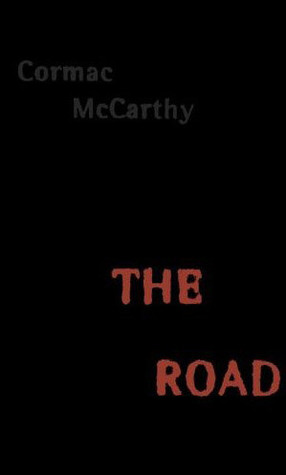
Review: The Road by Cormac McCarthy


First published:- 2006

Star rating:-

Terror. Stark naked, clear as the day and indelible in its intensity. Terror that turns its unflinching gaze on you, commanding you to quake in your boots and disintegrate into pieces. This book is that kind of cold dread that seeps into your blood like insidious venom and drains away your strength in a steady, agonizing trickle as you read along. The horror of being stranded in a world, where the living live on either to become sustenance for other survivors or to hunt and feast on fellow brethren to survive, becomes as real as the morning sunlight pouring in to your room through the gauzy curtains.

The trouble with dystopian fiction (literary and otherwise) is that if you have read one book from the genre you have pretty much read them all. And the rather unabashed confession I have to make in this regard is that I have read quite a lot of them - this is the 'guilty pleasure' I am not really guilty of indulging in once in a while. But when the focus of the discussion on dystopias shifts to a universally read book like 'The Road' then opinions range from acerbically negative criticism, a patronizing, reluctant pat on the back to disappointed neutrality and effusive praise. Cormac McCarthy's prose has also garnered less than enthusiastic responses from quite a significant number of reviewers. I suppose some thought his metaphors to be too flowery for their taste. While the rest have found him to be repetitive and dull. 

Fair enough. But I did not.

To bring to life a world, where there's nothing left to do except scrounge around for nourishment, it is obvious the author will be hard pressed to elaborately detail the act of unscrewing a jar top and drinking from it. The monotone adopted while chronicling these trivial actions conveys the chilling truth of how much gravity is being accorded to affairs considered undeserving of even a passing mention in a former way of life.

Thus, I refuse to join in the chorus of complaints. The very visceral and undiluted reaction the narrative elicited from me as a reader, caused me to refrain from belittling McCarthy's gift for utilizing the same old genre tropes to offer such insightful commentary on the human condition. And despite its bleak and nihilistic leanings, 'The Road' surprised me with its deft handling of a subject as sensitive as a parent-child relationship, a theme that is often explored in many fictional narratives but with varying degrees of success. More than any tear-inducing gimmickry, the relationship depicted here bears a frighteningly close resemblance to how things are in reality. 

Our two unnamed vagrants, a listless father-son duo, who move down this seemingly endless road strewn with the debris of a world long gone and the echoes of a way of life no longer preserved, seemed to me to be representatives of a large majority of humans. The father acts as a kind of misery-sponge, enduring the brunt of all the vicissitudes of fate that await them on this cruel and unforgiving peregrination, while shielding the son from the same. And as the toil of this godforsaken journey wears the parent down to the point of no return, the child is familiarized with the brutalities of the world at large and gently shown the ways in which one can side-step all the unpleasantness and maintain an existence without challenging authority in any form. Isn't this what a majority of humans have been seeking to accomplish on an infinite loop? 'Survive and don't ask for trouble in any form.' is the motto etched onto the blank slate of our minds since childhood. 

All the horrors lying in ambush for this father-son pair, starting from chance encounters with roving bands of cannibals to combating the evident threat of starvation and the bitter cold which freezes them to the bone, can be taken to be allegories of all the challenges of living that individually all of us have to contend with. The metaphorical road is just another minefield where one can never foresee the kind of evils one wrong step may unleash. All the lawless laws, by which the world is governed once the formerly established edifice of order and organization has crumbled to dust, are deeply reminiscent of the relentless cycle of injustices institutionalized by our so-called 'civilization'. Just as the weak are preyed upon and devoured alive in this dystopia, the downtrodden and oppressed are victims of a sort of economic cannibalism enshrined in the 'laws' of our reality. 

The scales are tipped ever in the favor of those who wield power in some form; in this dystopia it is the possession of a weapon, in ours it is the ownership of wealth. 

"The last instance of a thing takes the class with it. Turns out the light and is gone. Look around you. Ever is a long time. But the boy knew what he knew. That ever is no time at all."

It disturbs me how near invisible the line of separation between an imagined dystopia and a real one is.

   photo C136E66569D294E4D5DA2D8124D4FF69.png

Tuesday, February 11, 2014

Review: American Pastoral by Philip Roth


First published:- 1997

Star rating:-
Read in:- From September to December, 2013

A quick perusal of my 'In-By-About-America' shelf will reveal a wide variety of titles ranging from popular fiction by the likes of Stephen King to the brand of post-modernist razzmatazz by the wonderfully perplexing Pynchon. Yet none of those books seem as American to me as American Pastoral is. Forget all the Great American Novels which swoop down on some of the 'Great American Issues' (this term is my invention yes!) like the Great Depression, racism, slavery, brutal and merciless killing of the Native Americans in the US-Mexican borderlands. Forget the illustrious names like To kill a mockingbird, The Grapes of Wrath, Beloved, The Great Gatsby, Blood Meridian and the other works which constitute the edifice of classic American literature. Even though every one of them focus either on watershed events in American history or relevant socio-cultural issues which form the basis of America's national identity, none of them are so glaringly American in spirit as this Philip Roth creation. I know my claims of being able to determine the degree of Americanness of any book are questionable at best since how can the internet and books supplant the experience of actually breathing American air. But I'll let Mr Roth speak on my behalf here -
"Around us nothing was lifeless. Sacrifice and constraint were over.The Depression had disappeared. Everything was in motion. The lid was off. Americans were to start over again, en masse, everyone in it together. If that wasn't sufficiently inspiring-the miraculous con-elusion of this towering event, the clock of history reset and a whole people's aims limited no longer by the past-there was the neighborhood, the communal determination that we, the children, should escape poverty, ignorance, disease, social injury and intimidation-escape, above all, insignificance!"

American Pastoral takes a plunge into the depths of America's heart and soul and analyzes its curious multiculturalism, its unrestrained self-love and its misdirected self-hatred. And speaking of 'depths', please bear in mind that it does go really deep, probing unmapped territory like the complications at the root of every human relationship be it between husband and wife or between a father and daughter who feel a subtly obsessive, nearly incestuous love for each other. On one hand it recounts a series of tragic events which result in the slow disintegration of a rich Jewish businessman's inner world while on the other it rapidly moves back and forth between various American issues, from the postwar economic boom to the Newark Riots of '67 to the violent anti Vietnam War protests bordering on terrorist activity, thereby weaving an intricate network symbolizing the web of America's inner conflicts. It's like AP revels in its own Americanness and its unabashed disdain for anything that is considered outside America's sphere of influence. But the surprising thing is, despite the self-absorbed tone of the narrator's voice and his blatant apathy for anything unAmerican, none of it sounds remotely offensive. On the contrary, everything put together, it comes off as a mockery of America's self-obsession. Every sentence, every stream of thought, every conversation that Roth has painstakingly put together to construct this masterpiece is rife with underlying implications. So much so that in order to squeeze out every last drop of meaning from one passage or a long conversation, a literature student reading this for coursework may need to pore over one particular page for hours on end. This, however, does not mean it is a difficult read, it isn't by a long shot. It is simply a book which requires a tremendous amount of patience and an effort on the reader's part to remove all the layers of obfuscation.

I have come across people criticizing Roth for portraying Jews in an unflattering light here but I find myself nodding my head in disagreement with them. The book smacks of anti-heroism if anything and it looks down upon the rich white American's idea of familial bliss, material prosperity and his hankering after a squeaky clean reputation free of any incriminating smudges. Roth tramples on the idea of hero-worship and stomps on it until it is so bent out of shape that it is beyond recognition. I also beg to differ on the subject of Roth's widespread infamy among the critic circle as a misogynist. Any writer capable of rustling up such fleshed out female characters like the ones depicted here, cannot be accused of nurturing a conscious hatred of women. Sure, there is a sprinkling of barely noticeable sexist remarks but I suspect it is done with the purpose of defining a particular character's perspective rather than simply out of contemptuous indifference (or maybe I need to read more Roth before pronouncing judgement). Some of the scenes of a sexual nature are disturbing to the point of being slightly cringe-worthy, but none of them demean women as such. And it will be hardly fair to indict Roth for sexual vulgarity when women erotica writers of today can be accused of much worse (rape and stalker fantasies anyone?).
To wrap up, this is a hard book to review as it obdurately resists deconstruction. But it is an ingeniously written one with long drawn out sentences which are a delight to savour if you love your share of linguistic acrobatics. Roth rambles a lot and gets side-tracked often, like an old man suffering from an early onset of dementia, frustrating the reader with his abrupt jumps from one subject to another almost in a stream-of-consciousness like manner and his penchant for detailing something as maddeningly boring as the art of glove-making. But eventually, when he makes his point you can't help but marvel at his ability to accurately deduce the hidden motives at work behind seemingly unremarkable action. And as schizophrenic as his writing may seem, one can't deny that it is also the work of a true master. 

 photo C136E66569D294E4D5DA2D8124D4FF69.png

Thursday, August 22, 2013

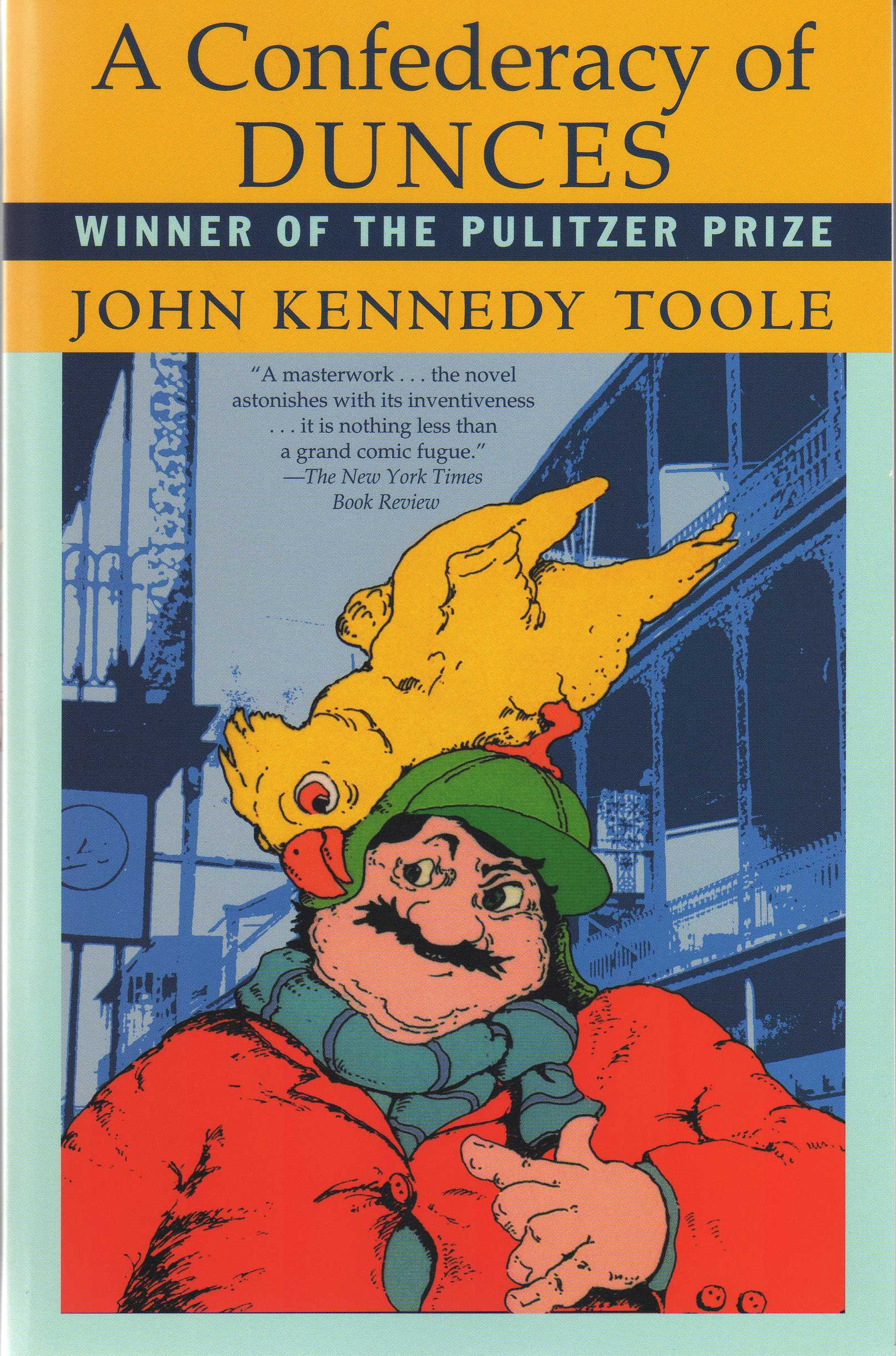
Review : A Confederacy of Dunces by John Kennedy Toole

(Original review posted on Goodreads:- December 23, 2012)

It's hard not to have preconceived notions about a book which was published after its author had committed suicide and went on to win the Pulitzer Prize.
And sometimes these notions may end up skewing our view of a book or even tend to drive feelings toward a specific direction.
But this book does not.
In fact, it engages you from the get go and as you get acquainted with each one of the ensemble of quirky characters you forget about everything else. You burst into spontaneous laughter at their antics, but also feel for their predicament.
A Confederacy of Dunces takes a look at the outer realm of the American society consisting of the weirdos, the oddballs, the poor, the destitute, the lower-ranked policemen, petty criminals, the strippers and 'immoral' stripbar owners, the working class, the minority groups.
Through the misadventures of Ignatius J. Reilly, our protagonist and a delusional, obese,self-obsessed 30-years old aberration of a grown man, the author spins a predominantly humorous tale revolving around a multitude of characters.
And by humorous I mean laugh-out-loud kind of humorous or the kind of humorous that can make you choke violently on the juice you had been unwise enough to sip on while reading this book. You have been warned.
But the book is much more than that - more like a social commentary disguised as a comedy. Hilarious, charming, witty, beautifully prosaic and a true modern classic.
If you suddenly find this book in your possession after this Christmas, consider that Fortuna spun your wheel exactly in the right direction.

5 out of 5 stars.

Related Posts Plugin for WordPress, Blogger...