Monday, October 28, 2013

Review : Life & Times of Michael K by J.M. Coetzee

**Winner of the Man Booker Prize in 1983.**
Star Rating:- 

Ask me to pronounce verdict on a work of literature flaunting self-indulgent wordplay, 
revelling in its own brand of avant-gardism which stops short of making a powerful statement on our troubled times and my response to it is likely to be lukewarm. 
Ask me to judge a book dissecting the greater human quandary with keen insight but in stilted prose, and my reaction is likely to be more or less the same. 

But give me a story capable of dismantling all the divides of race, culture, political/religious indoctrination, time and space, encompassing all the inner contradictions of our existence into a compelling commentary on human follies that elicits a very visceral, emotional response, and my being won over is practically guaranteed.

Reading Michael K's tale took me on one such heart-breaking metaphorical journey. At the culmination of which I realized that pitying the innocence of Michael Ks of the world who are repeatedly squashed like bugs under the bootsoles of the 'system' is but a foolish thing to do. Instead, I pitied the ones who are incapable of recognizing true misery when they see it, the ones who fail to identify the root cause of all human conflict and its futility, who pride themselves on their achievements which are, sometimes, nothing but grave mistakes in the greater scheme of things.

Inspite of being born with genetic deformities and other crucial handicaps like the absence of a privileged background, Michael K is a fortunate being in my eyes. Someone who doesn't baulk at staring truth right in the eye, a venerable hero stranded in the midst of cowards. He can summon the moral strength to shun the comforts of life, deprived of which each one of us are bound to wither away and die the pathetic death of an unwatered plant. He can seek refuge in the heart of the inhabitable mountains, combat starvation by feasting on insects and the cherished pumpkins he cultivates with the tender care of a mother. He is brave enough to eschew the path prescribed by the ones positioned on the top most echelons of the social hierarchy. He doesn't know which side to choose during a war. So he chooses life over death, physical misery over psychological enslavement, creation over destruction. Simply put, he deserts the company of men to embrace humanity.

"You are precious, Michaels in your way; you are the last of your kind, a creature left over from an earlier age, like the coelacanth or the last man to speak Yaqui. We have all tumbled over the lip into the cauldron of history: only you, following your idiot light, biding your time in an orphanage, evading the peace and the war, skulking in the open where no one dreamed of looking, have managed to live in the old way, drifting through time, observing the seasons no more trying to change the course of history than a grain of sand does. We ought to value you and celebrate you, we ought to put your clothes and your packet of pumpkin seeds too, with a label; there ought to be a plague nailed to the racetrack wall commemorating your stay here."

He understands the one thing that others are too cowardly or too ignorant to acknowledge. That laying the groundwork for a future way of life through ruthless violence blunts the human intellect to the point where one is only aroused by the urge to draw blood, inflict fatal injury and the application of reason loses its appeal.
Michael doesn't understand what a war is, so he struggles to flee the myriad horrors of it, clinging to the last shred of his dignity and his self-made definitions of right and wrong. As everything falls apart in the cities, in the labour camps, swallowed up by the chaos brought about during war, Michael busies himself with creating and rebuilding life in the countryside.

Thus, Michael is nothing but a representation of that slumbering voice of reason within each one of us, the voice of the dissenter, the voice of the one putting up a passive but stubborn resistance against the absurd, inhumane demands of society. And that is precisely the reason why this world needs more silent revolutionaries like him. 

P.S.:- My only grouse with Coetzee is his pedagogical compulsion to launch into a lengthy discourse expounding on hidden meanings, instead of having faith in the perceptive reader to grasp underlying implications. That caused me to take away that 1 star.

 photo C136E66569D294E4D5DA2D8124D4FF69.png

Wednesday, October 23, 2013

Review : Letter to a child never born by Oriana Fallaci

Originally published in 1975 by Rizzoli 
Republished on:- September 24th, 2013
Republished by:- Open Road Integrated Media 
Star Rating:-

Once in a while, I stumble upon an unheard of book written by someone who expresses everything I have ever felt and says it as eloquently and without any reservations as I would hope to someday. And I realize once again why reading is so vital to my existence. Only literature helps me make my peace with all the ugliness in the world and infuses me with the strength to carry on with whatever futile everyday doings I busy myself with in the hope that someone somewhere is summarizing the human condition with deep empathy and sensitivity, for me to derive my solace from.

Once in a while, I stumble upon an unheard of book written by someone who expresses everything I have ever felt and says it as eloquently and without any reservations as I would hope to someday. And I realize once again why reading is so vital to my existence. Only literature helps me make my peace with all the ugliness in the world and infuses me with the strength to carry on with whatever futile everyday doings I busy myself with in the hope that someone somewhere has summarized the human condition with profound empathy and insight, for me to derive my solace from.

Oriana Fallaci makes no pretensions in this book. Doesn't sugar-coat her attempt at shaking the very rigid walls that make up the citadel of patriarchy, doesn't shy away from tackling the entire spectrum of burning issues which if you proceed to discuss with friends and acquaintances even now in 2013, will earn you the raised eyebrows of some, urgently conducted hushed discussion of your 'morals as a woman' behind your back by others and vehement denouncement by the rest. And to think this brave war correspondent from Italy, who had removed the 'hijab' or 'chador' forced on her during an interview with Ayatollah Khomeini in Iran in addition to criticizing the imposed compulsion of wearing it, wrote this in 1975. (I am not going into the topic of her alleged Islamophobia)

A woman's right to her life over the life of her yet unborn child. Is there one?
And not just that. When do we say that life comes into being? At the moment of conception or in the ninth month and, in some cases, the seventh month when the foetus actually becomes viable?
How morally justifiable is it to ask a woman to behave, monitor her own mood changes, refrain from undertaking tasks which put a physical strain on her or treat her like an inanimate incubator designed to mold its existence around a foetus' needs? Is it okay to overlook the importance of the life of a full-fledged person of flesh and blood, with her own place in the world, taking only into consideration the hint of possibility of life that has taken roots inside of her? Given a choice, would an unborn child want to be born in a world like ours where a mother is unable to ensure her child's safety and well-being and slavery begins the moment we are liberated from our dark prison inside the mother's womb?

Oriana Fallaci writes with a poetic flair, fearlessly lending her voice to many questions which nearly all of us (specially women) battle with in solitude over a lifetime, but are often unable to articulate these ideas in front of an audience in fear of backlash by a predominantly conservative society. The central ideas are presented in the form of a young woman's internal monologue, in which she confronts her own fears, doubts, misgivings and suppressed anger while pretending to converse with her unborn child.

As I reached the end of the book I couldn't help but wonder if the irony of mostly men framing abortion laws in almost all nations of the world would have registered with the ones at the helm of matters if they had a copy of this book? Probably not. After all, a writer like Fallaci is more likely to be labelled a 'radical feminist' and her views snubbed coldly with a patronizing shake of the head without further thought.

I haven't 5-starred this book merely because it deals with a strongly feminist humanist theme or because it is so deftly written but also because it neatly presents a logical argument both in favor and in opposition of nearly every pronouncement of the pregnant woman. The unnamed protagonist's voice keeps shifting between the extremities of calm rationality and impatient resentment, sometimes making irrefutably cogent statements in front of an imagined jury silently judging her thoughts and actions, and sometimes just lashing out in cold fury at the unfairness with which the world treats her. 
She is as humane and prone to error as any one of us, which is why it is most important to acknowledge that our established notions of life, death and motherhood could be just as flawed.


**I received a free copy of the republished e-edition from Netgalley and Open Road Integrated Media**
___

Also posted on GoodreadsBooklikes and Amazon.

 photo C136E66569D294E4D5DA2D8124D4FF69.png

Monday, October 21, 2013

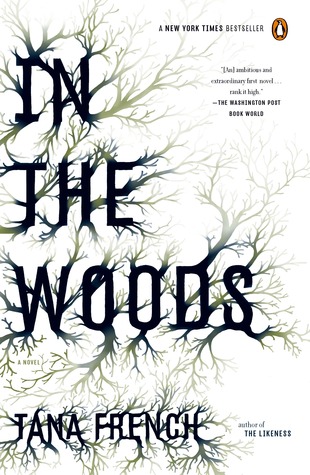
Review: In The Woods (Dublin Murder Squad #1) by Tana French

First published: 2007

Star rating:  


It's been two hours since I finished reading. I'm disoriented and emotionally drained, and turns out, home alone on a Sunday. I think my parents told me they were going somewhere but I honestly cannot remember where that somewhere is; I was just that deeply obsessed with reading this book.

In The Woods is too layered to be labelled as a crime-thriller or a mystery. It is not just a guessing-game of who did what to whom. It is an exploration of what this guessing-game does to the people involved, from the ones left behind to deal with the ramifications to the ones responsible for doling out justice - and what better way to do that than tell the story through the eyes of a man who plays both roles at the same time.

In the Woods is a very unusual book. It has this lovely subdued feel to it, which I absolutely loved. It was everything I did not expect - unhurried, reflective, gorgeously written. There are two crimes involved but Tana French does not sensationalize either one. What she does instead, is create complex, real characters and build the dynamics between them. She makes you care about the players and not the game, so even when the whole thing wraps up and the verdict is out, you don't stop caring. You don't forget.

There is a big question-mark at the end that I'm sure will frustrate a lot of readers but I liked that note of incompleteness. I'd rather be left with a question that has room for hope than be left with an answer that is definite and ugly.

This book is not a high-action nail-biter. It is quiet and sad, but I can guarantee that it will linger in your memory way past the last page.

Added bonus: The writing is just wow.

These three children own the summer. They know the wood as surely as they know the microlandscapes of their own grazed knees; put them down blindfolded in any dell or clearing and they could find their way out without putting a foot wrong. This is their territory, and they rule it wild and lordly as young animals; they scramble through its trees and hide-and-seek in its hollows all the endless day long, and all night in their dreams. 
They are running into legend, into sleepover stories and nightmares parents never hear. Down the faint lost paths you would never find alone, skidding round the tumbled stone walls, they stream calls and shoelaces behind them like comet-trails. And who is it waiting on the riverbank with his hands in the willow branches, whose laughter tumbles swaying from a branch high above, whose is the face in the undergrowth in the corner of your eye, built of light and leaf-shadow, there and gone in a blink? 

If this snippet from the prologue doesn't convince you to give this book a try, I don't know what will.


Friday, October 18, 2013

Review : Chronicle of a Blood Merchant by Yu Hua

First published:-1995
Star rating:- 

I have anemia and irrespective of what comprises my daily diet or the amount I consume, my body's ability to manufacture blood and hemoglobin remains permanently stunted. Which is why I have no choice but to take iron supplements regularly and without fail. 
Once I suspend this routine for a few days, the dizziness, the lack of vigour returns to haunt me with a vengeance. 

So perhaps, it is a travesty of the highest order that I will now proceed to empathize with the protagonist's compulsion of selling his own blood away like a commodity to procure a few Yuan for his family's well-being. 
I am supposed to wax eloquent about how moving an account this is of the mishaps that befall a family, mainly due to the policies implemented by a cruel, unfeeling administration divorced from the needs of the common man.
I do know a thing or two about being bloodless but then I have no first-hand knowledge of suburban and rural poverty in China preceding and succeeding the years of the Cultural Revolution. Hence, I don't deserve to frame a few pompous sounding sentences in a review depicting the hardships of Xu Sanguan and his family and express commiseration. Because come what may, I'll never be able to experience what it feels like to be in his shoes. Even if my family falls on hard times, I'll promptly be shooed away from hospitals or laughed at if I ever did try and sell/donate my blood.

How can I understand destitution, sitting here inside an air-conditioned room typing away patronizingly at a desktop after having read a book on my kindle? I don't know the first thing about working on an empty stomach in a silk factory. Or being forced to savour a bowl of thin corn flour gruel laced with sugar like the finest gourmet dish in existence during a terrible famine. Or having to sell blood and, in turn, risk selling my life away in order for my family to get over a crisis. Or having my life's basic structure re-modelled according to the whims of a delusional autocrat.

But what I do perceive with shocking certainty is the giant, looming shadow of Chairman Mao's legacy of despotism and how deeply it affects the work of writers from this fascinating country. 
It is becoming increasingly hard to imagine coming across literature from and about China devoid of any mention of the Communist Party's history of corruption and the blunt indifference with which they stripped away a generation of people of their dignity as human beings, treating them almost like laboratory mice.

Xu Sanguan goes through life, fights his daily battles with various adversities without knowing the first thing about Communism, Socialism or Capitalism. He only wishes to provide for his family and survive, remaining largely clueless about the political upheavals in his own country or their significance in the greater scheme of things. Forget politics, he only identifies with the English letter 'O' as a circle which denotes his blood group. Such is the extent of his guileless ignorance.

He can only know what being in the throes of starvation feels like and what it is like to be in perpetual need of one thing or another. Concepts like subversion, revolution, agitation or questioning the legitimacy of a regime or higher authority are alien to him.
And yet innocuous as his existence is, ripples of political disturbances outside the realm of his comprehension bring turbulence into his own minuscule sphere of existence. He suffers and we suffer along with him.

Chronicle of a Blood Merchant showcases no instances of ostentatious wordsmithy or lucid erudition. Instead, Yu Hua often resorts to crude metaphors to bring to life the rustic simplicity of the backdrop against which the story unfolds. But what catapults this into the league of great literature is its endearing honesty and its attempt at remaining true to the spirit of an age and a nation caught in a painful phase of transformation. Sanguan's bloodlessness is rife with underlying implications. It is his steady depletion of vitality which symbolizes the silent misery of a generation.

And yet, this book stresses not so much on an anti-communist rhetoric as much as it directs its energies at narrating a tale of blood ties and a family's quest for survival in the face of all imaginable trials and tribulations. A family which couldn't care less about Mao remaining in power or Mao being deposed. 

Because to the Xu Sanguans of China, all meaning in life lies embedded in a crock full of bug-free rice and a few Yuan which can buy them the luxury of gorging on fried pork livers and gulping down a few shots of cheap yellow wine.


4 stars out of 5.
 photo C136E66569D294E4D5DA2D8124D4FF69.png

Wednesday, October 16, 2013

Eleanor Catton wins the Man Booker

Way to win an award in style, woman. Not only is Eleanor Catton the youngest Booker winning author in history (at 28) but she has also won the award for the longest novel in Booker history.

At 832 pages, The Luminaries is the longest novel to be ever awarded the Man Booker Prize.


Aww someone is all smiles. 


Quoting from The Telegraph:-

"Catton, 28, beat competition from Colm Tóibín, NoViolet Bulawayo, Jhumpa Lahiri, Ruth Ozeki and the favourite, Jim Crace, to be awarded the £50,000 prize by the Duchess of Cornwall at a ceremony in Guildhall in London.The author began The Luminaries, her second novel, aged 25, and has eclipsed the previous youngest recipient of the award, Ben Okri, who won aged 32 in 1991."

Well heartiest congratulations to Ms Catton. Now I may have to read this after all.

 photo C136E66569D294E4D5DA2D8124D4FF69.png

Monday, October 14, 2013

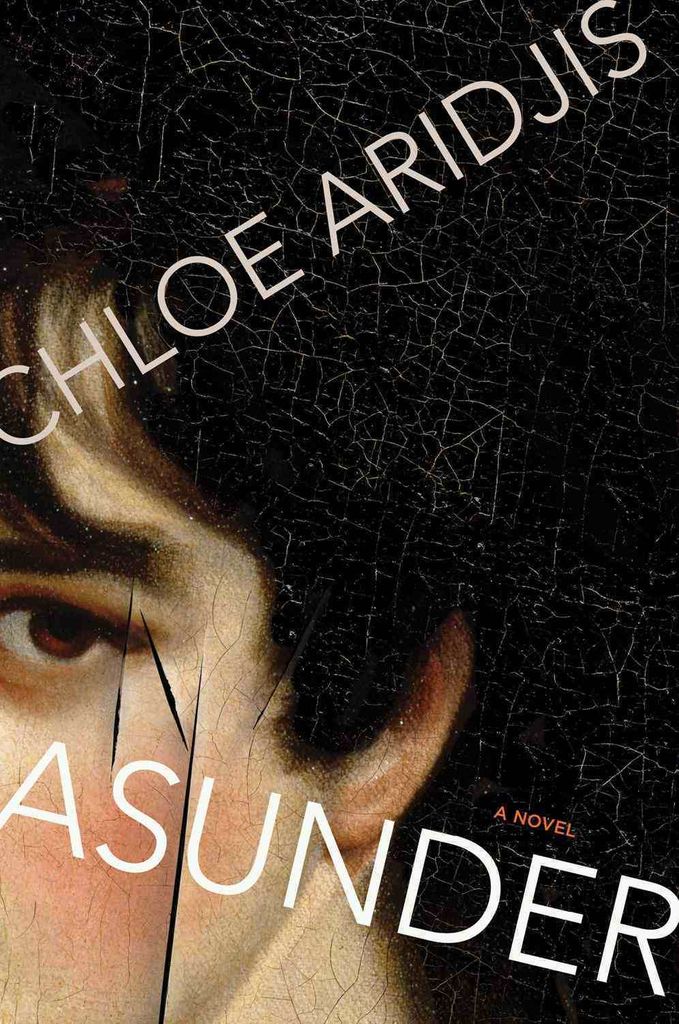
Review : Asunder by Chloe Aridjis

Publisher:-Houghton Mifflin Harcourt
Published on:-September 17th, 2013

A vague sense of foreboding persistently stalks the reader on every page of this narrative, as if something potentially dangerous and forbidding awaits one at the turn of the next page. But then the pages fly by, nothing truly nefarious ever materializes and the feeling finally settles in that the substance of this narrative lies not in a likely event of cosmic importance or even in the anticipation of its occurrence but in the minutiae a reader usually glosses over.
The everyday happenings, some of them mystically inexplicable, some of them a little odd but so commonplace that they do not merit even a second thought let alone further introspection - the things we breeze past in an effort to dwell on the more materially satisfying aspects of life without realizing that each one of these discrete snippets of time spent with people in places is what makes up the structure of life itself.

As I glanced at the blurb (which clearly does not do the book justice even as a half-hearted synopsis), I felt a stab of sympathy for whoever wrote it (author/publisher/random intern), because not only is it very difficult to clearly define the contours of this book but it is equally trying to put one's finger on one strongly resonant theme in it since there are many.

There's the subject matter of the suffragettes (the term used for women campaigning in Britain in the late 19th and 20th centuries for the female ballot) and a young Mary Richardson who had taken a blade to assault one of the priceless works of art in the National Gallery on the eve of the First World War while Marie's great-grandfather Ted was a guard at the museum. It's no coincidence that our protagonist is the namesake of this revolutionary since the shadow of Mary Richardson's act of bravado looms large over Marie's life, silently influencing her in ways she remains oblivious to.
Hence it can be stated that feminist undertones are delicately woven into the the narrative without being glaringly obvious.

There's also an overarching feeling of the protagonist's unnerving indifference to most things, her tacit refusal to take the wheels of her own life and letting herself be propelled by happenings and the decisions made by people around herself. In the beginning I was speculating on the possibility of some sort of unique psychological condition plaguing her in an attempt to convincingly explain her aloofness from life or what could even be called her cowardice. But by the end of the narrative, I realized, a little bit of Marie's dogged impassivity lives inside all of us.

She is haunted by the spectre of her own isolation in the midst of people and her inability to steer her life in the direction of romantic entanglements and fulfillment of any kind. As a guard at the National Gallery in London, Marie comes across many visitors from day to night who spend agonizing minutes peering over works of art which have been witness to centuries of history. With the passage of time, she starts equating the cracks and fissures showing up in the fabric of her life with the craquelures in the paintings. And finally when she confronts her own hesitations after an enigmatic encounter with an owner of a chateau in France, the reader is left with the parting message that Marie has finally summoned the courage to destabilize the status quo in her life just as a certain young Mary Richardson of yesterday had dismantled the status quo in the socio-political landscape.

Chloe Aridjis is a gifted story-teller. Her writing is richly atmospheric and often plays out like a discordant symphony, combining too many erratic musical notes together and yet sounding so perfectly melodious. Same can be said about her choice of original but beautiful metaphors.
"It began with those viragos, he'd tell me, comets detached from the firmament, deviant and sharply veering, long-haired vagabond stars, hissing through the universe on their solitary paths, a tear in the social fabric, threats to the status quo. Yes once war broke out, Ted said, their battle eclipsed by larger events, became no more than one of many lit matches in the stratosphere."
This book made me feel thankful for my relationship with Netgalley which has allowed me to discover such promising new female authors as Chloe Aridjis and Nina Schuyler. In other words, this is very highly recommended.

4.5/5

Also posted on GR:- https://www.goodreads.com/review/show/698912348
Also posted on Booklikes:- http://samadrita.booklikes.com/post/612329/review-asunder-by-chloe-aridjis

**with thanks to Netgalley and the publishing house for providing me with a free copy of the e-edition**
 photo C136E66569D294E4D5DA2D8124D4FF69.png

Saturday, October 12, 2013

Review: The Wind-Up Bird Chronicle by Haruki Murakami

If I were to use only one word to describe this book, I would type the word 'brilliant' a million times with each letter in CAPITALS and fill up the entire word length of this particular space.

In all its sensitivity, emotional depth and keen understanding of the complications of the human mind, this is a stellar work of literature and a tour de force in itself. I cannot go ahead and say it is Murakami's magnum opus (it is not his longest novel), since I haven't finished with all his translated works and besides he is only 63 and I expect him to keep writing books for as long as it matters, each one better than the last. But I'm forced to admit that of the 7 Murakami books I have had the fortune to read so far, this one stands out as the most gripping, most cerebral yet compassionate commentary on loneliness and human misery. 

In this particular novel, Murakami stitches together a handful of seductively beautiful vignettes to form a magnificent larger than life image, that does not only represent a story of a particular individual but recounts the tales of many. Seemingly unconnected at first, these numerous subplots coalesce together in a solid clincher of an ending - a humongous task but performed with elan by the masterful surrealist.

It is a story of a marriage which is falling apart slowly but steadily, a moving depiction of the horrors inflicted on humanity during Japan's occupation of Manchuria and the forgotten battle of Nomonhan, a mystery thriller, an exploration of the inherent darkness within each one of us and a man's path to self discovery all combined into one.

Newly out of work, Toru Okada is leading a peaceful life with his wife Kumiko when his carefully organized world starts to crumble bit by bit. His wife goes missing without a hint, the sociopathic brother-in-law he despises with a passion is emerging as a compelling figure in Japanese politics and he begins encountering queer characters one after the other, each of whom seem to be twisted individuals but guide him towards solving the mystery of his wife's sudden disappearance. And thus begins a most intriguing tale of Okada's journey through an intricate labyrinthine path stretching across time and space, the real and the surreal, where he goes through a set of bizarre but enlightening experiences.

It is difficult for me to say anything more about the plot simply because it is impossible to summarize a Murakami novel or to express all the emotions a reader goes through in such a short review. Honestly I could write a whole damn book if I'm to review every aspect of one particular Murakami novel.

All this time I had subconsciously developed an intense desire of knowing Murakami's opinions on Japan's infamous role in World War II. This book surprised me pleasantly by giving me exactly that and I'm not disappointed with his view. 
Instead of taking a stand, Murakami describes a few scenes of extreme violence with precision and calculated neutrality and pushes the reader to form his/her own opinion. He does not try to absolve the Japanese of the unmentionable crimes they committed against the Chinese but at the same time offers a very human perspective of the trail of death and devastation. For example, when a Japanese veterinarian, serving as the director of a zoo in Manchukuo is being made to watch the gruesome killing of 4 Chinese rebels with bayonets, Murakami sums up his feelings in the line:-

'He became simultaneously the stabber and the stabbed.'
I don't think he could have created a more moving picture of the ruthlessness of war or the unimaginable horrors it spawns. If the Japanese were ruthlessly brutal, so were the rest - the Soviets, the Mongols and every single human being who killed or tortured another in the name of war. He also hints at the accountability of those at the helm of matters, seated somewhere in their immaculately decorated offices, dressed in dapper suits, making decisions which alter the course of humanity for the worse and bring about disastrous consequences for the rest to face.

This is perhaps the only Murakami novel which has a very strong element of mystery at heart and which ends with a satisfactory resolution of sorts. 


Final rating :- 5 stars and no less. Hell, I could've given it a 10 stars out of 5 if possible.

P.S:- So Murakami didn't win the Nobel this year either, but that's okay because in the heart of every devoted Murakami lover, he has been given the Nobel a million times over already.


 photo C136E66569D294E4D5DA2D8124D4FF69.png
Related Posts Plugin for WordPress, Blogger...