First published:-
2006
Star rating:-
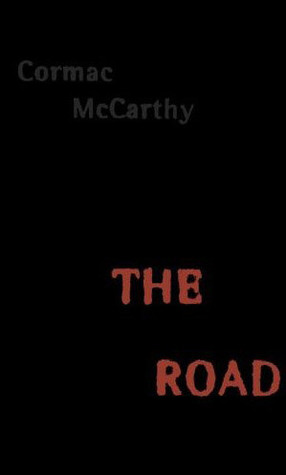
 Terror. Stark naked, clear as the day and indelible in its intensity. Terror that turns its unflinching gaze on you, commanding you to quake in your boots and disintegrate into pieces. This book is that kind of cold dread that seeps into your blood like insidious venom and drains away your strength in a steady, agonizing trickle as you read along. The horror of being stranded in a world, where the living live on either to become sustenance for other survivors or to hunt and feast on fellow brethren to survive, becomes as real as the morning sunlight pouring in to your room through the gauzy curtains.
The trouble with dystopian fiction (literary and otherwise) is that if you have read one book from the genre you have pretty much read them all. And the rather unabashed confession I have to make in this regard is that I have read quite a lot of them - this is the 'guilty pleasure' I am not really guilty of indulging in once in a while. But when the focus of the discussion on dystopias shifts to a universally read book like 'The Road' then opinions range from acerbically negative criticism, a patronizing, reluctant pat on the back to disappointed neutrality and effusive praise. Cormac McCarthy's prose has also garnered less than enthusiastic responses from quite a significant number of reviewers. I suppose some thought his metaphors to be too flowery for their taste. While the rest have found him to be repetitive and dull.
Fair enough. But I did not.
To bring to life a world, where there's nothing left to do except scrounge around for nourishment, it is obvious the author will be hard pressed to elaborately detail the act of unscrewing a jar top and drinking from it. The monotone adopted while chronicling these trivial actions conveys the chilling truth of how much gravity is being accorded to affairs considered undeserving of even a passing mention in a former way of life.
Thus, I refuse to join in the chorus of complaints. The very visceral and undiluted reaction the narrative elicited from me as a reader, caused me to refrain from belittling McCarthy's gift for utilizing the same old genre tropes to offer such insightful commentary on the human condition. And despite its bleak and nihilistic leanings, 'The Road' surprised me with its deft handling of a subject as sensitive as a parent-child relationship, a theme that is often explored in many fictional narratives but with varying degrees of success. More than any tear-inducing gimmickry, the relationship depicted here bears a frighteningly close resemblance to how things are in reality.
Our two unnamed vagrants, a listless father-son duo, who move down this seemingly endless road strewn with the debris of a world long gone and the echoes of a way of life no longer preserved, seemed to me to be representatives of a large majority of humans. The father acts as a kind of misery-sponge, enduring the brunt of all the vicissitudes of fate that await them on this cruel and unforgiving peregrination, while shielding the son from the same. And as the toil of this godforsaken journey wears the parent down to the point of no return, the child is familiarized with the brutalities of the world at large and gently shown the ways in which one can side-step all the unpleasantness and maintain an existence without challenging authority in any form. Isn't this what a majority of humans have been seeking to accomplish on an infinite loop? 'Survive and don't ask for trouble in any form.' is the motto etched onto the blank slate of our minds since childhood.
All the horrors lying in ambush for this father-son pair, starting from chance encounters with roving bands of cannibals to combating the evident threat of starvation and the bitter cold which freezes them to the bone, can be taken to be allegories of all the challenges of living that individually all of us have to contend with. The metaphorical road is just another minefield where one can never foresee the kind of evils one wrong step may unleash. All the lawless laws, by which the world is governed once the formerly established edifice of order and organization has crumbled to dust, are deeply reminiscent of the relentless cycle of injustices institutionalized by our so-called 'civilization'. Just as the weak are preyed upon and devoured alive in this dystopia, the downtrodden and oppressed are victims of a sort of economic cannibalism enshrined in the 'laws' of our reality.
The scales are tipped ever in the favor of those who wield power in some form; in this dystopia it is the possession of a weapon, in ours it is the ownership of wealth.
"The last instance of a thing takes the class with it. Turns out the light and is gone. Look around you. Ever is a long time. But the boy knew what he knew. That ever is no time at all."
It disturbs me how near invisible the line of separation between an imagined dystopia and a real one is.

First published:- April 1st, 2014
Published by:- Spiegel & Grau
Star rating:-  What your mind dredges up from memory and consciousness upon the utterance of the word 'Vietnam' is wholly predictable. That naked girl child of Trảng Bàng fleeing a napalm attack in terror, her scream silenced by the stillness of the well-known picture you have glanced at time and again or the grotesque image of blood-soaked bodies heaped by the side of a rice field in My Lai that continued to burn like a stinging slap across the face of the American administration long after the troops had pulled out of Vietnam. But the sheer tragedy of a nation being whittled down to the status of being defined by an ill-famed proxy war and a trendy word with an 'ism' at the end, has its roots in our collective apathy.
Marguerite Duras' Indo-China (as described in her fictionalized memoir The Lover) was a place inextricably linked to the abuse of her childhood years, a cultural melting pot, an eerie and exotic landscape which served to simultaneously heighten and assuage her mental anguish, a nation still resigned to being seen as just another jewel in the crown of Europe. But Violet Kupersmith's Vietnam is the hum of the life force coursing through her veins; the horror and beauty that this culture encompasses, a hand-me-down from her ancestors. And it is this Vietnam, we have not cared enough to know, which inhabits these short stories. The tinge of paranormal intrigue and the elements of suspense are merely there to help you keep turning the pages with ease but it is the landscape itself which towers above the set of native Vietnamese characters and the Vietnamese diaspora in the U.S., metamorphosing into a humanly protagonist narrating a melancholic tale of personal woes.
The water nymph boarder of Hotel Frangipani, the ailing old Mrs Tran whose time on earth runs out while waiting for her now-American daughter and grand-daughters to visit her from far off Houston, the soldier-turned-calligrapher who cannot banish the horrifying memories of accidentally killing a civilian girl while serving the Viet Cong, the septuagenarian who involuntarily undergoes a morbid transformation into a giant python at times and ends up recounting the story of his life to a random Vietnamese American teen, the white girl who works at the American consulate in Ho Chi Minh are many among the imaginary guides that Ms Kupersmith designates to familiarize readers with an assortment of folktale-ish stories with elements of horror as the common running theme.
To quibble, some of the stories have been fashioned in an amateurish way in which character tropes such as the thoughtful, unattractive, fat sister and the insensitive, skinny one and the ignorant, condescending American tourist abound. But the structural and thematic integrity of the remaining stories made up for the flaws of the former and caused my 3 stars to be elevated to 3.5 stars.
Subtlety isn't Ms Kupersmith's strongest suit but her writing serves as a good example of potency of theme and plot surpassing the need for linguistic adornments at times and a rude reminder of my little to no knowledge of Vietnam sans the 'war', an oversight which needs to be remedied post haste.
___
Review also posted on Goodreads & Amazon.
First published:-
1980
Star rating:-
 I wonder what Carl Sagan may have thought of 9/11 and the world in the new millennium, a strife-torn place which is being shaken up and shaken out every moment. I imagine the civil but slightly horrified and slightly bemused tone he may have employed while talking about the Iraq and Afghanistan wars and the antics of the Bush administration which have become such excellent fodder for stand up comedians the world over. And I can almost detect the note of boyish enthusiasm in his voice while he may have spoken of the Higgs Boson and explained the reasons behind the incorrect observation readings of the 'neutrinos being speedier than light particles' experiment that had made the headlines a few years ago.
I can only imagine because he wasn't there to witness these watershed events and he isn't here to offer comment, criticism or share his inexhaustible repository of knowledge with us any longer. His time in the Cosmos had run out within two decades of the publication of this work - a testament to his own belief in the staggering inferiority of our evanescent lifetimes in the scheme of the universe(s).
"Our familiar universe of galaxies and stars, planets and people, would be a single elementary particle in the next universe up, the first step of another infinite regress."
It would be nice if I could summarize each one of the 13 chapters of 'Cosmos' and give readers the lowdown on our painstakingly slow but rewarding crawl through the fabric of space and time, the civilizational hurdle race towards a finish line which we can neither begin to envision nor fully comprehend yet.
I could write a review in the conventional format, leaving you with a gentle nudge to read this book as soon as you can.
Or, instead, I could simply write about how, despite being more than 30 years outdated, Carl Sagan's voice of reason rings truer than ever, cutting through the heart of all the din and chaos of our troubled times. I could just tell you how Sagan's deep and abiding love for nature and humanity reverberates in every page of this work and how our scientific endeavours across timelines and geographical boundaries, across the unending void which surrounds us on all sides, symbolize our collective pursuit of knowledge.
"There is no other species on Earth that does science. It is, so far, entirely a human invention, evolved by natural selection in the cerebral cortex for one simple reason: it works. It is not perfect. It can be misused. It is only a tool. But it is by far the best tool we have, self-correcting, ongoing, applicable to everything. It has two rules. First: there are no sacred truths; all assumptions must be critically examined; arguments from authority are worthless. Second: whatever is inconsistent with the facts must be discarded or revised."
The Cold War is a now defunct appendage of our history, the Soviet Union is no more, America has achieved a milestone in its race relations by welcoming its first Black President. But turmoil in the world order persists - the nuclear arms race between the Americans and the Soviets has been replaced by a newer dance of dominance in the Asia Pacific region. The world is as much embroiled in a mesh of steadily growing list of challenges as it was in the past, if not more. Preposterous decrees issued by fanatical outfits, blatant human rights violations, infringement on freedom of speech and expression, diplomatic arm-wrestling, the ever-enthusiastic decriers of science, 'War on Women', the shouts of the global-warming deniers reign supreme still. The players may have changed faces but the game of petty one-upmanship in the arena of global politics still continues unabated.
Which is why Sagan's rousing call for all of mankind to unite under the identity of citizens of the Cosmos and not as citizens of a nation moves me to the core of my being. His recapitulation of our scientific advancements achieved against the tide of adverse circumstances, of the victories won in the face of persecution by religious authority, impresses upon us a sense of urgency - that with the exponential increase in the defense budgets of the global powers, the incentive given to the greatest minds of our times to devote time and energy to unraveling the mysteries of the Cosmos is reduced. As the concept of 'nuclear deterrence' receives a pat on the back, the global arms sales numbers continuing to soar despite hollow promises of arms control, more and more scientists are being engaged in improving weapons technology rather than validating the fact of our existence against the intimidating presence of the stars, galaxies and universes. The NASA budget cuts of recent times are proof of this ignominy.
Is it to this end that the ancient advanced cities like Alexandria, the destroyed civilizations of Ionia and the Aztecs and pioneers such as Eratosthenes, Democritus, Aristarchus, Hypatia, Leonardo da Vinci, Copernicus, Galileo, Johannes Kepler, Tycho Brahe, Christiaan Huygens, Issac Newton and Albert Einstein worked tirelessly for? To further intensify mutual national antagonism and increase our probability of complete self-annihilation?
Sagan thinks not.
"Our loyalties are to the species and the planet.We speak for the Earth. Our obligation to survive is owed not just to ourselves but also to that Cosmos, ancient and vast, from which we spring."
This is why I can't help but agree quite heartily with someone who says 'If I had a religion, I would be a Carl Saganian.'
"If a human disagrees with you, let him live. In a hundred billion galaxies, you will not find another."
If there is only one worldly diktat we must abide by with unquestioning faith, let it be this one.
First published:- 1914
Star rating:-
A languid, melancholic dream of a novel which pierces the heart of the reader with its quiet intensity.
Cautious in its narrative tread on the ground of contentious issues, delicate in its broaching of subjects like the indignity of death, sin and redemption, existentialist ennui, self-recrimination and misanthropy, 'Kokoro' is a masterful recounting of a tragedy which unfolds against the backdrop of the dying years of the Meiji era. As Emperor Meiji breathes his last taking along with him the anachronistic echoes of an obsolete way of life rigidly shackled by the conservatism of the isolationist years, a hesitant Japan steps into the welcoming embrace of modern day materialism while simultaneously waging an inner war with the self-denying Confucian ideologies of its past.
A mysterious and scholarly middle-aged man only referred to as 'Sensei' meets our young protagonist in a chance encounter and the unique mentor-protege bonding, that forms between them subsequently, brings an indescribable joy and solace to both. While 'Sensei' eventually summons the courage to confess to past wrongdoings in a letter to the young man he barely knows and attains a kind of salvation through a self-imposed exile from society, his unnamed protege learns to look past the horror and agony of slow bodily death and accept the natural order of things. A powerfully written spiritual inquiry into the corruption of the human soul, an elegant acknowledgement of the juxtaposition of mournful endings and optimistic beginnings and a testimony to the fragility of human lives.
First published:-
1961
Read in:-
January, 2014
Star rating:-
 Henry Louis Vivian Derozio is a name possibly not known or cared for beyond the frontiers of India.
At the tender age of 17 this man of Anglo-Indian descent, possessing a sharp intellect and an even sharper tongue, was already a Professor of English Literature and History, busy influencing a group of eager, well-bred young men hailing from affluent Bengali families in Calcutta. He became a leading figure in the age of socio-cultural reform movements in Bengal in the dawn of the 19th century through his dissemination of Western philosophical and scientific ideas at a time when our society was stagnating in a cesspool of ignorance and blind prejudices. And his close-knit group of brilliant young students of the Hindu College who were referred to by the smart moniker of'Derozians', much in the same manner of the ill-famed 'Brodie set' of TPOMJB, were viewed with as much suspicion as unacknowledged respect. But following the pattern of reception of new ideas which are regarded 'radical' and therefore dangerously subversive in their times, Derozio was expelled from the Hindu College and this in turn applied an abrupt brake on the Young Bengal movement.
As much as my teenage self had looked upon the Derozio name and his legacy with a kind of starry-eyed deference, post-acquaintance with a fictional educator as sociopathic and ambiguous as Miss Jean Brodie, I am forced to view this whole idea of an inspirational teacher weaning a student away from conventional methods of learning with utmost skepticism. No I do not intend to overlook Derozio's small but significant contribution to the collective betterment of our society of the times which in turn greatly aided the nationalist movement later on. But maybe, it will be wise to probe deeper for the unadulterated truth rather than be so guilelessly accepting. I am sure both Muriel Spark and Derozio himself would have approved.
Young, impressionable minds being shaped according to someone else's personal standards of nauseating elitism and if one is unlucky enough to fall under the spell of some conniving Miss Jean Brodie in her prime, being sucked right into a sinister trap.
What a slippery slope this is! This setting about to correct the course undertaken by a young learner under the facade of challenging conformity, with a perverse sense of authoritarian entitlement.
'I know better than you, therefore you must follow my instructions.'
In the way of Miss Jean Brodie's attempts at manipulating adolescent girls into competing with each other to be made a part of her venerated 'crème de la crème', people of insidious intent devise ways of propagating some attractive piece of ideology with confident pronouncements of it being the 'path of righteousness' and all that familiar drivel.
Which is why I now realize how treacherous traversing this distance between not knowing and knowing a little better is - there's no way to fill up the vacuum of ignorance other than with information in any form that is available nearby and you better hope that pedagogical influence of the likes of the magnetic Miss Jean Brodies of the world does not hold free reign in the vicinity at the time.
"Give me a girl at an impressionable age, and she is mine for life."
It's been a while since something quite as innocuous sounding as the above claim has left me feeling so deeply unsettled.
First published:- 1997
Read in:- January, 2014
Star rating:- 
As I stand just outside the compound with the untended garden, an uninvited, random visitor, the darkened Ayemenem House resembles a haunted mansion, belying the truth of the lives it once nurtured with maternal protectiveness in its cozy interiors. Derelict. Abandoned. Forgotten.
But I remember, you see. I remember the lives lived, and the loves which were birthed by circumstances, loves which breathed for a while before perishing on the altar of conformity.
I remember Chacko and Sophie Mol. Ammu and Velutha. Rahel and Estha.
And, most of all, I remember You. You, the painter of this portrait of a family's downward spiral into oblivion. You, the creator of this life-sized painting of a city and a nation, and all of human civilization in turn.
I see You as an iconoclast, persistent in your demand for liberties we are too submissive to dream of acquiring. You ask for things so heedlessly, so powerfully. The right to love whom we want and how much we want. The right to be equal. The right not to be discriminated against. The right not to be left languishing in solitude, battling painful memories. The right not to lose, at any cost, one's faith in the goodness in human beings.
You are the rebel we never considered becoming. We do not have courage like yours, you see.
(Your opinions aired on national television are so often misinterpreted. Deliberately. Craftily.)
The sun, inside of You that refuses to be subdued by the drear of political machinations, by the evil lurking in the human heart, by the sham of 'development' perpetrated under the helpful charade of inexistent liberty, equality, fraternity, by every one saying 'No no no, you ask for too much. The world cannot ever be a fair place.', sent a little light my way.
That light gives me hope. Your Small God gives me hope.
He augurs that the overlooked small, mundane cruelties will only snowball into a tragedy of life-altering proportions later on, a gigantic boulder hurtling down the slope of a mountain crushing everything in its path into an unrecognizable gory pulp of flesh and blood. Small God's wrath will eventually consume Big God's apathy and reduce it to mere cinders.
I hope your Small God is right.
You speak the esoteric language of children, whose inner worlds are but their own, beyond the reach of the sharpened claws of the Love Laws - worlds which are free and infinite, where fables, dreams and terrifying realities churn into a nonsensical lovely mass, worlds untethered to earthly considerations. The two-egg twins' interlinked worlds, which stubbornly rejected the continued tyranny of the cycle of injustices perpetuated outside, were the same.
Their combined muteness throbbed with the dull ache of longing, loss and irreparable damage. Their collective passivity stood out as a blistering denouncement of humanity always coming second to zealously preserved blind prejudices. And You spoke through Rahel and Estha's silence which rung much louder than a giant church bell chiming away nearby.
We stew in our own insecurities and the irrelevance of small personal outrages, unable to take a step forward, helpless captives in the iron grip of the status quo of the world. While You, Ms Roy, take up your pen and fearlessly hail The God of Human Dignity, Empathy and Love - The God of Small Things.
So in this space, I thank that God for the Arundhati Roys of the world.
First published:-1985
Read in:- August, 2013
Star rating:-
Consider this not a ground-breaking work of literature. Consider this not a piece of fiction boasting an avant-garde mode of narration.
Consider it not a commentary on the concept of subjugation of the weak by the ones holding the reins. Consider it not a thinly veiled feminist diatribe either.
Instead, consider The Handmaid's Tale an almost physical experience. Consider Margaret Atwood a fearless deliverer of unpleasant news - a messenger unafraid of dishing out the bone-chilling, cruel, unaltered truth and nothing but the truth.
Move over Bram Stoker. Move over H.P. Lovecraft. Fade away into oblivion, Edgar Allan Poe. Disappear down the depths of obscurity, Stephen King. Your narratives are not nearly as coldly brutal, your premonitions not nearly as portentous.
Because Ms Atwood, presents to us something so truly disturbing in the garb of speculative fiction that it reminds one of Soviet-era accounts of quotidian hardships in Gulag labour camps.
Speculative is it?
Aren't the Offreds (Of Fred) , Ofglens (Of Glen), Of warrens (Of Warren) of Gilead equivalent to the Mrs So-and-So-s of the present, reduced to the identity of their male partners? Isn't the whittling down of a woman to the net worth of her reproductive organs and her outer appearance an accepted social more? Isn't blaming the rape victim, causing her to bear the burden of unwarranted shame and social stigma a familiar tactic employed by the defense attorney?
Hasn't the 21st century witnessed the fate of Savita Halappanavars who are led to their untimely deaths by inhumane laws of nations still unwilling to acknowledge the importance of the life of a mother over her yet unborn child?
Doesn't the 21st century have materially prosperous nations governed by absurd, archaic laws which prohibit a woman from driving a car?
Doesn't the world still take pleasure in terrorizing activists like Caroline Criado-Perez with threats of rape and murder only because they have the audacity to campaign for female literary icons (Jane Austen) to become the face of Britain's 10-pound note?
Do I not live in a country where female foeticide is as normal an occurrence as the rising and setting of the sun?
Are we still calling this speculative fiction?
Some may wish to labour under the delusion that the women belonging to this much vaunted modern civilization of ours are not experiencing the same nightmare as Offred and are at perfect liberty to do what they desire. But I will not.
Because when I look carefully, I notice shackles encircling my feet, my hands, my throat, my womb, my mind. Shackles whose presence I have become so used to since the dawn of time, that I no longer possess the ability to discern between willful submission and conditioned subservience.
But thankfully enough, I have Margaret Atwood to jolt me back into consciousness and to will me to believe that I am chained, bound and gagged. That I still need to break free.
I thank her for making me shudder with indignation, revulsion and righteous anger. I thank her for causing bile to rise up my throat.
And I thank her for forcing me to see that women of the present do live in a dystopia like Offred's United States of America. We just prefer to remain blissfully blind to this fact at times.
Disclaimer:- I mean no disrespect to the other writers mentioned in this review all of whom I have read and deeply admire.