Showing posts with label Tear Jerkers. Show all posts

Thursday, December 11, 2014

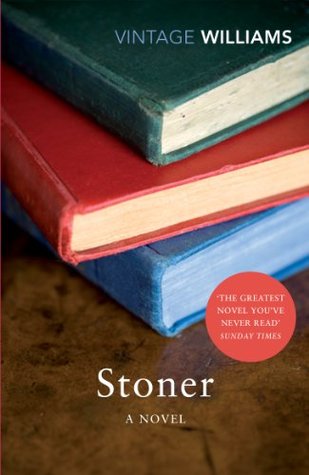
Review: Stoner by John Edward Williams


First published:-1965

Republished by:- Vintage Digital, 2012

Star rating:-

“Most men lead lives of quiet desperation and go to the grave with the song still in them.” - Henry David Thoreau

The triumph of this work lies in its self-effacing world-weariness, its tone of presupposed indifference even to the prospective reader's concerns. Like the inexorable stoicism of its protagonist in the face of misfortune and persecution, the narrative revels in its own lacklusterness, its state of diffused melancholy. 
William Stoner, first student and eventually English professor at (fictionalized) University of Missouri lives a life of flawed choices, unrealized potential and innumerable regrets, witnessing the world go through a period of tremendous sociopolitical ferment in the 20th century, and remaining invisible in the eyes of history. He breathes his last, just as silently, alone in a hospital ward, feebly flipping through the pages of a scholarly work. But do not for a moment think this deceptively drab synopsis encapsulates the essence of 'Stoner'. John Williams, through his luminous prose and by the aid of a vision which is as solemn as it is lucid, reminds us of the quotidian battles fought every moment anywhere by faceless individuals against the forces of oppression and moral laxity - that the fate of civilization is dependent on the capable or incapable shoulders of an individual.

He found himself wondering if his life were worth the living; if it had ever been. It was a question, he suspected, that came to all men at one time or another; he wondered if it came to them with such impersonal force as it came to him. The question brought with it a sadness, but it was a general sadness which (he thought) had little to do with himself or with his particular fate; he was not even sure that the question sprang from the most immediate and obvious causes, from what his own life had become.

An ode to literature? Yes. A story recounted with conviction and a quiet dignity? Undoubtedly. A sincere attempt at proffering acknowledgment on a seemingly inconsequential existence? That too. But more than anything else this is a literary toast raised in honour of those small, often unnoticed, acts of courage and compassion which somehow realign the moral order of the universe but are blotted out from memory and consciousness easily.
There is sadness here - boundless in depth and overwhelming in intensity - but hope glimmers occasionally too. Hope that the world may go to pieces and things may fall apart irrevocably yet a man may summon the strength to endure the tragedy of existence by discovering a true and unbreakable love. The currents of time weather away all past disappointments, longing, old grudges and anger. Only the love of the written word casts a glow in the eternal darkness.

A kind of joy came upon him, as if borne in on a summer breeze. He dimly recalled that he had been thinking of failure--as if it mattered. It seemed to him now that such thoughts were mean, unworthy of what his life had been. Dim presences gathered at the edge of his consciousness; he could not see them, but he knew that they were there, gathering their forces toward a kind of palpability he could not see or hear. He was approaching them, he knew; but there was no need to hurry. He could ignore them if he wished; he had all the time there was.

__

**much gratitude to Netgalley and Vintage Digital for providing a free e-copy as ARC**

Review also posted on Goodreads & Amazon.

   photo C136E66569D294E4D5DA2D8124D4FF69.png

Saturday, July 26, 2014

Review: The Garden of Evening Mists by Tan Twan Eng


First published:-2011

Star rating:-

"For after the rain, when with never a stain
The pavilion of Heaven is bare,
And the winds and sunbeams, with their convex gleams,
Build up the blue dome of Air
I silently laugh at my own cenotaph
And out of the caverns of rain,
Like a child from the womb, like a ghost from the tomb,
I arise, and unbuild it again."
 - P.B. Shelley

The heron preens itself majestically, perched delicately at the edge of the pond, having found the familiarity of a home at last after miles of mateless flight. Gold-flecked koi fishes dart surreptitiously just below the surface, disrupting the lotus leaves. Wisps of rain-bearing clouds and the mountains meld into each other's embrace in a rare moment to become a mist-robed goddess and render the vista an acute resemblance with aukiyo-e painting, a charming illusion not even a discerning eye can remain immune to. Unwilling to pay the dues exacted by aphasia, Yun Ling hears the fading whispers of times gone by - unspeakable horrors etched across the soft palate of her consciousness she'd dearly like to forget and fond remembrances of the ones who sustained the flame of empathy in their hearts while the symphony of death and devastation reached its crescendo all around the Malay peninsula. The beautiful and fragile landscape of Yugiri lies forgotten in the wake of Aritomo's perplexing disappearance, but his decrepit, untended garden stands as a testimony to his lifelong devotion to a dying art form, to his solemn resolve of remaining humane at a time when savagery was the norm. 

One war replaces another as the ruthless Communist guerrillas commence a new reign of terror at the end of the Japanese Occupation. Peace remains that idealized mirage in a desert, forever out of reach. The prospect of succumbing to an acute hatred of the ones who caused her misery tempts, but Yun Ling struggles to hold on to her sanity and conscience in the grey abyss trapped between light and dark. Her faith in Aritomo wavers time and again but she lets her skin become the last canvass of his horimono art anyway. 

Did Aritomo's loyalty lie with Emperor Hirohito all along? Or had he simply ignored the obligations imposed by notions of race, gender, skin color, and nationality to respond to that primordial voice of reason every time it had called out to him to do the right thing? Will Yun Ling ever be able to forgive herself for surviving the atrocities that claimed her sister's life? Will Yun Hong find the peace and dignity in death that she was denied as a 'comfort woman' at the hands of her Japanese captors? 

In her twilight years, Yun Ling realizes that these questions will continue to ricochet off the walls of her consciousness time and again until the day she breathes her last. But she is no longer haunted by their echoes. The war had claimed victims on all sides and nearly every one was complicit in the collective barbarity of it all. Her festering psychological wounds will never truly heal but she finds contentment in calm acceptance of this baffling duality of life - the juxtaposed coexistence of kindness and cruelty, love and loathing, memory and oblivion, the human capacity for creation and destruction. 

"Are all of us the same, I wonder, navigating our lives by interpreting the silences between words spoken, analysing the returning echoes of our memory in order to chart the terrain, in order to make sense of the world around us?"

Reconciled to history's ironies, Yun Ling now knows that the world will forever rotate on its axis of disastrous decisions and terrible consequences for all. The relentless flow of time will weather away all the damage that had seemed indelible once. Remembering Aritomo's words, she will cling to a greater purpose with every last bit of strength if and when the cycle of madness starts all over again. Because nestled in the heart of the mountains in Tanah Rata lies the frayed dream of her refuge from the brutalities of the outside world - the slumbering garden of evening mists which patiently waits for her to awaken it to the magical touch of life once again.


   photo C136E66569D294E4D5DA2D8124D4FF69.png

Tuesday, April 15, 2014

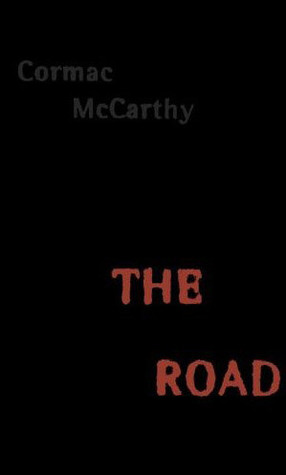
Review: The Road by Cormac McCarthy


First published:- 2006

Star rating:-

Terror. Stark naked, clear as the day and indelible in its intensity. Terror that turns its unflinching gaze on you, commanding you to quake in your boots and disintegrate into pieces. This book is that kind of cold dread that seeps into your blood like insidious venom and drains away your strength in a steady, agonizing trickle as you read along. The horror of being stranded in a world, where the living live on either to become sustenance for other survivors or to hunt and feast on fellow brethren to survive, becomes as real as the morning sunlight pouring in to your room through the gauzy curtains.

The trouble with dystopian fiction (literary and otherwise) is that if you have read one book from the genre you have pretty much read them all. And the rather unabashed confession I have to make in this regard is that I have read quite a lot of them - this is the 'guilty pleasure' I am not really guilty of indulging in once in a while. But when the focus of the discussion on dystopias shifts to a universally read book like 'The Road' then opinions range from acerbically negative criticism, a patronizing, reluctant pat on the back to disappointed neutrality and effusive praise. Cormac McCarthy's prose has also garnered less than enthusiastic responses from quite a significant number of reviewers. I suppose some thought his metaphors to be too flowery for their taste. While the rest have found him to be repetitive and dull. 

Fair enough. But I did not.

To bring to life a world, where there's nothing left to do except scrounge around for nourishment, it is obvious the author will be hard pressed to elaborately detail the act of unscrewing a jar top and drinking from it. The monotone adopted while chronicling these trivial actions conveys the chilling truth of how much gravity is being accorded to affairs considered undeserving of even a passing mention in a former way of life.

Thus, I refuse to join in the chorus of complaints. The very visceral and undiluted reaction the narrative elicited from me as a reader, caused me to refrain from belittling McCarthy's gift for utilizing the same old genre tropes to offer such insightful commentary on the human condition. And despite its bleak and nihilistic leanings, 'The Road' surprised me with its deft handling of a subject as sensitive as a parent-child relationship, a theme that is often explored in many fictional narratives but with varying degrees of success. More than any tear-inducing gimmickry, the relationship depicted here bears a frighteningly close resemblance to how things are in reality. 

Our two unnamed vagrants, a listless father-son duo, who move down this seemingly endless road strewn with the debris of a world long gone and the echoes of a way of life no longer preserved, seemed to me to be representatives of a large majority of humans. The father acts as a kind of misery-sponge, enduring the brunt of all the vicissitudes of fate that await them on this cruel and unforgiving peregrination, while shielding the son from the same. And as the toil of this godforsaken journey wears the parent down to the point of no return, the child is familiarized with the brutalities of the world at large and gently shown the ways in which one can side-step all the unpleasantness and maintain an existence without challenging authority in any form. Isn't this what a majority of humans have been seeking to accomplish on an infinite loop? 'Survive and don't ask for trouble in any form.' is the motto etched onto the blank slate of our minds since childhood. 

All the horrors lying in ambush for this father-son pair, starting from chance encounters with roving bands of cannibals to combating the evident threat of starvation and the bitter cold which freezes them to the bone, can be taken to be allegories of all the challenges of living that individually all of us have to contend with. The metaphorical road is just another minefield where one can never foresee the kind of evils one wrong step may unleash. All the lawless laws, by which the world is governed once the formerly established edifice of order and organization has crumbled to dust, are deeply reminiscent of the relentless cycle of injustices institutionalized by our so-called 'civilization'. Just as the weak are preyed upon and devoured alive in this dystopia, the downtrodden and oppressed are victims of a sort of economic cannibalism enshrined in the 'laws' of our reality. 

The scales are tipped ever in the favor of those who wield power in some form; in this dystopia it is the possession of a weapon, in ours it is the ownership of wealth. 

"The last instance of a thing takes the class with it. Turns out the light and is gone. Look around you. Ever is a long time. But the boy knew what he knew. That ever is no time at all."

It disturbs me how near invisible the line of separation between an imagined dystopia and a real one is.

   photo C136E66569D294E4D5DA2D8124D4FF69.png

Sunday, March 16, 2014

Review: The God of Small Things by Arundhati Roy


First published:- 1997

Read in:- January, 2014

Star rating:- 


As I stand just outside the compound with the untended garden, an uninvited, random visitor, the darkened Ayemenem House resembles a haunted mansion, belying the truth of the lives it once nurtured with maternal protectiveness in its cozy interiors. Derelict. Abandoned. Forgotten.
But I remember, you see. I remember the lives lived, and the loves which were birthed by circumstances, loves which breathed for a while before perishing on the altar of conformity. 
I remember Chacko and Sophie Mol. Ammu and Velutha. Rahel and Estha. 

And, most of all, I remember You. You, the painter of this portrait of a family's downward spiral into oblivion. You, the creator of this life-sized painting of a city and a nation, and all of human civilization in turn.
I see You as an iconoclast, persistent in your demand for liberties we are too submissive to dream of acquiring. You ask for things so heedlessly, so powerfully. The right to love whom we want and how much we want. The right to be equal. The right not to be discriminated against. The right not to be left languishing in solitude, battling painful memories. The right not to lose, at any cost, one's faith in the goodness in human beings.
You are the rebel we never considered becoming. We do not have courage like yours, you see. 
(Your opinions aired on national television are so often misinterpreted. Deliberately. Craftily.)

The sun, inside of You that refuses to be subdued by the drear of political machinations, by the evil lurking in the human heart, by the sham of 'development' perpetrated under the helpful charade of inexistent liberty, equality, fraternity, by every one saying 'No no no, you ask for too much. The world cannot ever be a fair place.', sent a little light my way.
That light gives me hope. Your Small God gives me hope.

He augurs that the overlooked small, mundane cruelties will only snowball into a tragedy of life-altering proportions later on, a gigantic boulder hurtling down the slope of a mountain crushing everything in its path into an unrecognizable gory pulp of flesh and blood. Small God's wrath will eventually consume Big God's apathy and reduce it to mere cinders.
I hope your Small God is right.

You speak the esoteric language of children, whose inner worlds are but their own, beyond the reach of the sharpened claws of the Love Laws - worlds which are free and infinite, where fables, dreams and terrifying realities churn into a nonsensical lovely mass, worlds untethered to earthly considerations. The two-egg twins' interlinked worlds, which stubbornly rejected the continued tyranny of the cycle of injustices perpetuated outside, were the same.
Their combined muteness throbbed with the dull ache of longing, loss and irreparable damage. Their collective passivity stood out as a blistering denouncement of humanity always coming second to zealously preserved blind prejudices. And You spoke through Rahel and Estha's silence which rung much louder than a giant church bell chiming away nearby.

We stew in our own insecurities and the irrelevance of small personal outrages, unable to take a step forward, helpless captives in the iron grip of the status quo of the world. While You, Ms Roy, take up your pen and fearlessly hail The God of Human Dignity, Empathy and Love - The God of Small Things.

So in this space, I thank that God for the Arundhati Roys of the world.


   photo C136E66569D294E4D5DA2D8124D4FF69.png

Thursday, October 10, 2013

Review : Paper Towns by John Green

I sit here at my desk, staring blankly at the notepad document wondering what kind of a review will be able to portray effectively all that I felt for this book and yet manage not to come off as an incoherent, mawkishly emotional discourse on the failings of life.
On the one hand, there's this hazy voice at the back of my head - the one voice embodying the spirit of the slightly snooty me who almost had me convinced that I won't find another good YA book to read again - telling me to single out all the minor flaws and inconsistencies, elaborate on them and dismiss John Green with a condescending, pat-on-the-back kind of review.
On the other hand, there's the voice of the the flawed, often conflicted, unsure but honest me - asking me to be generous instead of patronizing, to have the courage to admit that the poignant ending made me shed tears and that often, our heart craves for a heart-warming, bittersweet yet simplistic story that represents life itself, in its myriad manifestations, rather than endless pages of rich, flowery prose and little more.
I am honoring the intentions of the second voice. (I mostly go with the second voice. Please care to note the word 'mostly'.)

At a superficial level, Paper Towns, is not much apart from a regular YA novel. It's about American teenagers doing what teenagers do - survive high school, try to fit into social cliques, get into colleges, date, break up, date again, lose their virginities and so on and so forth.
Yet deeper beneath that surface, it is a story flavoured with the bittersweetness of life itself.
It is about an unremarkable, often ignored boy named Quentin whose presence is almost taken for granted by every one around him. And it is about his polar opposite - an exceptionally interesting girl called Margo, Quentin's neighbor, who is seen only as the quintessential popular girl at school. And it is about the pair of them discovering who they really are underneath that exterior of carefully preserved appearances through a long and convoluted process..
When Margo goes missing after a night of vengeance wreaked on a handful of people at school who 'betrayed' her, the only person truly interested in getting her back or finding out her whereabouts is none other than Quentin. Because, predictably, our male lead has a crush on Margo since he was a kid.
But how does he find her when she has disappeared supposedly without a trace? - Turns out Margo has left clues behind for only Quentin to piece together and figure out where she is headed and more importantly, why she has taken off abruptly anyway.
This puts Quentin at the head of a long, winding, physical and metaphysical journey of deconstructing the enigma that Margo Roth Spiegelman is, figuring out where she is and in the process of it all, coming closer to understanding himself and the people around him better.

As a woman who spent her adolescence in a country named India, let me say that American YA fiction makes us feel as if we're reading about people from an alternate plane of reality. While American teens go to prom, date, lose their virginity, smoke pot, go clubbing, (sometimes) engage in illegal activities, take a gap year after school and mainly act and behave like adults, Indian teens are busy taking tuitions to get into the premier engineering institute in the country.
Because our society holds a degree in engineering in the highest regard and sees it as a one-way ticket to the realm of financial eminence.
So it's more of an understatement to say that we do not relate to American teens - we read these YA novels partly out of bizarre fascination and partly out of curiosity.
But rarely do we stumble upon a YA book which is able to surmount the barriers of stiff cultural divides and sing to the universal human spirit.
Paper Towns is like that rare gem in a genre well-known for its banality. It is alternately frivolous in its portrayal of teenagers and melancholic in its ruminations on life, love and the way we choose to put labels on people without caring to know the real person under the disguise of the stereotype.
But it is not free from its quota of cliches and minor flaws. The pairing up of the school geek with the school beauty, her jock boyfriend and bitchy best friend and two additional nerdy boys as sidekicks of the male lead - these are but formulaic elements found in a run-of-the-mill YA novel.
Also, in real life a girl like Margo Roth Spiegelman is unlikely to exist and even though she insists on the contrary, her penchant for drama and actions appear to be desperate bids for more attention - a fact John Green doesn't gloss over by making the side characters point this out to Quentin time and again. There's also something very Holden Caulfield-ish about Margo, a thought I just couldn't get out of my head.
Not to mention, the whole premise comes off as a little unrealistic as well - Margo is repeatedly shown to be a near invincible character whose plans and designs seldom fail.
But even so, the strengths of this book do enough to overshadow its shortcomings. John Green's fast dialogue and witty one-liners make you smile.
"Getting you a date to prom is so hard that the hypothetical idea itself is actually used to cut diamonds."

"Girls dig you," he said to me, which was at best true only if you defined the word as girls as "girls in the marching band."

Some of the hilarious situations that Quentin and his friends find themselves in during the course of their road trip, made me laugh out loud multiple times. Which doesn't happen often.

Ben keeps bouncing his legs up and down.
"Will you stop that?"
"I've had to pee for three hours."
"You've mentioned that."
"I can feel the pee all the way up to my rib cage," he says. I am honestly full of pee. Bro, right now, seventy percent of my body weight is pee."

And what sealed my absolute, unwavering love for this book was the ending. The sheer poignancy of it will stay with me for a long time.
John Green dares to ponder on the difference between being in love with the idea of a person and being in love with the actual person, while staying within the limits of a genre not noted for its depth or emotional range.
And this is why, Paper Towns stays with the reader long after he/she has finished reading - as a great story and as a somewhat sentimental discourse on the imperfection of our lives.

 photo C136E66569D294E4D5DA2D8124D4FF69.png
Related Posts Plugin for WordPress, Blogger...