Showing posts with label Speculative Fiction. Show all posts

Tuesday, April 15, 2014

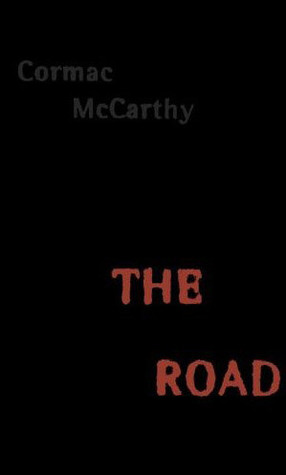
Review: The Road by Cormac McCarthy


First published:- 2006

Star rating:-

Terror. Stark naked, clear as the day and indelible in its intensity. Terror that turns its unflinching gaze on you, commanding you to quake in your boots and disintegrate into pieces. This book is that kind of cold dread that seeps into your blood like insidious venom and drains away your strength in a steady, agonizing trickle as you read along. The horror of being stranded in a world, where the living live on either to become sustenance for other survivors or to hunt and feast on fellow brethren to survive, becomes as real as the morning sunlight pouring in to your room through the gauzy curtains.

The trouble with dystopian fiction (literary and otherwise) is that if you have read one book from the genre you have pretty much read them all. And the rather unabashed confession I have to make in this regard is that I have read quite a lot of them - this is the 'guilty pleasure' I am not really guilty of indulging in once in a while. But when the focus of the discussion on dystopias shifts to a universally read book like 'The Road' then opinions range from acerbically negative criticism, a patronizing, reluctant pat on the back to disappointed neutrality and effusive praise. Cormac McCarthy's prose has also garnered less than enthusiastic responses from quite a significant number of reviewers. I suppose some thought his metaphors to be too flowery for their taste. While the rest have found him to be repetitive and dull. 

Fair enough. But I did not.

To bring to life a world, where there's nothing left to do except scrounge around for nourishment, it is obvious the author will be hard pressed to elaborately detail the act of unscrewing a jar top and drinking from it. The monotone adopted while chronicling these trivial actions conveys the chilling truth of how much gravity is being accorded to affairs considered undeserving of even a passing mention in a former way of life.

Thus, I refuse to join in the chorus of complaints. The very visceral and undiluted reaction the narrative elicited from me as a reader, caused me to refrain from belittling McCarthy's gift for utilizing the same old genre tropes to offer such insightful commentary on the human condition. And despite its bleak and nihilistic leanings, 'The Road' surprised me with its deft handling of a subject as sensitive as a parent-child relationship, a theme that is often explored in many fictional narratives but with varying degrees of success. More than any tear-inducing gimmickry, the relationship depicted here bears a frighteningly close resemblance to how things are in reality. 

Our two unnamed vagrants, a listless father-son duo, who move down this seemingly endless road strewn with the debris of a world long gone and the echoes of a way of life no longer preserved, seemed to me to be representatives of a large majority of humans. The father acts as a kind of misery-sponge, enduring the brunt of all the vicissitudes of fate that await them on this cruel and unforgiving peregrination, while shielding the son from the same. And as the toil of this godforsaken journey wears the parent down to the point of no return, the child is familiarized with the brutalities of the world at large and gently shown the ways in which one can side-step all the unpleasantness and maintain an existence without challenging authority in any form. Isn't this what a majority of humans have been seeking to accomplish on an infinite loop? 'Survive and don't ask for trouble in any form.' is the motto etched onto the blank slate of our minds since childhood. 

All the horrors lying in ambush for this father-son pair, starting from chance encounters with roving bands of cannibals to combating the evident threat of starvation and the bitter cold which freezes them to the bone, can be taken to be allegories of all the challenges of living that individually all of us have to contend with. The metaphorical road is just another minefield where one can never foresee the kind of evils one wrong step may unleash. All the lawless laws, by which the world is governed once the formerly established edifice of order and organization has crumbled to dust, are deeply reminiscent of the relentless cycle of injustices institutionalized by our so-called 'civilization'. Just as the weak are preyed upon and devoured alive in this dystopia, the downtrodden and oppressed are victims of a sort of economic cannibalism enshrined in the 'laws' of our reality. 

The scales are tipped ever in the favor of those who wield power in some form; in this dystopia it is the possession of a weapon, in ours it is the ownership of wealth. 

"The last instance of a thing takes the class with it. Turns out the light and is gone. Look around you. Ever is a long time. But the boy knew what he knew. That ever is no time at all."

It disturbs me how near invisible the line of separation between an imagined dystopia and a real one is.

   photo C136E66569D294E4D5DA2D8124D4FF69.png

Wednesday, September 4, 2013

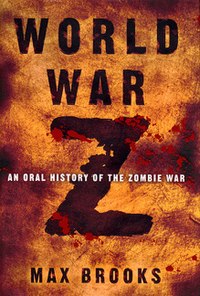
Review : World War Z by Max Brooks

Full title:- World War Z : An Oral History of the Zombie War  (yeah too long to write the whole thing on top at once)

(Originally review posted on Goodreads:- May 5, 2013)

Initially I had thought World War Z was going to be a book I would be surreptitiously adding to
my 'read' list on Goodreads, rating it and moving on to better reads quite unceremoniously.
I had considered not even the remotest possibility of reviewing it, because I assumed this was going to be one of those books one reads for sheer entertainment value and little else. 
But here I am writing one anyway, because I think the author definitely deserves some praise for his powers of imagination, if not for the copious amount of research he must have put in to write this.

If you are looking for your regular dosage of blood, guts and gore or a deliciously disturbing montage of decapitated torsos and severed limbs, I suggest you look elsewhere. Because World War Z is different from your mainstream zombie book.
Sure it contains the appropriate number of grotesque scenarios and morbid imagery, but these are not its highlights.
Here the zombie apocalypse serves merely as a backdrop against which the fragility of the world order is exposed - how an unforeseen human crisis of unimaginably catastrophic proportions can make the painstakingly put-together fabric of our civilization crumble like a house of cards.
Instead of recounting the story of the survival of one particular group of humans, making their way from one safe haven to another, Max Brooks gives us the bird's eye view of the nature of the calamity. 
The story of the human resistance against zombies unfolds from the perspective of not one but numerous survivors all over the world - military and navy men/women, war strategists, politicians, fraudulent businessmen, doctors, film directors, divers, ordinary civilians and so on. But the multiple points of view are compiled together in a single document, by an unnamed UN official to help create a clearer picture of the extent of the tragedy after the war has ended.
So what one finds in this book are minutiae regarding military equipment, weapons specially designed to fight off the living dead, strategies for quarantine and annihilation of infected people, psychological after-effects of surviving the disaster and living through it. Which makes it a lot more interesting and unconventional since the focus is shifted from the mindless violence perpetrated by a bunch of reanimated corpses and placed on human strengths and fallacies, instead. 

So then why did it leave me underwhelmed? 
Because the different accounts start to sound repetitive and the novelty of the mode of narration wears off after you get past the halfway mark. The frequency with which the author bombards the reader with descriptions of tactics employed by military and navy men tires one out after a while. And often, he goes overboard while trying to display his ample knowledge of the socio-political landscape of various nations. The way the book feels like a piece of non-fiction rather than a fictionalized account, also curtails one's enjoyment of the story somewhat.
I would have rated this 4 stars had the book helped me maintain the same level of interest throughout. 
That, however, does not mean it is unreadable. 
If you love your zombies yet cannot put up with mediocre writing and respect an author who cares to thoroughly research the topics he wishes to write on, World War Z is your next prospective read.

3 stars out of 5.


 photo C136E66569D294E4D5DA2D8124D4FF69.png

Saturday, August 24, 2013

Review : The Stand by Stephen King

(Original review posted on Goodreads:- Feb 02, 2013)


One of the reasons why I would never club Stephen King together with any of the other best-selling writers of his generation (Grisham, Archer, Patterson, Sheldon and so on) is this :-
None of them match King's calibre as a story-teller.They don't even come close.

If somebody spins an intriguing tale, his characters get in the way of my enjoyment of it.
If somebody excels at characterization, his plotting is rather unconvincing.
If somebody plots a story well, then his writing turns out to be flat.
(And if you're unlucky enough, some of them mess everything up.)

But Stephen King, possesses that rare talent of getting everything right - the story, the unraveling of the plot, the imagery, the underlying implications, the characters, the backdrop, the world-building, the writing - down to the very last detail. 
He can grasp your attention at the onset, reel you in slowly but surely, give you nerve-wracking moments of pure anxiety, make you visualize a scene exactly the way he must have imagined it, feel for the characters in his story as if they were people of flesh and blood you were familiar with and, at some point, render you completely incapable of discerning between reality and the make-believe world of his imagination. And you're caught in the same nightmare as the characters of his book are plunging deeper into with every passing moment. 

The Stand is one such Stephen King creation. Arguably known as his best written work yet, The Stand, I'm happy to inform readers, deserves every bit of the praise and adulation it continues to receive worldwide till this day. 
Now don't get me wrong. The book is nothing new when you glance at the blurb. It is nothing you haven't already read or known about because it is the story your mom/dad/grandma must have read to you as a kid - while you listened moon-eyed with wonder and awe, overcome with emotions you couldn't quite fathom. 
It is the ever-fascinating and timeless tale of good triumphing over evil that you have come across enough times yet can never possibly get over. 
It is that same story, but with a distinct Stephen King-esque flavour.
Add a dystopian, post-apocalyptic, anarchic world in the grip of an epidemic that claimed most human lives to the eternal conflict between good and evil, and the summation result will lead to The Stand.
But it is so much more than this simple one-sentence summary. Every character, every plot device, every written scene has been constructed and put together so fastidiously in this book that at the end of it one feels that the reader is assigned with the task of collecting and preserving every piece of the gigantic puzzle to form this humbling, larger-than-life image the author had begotten.
Everything is done so ingeniously, that the mesmerized reader can only sit back and watch this spectacle of gargantuan proportions unfolding right in front of his/her mind's eyes. 
Horror, psychological ramifications of events, political intrigue, war, chaos in the absence of a centralized administration, a crumbling world order, basest of our human tendencies - King doesn't shy away from exploring the entire gamut of human actions and emotions in a world where nothing of the old establishments has survived.

This man can write. There's no doubt about it.

In terms of sheer volume, scale and narrative sweep, it is an epic. In a way it is The Ramayana, The Mahabharata, The Iliad and The Odyssey or a concoction of all the elements that transformed each one of these stories into epics the world will never cease to look upon with the utmost respect. 
It is the story that never becomes stale despite the number of years you insert between the time you read it first and read it for the umpteenth time in some other form. It is the story that transcends barriers of language, culture, religion and history and will always be told and retold in possible ways imaginable, for as long as humanity survives.
It is the story you are bound to be won over by even if you're snotty enough to swear by your copy of Ulysses and frown upon the Stephen Kings of the world of writing simply because they don't have much of a chance of ever winning the Man Booker or Pulitzer or *gasp* the Nobel Prize.
It is the story of good, evil and everything in between. It is the story of love and hatred, loyalty and betrayal, sin and redemption, fate and co-incidence, rationality and the inexplicable. Of unalterable mistakes and innocence lost. Of the goodness of the human heart and the face of the Devil.
At 1100+ pages, it was rather much too short. 
I almost wished for it to never end. 
But then again one can always re-read to start the cycle of awesomeness all over again.


5 awestruck stars out of 5.
Related Posts Plugin for WordPress, Blogger...