Showing posts with label Melancholia. Show all posts

Wednesday, September 30, 2015

Review : So You Don't Get Lost in the Neighborhood by Patrick Modiano


First published:- October, 2014

Translated by:- Euan Cameron

Publisher:- Houghton Mifflin Harcourt 

Star rating:- 


Call this a book of mirages and mirrors that distort the contours of visible reality all the time. Call it a lament for the inevitability of change that erases all the landmarks to a place that anchors one to a past self. Call it a psychological thriller, a faux-noir in which people materialize out of thin air to serve as clues to lead the joyless protagonist to a truth too terrible for him to comprehend all at once. (Faux noir because Modiano ingeniously deploys its signature leitmotifs to subvert the genre. The token crook is merely a shady character, the token gangster's moll/seductive siren becomes a sympathetic confidante and the token mystery transforms into a disconcerting odyssey through the maze of time and memory.) But an adroitly spun yarn as this one transcends the imposed boundaries of any such labeling with ease and surprising grace.

One can tell the Nobel committee usually doesn't mess around at least when it comes to this greatest of honours reserved for literary achievement. Only pure artistry could have produced something as perfect as this - a combination of strategically placed expository bits, a dreamy, sublime narrative voice reflecting both a subconscious longing and antipathy for lost time, a melding together of reality and delusion, an overlapping of the worlds of 'was' and 'is', and a cautious but sure-footed unravelling of plot. The last time something this unambiguously postmodern in tone and form had brought me such pure reading pleasure was when I happily surrendered before Ali Smith's rhetorical playfulness in There But for The.

There, on the pavement, in the light of the Indian summer that lent the Paris streets a timeless softness, he once again had the feeling that he was floating on his back.

Author Jean Daragane's world is populated by ghosts - ghost-like individuals who hover over his reality to lead him to places and people he has forgotten and, in all likelihood, does not want to recall, the specter of self-written words that elude his feeble grasp on memory, ghost of a city's turbulent past intruding on the equanimity of the present, ghost of those nauseous years of the Occupation that one cannot shake off despite best efforts. And these myriad ghosts proliferate at the back of his mind to warp his sense of time, creating a stark dissonance between reality and memory that usher in a renewed sense of dislocation. In a way, he seems like a vagrant spirit himself, adrift in life like flotsam after a devastating tsunami, alienated from the rituals of work, love, relationships. But this deceptive placidity of the surface of his consciousness is disturbed by a phone call out of the blue which sets into motion a chain of fated meetings and ridiculous coincidences which eventually allow him to find a way back into his past, a journey he undertakes with considerable reluctance and disguised trepidation. I'll leave you to summon the curiosity to find out where this journey eventually leads him.

It would appear, he often used to say to himself, that children never ask themselves any questions. Many years afterwards, we attempt to solve puzzles that were not mysteries at the time and we try to decipher half-obliterated letters from a language that is too old and whose alphabet we don't even know.

Like a true master of the craft, Modiano only ever mentions the War in passing, subtly inserting roadsigns which point to the ineffaceable marks of damage on a Paris which itself appears like a figment of Daragane's imagination at times, as if it might flicker out of focus any moment to reappear in a pale imitation of an unrecognizable former avatar. But the memory of war lingers on in the desolation of rue de l'Arcade and the boulevard of Champs-Élysées witnessing the flow of time like a dispirited sentinel, in Daragane's uneasy perambulations through the courtyard of Louvre and the mist-laden autumn air of the rue de l'Ermitage. An amnesia sets in when the currents of time gradually whittle down the tangible reminders of a tragic event into unfamiliar forms but reality forgotten is never reality expunged. 

...And yet he now wondered whether he had not dreamed this journey, which had taken place over forty years ago.

Daragane's Paris is tied inextricably to the past just as he finds himself colliding with the vision of an abandoned, forgotten child navigating the unfamiliar nooks and corners of an unknown neighborhood, perhaps, pained and relieved in equal measure to have finally remembered that which he was so intent on forgetting. I could not have wished for a more befitting sense of closure for our traumatized narrator.


**with thanks to Netgalley and Houghton Mifflin Harcourt for an ARC**
__


Also posted on Goodreads & Amazon.

   photo C136E66569D294E4D5DA2D8124D4FF69.png

Sunday, April 5, 2015

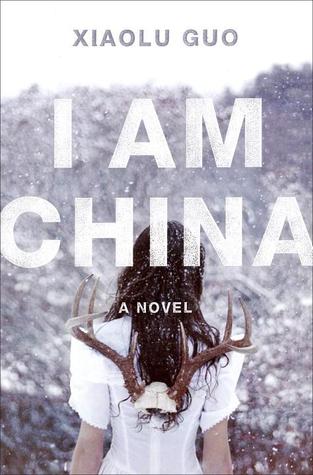
Review: I am China by Xiaolu Guo


Publishing date:-September, 2014

Publishing House:- Doubleday Books

Star rating:-

Seldom do I rue the absence of the solidity of a paperback I can clutch to my chest out of an overwhelming love, memorize the feel of its pages against my fingertips. My priorities lie in knowing what I do not, the means to the end irrelevant in this instance. The advent of the e-reader has negated the problem of the steadily shrinking space on the book shelf and helped me horde books without a care. And yet sometimes a kindle copy just isn't enough. The last time I had felt this familiar pang of kinship with a book right after turning over the last page was when Adichie left me feeling the weight of Biafra's senseless wartime violence (Half of a Yellow Sun). I procured a physical copy right after. 

I will do the same with this one too. Because imperfectly characterized and contrived as it is, this is the story I would want to associate modern China with. This is a book I would want to read again someday. 

All the cacophony around censorship and forgotten square massacres and totalitarianism aside, Xiaolu Guo's globe-trotting, no doubt most ambitious work till date tries to reclaim the dignity of the individual from the clutches of state ownership - a theme I have been desperately seeking out in my pick of literature from the land with less than satisfactory results. 

So far what I have gleaned from the works of writers from the mainland is mostly an overarching sense of dejection and bitterness - a gloomy preoccupation with rubbing old wounds raw.

Outside the bar, the midnight sky was lit by a vast cascade of fireworks, illuminating the solemn and dark Long Peace Avenue, the featureless Heavenly Gate Park, the foreboding Forbidden City, the drumming Bell Tower, and finally creating a fake light of day in Tiananmen Square. A new century of amnesia had arrived on China's earth.

But unlike the defeated, anguished voices of other contemporary Chinese authors, Guo's brims over with a valiant hope. Her Mu and Jian face the consequences of their political beliefs with an understated courage, hop across geographical boundaries to embrace the challenges of a hitherto unknown world outside their beloved China, even if to find themselves thwarted at various junctures. Driven out of their homeland by forces beyond their control and comprehension, they plunge headfirst into individual journeys of self realization, only their letters to each other tethering them to their shared reality in Beijing. And yet the same restlessness of being, the same grim disillusionment and feeble optimism color their evolving worldviews as they grapple with both hostility and acceptance in the humdrum heart of Europe and America. Experiences dismantle their prejudices about the west and the reckless abandon of youth gradually gives way to true wisdom. While Mu comes to acknowledge the purpose in Jian's subversive punk rock concerts in Beijing and his revolutionary zeal, Jian discovers merit in Mu's pacifist stance, her unrestrained love of life, art and literature. 

Art is the politics of perpetual revolution. Art is the purest revolution, and so the purest political form there is. A great artist is a great revolutionary.
Revolution = art, and art = perfect freedom. Right now, we have no revolution, no real art and no freedom.

As a lonely, unsociable Scottish translator unspools the many different threads of their past and present from a collection of letters and journal entries in her London flat, Mu and Jian's discordant voices harmonize in pitch and intensity across the barriers of time and space to meld into a symphony of human triumph. Their unbridled zest for life and liberty comes to symbolize the individual's quest for emancipation, to disentangle oneself from the myth of a national identity. Time, place and circumstances recede into the background. History's tenacious grip loosens. Mu and Jian's enduring love for one another finds its truest expression in the dream of a new China - one freed from the shadow of oppression.

I am China. We are China. The people. Not the state.

May this very dream survive.


**ARC received from Doubleday Books through Netgalley**
_____

Also published on Goodreads & Amazon.


 photo C136E66569D294E4D5DA2D8124D4FF69.png

Thursday, December 11, 2014

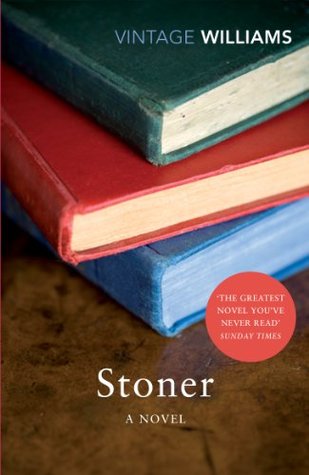
Review: Stoner by John Edward Williams


First published:-1965

Republished by:- Vintage Digital, 2012

Star rating:-

“Most men lead lives of quiet desperation and go to the grave with the song still in them.” - Henry David Thoreau

The triumph of this work lies in its self-effacing world-weariness, its tone of presupposed indifference even to the prospective reader's concerns. Like the inexorable stoicism of its protagonist in the face of misfortune and persecution, the narrative revels in its own lacklusterness, its state of diffused melancholy. 
William Stoner, first student and eventually English professor at (fictionalized) University of Missouri lives a life of flawed choices, unrealized potential and innumerable regrets, witnessing the world go through a period of tremendous sociopolitical ferment in the 20th century, and remaining invisible in the eyes of history. He breathes his last, just as silently, alone in a hospital ward, feebly flipping through the pages of a scholarly work. But do not for a moment think this deceptively drab synopsis encapsulates the essence of 'Stoner'. John Williams, through his luminous prose and by the aid of a vision which is as solemn as it is lucid, reminds us of the quotidian battles fought every moment anywhere by faceless individuals against the forces of oppression and moral laxity - that the fate of civilization is dependent on the capable or incapable shoulders of an individual.

He found himself wondering if his life were worth the living; if it had ever been. It was a question, he suspected, that came to all men at one time or another; he wondered if it came to them with such impersonal force as it came to him. The question brought with it a sadness, but it was a general sadness which (he thought) had little to do with himself or with his particular fate; he was not even sure that the question sprang from the most immediate and obvious causes, from what his own life had become.

An ode to literature? Yes. A story recounted with conviction and a quiet dignity? Undoubtedly. A sincere attempt at proffering acknowledgment on a seemingly inconsequential existence? That too. But more than anything else this is a literary toast raised in honour of those small, often unnoticed, acts of courage and compassion which somehow realign the moral order of the universe but are blotted out from memory and consciousness easily.
There is sadness here - boundless in depth and overwhelming in intensity - but hope glimmers occasionally too. Hope that the world may go to pieces and things may fall apart irrevocably yet a man may summon the strength to endure the tragedy of existence by discovering a true and unbreakable love. The currents of time weather away all past disappointments, longing, old grudges and anger. Only the love of the written word casts a glow in the eternal darkness.

A kind of joy came upon him, as if borne in on a summer breeze. He dimly recalled that he had been thinking of failure--as if it mattered. It seemed to him now that such thoughts were mean, unworthy of what his life had been. Dim presences gathered at the edge of his consciousness; he could not see them, but he knew that they were there, gathering their forces toward a kind of palpability he could not see or hear. He was approaching them, he knew; but there was no need to hurry. He could ignore them if he wished; he had all the time there was.

__

**much gratitude to Netgalley and Vintage Digital for providing a free e-copy as ARC**

Review also posted on Goodreads & Amazon.

   photo C136E66569D294E4D5DA2D8124D4FF69.png

Sunday, October 19, 2014

Review: Broken Harbour (Dublin Murder Squad, #4) by Tana French


First published:- 2012

Read in:- June, 2014

Star rating:-


There are certain things I pride myself on - the ability to read through a tremendous racket without losing my thread of concentration, the audacity to share my blasphemous distaste for pizzas with pizza worshippers who then proceed to shoot me death glares, and more pertinently, the way I don't balk at rating a piece of mainstream literature 5 stars if it has shown the grit to discard gimmickry and preserve that golden human touch. 

How ingeniously Tana French subverts the formulaic plotting of a 'psychological thriller', poking and prodding at the darkness we prefer to bury under the gloss of make-believe contentment until it becomes a threat of gargantuan proportions. How masterfully she paints this picture of a family marooned at the thin divide between normalcy and utter chaos, dangling precariously from the edge of oblivion. How mercilessly she concocts such a heart-wrenching tragedy where the lines between culpability and innocence are blurred to the point that both merge into a single entity, where the victims are just as unwittingly drawn to the dark side as the perpetrators and the ones entrusted with the task of rectifying the wrongs done. 

Sometimes the ugliness of visible reality is nothing but the tip of the iceberg and the truth is like a lightning bolt from the blue, capable of shattering the glass mansion of denial we prefer to live in. The truth runs much deeper, past the shallow defenses offered by skin and flesh, inexorably slicing through our bones.

"In that moment I thought of Broken Harbor: of my summer haven, awash with the curves of water and the loops of seabirds and the long falls of silver-gold light through sweet air; of muck and craters and raw-edged walls where human beings had beat their retreat. For the first time in my life, I saw the place for what it was: lethal, shaped and honed for destruction..."

'Broken Harbour' is about the proverbial monsters of our own creation lurking in the shadows biding their time to harm what we cherish the most, the slow disintegration of that 'good life' we have put together bit by bit and how sometimes cause does not precede effect. And it is a sad acknowledgement of the fact that a horrendous fate may lie in ambush for the sinless and unsuspecting. 

For the ones who steer clear of 'murder mystery novels' for their stereotypical compartmentalization of crime and detective work, I dare you to read this particular Tana French creation and remain unaffected.


 photo C136E66569D294E4D5DA2D8124D4FF69.png

Saturday, October 18, 2014

Review: The Likeness (Dublin Murder Squad, #2) by Tana French

First published:- 2008

Star rating:-

Read in:- March, 2014

"We had worked together seamlessly, she and I. I had drawn her to this house, this life, every bit as neatly and surely as she had drawn me."

Tana French knows how to conjure up the most charmingly creepy characters out of thin air like nobody's business - damaged individuals who go about life like sentient, breathing time bombs about to go off and leave a trail of wreckage consisting of wounded hearts and shattered illusions in the wake of their committed mistakes. Call this tale of blurred identities a flight of her fancy where the basic premise induces one eye-roll after another. Call this The Secret History redux. Call this anything at all. But a beautifully worded commentary on the unpredictability of human behavior will remain as unputdownable under any other name, all criticisms notwithstanding.

A murdered girl with a fake identity made up and used by an undercover cop and her superior years ago, and that same undercover cop destined to unravel the mystery of her murder by pretending to be the dead girl brought to life - who are we kidding here? All of this sounds ridiculous on several levels.

But hey it's Tana French! When she tells you a story, you deferentially suspend disbelief, snuggle into the comfort of your blanket, and read till you hear the first bird gleefully chirping outside your window signalling the onset of yet another morning.

'The Likeness' is a story about people who breach forbidden boundaries in search of the ultimate freedom, refuse to fit into some generic, pre-determined cog in the wheel of society and develop a hermetically sealed, secretive world of their very own where no outside forces are allowed to operate. And it depicts how this painstakingly achieved state of domestic harmony comes apart at the seams when the personal needs of an individual jeopardize the unity of the close-knit group. Thus in the same vein as its predecessor, 'The Likeness' ingeniously utilizes its characters and events to introspect on the fallout of human foibles. But it is important to note here that it is not much of a standalone mystery. It is essential that readers acquaint themselves with the happenings of the first book in the series to grasp the motivations behind our headstrong, kickass female protagonist's actions and the fragile state of her mind. 

It has been 6 months since the spectacularly eerie and depressing events of 'In the Woods' and Operation Vestal blew up in the face of Detectives Rob and Cassie, damaging their relationship beyond any hope of salvation, and leaving them with emotional scars that run much deeper than they care to admit to themselves. Cassie has moved from the Murder Squad to Domestic Violence, Rob is stuck in some other unknown branch of the police department, both no longer on speaking terms. In the midst of this irredeemable mess, a baffling murder case surfaces where the victim resembles Cassie down to her last lock of hair and carries an alias Cassie had used years ago on an undercover drug bust and gotten rid of later on. With no leads to follow and the mystery over the girl's true identity steadily deepening, Cassie decides to revisit her undercover roots (much to the chagrin of her gentle and considerate detective boyfriend Sam O'Neill) by masquerading as the victim, who somehow survived the assault, and returning to the secluded Whitethorn House with its assortment of 4 other inhabitants who are all PhD students of Trinity like Lexie, the murdered girl. Cassie aka Lexie's return under extraordinary circumstances triggers a set of curious events which, in turn, reveal alarming aspects of the lives of the 5 students whose closeness not only hints at something inexplicably disturbing but reveals darker sides of their past lives.

To be fair, this installment of the Dublin Murder Squad series is slightly underwhelming compared to Ms French's brilliant debut. None of the occurrences narrated are as bone-chilling or spooky and an awareness of the wafer thin nature of the logic presented creeps in once in a while. The very Secret History-ish list of ensemble characters (Daniel is Henry, Justin is Francis, Rafe is a cross between Charles and Bunny while Lexie and Abby have shades of Camilla in themselves) evoke a keen sense of déjà vu and the ending disappoints since the emotional aftermath of the crime(s) is much less affecting here compared to the climax of 'In the Woods', which begs the question why I have still rated this 4 stars despite the flaws. 

A good way to answer this question will be to put my finger on French's accurate reconstruction of that feather light feeling of not being tethered to worldly considerations yet and that firm, transient belief in the fact that we'll always remain young and invincible, forever unyielding to civilization's ruthless demands - the wonderful friendships of student life which slip right through our grasp and melt away into oblivion like treacherous mirages as 'real life' hurls one gauntlet after another our way. And it is this thoughtful portrayal of that unavoidable tragedy, of having to grow up and grow out of the optimism of youth, that all of us eventually experience at some point of time which tugs at the heartstrings the most and transforms 'The Likeness' into more of an homage to the intrigue and vigor of youth from just a preternatural murder mystery.


   photo C136E66569D294E4D5DA2D8124D4FF69.png

Saturday, July 26, 2014

Review: The Garden of Evening Mists by Tan Twan Eng


First published:-2011

Star rating:-

"For after the rain, when with never a stain
The pavilion of Heaven is bare,
And the winds and sunbeams, with their convex gleams,
Build up the blue dome of Air
I silently laugh at my own cenotaph
And out of the caverns of rain,
Like a child from the womb, like a ghost from the tomb,
I arise, and unbuild it again."
 - P.B. Shelley

The heron preens itself majestically, perched delicately at the edge of the pond, having found the familiarity of a home at last after miles of mateless flight. Gold-flecked koi fishes dart surreptitiously just below the surface, disrupting the lotus leaves. Wisps of rain-bearing clouds and the mountains meld into each other's embrace in a rare moment to become a mist-robed goddess and render the vista an acute resemblance with aukiyo-e painting, a charming illusion not even a discerning eye can remain immune to. Unwilling to pay the dues exacted by aphasia, Yun Ling hears the fading whispers of times gone by - unspeakable horrors etched across the soft palate of her consciousness she'd dearly like to forget and fond remembrances of the ones who sustained the flame of empathy in their hearts while the symphony of death and devastation reached its crescendo all around the Malay peninsula. The beautiful and fragile landscape of Yugiri lies forgotten in the wake of Aritomo's perplexing disappearance, but his decrepit, untended garden stands as a testimony to his lifelong devotion to a dying art form, to his solemn resolve of remaining humane at a time when savagery was the norm. 

One war replaces another as the ruthless Communist guerrillas commence a new reign of terror at the end of the Japanese Occupation. Peace remains that idealized mirage in a desert, forever out of reach. The prospect of succumbing to an acute hatred of the ones who caused her misery tempts, but Yun Ling struggles to hold on to her sanity and conscience in the grey abyss trapped between light and dark. Her faith in Aritomo wavers time and again but she lets her skin become the last canvass of his horimono art anyway. 

Did Aritomo's loyalty lie with Emperor Hirohito all along? Or had he simply ignored the obligations imposed by notions of race, gender, skin color, and nationality to respond to that primordial voice of reason every time it had called out to him to do the right thing? Will Yun Ling ever be able to forgive herself for surviving the atrocities that claimed her sister's life? Will Yun Hong find the peace and dignity in death that she was denied as a 'comfort woman' at the hands of her Japanese captors? 

In her twilight years, Yun Ling realizes that these questions will continue to ricochet off the walls of her consciousness time and again until the day she breathes her last. But she is no longer haunted by their echoes. The war had claimed victims on all sides and nearly every one was complicit in the collective barbarity of it all. Her festering psychological wounds will never truly heal but she finds contentment in calm acceptance of this baffling duality of life - the juxtaposed coexistence of kindness and cruelty, love and loathing, memory and oblivion, the human capacity for creation and destruction. 

"Are all of us the same, I wonder, navigating our lives by interpreting the silences between words spoken, analysing the returning echoes of our memory in order to chart the terrain, in order to make sense of the world around us?"

Reconciled to history's ironies, Yun Ling now knows that the world will forever rotate on its axis of disastrous decisions and terrible consequences for all. The relentless flow of time will weather away all the damage that had seemed indelible once. Remembering Aritomo's words, she will cling to a greater purpose with every last bit of strength if and when the cycle of madness starts all over again. Because nestled in the heart of the mountains in Tanah Rata lies the frayed dream of her refuge from the brutalities of the outside world - the slumbering garden of evening mists which patiently waits for her to awaken it to the magical touch of life once again.


   photo C136E66569D294E4D5DA2D8124D4FF69.png

Friday, July 11, 2014

Review: Enon by Paul Harding

First published:-June 7th 2012

Published by:-Random House

Star rating:- 

It is an ominous sign when your trusted, steady flow of empathy tapers off into a reluctant drip while you were making your way around the misfortunes encountered by a fictional parent rendered newly childless. Are you being too coldly practical, perhaps, mentally asking this grief-addled father to pick up the pieces of his heart and kickstart his life like a pre-programmed cyborg? Is your work-tired brain refusing to let you feel an intense pity for this man who resorts to tripping himself up on drugs to have a daily hallucinogenic rendezvous with his dead daughter?

I dearly wish I could nip such nagging doubts in the bud by answering all these questions with a 'no'. But I can't. My feelings for this book are as vague as the state of the protagonist's chaotic inner world post his daughter's demise.

The themes of trauma and tragedy permeate literature of any merit right down to its bones ever so often, that it's hard to come by a new treatment of the same old soul-crushing sadness. While some authors add an outer gloss of dignity and self-restraint to their psychologically broken characters, others deftly interweave unforeseen outwardly manifestations of repressed grief with the ennui of carrying on with the daily routine. And this is where Paul Harding does things differently. 

He kills Charlie Crosby's carefully organized world in an instant, shoving him right down the gaping hole of nothing. Charlie has no story to tell anymore, no purpose left in life except giving us prolonged glimpses of the tendrils of darkness that coil around his waking moments threatening to choke him to death. He only pulls us along for this turbulent ride as he traverses the distance between the edge of utter madness and a saner place, between losing himself in the futility of preserving any and every remnant of his daughter's short-lived earthly presence and finding his footing in the treacherous bog of loss. And this is fine really. But what is his justification for pushing away his co-mourner, his wife? 

There's only a thin line of difference between grieving for a loved one and internalizing that grief to the point where you begin using it as an anchor keeping you tethered to the reality that was stolen from you, to the extent the sadness which was gnawing away at your insides bit by bit became so fattened on your weaknesses that it pushed out every other thing from your head to make space for itself. And Charlie treads on this thin line barely holding on to his balance, often crossing over into the territory of no-man's land.


"I could not stop myself from stepping over the same dark threshold, night after night, trying to follow her into the country of the dead in order to fetch her back, even though she visited me in dreams and never left my waking thoughts."

I do not claim a kinship with most kinds of life-threatening sadnesses, especially a grief so fatal as the one entailing the loss of a child, not yet anyway. But I have lost a parent at 14. So I hope Paul Harding forgives me for judging Charlie Crosby the way I did.

Maybe I have never felt important enough to accord my grief a higher place over all the other more terrifying griefs - many of them unknown to me - which befall fellow humans and compete for priority every second in this mystifying drama of life. Maybe it's a personal foible to revere the ones who carry the ineffaceable marks of psychological damage, yet muster the courage to wake up every morning and put in their share of effort to keep the world's engines running. Maybe it's a puerile thing to care for tortured, emotionally scarred, righteous heroes like Rust Cohle who find an all-encompassing nihilism to be the answer to the inherent unfairness of life yet battle with that nihilism every moment with hope. 

Whatever the actual reasons maybe, I could not sympathize enough with this hapless father's 'magical realist' tendencies to keep his daughter frozen in the amber of his dope-induced daydreams. Even Harding's thoughtfully wrought, ornate sentences chronicling Charlie's memories of the small rural town of Enon, which witnessed the birth and death of his daughter, couldn't help me establish that intense emotional connection I was expecting to form with this story-without-a-story. In some of the narrative's most lucid yet hazy moments, during the course of Charlie's scarily accurate depiction of despair in its rawest form - the terror of waking up from a nightmare where your loved one was constantly slipping away from your grasp - I came close to developing a sense of solidarity with his pain. But then these moments of sporadic brilliance were interspersed with numerous other iterations of similarly-themed moments which gave rise to nothing other than indifference in me.

On occasions like these, I wish I could align my reviewing methods with those who never rate books but simply move on after recording their experiences with it. Because how do you rate a grief-stricken father's lament?
This is why I am trying to believe that the noticeable absence of 2 stars will only underscore my apathy for infinite extrapolations of the aftermath of tragedy, paraphrased again and again until the reader becomes too jaded to care, and not my disregard for mourning as the key resonant theme. Because the latter assumption couldn't be further from the truth.


P.S.:-I have a feeling my experiences with Harding's Pulitzer winning book, Tinkers will fare much better.
__

Review also posted on Goodreads and Amazon

**I received an ARC from Random House via Netgalley**

 photo C136E66569D294E4D5DA2D8124D4FF69.png

Thursday, May 15, 2014

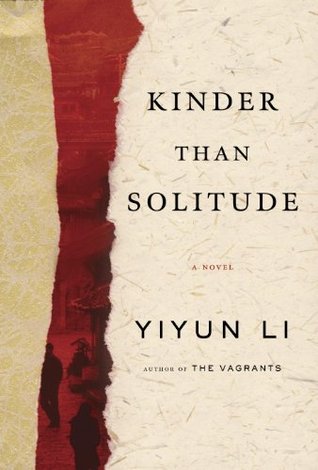
Review: Kinder than Solitude by Yiyun Li

Published on:- February 25, 2014

Published by:-Random House

Star rating:-

Coping mechanisms. For how long can one cling on to them with a quiet desperation? 

Long after grief subsided, long after the ache dealt by the blow of tragedy dulled, Ruyu, Moran and Boyang continued to let their lives revolve around their coping mechanisms. In place of a youthful lust for life and unbounded optimism they made a gaping emptiness their constant companion, drew strength from their blunt indifference to the world at large, never caring for the interminable flow of time and living from one moment to the next one. 

No expectations from those who touched their lives fleetingly. Relationships established and subsequently shed like second skins just as easily. An impenetrable fog of nothingness separated these three individuals from the world around them. Deeply afraid of tenuous attachment, they chose the secure comfort of solitude.

Orphaned in infancy, Ruyu had her perception of morality blurred by the blind religious fervor with which her grandaunts tried to indoctrinate her and later by Shaoai's everyday small cruelties. Disillusioned with life at a tender age, she could only snub gentle Moran's offer of friendship with acid contempt and wield Boyang's love for her as a weapon to harm others. Her act of transgression (not without its reasons) - perhaps triggered by the vindictive nature of adolescence - brought turbulence into the lives of three souls and destroyed a fourth, the aftershocks of this incident continuing to haunt them decades later across continents.

Ruyu knew she wasn't going to be let off unscathed by fate either but then what could possibly intimidate a misanthrope who treated life like a prison and considered the act of living akin to a sentence meant to be served out in silent despondency?

"She was not the only one trapped by life. She was afraid of meeting another person like her, but more than that she was afraid of never meeting another person like her, who, however briefly, would look into her eyes so that she knew she was not alone in her loneliness."

Yiyun Li is my new favorite author of Chinese origin simply because she manages not to succumb to the lure of sketching a Beijing under an autocratic regime like so many of her peers, choosing instead to narrate a tale of heartbreak and loss which will remain as affecting even if one strips her characters of their ethnicity and shifts the backdrop of events to any other place and time. It is the flawed humanity of the ensemble characters, none of whom are completely beyond reproach, and their self-inflicted emotional isolation which establishes Li's ability to go beyond the limits of spick and span pigeonholing. The devastating aftermath of the Tiananmen Square massacre and the agonizing chokehold of the Communist administration over its citizens are simply hinted at and never spelled out for the sake of inducing any cheap sentimentality. And what elevates her craft further in my eyes is the languid beauty of her prose and her accurate portrayal of the melancholia and ennui entailing the quandary of life. 

"They were not her stories. They were not about her time, or her people, but what she had once found in these stories-escape-would eventually become her wisdom. Perhaps if she kept these tales going he would one day forgive her stubbornness in choosing solitude, because he, kinder than solitude, was always here for her until death do them apart."

The pleasure of familiarizing myself with an author I know I can unhesitatingly seek out in the future never becomes stale.


-------

**I received an arc from Random House through Netgalley in exchange for an honest review**

Also posted on Goodreads and Amazon.

   photo C136E66569D294E4D5DA2D8124D4FF69.png
Related Posts Plugin for WordPress, Blogger...