Saturday, May 24, 2014

Review: Cloud Atlas by David Mitchell


First published:-2004

Read in:- April, 2014

Star rating:-

There's the sound of a deeply contented sigh emanating from the lips of someone clutching this book to herself like a long-lost friend, a bead of tear perched precariously atop disorderly eyelashes. And there's the barely audible sound of her turning the pages ricocheting off the pliant walls of time and space, sculpting a minuscule dent on the surface of a collective fate and this perplexing cosmic interconnection. 

She cannot properly articulate her awe or even fathom her own bewilderment at being rendered so tearfully sentimental by another case of 'old wine in new bottle'. Now she longs to believe that any or all of her trivial actions will lift her out of her predestined prison and place her somewhere on the crisscrossing grid of timelines and geographical boundaries, enable others to hear the distinct echo of her shout into the void. She just by herself is insignificant, not even a mere drop in the pool of time and she fears this looming threat of obscurity above all. But then David Mitchell gently reminds her that mute resignation to the 'natural order of things' is cowardice and billions and billions of droplets like her coalesce to form the ocean itself. She can will herself to shape the world any way she can. 

American notary, Adam Ewing sails reluctantly across the Pacific aboard The Prophetess, unaware of the events that will set into motion a change of heart which will contribute toward the making of history. 

A disinherited, arrogant and musically gifted Robert Frobisher chronicles the making of his avant garde 'Cloud Atlas' sextet in a series of letters addressed to his dear friend from distant Zedelghem.

Dauntless Luisa Rey doggedly pursues the truth and exposes the nexus between the Nixon administration and corporate corruption, emerging victorious against the tide of adverse circumstances. 

Ageing, pedantic and self-important vanity publisher Timothy Cavendish endures a 'ghastly ordeal' partly as comeuppance for his lifelong selfishness but manages to emerge from his own predicament with a reformed worldview. 

Fabricant Sonmi~451 rises above the 'catechisms' of institutionalized servitude to 'corpocratic' masters in futuristic Korea to light the spark of revolution. 

In a post-apocalyptic Hawaii, valleysman Zachry witnesses mankind on the brink of a choice between complete annihilation and survival through self-reform. 

And master puppeteer David Mitchell pulls all their strings from the background.

As she delights in her newfound admiration for the sweeping scope of this masterpiece and Mitchell's ambitious foray into the Matryoshka-doll structured story-telling, she doesn't fail to notice the accusations of gimmickry and pretensions, of self-indulgent writing, of 'trying too hard', of 'contrivances' and acknowledges the legitimacy of these opinions. 
But then she remembers Robert Frobisher answering Mitchell's detractors on his behalf. 

"Revolutionary or gimmicky? Shan't know until it's finished, and by then it'll be too late..."
Do you blame her for chuckling at the man's foresight and wit?

Enthralled, she notices the parallels drawn between the rabid consumerism of our times and a 'predatory society' based on principles of the empowered devouring the disenfranchised and the voiceless, the invisibility of the aged in the eyes of the young and unwrinkled, carefully inserted allusions to virulent sexism, racism and xenophobia through the ages, the enthusiastic nod given to cross-cultural harmony and freedom of sexuality and she wonders if Mitchell has left any of the issues haunting mankind since times immemorial unexplored. 

Thus as Mitchell tips his hat to the likes of Melville and Calvino, to prose stylists like Joyce and Nabokov, to the traditions of intertextual witticisms and metafictional references, to all the disparate voices and genres that help enrich the body of literature today, she tips her hat to Mitchell's genius and the sheer audacity of his vision.

Unhappily she then takes cognizance of the fact that never again will she read 'Cloud Atlas' for the first time. 
But then again, she might.


   photo C136E66569D294E4D5DA2D8124D4FF69.png

Thursday, May 15, 2014

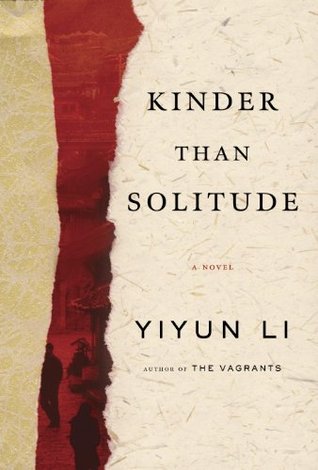
Review: Kinder than Solitude by Yiyun Li

Published on:- February 25, 2014

Published by:-Random House

Star rating:-

Coping mechanisms. For how long can one cling on to them with a quiet desperation? 

Long after grief subsided, long after the ache dealt by the blow of tragedy dulled, Ruyu, Moran and Boyang continued to let their lives revolve around their coping mechanisms. In place of a youthful lust for life and unbounded optimism they made a gaping emptiness their constant companion, drew strength from their blunt indifference to the world at large, never caring for the interminable flow of time and living from one moment to the next one. 

No expectations from those who touched their lives fleetingly. Relationships established and subsequently shed like second skins just as easily. An impenetrable fog of nothingness separated these three individuals from the world around them. Deeply afraid of tenuous attachment, they chose the secure comfort of solitude.

Orphaned in infancy, Ruyu had her perception of morality blurred by the blind religious fervor with which her grandaunts tried to indoctrinate her and later by Shaoai's everyday small cruelties. Disillusioned with life at a tender age, she could only snub gentle Moran's offer of friendship with acid contempt and wield Boyang's love for her as a weapon to harm others. Her act of transgression (not without its reasons) - perhaps triggered by the vindictive nature of adolescence - brought turbulence into the lives of three souls and destroyed a fourth, the aftershocks of this incident continuing to haunt them decades later across continents.

Ruyu knew she wasn't going to be let off unscathed by fate either but then what could possibly intimidate a misanthrope who treated life like a prison and considered the act of living akin to a sentence meant to be served out in silent despondency?

"She was not the only one trapped by life. She was afraid of meeting another person like her, but more than that she was afraid of never meeting another person like her, who, however briefly, would look into her eyes so that she knew she was not alone in her loneliness."

Yiyun Li is my new favorite author of Chinese origin simply because she manages not to succumb to the lure of sketching a Beijing under an autocratic regime like so many of her peers, choosing instead to narrate a tale of heartbreak and loss which will remain as affecting even if one strips her characters of their ethnicity and shifts the backdrop of events to any other place and time. It is the flawed humanity of the ensemble characters, none of whom are completely beyond reproach, and their self-inflicted emotional isolation which establishes Li's ability to go beyond the limits of spick and span pigeonholing. The devastating aftermath of the Tiananmen Square massacre and the agonizing chokehold of the Communist administration over its citizens are simply hinted at and never spelled out for the sake of inducing any cheap sentimentality. And what elevates her craft further in my eyes is the languid beauty of her prose and her accurate portrayal of the melancholia and ennui entailing the quandary of life. 

"They were not her stories. They were not about her time, or her people, but what she had once found in these stories-escape-would eventually become her wisdom. Perhaps if she kept these tales going he would one day forgive her stubbornness in choosing solitude, because he, kinder than solitude, was always here for her until death do them apart."

The pleasure of familiarizing myself with an author I know I can unhesitatingly seek out in the future never becomes stale.


-------

**I received an arc from Random House through Netgalley in exchange for an honest review**

Also posted on Goodreads and Amazon.

   photo C136E66569D294E4D5DA2D8124D4FF69.png

Sunday, May 11, 2014

Review: Home and Exile by Chinua Achebe

First published:- 2000

Read in:- February, 2014

Star rating:-

'The Empire Writes Back' would have been a fitting alternative title for this essay collection. (Achebe doesn't fail to pay a tribute to Salman Rushdie's essay of the same name published in 1982). Because that is what the running theme here is - a reclamation of a land and a culture that was wrested away with brutal force and made a part of an 'Empire' which still insists on viewing that period as one of glory and not characterized by the worst kind of human rights violation ever. And a heralding of the arrival of the African voice in the world literary scene.

Achebe is slowly turning into my personal literary hero. His wry humor, elegant prose, mildly sardonic tone and passion for social justice exude a righteousness that's hard not to defer to. His writings continue to make me question certain pet notions and ideas that are so deeply ingrained in each one of us that they seem like indisputable facts and consequently evade further introspection. My penchant for unconsciously comparing Latin American, South East Asian and African writing to the style, technique and language of the Americans and Europeans I admire and immediately pronouncing judgement on them on the basis of said parameters has to go away now, I realize.
It doesn't matter if African, Asian and other writers of the Commonwealth (Dear god, why do we have that ridiculous redundant grouping still? is it not there for the sole purpose of reminding us that we were once colonies?) have the same degree of grammatical precision and structural integrity to their English prose as their European and American counterparts. It matters that their voices be heard and universally acknowledged and the overlooked truths, their narratives highlight, be analyzed without bias.

Although this collection consists of 3 essays titled 'My Home Under Imperial Fire', 'The Empire Fights Back' and 'Today, the Balance of Stories' it should be considered a single body of work or discourse intended to dispel certain flawed notions about African people who are often derogatorily referred to as 'tribes' and automatically consigned to a lesser category of humanity. 
Achebe begins with his reminiscences on his early years as a young university student in Nigeria, reading literature based on Africa authored mostly by British and European scholars who, of course, liberally manufactured painfully offensive 'facts' regarding the intellectual and anatomical inferiority of his fellow brethren and propagated the theory that European acquisition of their land and sphere of existence was for the sake of their own personal benefit.

This is what Achebe says about the interlinked nature of inherently racist literature of the time (he is sophisticated enough not to use the word 'racist' even once though) and the Atlantic slave trade:-

"I will merely say that a tradition does not begin and thrive, as the tradition of British writing about Africa did, unless it serves a certain need. From the moment in the 1560s when the English captain John Hawkins sailed to West Africa and 'got into his possession, partly by the sword and partly by other means, to the number of three hundred Negroes,' the European trade in slaves was destined by its very profitability to displace trade in commodities with West Africa."

Achebe directs his suppressed ire at Anglo-Irishman Joyce Cary who was regarded as one of the finest novelists of his time and his creation 'Mister Johnson' which Achebe systematically breaks down and interprets as a text strewn with viciously hateful commentary on Africans. Another renowned novelist and polymath who had considerable first hand experience of Africa, Elspeth Huxley, isn't spared either as her criticism of Amos Tutuola's 'The Palm-Wine Drinkard' as a 'folk tale full of queer, distorted poetry, the deep and dreadful fears, the cruelty, the obsession with death and spirits, the macabre humour, the grotesque imagery of the African mind' comes off as an insidious denunciation of all African literature in general. 
Joseph Conrad, predictably, is his next victim. (Criticism of 'Heart of Darkness' seems like a recurrent theme in Achebe's essays)

Quote from 'Heart of Darkness' -

"Well, you know, that was the worst of it-this suspicion of their not being inhuman."

Achebe's deconstruction-

"A more deadly deployment of a mere sixteen words it would be hard to imagine. I think it merits close reading. Note first the narrator's suspicion; just suspicion, nothing more. And note also that even the faint glimmer of apparent charitableness around this speculation is not, as you might have thought, a good thing, but actually the worst of it! And note finally, the coup de grace of double negation, like a pair of prison guards, restraining that problematic being on each side."

Next in Achebe's line of fire is the ever controversial V.S. Naipaul and his lecture titled 'Our Universal Civilization' delivered at the Manhattan Institute and his caustic and downright obnoxious comments on Asian and African readership and cultures. Achebe brings into focus the difference in attitudes between the Indian-origin Naipaul and the famed Indian writer R.K. Narayan by stating how Narayan saw 'a million stories' every time he looked out of his window and not a 'million mutinies' like Naipaul did.

He ends by hailing story-tellers of repute like Nadine Gordimer (for her literary activism in the backdrop of the Anti-Apartheid movement in South Africa), Wole Soyinka, Amos Tutuola and names like Nigerian Cyprian Ekwensi (People of the City), Guinea's Camara Laye (L'Enfant Noir), Cameroon's Mongo Beti, Ferdinand Oyono (Houseboy), Cheikh Hamidou (Ambiguous Adventure) who have lent enormous credibility to the African literary landscape and have led readers all over the world, to take into account the complementary points of view of the people who had been, so far, deprived of a voice.

"Despite the significant changes that have taken place in the last four or five decades, the wound of the centuries is still a long way from healing. And I believe the curative power of stories can move the process forward."


P.S.:-My rating may be upgraded (or downgraded) in the future based on what I glean from a reading of A Bend in the River, India: A Million Mutinies Now and a re-reading of Heart of Darkness.


   photo C136E66569D294E4D5DA2D8124D4FF69.png

Monday, May 5, 2014

Review: The Color Purple by Alice Walker


First published:- 1982

Star rating:-

Read in: - September, 2013

I give this book 5 stars to spite the myopic David Gilmours and the V.S. Naipauls of the world who think books written by women are irrelevant. I give this 5 stars to make up for the many 1/2/3 star ratings it may receive simply because of Alice Walker's forthright, honest portrayal of unpleasant truths that are often conveniently shoved under the carpet so as not to disturb the carefully preserved but brittle structure of dogma and century-old misconceptions. 
And I award this 5 stars, symbolically on Banned Books Week as an apology for all the cowardly sentiments of the ones who misuse their power by banning books, thereby shutting out many powerful voices which demand and need to be heard.

In my eyes, an author's merit lies not only in their sense of aesthetic beauty, but also in the scope and reach of their worldviews which must reflect in their craft.

Alice Walker's is the voice of one such African American writer that recounts a story which not only breaches the boundaries of an issue like emancipation of women but tries to detect a common pattern in problems plaguing civilizations across continents. She gives us one horrifying glimpse after another into the lives of women ravaged by unspeakable brutalities like rape and abuse, lives searching for meaning and connection and seeking out that elusive ray of hope amidst the darkness of despair. 
And by the end of the narrative, she brings to light with great sensitivity, that misogyny, sexism and blind patriarchal prejudices are as rampantly in vogue in the urban, upscale sphere of American cities as they are in the intractable, untameable African landscapes.

Celie and Nettie. Shug Avery, Sofia and Mary Agnes. Tashi and Olivia. 
All these are but different names and many facets of the same disturbing reality.
If the lives of Celie and Nettie are torn apart by sexual abuse and humiliation from childhood, then Tashi and other unnamed young African girls of the Olinka tribe are victims of genital mutilation and other forms of psychological and physical torture.
If the men of African American families dehumanize the female members to the point of treating them as mere care-givers and sex slaves, then the objectification of African women by the men of their families is no less appalling. And contrary to accepted beliefs, white families in America are just as easily susceptible to misogyny as the African American families are.

But Alice Walker doesn't only stop at opening our eyes to the uncivilized aspects of our so-called civilized world, but also shows us how knowledge of the world and people at large, self-awareness and education can help exorcize such social evils, how it is never too late to gain a fresh perspective, start anew and how empowerment of women eventually empowers society.

Dear David Gilmour, if I were a professor of English literature I'd have taught Alice Walker to my students without a shred of hesitation, because here's an author who may not possess the trademark sophistication of Virginia Woolf's lyrical prose but who, nonetheless, fearlessly broaches subjects many masters and mistresses of the craft may balk at dealing with.

Alice Walker: 5 | David Gilmour: 0


   photo C136E66569D294E4D5DA2D8124D4FF69.png

Monday, April 21, 2014

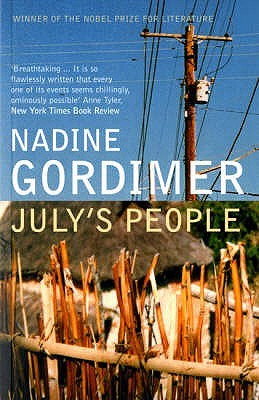
Review: July's People by Nadine Gordimer


First published:- 1981

Star rating:- 


The 5 stars you see flashing at you are not just any 5 stars. They were the end result of a whole day of deliberation. 
I happen to be one of those people who are not stingy with their ratings. If a book manages to bestow equal importance on both the prose and the message contained within in such a way that neither overshadows the other and both meld into a single entity of an unforgettable work of literature/fiction capable of whisking the reader away to a special place, then it can take my 5 stars right away.

But July's People had me dawdling back and forth between a 4 and a 5 star rating for the longest period of time. 

What happens to a middle-class family of white liberals in South Africa fleeing the horrors of a large scale violent agitation started by the blacks in the city? They find a safe haven in their black manservant July's village. 
Away from the amenities of an upscale, urban neighborhood in Johannesburg, away from all known civilization, in the heart of the formidable great South African wilderness, among people whose lives are different from their own as chalk is from cheese, Bamford and Maureen Smales and their 3 children become witnesses to the spectacle of humanity, stripped of all its materialistic props.

They become mute spectators to their own struggle for survival in the harshest of conditions and are left with no other option but to fall into the same pattern of weed-gathering, mealie-meal consuming, wart-hog slaying daily activities of the native Africans. They are also forced to accept this drastic role reversal with July, who had so far been at the receiving end of their patronizing 'kindness' and occasional thoughtfulness.

When July becomes their savior and protector, they finally start to realize how it must have been for July all this time to have been reduced to the status of dependence on a white family, to be considered human but still never judged according to the same criteria used to evaluate a white man's worth. 

Thus in the middle of the intractable African countryside, in the constant presence of buzzing mosquitoes and other poisonous bugs and in an environment redolent of decay and rotting animal corpses, all the hitherto insurmountable barriers between Maureen, the mistress, and July, the servant, are dismantled by the tide of circumstances. Maureen and July assume their true roles as mere humans in a symbiotic relationship where the nature of the dependence of one on the other may vary with a change in the scenario. 
And herein lies the poignancy of this story which relies much on the Maureen-July equation to lend the plot its true substance.
"We can go to my home - July said it, standing in the living-room where he had never sat down, as he would say 'We can buy a little bit paraffin' when there was a stain to be removed from the floor. That he should have been the one to decide what they should do, that their helplessness, in their own house, should have made it clear to him that he must do this - the sheer unlikeliness was the logic of their position."

"How was she to have known, until she came here, that the special consideration she had shown for his dignity as a man, while he was by definition a servant, would become his humiliation itself, the one thing there was to say between them that had any meaning."

"Of course, 'July' was a name for whites to use; for fifteen years they had not been told what the chief's subject was really called."

"She was unsteady with something that was not anger but a struggle: her inability to enter into a relation of subservience with him that she had never had with Bam."


Oh I could go on quoting such brilliant lines, fraught with underlying implications of life-changing proportions. 

Thus, July's People is not just a fantastic meditation on inter-racial tension but also an attempt at acknowledging the humanity of the ones considered less human. 
Gordimer doesn't merely highlight the ambiguity of the South African socio-political situation against the backdrop of the Anti-Apartheid movement or this imperfect intermingling of two cultures so disparate and alien to each other. She also poses a few fundamental questions which go far beyond the limits of a topic like racial discrimination. How do we live together in harmony? How do we come to terms with the differences(social, economic or racial) we perceive in others? 

As I write this, I am repeatedly struck by my own inadequacy as a reviewer and the fact that a few measly passages in a review cannot even come close to recording the experience of reading this book. I am fumbling around for the right words to present to the future reader, all the vivid images and the indescribably complex human emotions that Gordimer has stitched together with the gift of her skillful yet subtle story-telling in this narrative.

At times I forgot I was reading this in an air-conditioned room and found myself in Maureen's shoes - having to wash the unhygienic dirty rags she uses in the absence of sanitary napkins to soak up her menstrual blood or squatting down together with the women of July's family and plucking edible vegetables. I could almost imagine myself living the same nightmare as the Smales family in that stifling atmosphere rife with Equatorial heat and humidity and taut with the tension between July's black people and his white employers.

I am letting Ms Gordimer take over from me again- 

"On this night alone - Saturday - were the people awake among their sleeping companions, their animals; in the darkness(Drawing away, up from it, in the mind, like an eagle putting distance between his talons and the earth) the firelight of their party was a pocket torch held under the blanket of the universe. Heat and dark began to dissolve and she had to go in. There were no gutters; the soft rain was soundless on the thatch."

"It was the first time there had been rain since they came; the worn thatch darkened and began helplessly to conduct water down its smooth stalks; it dripped and dribbled. Insects crawled and flew in. They were activated by the moisture, broke from the chrysalis of darkness that had kept them in the walls, in the roof. She knew that the lamp attracted them but she kept it on. The flying cockroaches that hit her face were creatures she was familiar with."


And so I give July's People all the 5 stars. Because Nadine Gordimer excels at what she sets out to do here - dissect the human predicament with precision and deep sympathy, remove layering upon layering of man-made fabrications and reveal the crux of a human relationship as simple and complicated as Maureen and July's.

And if one thinks about it, she has titled this book ingeniously as well. What does she mean by July's people? July's own kith and kin, the anonymous and indistinguishable (to the white people) blacks of his own village? Does she mean July's white people who are also an indispensable part of his existence? Or is she referring to both at the same time? I think she left it as an unanswered question, left it for us to decide who July's people are.

And one has to admit, that it is certainly a question worth pondering.


   photo C136E66569D294E4D5DA2D8124D4FF69.png

Tuesday, April 15, 2014

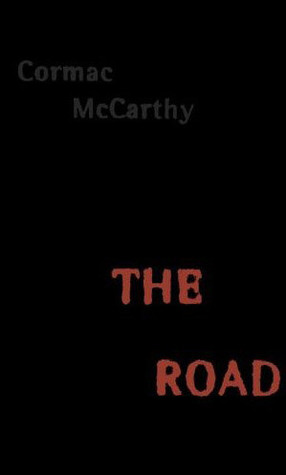
Review: The Road by Cormac McCarthy


First published:- 2006

Star rating:-

Terror. Stark naked, clear as the day and indelible in its intensity. Terror that turns its unflinching gaze on you, commanding you to quake in your boots and disintegrate into pieces. This book is that kind of cold dread that seeps into your blood like insidious venom and drains away your strength in a steady, agonizing trickle as you read along. The horror of being stranded in a world, where the living live on either to become sustenance for other survivors or to hunt and feast on fellow brethren to survive, becomes as real as the morning sunlight pouring in to your room through the gauzy curtains.

The trouble with dystopian fiction (literary and otherwise) is that if you have read one book from the genre you have pretty much read them all. And the rather unabashed confession I have to make in this regard is that I have read quite a lot of them - this is the 'guilty pleasure' I am not really guilty of indulging in once in a while. But when the focus of the discussion on dystopias shifts to a universally read book like 'The Road' then opinions range from acerbically negative criticism, a patronizing, reluctant pat on the back to disappointed neutrality and effusive praise. Cormac McCarthy's prose has also garnered less than enthusiastic responses from quite a significant number of reviewers. I suppose some thought his metaphors to be too flowery for their taste. While the rest have found him to be repetitive and dull. 

Fair enough. But I did not.

To bring to life a world, where there's nothing left to do except scrounge around for nourishment, it is obvious the author will be hard pressed to elaborately detail the act of unscrewing a jar top and drinking from it. The monotone adopted while chronicling these trivial actions conveys the chilling truth of how much gravity is being accorded to affairs considered undeserving of even a passing mention in a former way of life.

Thus, I refuse to join in the chorus of complaints. The very visceral and undiluted reaction the narrative elicited from me as a reader, caused me to refrain from belittling McCarthy's gift for utilizing the same old genre tropes to offer such insightful commentary on the human condition. And despite its bleak and nihilistic leanings, 'The Road' surprised me with its deft handling of a subject as sensitive as a parent-child relationship, a theme that is often explored in many fictional narratives but with varying degrees of success. More than any tear-inducing gimmickry, the relationship depicted here bears a frighteningly close resemblance to how things are in reality. 

Our two unnamed vagrants, a listless father-son duo, who move down this seemingly endless road strewn with the debris of a world long gone and the echoes of a way of life no longer preserved, seemed to me to be representatives of a large majority of humans. The father acts as a kind of misery-sponge, enduring the brunt of all the vicissitudes of fate that await them on this cruel and unforgiving peregrination, while shielding the son from the same. And as the toil of this godforsaken journey wears the parent down to the point of no return, the child is familiarized with the brutalities of the world at large and gently shown the ways in which one can side-step all the unpleasantness and maintain an existence without challenging authority in any form. Isn't this what a majority of humans have been seeking to accomplish on an infinite loop? 'Survive and don't ask for trouble in any form.' is the motto etched onto the blank slate of our minds since childhood. 

All the horrors lying in ambush for this father-son pair, starting from chance encounters with roving bands of cannibals to combating the evident threat of starvation and the bitter cold which freezes them to the bone, can be taken to be allegories of all the challenges of living that individually all of us have to contend with. The metaphorical road is just another minefield where one can never foresee the kind of evils one wrong step may unleash. All the lawless laws, by which the world is governed once the formerly established edifice of order and organization has crumbled to dust, are deeply reminiscent of the relentless cycle of injustices institutionalized by our so-called 'civilization'. Just as the weak are preyed upon and devoured alive in this dystopia, the downtrodden and oppressed are victims of a sort of economic cannibalism enshrined in the 'laws' of our reality. 

The scales are tipped ever in the favor of those who wield power in some form; in this dystopia it is the possession of a weapon, in ours it is the ownership of wealth. 

"The last instance of a thing takes the class with it. Turns out the light and is gone. Look around you. Ever is a long time. But the boy knew what he knew. That ever is no time at all."

It disturbs me how near invisible the line of separation between an imagined dystopia and a real one is.

   photo C136E66569D294E4D5DA2D8124D4FF69.png

Wednesday, April 9, 2014

Review:The Frangipani Hotel: Stories by Violet Kupersmith

First published:- April 1st, 2014

Published by:- Spiegel & Grau

Star rating:- 

What your mind dredges up from memory and consciousness upon the utterance of the word 'Vietnam' is wholly predictable. That naked girl child of Trảng Bàng fleeing a napalm attack in terror, her scream silenced by the stillness of the well-known picture you have glanced at time and again or the grotesque image of blood-soaked bodies heaped by the side of a rice field in My Lai that continued to burn like a stinging slap across the face of the American administration long after the troops had pulled out of Vietnam. But the sheer tragedy of a nation being whittled down to the status of being defined by an ill-famed proxy war and a trendy word with an 'ism' at the end, has its roots in our collective apathy. 

Marguerite Duras' Indo-China (as described in her fictionalized memoir The Lover) was a place inextricably linked to the abuse of her childhood years, a cultural melting pot, an eerie and exotic landscape which served to simultaneously heighten and assuage her mental anguish, a nation still resigned to being seen as just another jewel in the crown of Europe. But Violet Kupersmith's Vietnam is the hum of the life force coursing through her veins; the horror and beauty that this culture encompasses, a hand-me-down from her ancestors. And it is this Vietnam, we have not cared enough to know, which inhabits these short stories. The tinge of paranormal intrigue and the elements of suspense are merely there to help you keep turning the pages with ease but it is the landscape itself which towers above the set of native Vietnamese characters and the Vietnamese diaspora in the U.S., metamorphosing into a humanly protagonist narrating a melancholic tale of personal woes.

The water nymph boarder of Hotel Frangipani, the ailing old Mrs Tran whose time on earth runs out while waiting for her now-American daughter and grand-daughters to visit her from far off Houston, the soldier-turned-calligrapher who cannot banish the horrifying memories of accidentally killing a civilian girl while serving the Viet Cong, the septuagenarian who involuntarily undergoes a morbid transformation into a giant python at times and ends up recounting the story of his life to a random Vietnamese American teen, the white girl who works at the American consulate in Ho Chi Minh are many among the imaginary guides that Ms Kupersmith designates to familiarize readers with an assortment of folktale-ish stories with elements of horror as the common running theme.

To quibble, some of the stories have been fashioned in an amateurish way in which character tropes such as the thoughtful, unattractive, fat sister and the insensitive, skinny one and the ignorant, condescending American tourist abound. But the structural and thematic integrity of the remaining stories made up for the flaws of the former and caused my 3 stars to be elevated to 3.5 stars.

Subtlety isn't Ms Kupersmith's strongest suit but her writing serves as a good example of potency of theme and plot surpassing the need for linguistic adornments at times and a rude reminder of my little to no knowledge of Vietnam sans the 'war', an oversight which needs to be remedied post haste. 


___

Review also posted on Goodreads & Amazon.

 photo C136E66569D294E4D5DA2D8124D4FF69.png
Related Posts Plugin for WordPress, Blogger...