Monday, October 14, 2013

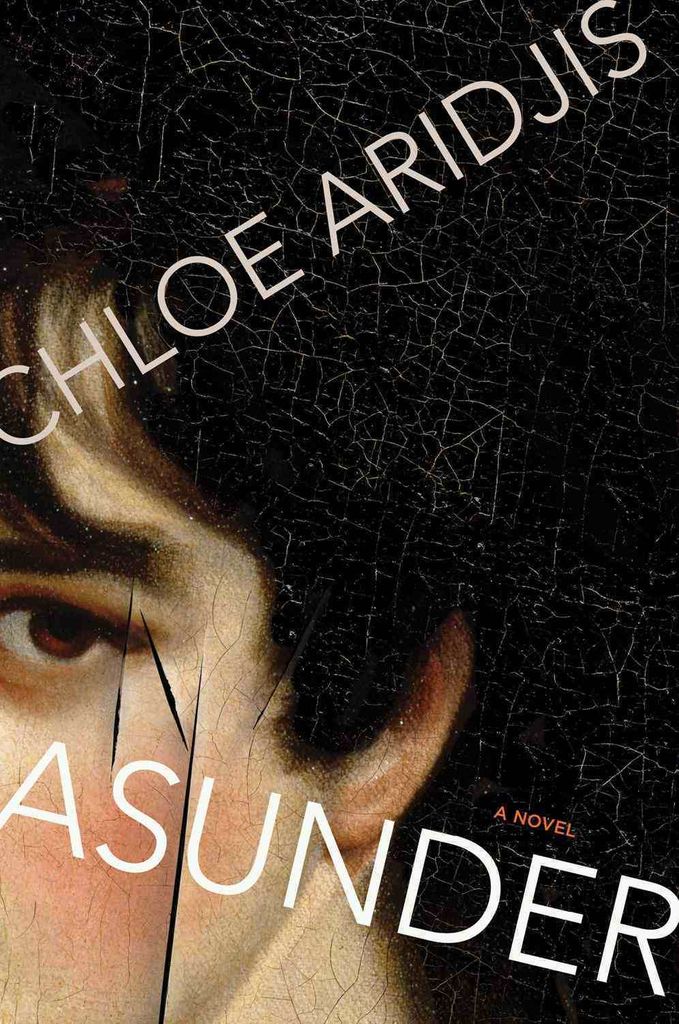
Review : Asunder by Chloe Aridjis

Publisher:-Houghton Mifflin Harcourt
Published on:-September 17th, 2013

A vague sense of foreboding persistently stalks the reader on every page of this narrative, as if something potentially dangerous and forbidding awaits one at the turn of the next page. But then the pages fly by, nothing truly nefarious ever materializes and the feeling finally settles in that the substance of this narrative lies not in a likely event of cosmic importance or even in the anticipation of its occurrence but in the minutiae a reader usually glosses over.
The everyday happenings, some of them mystically inexplicable, some of them a little odd but so commonplace that they do not merit even a second thought let alone further introspection - the things we breeze past in an effort to dwell on the more materially satisfying aspects of life without realizing that each one of these discrete snippets of time spent with people in places is what makes up the structure of life itself.

As I glanced at the blurb (which clearly does not do the book justice even as a half-hearted synopsis), I felt a stab of sympathy for whoever wrote it (author/publisher/random intern), because not only is it very difficult to clearly define the contours of this book but it is equally trying to put one's finger on one strongly resonant theme in it since there are many.

There's the subject matter of the suffragettes (the term used for women campaigning in Britain in the late 19th and 20th centuries for the female ballot) and a young Mary Richardson who had taken a blade to assault one of the priceless works of art in the National Gallery on the eve of the First World War while Marie's great-grandfather Ted was a guard at the museum. It's no coincidence that our protagonist is the namesake of this revolutionary since the shadow of Mary Richardson's act of bravado looms large over Marie's life, silently influencing her in ways she remains oblivious to.
Hence it can be stated that feminist undertones are delicately woven into the the narrative without being glaringly obvious.

There's also an overarching feeling of the protagonist's unnerving indifference to most things, her tacit refusal to take the wheels of her own life and letting herself be propelled by happenings and the decisions made by people around herself. In the beginning I was speculating on the possibility of some sort of unique psychological condition plaguing her in an attempt to convincingly explain her aloofness from life or what could even be called her cowardice. But by the end of the narrative, I realized, a little bit of Marie's dogged impassivity lives inside all of us.

She is haunted by the spectre of her own isolation in the midst of people and her inability to steer her life in the direction of romantic entanglements and fulfillment of any kind. As a guard at the National Gallery in London, Marie comes across many visitors from day to night who spend agonizing minutes peering over works of art which have been witness to centuries of history. With the passage of time, she starts equating the cracks and fissures showing up in the fabric of her life with the craquelures in the paintings. And finally when she confronts her own hesitations after an enigmatic encounter with an owner of a chateau in France, the reader is left with the parting message that Marie has finally summoned the courage to destabilize the status quo in her life just as a certain young Mary Richardson of yesterday had dismantled the status quo in the socio-political landscape.

Chloe Aridjis is a gifted story-teller. Her writing is richly atmospheric and often plays out like a discordant symphony, combining too many erratic musical notes together and yet sounding so perfectly melodious. Same can be said about her choice of original but beautiful metaphors.
"It began with those viragos, he'd tell me, comets detached from the firmament, deviant and sharply veering, long-haired vagabond stars, hissing through the universe on their solitary paths, a tear in the social fabric, threats to the status quo. Yes once war broke out, Ted said, their battle eclipsed by larger events, became no more than one of many lit matches in the stratosphere."
This book made me feel thankful for my relationship with Netgalley which has allowed me to discover such promising new female authors as Chloe Aridjis and Nina Schuyler. In other words, this is very highly recommended.

4.5/5

Also posted on GR:- https://www.goodreads.com/review/show/698912348
Also posted on Booklikes:- http://samadrita.booklikes.com/post/612329/review-asunder-by-chloe-aridjis

**with thanks to Netgalley and the publishing house for providing me with a free copy of the e-edition**
 photo C136E66569D294E4D5DA2D8124D4FF69.png

Saturday, October 12, 2013

Review: The Wind-Up Bird Chronicle by Haruki Murakami

If I were to use only one word to describe this book, I would type the word 'brilliant' a million times with each letter in CAPITALS and fill up the entire word length of this particular space.

In all its sensitivity, emotional depth and keen understanding of the complications of the human mind, this is a stellar work of literature and a tour de force in itself. I cannot go ahead and say it is Murakami's magnum opus (it is not his longest novel), since I haven't finished with all his translated works and besides he is only 63 and I expect him to keep writing books for as long as it matters, each one better than the last. But I'm forced to admit that of the 7 Murakami books I have had the fortune to read so far, this one stands out as the most gripping, most cerebral yet compassionate commentary on loneliness and human misery. 

In this particular novel, Murakami stitches together a handful of seductively beautiful vignettes to form a magnificent larger than life image, that does not only represent a story of a particular individual but recounts the tales of many. Seemingly unconnected at first, these numerous subplots coalesce together in a solid clincher of an ending - a humongous task but performed with elan by the masterful surrealist.

It is a story of a marriage which is falling apart slowly but steadily, a moving depiction of the horrors inflicted on humanity during Japan's occupation of Manchuria and the forgotten battle of Nomonhan, a mystery thriller, an exploration of the inherent darkness within each one of us and a man's path to self discovery all combined into one.

Newly out of work, Toru Okada is leading a peaceful life with his wife Kumiko when his carefully organized world starts to crumble bit by bit. His wife goes missing without a hint, the sociopathic brother-in-law he despises with a passion is emerging as a compelling figure in Japanese politics and he begins encountering queer characters one after the other, each of whom seem to be twisted individuals but guide him towards solving the mystery of his wife's sudden disappearance. And thus begins a most intriguing tale of Okada's journey through an intricate labyrinthine path stretching across time and space, the real and the surreal, where he goes through a set of bizarre but enlightening experiences.

It is difficult for me to say anything more about the plot simply because it is impossible to summarize a Murakami novel or to express all the emotions a reader goes through in such a short review. Honestly I could write a whole damn book if I'm to review every aspect of one particular Murakami novel.

All this time I had subconsciously developed an intense desire of knowing Murakami's opinions on Japan's infamous role in World War II. This book surprised me pleasantly by giving me exactly that and I'm not disappointed with his view. 
Instead of taking a stand, Murakami describes a few scenes of extreme violence with precision and calculated neutrality and pushes the reader to form his/her own opinion. He does not try to absolve the Japanese of the unmentionable crimes they committed against the Chinese but at the same time offers a very human perspective of the trail of death and devastation. For example, when a Japanese veterinarian, serving as the director of a zoo in Manchukuo is being made to watch the gruesome killing of 4 Chinese rebels with bayonets, Murakami sums up his feelings in the line:-

'He became simultaneously the stabber and the stabbed.'
I don't think he could have created a more moving picture of the ruthlessness of war or the unimaginable horrors it spawns. If the Japanese were ruthlessly brutal, so were the rest - the Soviets, the Mongols and every single human being who killed or tortured another in the name of war. He also hints at the accountability of those at the helm of matters, seated somewhere in their immaculately decorated offices, dressed in dapper suits, making decisions which alter the course of humanity for the worse and bring about disastrous consequences for the rest to face.

This is perhaps the only Murakami novel which has a very strong element of mystery at heart and which ends with a satisfactory resolution of sorts. 


Final rating :- 5 stars and no less. Hell, I could've given it a 10 stars out of 5 if possible.

P.S:- So Murakami didn't win the Nobel this year either, but that's okay because in the heart of every devoted Murakami lover, he has been given the Nobel a million times over already.


 photo C136E66569D294E4D5DA2D8124D4FF69.png

Thursday, October 10, 2013

Review : Paper Towns by John Green

I sit here at my desk, staring blankly at the notepad document wondering what kind of a review will be able to portray effectively all that I felt for this book and yet manage not to come off as an incoherent, mawkishly emotional discourse on the failings of life.
On the one hand, there's this hazy voice at the back of my head - the one voice embodying the spirit of the slightly snooty me who almost had me convinced that I won't find another good YA book to read again - telling me to single out all the minor flaws and inconsistencies, elaborate on them and dismiss John Green with a condescending, pat-on-the-back kind of review.
On the other hand, there's the voice of the the flawed, often conflicted, unsure but honest me - asking me to be generous instead of patronizing, to have the courage to admit that the poignant ending made me shed tears and that often, our heart craves for a heart-warming, bittersweet yet simplistic story that represents life itself, in its myriad manifestations, rather than endless pages of rich, flowery prose and little more.
I am honoring the intentions of the second voice. (I mostly go with the second voice. Please care to note the word 'mostly'.)

At a superficial level, Paper Towns, is not much apart from a regular YA novel. It's about American teenagers doing what teenagers do - survive high school, try to fit into social cliques, get into colleges, date, break up, date again, lose their virginities and so on and so forth.
Yet deeper beneath that surface, it is a story flavoured with the bittersweetness of life itself.
It is about an unremarkable, often ignored boy named Quentin whose presence is almost taken for granted by every one around him. And it is about his polar opposite - an exceptionally interesting girl called Margo, Quentin's neighbor, who is seen only as the quintessential popular girl at school. And it is about the pair of them discovering who they really are underneath that exterior of carefully preserved appearances through a long and convoluted process..
When Margo goes missing after a night of vengeance wreaked on a handful of people at school who 'betrayed' her, the only person truly interested in getting her back or finding out her whereabouts is none other than Quentin. Because, predictably, our male lead has a crush on Margo since he was a kid.
But how does he find her when she has disappeared supposedly without a trace? - Turns out Margo has left clues behind for only Quentin to piece together and figure out where she is headed and more importantly, why she has taken off abruptly anyway.
This puts Quentin at the head of a long, winding, physical and metaphysical journey of deconstructing the enigma that Margo Roth Spiegelman is, figuring out where she is and in the process of it all, coming closer to understanding himself and the people around him better.

As a woman who spent her adolescence in a country named India, let me say that American YA fiction makes us feel as if we're reading about people from an alternate plane of reality. While American teens go to prom, date, lose their virginity, smoke pot, go clubbing, (sometimes) engage in illegal activities, take a gap year after school and mainly act and behave like adults, Indian teens are busy taking tuitions to get into the premier engineering institute in the country.
Because our society holds a degree in engineering in the highest regard and sees it as a one-way ticket to the realm of financial eminence.
So it's more of an understatement to say that we do not relate to American teens - we read these YA novels partly out of bizarre fascination and partly out of curiosity.
But rarely do we stumble upon a YA book which is able to surmount the barriers of stiff cultural divides and sing to the universal human spirit.
Paper Towns is like that rare gem in a genre well-known for its banality. It is alternately frivolous in its portrayal of teenagers and melancholic in its ruminations on life, love and the way we choose to put labels on people without caring to know the real person under the disguise of the stereotype.
But it is not free from its quota of cliches and minor flaws. The pairing up of the school geek with the school beauty, her jock boyfriend and bitchy best friend and two additional nerdy boys as sidekicks of the male lead - these are but formulaic elements found in a run-of-the-mill YA novel.
Also, in real life a girl like Margo Roth Spiegelman is unlikely to exist and even though she insists on the contrary, her penchant for drama and actions appear to be desperate bids for more attention - a fact John Green doesn't gloss over by making the side characters point this out to Quentin time and again. There's also something very Holden Caulfield-ish about Margo, a thought I just couldn't get out of my head.
Not to mention, the whole premise comes off as a little unrealistic as well - Margo is repeatedly shown to be a near invincible character whose plans and designs seldom fail.
But even so, the strengths of this book do enough to overshadow its shortcomings. John Green's fast dialogue and witty one-liners make you smile.
"Getting you a date to prom is so hard that the hypothetical idea itself is actually used to cut diamonds."

"Girls dig you," he said to me, which was at best true only if you defined the word as girls as "girls in the marching band."

Some of the hilarious situations that Quentin and his friends find themselves in during the course of their road trip, made me laugh out loud multiple times. Which doesn't happen often.

Ben keeps bouncing his legs up and down.
"Will you stop that?"
"I've had to pee for three hours."
"You've mentioned that."
"I can feel the pee all the way up to my rib cage," he says. I am honestly full of pee. Bro, right now, seventy percent of my body weight is pee."

And what sealed my absolute, unwavering love for this book was the ending. The sheer poignancy of it will stay with me for a long time.
John Green dares to ponder on the difference between being in love with the idea of a person and being in love with the actual person, while staying within the limits of a genre not noted for its depth or emotional range.
And this is why, Paper Towns stays with the reader long after he/she has finished reading - as a great story and as a somewhat sentimental discourse on the imperfection of our lives.

 photo C136E66569D294E4D5DA2D8124D4FF69.png

Tuesday, October 8, 2013

Review : Orlando by Virginia Woolf

The most prudent way to review a Virginia Woolf book, perhaps, would be to write 'READ THIS  BOOK. IT'S STUPENDOUS. GENIUS. AMAZING. WHY HAVEN'T YOU READ THIS YET?' and leave it at that. Because not only does this relieve you of the responsibility of casting about for appropriate words to serenade Woolf but also because you know no review in the world does justice to the sheer magic that she is capable of creating with words.
But since I have a thing for self-flagellation (not really) I wish to undertake precisely this mammoth task of writing about Orlando.

After having closed the book and put it aside, the first predominant emotions are that of being overwhelmed by the all-encompassing nature of its inherent themes, then awestruck, then of being very close to tears.
One is compelled to sit quietly in a corner, still under the heady influence of Orlando's poetic stream of thoughts, and brood over all the discrete human sentiments, actions and events that make up life as we know it, letting precious minutes trickle by.

Our hero-heroine, Orlando, seems not only to be a representation of the human spirit, a union of yin and yang in all its imperfect glory, but also a lasting testament to the perpetual flow of time. His-her pronouncements sound almost like a chorus of voices, echoing all the dichotomies that characterize our existence and the transience of our emotions.
Orlando begins the journey of life as a man of wealth and social standing in Elizabethan era England, comfortable in the skin of his vanity, amorous in his dalliances with women. And the book ends on 11th of October, 1928, in modern England where Orlando is a married woman, a mother, an accomplished writer and finally at peace with life's many ironies and caprices. I will refrain from going into all that takes place between these two distant points in time because for that one can always read the book.

It will suffice to say that Orlando swings back and forth between craving and shunning love, between pursuing his-her literary interests and trivializing the urge to write, between seeking the august company of men of letters like Pope, Addison and Swift and then belittling them. And even though hundreds of years pass by as Orlando goes through the many myriad experiences that life had in store for him-her, it seems like everything has remained essentially the same. The reader is struck by a sense of passivity in motion, of an enduring constancy even though the sights and sounds and scenarios, that Orlando flits through, keep varying.

Thus in a way Orlando is not different from Woolf's other works just because of the noticeable absence of a stream of consciousness(which, again, is not totally absent here) but because here, she attempts to grasp at an amorphous entity like time and enclose it within the pages of this gem. And I am mightily pleased to say that she pulls it off with an elan, one associates only with her.
What makes Orlando really stand out among other VW works is the dual gender of its protagonist. Orlando keeps oscillating between his-her manly and womanly bearings and towards the very end, what nullifies the differences between the sexes is his-her humanity, his-her detachment from the material world and a crossover into the realm of the spiritual.

"The whole of her darkened and settled, as when some foil whose addition makes the round and solidity of a surface is added to it, and the shallow becomes deep and the near distant; and all is contained as water is contained by the sides of a well. So she was now darkened, stilled, and become, with the addition of this Orlando, what is called, rightly or wrongly, a single self, a real self."

The narrative does seem a bit disjointed at certain points, especially when Woolf foregoes conventions and goes into intricate detailing of events which seem of little importance in the greater scheme of things or inserts her witty observations on society's prejudices concerning women, chastity and more.

"Orlando, who was a passionate lover of animals, now noticed that her teeth were crooked and the two front turned inward, which, he said, is a sure sign of a perverse and cruel disposition in women, and so broke the engagement that very night for ever." 
"I am she that men call Modesty. Virgin I am and ever shall be. Not for me the fruitful fields and the fertile vineyard. Increase is odious to me; and when the apples burgeon or the flocks breed, I run, I runl I let my mantle fall. My hair covers my eyes, I do not see. Spare, O spare!"
 "Truth come not out from your horrid den. Hide deeper, fearful Truth. For you flaunt in the brutal gaze of the sun things that were better unknown and undone; you unveil the shameful; the dark you make clear, Hide! Hide! Hide!"

See what I mean? This is probably Woolf at her funniest and wittiest. So not a single sentence or passage can be devalued even though it may appear a little out of place or slow down the progress of the narrative.

In essence, Orlando is a summation of all the irrepressible instincts of both the man and woman - their quest for knowledge, their search for meaning in chaos, their feelings of inferiority aroused by the vastness of the universe and their desire to find an eternity trapped within their brief lifetimes.

5 out of 5 stars.

 photo C136E66569D294E4D5DA2D8124D4FF69.png

Saturday, October 5, 2013

Review: Forgive Me, Leonard Peacock by Matthew Quick


Either this book failed to do what it set out to do, or I went in with the wrong expectations. Whatever the cause, Forgive Me, Leonard Peacock did not have any appreciable impact on me.

You see, I read this book hoping to gain some insight into the mind of a school shooter. Someone like Kevin Khatchadourian, just not so inherently evil. I wanted this book to scare me, stun me, make me question, make me think, maybe break my heart a little.

What I did not want this book to do (and what it essentially did) was give me a long list of excuses for why this guy was walking around with a gun in his bag.

Now, I'm not trying to undermine the gravity of the situation here. Leonard has had a tough life; has endured some horrible things. He's depressed and lonely, he's been bullied, and I understand how difficult that is to get through. But isn't that true for a lot of teenagers?? Not everyone lugs a P-38 to school though. Shouldn't there be something more? Something in the way Leonard's mind works? Something to do with the person that Leonard is rather than the circumstances?

The narrative is designed to make you feel sorry for Leonard. I'm afraid that had quite the opposite effect on me - my empathy meter was stuck at zero. This is going to sound highly insensitive but I felt like Leonard was constantly appealing to the sensitive side of me - See how intelligent I am but nobody appreciates me? See how nice a person I am but nobody talks to me? See how profound my questions are but nobody gives a damn? See how none of my friends, and not even my mother, remember my birthday? Doesn't my life suck? Don't you feel sorry for me? Don't you? Don't you? - and all I could do was watch impassively, with the occasional annoyed eye-roll.

There are only a handful of characters other than Leonard but I cannot tell you anything remarkable about them except that they all seem a little extreme. As much as I hope teachers like Herr Silverman exist, he is almost too good to be true. Leonard's mother is way too absent; she has pretty much abandoned her only son and never bothers to return his messages. Asher Beal is... horrible, supposed to be hated. The whats-her-name that Leonard has a crush on is a little too obsessed with Christianity.

Leonard himself never became a real person in my eyes. At the best of times, he was nothing more than a string of adjectives, too different and too disjoint to go together.

Quick's writing is okay but the structure of the book impedes the flow. The footnotes are more like footessays - long, meandering recollections that make you forget you're reading a footnote until you're suddenly pulled back to the main narrative, following which it becomes necessary to re-read a few lines to grasp the context again. Then there are these "Letters from the Future" that, looking back, are probably some of the most poignant moments the book has to offer, but because Quick doesn't bother explaining their importance until it's too late, you read them only with a growing sense of bewilderment, wondering why you're suddenly in the middle of a post-apocalyptic water-world.

The only point where I felt some semblance of an emotional connection was the very last chapter. It's nothing remarkable, but there is this desperation there that really hit me. It was when I wondered if I had it all wrong. Maybe Leonard was never the "shooter" but just another depressed teenager who, tired of fighting the world, had come dangerously close to giving up altogether.

I don't know if I'd recommend this book. If you can empathize with Leonard then maybe you'll love it. I couldn't, so I didn't.

Forgive Me, Matthew Quick. I'm not impressed.


2 out of 5 stars


Thursday, October 3, 2013

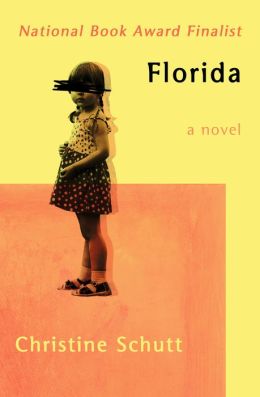
Review : Florida by Christine Schutt

While reading this, I suffered from a keen sense of déjà vu.

"Now where have I come across similar prose?"


Then I dredged up from memory, my feelings about Offred's nearly toneless, emotionally detached, subtly traumatized voice in The Handmaid's Tale.
The protagonist, Alice Fivey's voice shares stark similarities with Offred's, in the way it drips with a resignation to fate and acute despair. There's nothing much lyrical about the prose of THT as opposed to the prose-poem like structure of Florida, but there's the note of desolation and suppressed grief palpable in both the narrator voices. 
While I liked THT extremely because of the brilliant extrapolation of facts concerning present trends on misogyny, Alice Fivey's rather blandly narrated tale of grappling with abandonment issues left me cold and unaffected. 

And the thing is I am not a big fan of this kind of writing characterized by awkward, stumpy sentences which must be the polar opposite of Proustian prose. In fact, it grates on my nerves. My brand of poetic prose would be Anaïs Nin's, Virginia Woolf's in pretty much every one of her books or Toni Morrison's in Beloved. Sorry Christine Schutt, but your prose doesn't seem all that poetic to me. 

Alice Fivey is an orphaned child who lost her father to a car accident. A few years later her mother falls victim to a mental illness and has to be institutionalized as a result of which Alice becomes homeless, reduced to the state of temporary live-in arrangements with a set of unsympathetic relatives. 

"I was ten - ten was my age when Mother left for good, and this sleep-over life began."

The reader is led through her growing years in the midwest, where she is shown rather implicitly to suffer from profound loneliness, her dreams of a laughter-filled life with her parents in Florida shattered to bits. Her isolation is so pronounced that only the company of her family chauffeur Arthur, whom Alice comes to view as a kind of father figure, seems to provide her with a degree of comfort. Arthur becomes the only person who doesn't treat her unkindly or make thoughtless remarks regarding her mother the way her Aunt Frances and Uncle Billy do.

"No one was there to think he was my father, so I could love him as I might a father."

There are certain sentences containing heart-breaking implications of Alice's sense of hurt and subdued anger at her mother's 'betrayal'.

"Mother, or the woman who said she was my mother, settled in California, finally."

This one really stabbed me in a rather sensitive spot. But barring a few instances like the sentences I quoted above, Alice's story didn't achieve any kind of high emotional resonance. More often than not, the monotony of reading similarly structured sentences crept in unnoticed and I found myself trying to glide over them with a fluid grace in an effort to finish the book soon and move on to better reads.


3.5 stars out of 5.

P.S.:- My slightly negative review notwithstanding, this novella was a finalist for the National Book Award in 2004 so it could be worth a shot after all. 


 photo C136E66569D294E4D5DA2D8124D4FF69.png

Tuesday, October 1, 2013

Review : The Gift of Rain by Tan Twan Eng


"Like the rain, I had brought tragedy into many people's lives but, more often than not, rain also brings relief, clarity, and renewal. It washes away our pain and prepares us for another day, and even another life. Now that I am old I find that the rains follow me and give me comfort, like the spirits of all the people I have ever known and loved."

Tan Twan Eng may not be a great prose stylist or even come close to being one. He may falter when it comes to subtlety and fail at inserting appropriate metaphors into his rather direct tone of narration. But he surely succeeds in recounting a moving tale of human triumph with great clarity. Like a wise old man with sinewy forearms sitting in the midst of a group of young, moon-eyed listeners, he narrated a story of times gone by and all I did was lend him an eager ear. 
I listened to his voice with rapt attention, I learnt, I understood, I shed tears. 

I was transported back in time where I stood somewhere along the sidelines as a helpless spectator witnessing the mute misery of a picturesque but war-ravaged land. So much so I'm still recovering from the fierce onslaught of all the images of terrible beauty that Eng drew before my mind's eye in rapid succession. 
I'm going to recall from time to time, the startling greenery of the verdant rain forests in and around Penang, the hustle and bustle of the marketplaces in Istana, the gray-white limestone cliffs of Ipoh, the rich aroma of a pot of steaming coconut rice, the calming effect of zazen and the tale of Philip Hutton's uncommon bravery in the face of madness brought forth by an all-engulfing war. And I'm going to try to make sense of the paradoxical yet deeply human bond between Philip Hutton, a representative of a vanquished and besieged Malaysia and Hayato Endo, a representative of the conqueror Japan.

When the world sinks into chaos of the most fatal kind and all finer human impulses are trampled on over and over again until nothing remains but only the irrational urge to draw blood, burn and annihilate, a handful of people refuse to stray from the path of sanity and compassion at the cost of complete personal ruin. 
Philip Hutton, our narrator, was one such person. Born of a British father and a Chinese mother, he was forever an outcast in any world he wished to belong to, all because he was guilty of having a mixed parentage. Perhaps that is why, he imbibed all the great virtues of his British and Chinese heritage and under the tutelage of a Japanese spy of dubious loyalties, familiarized himself with all the tenets of aikijutsu , aikido and other Japanese ways of living, which became crucial to the survival of many later on.

During the trying times of the Japanese Occupation, at the risk of perpetual disgrace, he crossed over to the side of the enemy only to save what was most precious to him. Philip Hutton became notorious for aiding the Japanese in running the affairs of Malay and a collaborator in all the atrocities carried out against the natives, but what didn't become common knowledge was how he saved many, many innocent lives under the helpful guise of betraying the land of his birth.

Even though I am sorely tempted to label The Gift of Rain as a testimony to the greater human predicament during turbulent times, that goes beyond the petty divides of ethnicity, skin color and culture, I will not succumb to that lure. Philip Hutton maybe perceived as a cliched symbol of a stabilizing influence on all conflicting elements of life or he may even be just a reminder of that elusive voice of reason which we often proceed to stifle with brutal force at a time we need it the most. But I will not seek to trivialize his fictitious life in this cold analytical manner.

Instead, I choose to be a random listener who came across the extraordinary story of his courage and withhold judgement. I choose to dignify his existence by not questioning his deeds, his associations, his choices or his existential dilemmas. I choose to empathize with Malay and China, both of which were tormented and ripped apart by another nation nurturing a blind Imperialist zest. But then I also choose to empathize with the aggresor Japan, which didn't escape suffering inflicted by the War either. 

I choose not to vilify Philip for fraternizing with the foe and I choose not to indict Endo san for his treachery. 
And by doing neither, I choose to side with humanity.
Because as much as it will be easier to pigeonhole wartime human barbarity into convenient labels like repercussions of ruthless nationalist ambitions and pass the buck on responsibility, the lasting truth of the matter is the all-encompassing nature of our collective ordeals through time and space. 
In the end, it doesn't matter who or what caused our suffering. It matters that we suffered.


4 glorious stars of 5.

 photo C136E66569D294E4D5DA2D8124D4FF69.png
Related Posts Plugin for WordPress, Blogger...